Saval
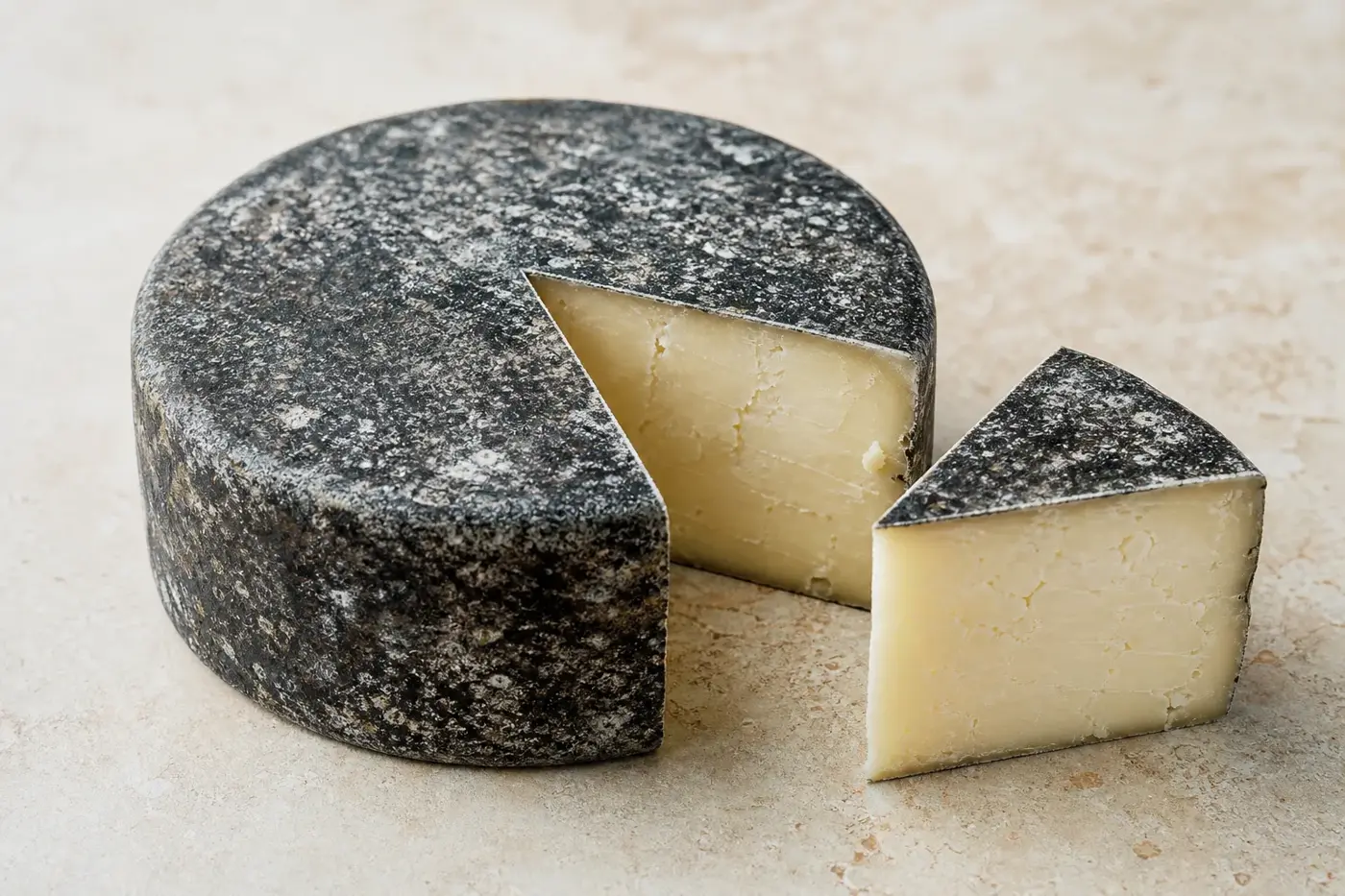
Cut into Saval and you meet a pale, buttery centre beneath a rind of contrasting colour.
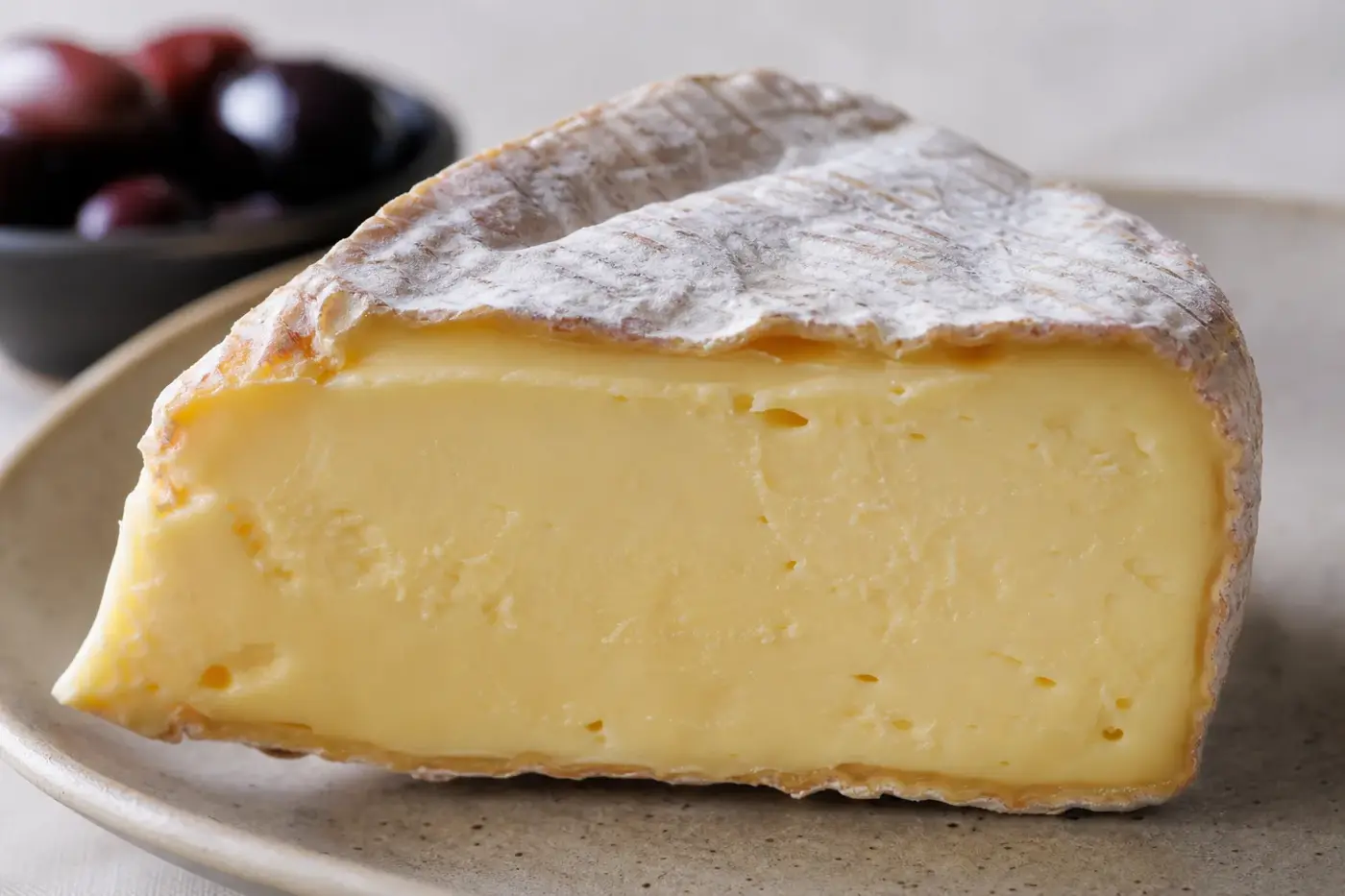
Cut into Saval and you meet a pale, buttery centre beneath a rind of contrasting colour. It is a gentle welcome from a cheese family whose surfaces tend to get all the attention. Made with raw cow’s milk by Caws Teifi Cheese in Ceredigion, Wales, Saval is the maker’s gentler relative of Celtic Promise.[1]
| Meet Saval | The details |
|---|---|
| Familiar name | Saval.[1] |
| Maker and home | Caws Teifi Cheese, Glynhynod Farm, near Llandysul, Ceredigion, Wales.[2] |
| Style | Caerphilly-style, washed-rind cheese.[1] |
| Milk treatment | Raw cow’s milk.[1] |
| Rennet | Animal rennet.[1] |
| Declared allergens | Milk and egg.[1] |
| Current organic certification for Saval | No confirmed information.[2] |
| Registered name and protection status | No confirmed information. |
| Typical maturation period | No confirmed information. |
| Rind edibility | No confirmed information. |
A gentler side of the washed-rind family
Put Saval on your cheeseboard and look at the relationship between rind and centre. Its maker places it in the Caerphilly tradition, while its surface receives the distinctive treatment of a washed-rind cheese. That need not mean overwhelming intensity: not every washed rind arrives with a brass band.[1][5]
The washing happens during maturation. Cheesemakers tend the surface to encourage communities of microorganisms that help develop colour, aroma and texture. Both the balance of those organisms and the ripening environment shape the result.[5]
Rind treatment is only part of the picture, alongside milk species and texture. The guide to telling cheese styles apart helps you fit those descriptions together, without asking any single one to explain the whole cheese.
Dutch beginnings, a West Wales home
The story at Glynhynod Farm starts with an ambition bigger than cheese. The founders arrived from the Netherlands in 1981, planning a life of organic farming and self-sufficiency. According to Caws Teifi Cheese, cheesemaking at the farm near Llandysul, Ceredigion, followed in 1982.[2][3]
The dairy’s published history traces that move into cheesemaking through Dutch training and a Gouda-style recipe. Its name has local roots, too. The maker says Teifi comes from the nearby river, a tributary of which passes through the farm.[3]
Today, Saval shares its West Wales home with Gouda-style cheeses, Caerphilly and washed-rind cheeses. You are not simply looking at one texture in several outfits. These cheeses bring different curd-handling and maturation traditions under one dairy roof, with Dutch beginnings and a range that now reaches beyond them.[2][4]
Milk, rennet and the details worth reading
Saval uses raw cow’s milk, but “raw” and “organic” answer different questions. One describes milk treatment; the other is a production claim requiring its own substantiation. Look for each in the product information and packaging, rather than taking your cue from the dairy’s name.[2]
Caws Teifi’s FAQ explains that milk treatment varies across its range. It also says the business previously held organic certification, and points you towards individual product information for current claims.[2]
If you avoid animal rennet, the key detail is straightforward: Saval uses it.[1] Rennet helps milk set into curd, the solid material that becomes cheese. For the differences between animal, microbial and fermentation produced preparations, turn to rennet explained.
Milk is not the only declared allergen. Saval also declares egg, so read the complete ingredient and allergen information for your particular piece. This is especially important when a cheesemonger has cut and rewrapped it.[1][2]
The busy life of a washed rind
As the cheese matures, much of the action happens outside. Washing the rind is different from washing the curd, which concerns the milk solids earlier in cheesemaking. “Washed-rind” therefore tells you about surface treatment, but relatively little about the initial make.[5]
Surface-ripened cheese hosts a changing cast of bacteria and yeasts. In one experimental study, researchers applied two commercial culture mixtures to young Cheddar curd, then followed microbial development and aroma compounds. Each mixture produced a different surface community, showing how interactions between organisms shape the outcome.[6]
For Saval, the maker identifies the broad product style. The finer workings leave some questions open, as the table below sets out.
| A closer look at the make | What is available for Saval |
|---|---|
| Starter cultures | No confirmed information |
| Curd cutting, draining and pressing | No confirmed information |
| Washing liquid and frequency | No confirmed information |
| Named rind organisms | No confirmed information |
| Maturation duration, temperature and humidity | No confirmed information |
The ripening environment plays its part, too. A study surveying cheese rinds and recreating communities experimentally found an association between environmental conditions, particularly surface moisture, and microbial composition. Tending a rind is an ongoing job, not simply a matter of choosing a culture and leaving it alone.[5]
Curious about the work before the rind takes centre stage? How cheese is made walks you through setting the milk, handling the curd, draining and maturation.
Take your time with that buttery centre
Caws Teifi describes Saval’s centre as buttery, with an aromatic, savoury and comparatively delicate flavour. In the maker’s product photograph, you can see the pale interior beneath a thin exterior of contrasting colour.[1]
Give texture and flavour a moment each. First, notice whether your piece feels firm, yielding or spreadable. Then consider the flavour’s intensity and how long it lingers. You will get a fuller picture than a single strength score can offer.
Age can change surface-ripened cheese as microbial communities shift and milk components break down. The experimental research above linked different microorganisms with different groups of volatile aroma compounds.[6] Ask your cheesemonger about the condition of the piece you are buying, rather than leaving the style description to do all the talking.
Two honours for Saval in 2017
Saval has two honours in the published British Cheese Awards 2017 results. The entry “Saval Rind Washed”, made by Caws Teifi Cheese, appears as both Best Welsh Cheese and Best Semi-Soft.[7]
Those awards mark a named entry at a particular moment in the cheese’s history. Read them alongside the product description as you decide whether Saval belongs on your cheeseboard.
Give the buttery centre room on your plate
The maker suggests crackers, crisp apple, chutney and crusty bread.[1] Begin with bread or a plain cracker, then try the apple. Keep chutney separate so each accompaniment gets its turn. Even a good chutney need not chair every mouthful.
Planning a selection? Caws Teifi’s celebration-cheese guidance allows approximately 75 g per person after dinner or 125 g as part of a buffet.[8] That allowance covers the whole cheese selection, not each cheese, so divide it among the cheeses you serve.
For a drink, start with an alcohol-free apple drink or sparkling water. Adults of legal drinking age who choose alcohol could try a small serving of dry cider. Taste the cheese first, then the drink, and compare the pairing with the cheese alone.
Set out a modest portion to begin with. Replenish it from refrigerated storage as you need it.
Keep Saval chilled, and ask before eating the rind
Follow the supplied packaging for storage instructions and dates. Caws Teifi advises promptly refrigerating products that need chilling after delivery. Before freezing cheese, consult the guidance for that particular product.[2]
For home refrigeration in England, Wales and Northern Ireland, the FSA guidance cited in its 2023 report recommends a fridge temperature of 5 °C or below, measured with a thermometer. Leave room for air to circulate. During preparation, keep chilled food out for the shortest possible time.[10]
If you want to eat the rind, first ask the maker or supplying cheesemonger to confirm its treatment and whether that product’s rind is intended to be eaten. Keep the answer with the product information, especially if your cheese has been rewrapped. For wider handling advice, turn to storing cheese at home.
General information only, not medical advice: follow the official guidance where you live.
Questions people ask
What does Saval taste like?
Caws Teifi describes Saval as aromatic, savoury and comparatively delicate, with a buttery centre. The maker suggests serving it with crackers, crisp apple, chutney or crusty bread.
Is Saval made with raw milk, and is it organic?
Saval is made with raw cow’s milk. Its current organic certification has not been verified, so check the product information and packaging.
Is Saval suitable for someone avoiding animal rennet?
Saval contains animal rennet. It also declares milk and egg as allergens.
Can you eat the rind on Saval?
The edibility of Saval’s rind has not been verified. Ask the maker or supplying cheesemonger whether the rind on your piece is intended to be eaten.
How should Saval be stored?
Follow the storage instructions and date on the packaging. For home refrigeration in England, Wales and Northern Ireland, the FSA recommends a fridge temperature of 5 °C or below, checked with a thermometer. See the FSA guidance for details.
Sources
- Caws Teifi Cheese, Saval, undated product page and product photograph, retrieved November 2026. Read at teificheese.co.uk
- Caws Teifi Cheese, Frequently Asked Questions, undated, sections “Do I need to refrigerate my cheese?”, “Can I freeze your cheese?” and “Our cheese”, retrieved November 2026. Read at teificheese.co.uk
- Caws Teifi Cheese, History + Farm, undated, retrieved November 2026. Read at teificheese.co.uk
- Caws Teifi Cheese, Organic Welsh Cheese, undated homepage, retrieved November 2026. Read at teificheese.co.uk
- Cell, Cheese rind communities provide tractable systems for in situ and in vitro studies of microbial diversity, volume 158, issue 2, 2014. Read at pmc.ncbi.nlm.nih.gov
- mSystems, Omics-Based Insights into Flavor Development and Microbial Succession within Surface-Ripened Cheese, 2018. Read at pmc.ncbi.nlm.nih.gov
- British Cheese Awards, British Cheese Awards 2017: Champion and Special Winners, results document hosted by the Specialist Cheesemakers Association, 2017. Read at specialistcheesemakers.co.uk
- Caws Teifi Cheese, 4 Tier Celebration Cheese, Smoked Teifi, Saval, Teifi + Teifi Mature, undated, serving guidance retrieved November 2026. Read at teificheese.co.uk
- Food Standards Agency, Redistributing food and donating to food banks, retrieved November 2026. Read at food.gov.uk
- Food Standards Agency, Storing chilled foods at incorrect temperatures, research report, 2023, section “FSA guidance on storing chilled foods at the correct temperature”. Read at food.gov.uk
Researched from the maker’s published descriptions, primary experimental research, published competition results and official food-handling guidance; serving preferences are identified as editorial suggestions.
Last checked: November 2026
Last checked November 2026.
The editors suggest you read next
Caerphilly
Your knife meets a rind-ripened Caerphilly, and one wedge offers two pleasures: a fresh, crumbly centre and a softer, creamy layer just beneath the rind.