Sharpham Rustic
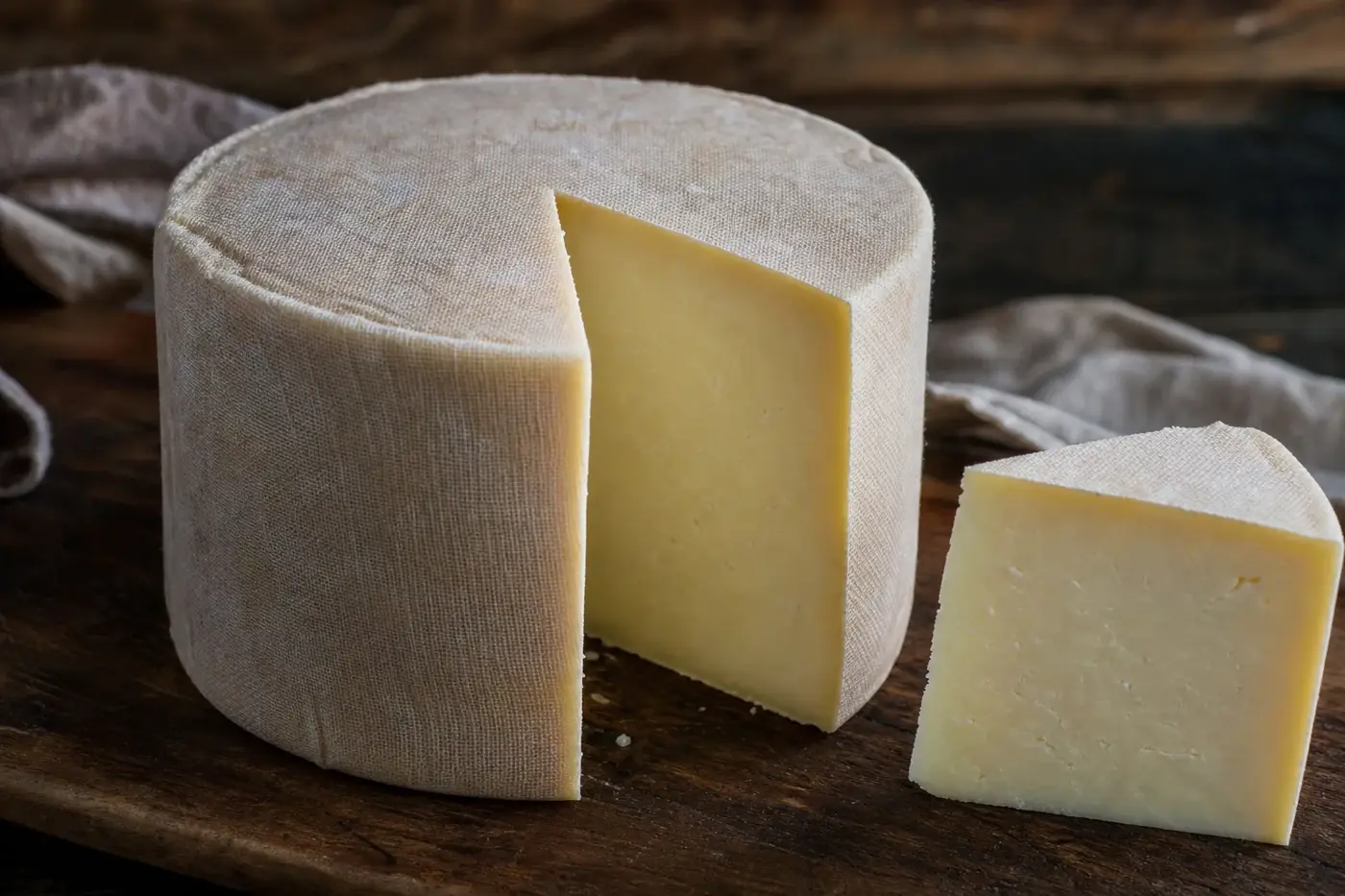
Your knife slips through a white bloom, then meets a golden centre that crumbles rather than surrenders to a spoon.
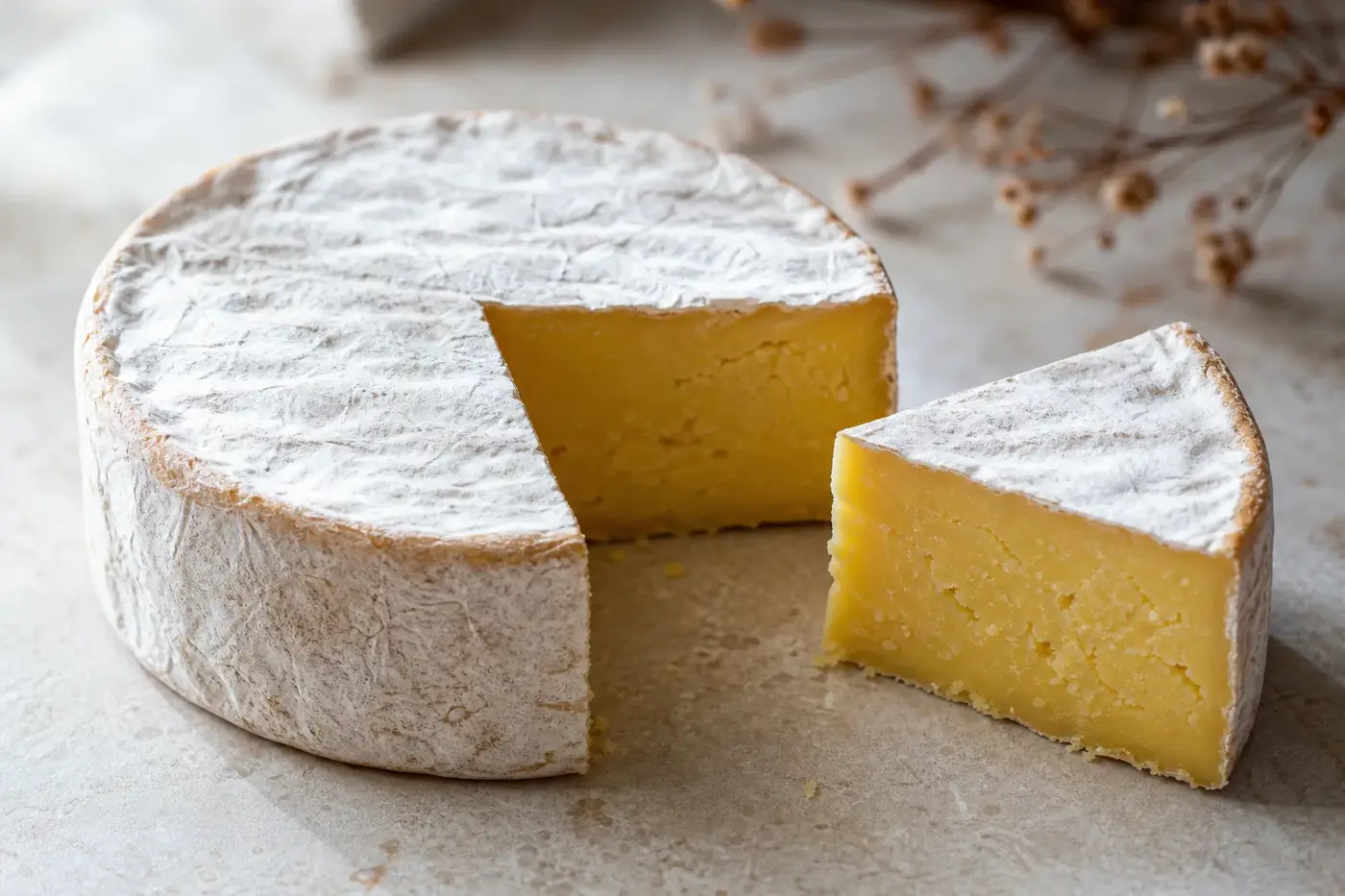
Your knife slips through a white bloom, then meets a golden centre that crumbles rather than surrenders to a spoon. Sharpham Rustic has a firmer character than its soft looks suggest. Made by Sharpham Dairy with pasteurised Jersey cow's milk, this semi-hard Devon cheese has a light, citrus-like tang that the maker says grows nuttier with age.[1]
Your first introduction to Rustic
| What to know | The detail |
|---|---|
| Name | Sharpham Rustic.[1] |
| Maker | Sharpham Dairy, Devon, England.[2][3] |
| Milk | Pasteurised Jersey cow's milk.[1] |
| Coagulant | Vegetarian rennet, declared by the maker.[1] |
| Style | Semi-hard, mould-ripened, with a natural edible rind.[1] |
| Time at the dairy to mature | Four weeks.[1] |
| Whole cheese sizes | Approximately 1.7 kg and 280 g.[1] |
| Ingredients | Cow's milk, rennet and salt, listed by Sharpham.[1] |
| GI registration and register ID (Great Britain) | Status unconfirmed. |
A white bloom with a firmer heart
Rustic's white surface hides a firm, crumbly interior, not a soft, spoonable one. If you have already reached for a spoon, no harm done. The bloom describes the outside; the paste, the cheesemaker's word for the interior, tells another story, as you can explore in how to tell cheese styles apart.[2]
Sharpham offers a larger cheese for cutting and a small whole cheese.[6] Whichever you choose, give a simple wedge some space on the plate so you can see the pale rind against the cut face. Leave the accompaniments aside until you have had your first taste.
Two Devon dairies, one continuing story
Rustic began at Ticklemore Dairy in the early 1990s. According to Sharpham, production moved to Sharpham in 2003. What you taste today connects two Devon dairies, rather than being a recipe newly created by its present maker.[2]
Today, Sharpham Dairy's contact address is at the South Devon Food Hub in Totnes, Devon, England. That is the address to use if you are researching the business. Accounts of its earlier estate setting tell a different chapter of the story, not necessarily that of the present dairy.[3]
Get to know the Jersey milk
Sharpham identifies Rustic's milk as pasteurised Jersey cow's milk.[6] Its farming pages describe the herd at Higher Artiscombe Farm, while the dairy says it receives milk from local farmers. The supplying farm for Rustic is not specified.[4][5]
Jersey tells you about the cattle; pasteurised tells you about the milk's treatment. Sharpham also declares vegetarian rennet, the enzyme preparation that sets milk into curd. When you compare labels, keep those details separate: the coagulant and the milk's treatment answer different questions.[5][6]
The finer cut behind that crumble
The decisive moment comes when the curd is cut. Rustic starts like Sharpham Brie, but its curd is cut more finely, allowing more whey, the liquid released from the set milk, to drain away. The curds then go into moulds, drain for 48 hours, are brined and are left to mature.[2]
Before that comes the dairy's shared cheesemaking routine. Sharpham describes milk being tested, chilled and passed through its heat treatment plant before entering a vat. Starter cultures begin the souring or ripening, then vegetarian rennet produces a jelly-like set; these are general production stages, not a complete Rustic recipe.[5]
Rustic's firmer character therefore takes shape before its white rind appears. Cutting and draining the curd creates the contrast with softer cheese, however alike their finished surfaces might look. You can follow how cheese is made for the wider journey from milk to finished cheese.[5]
Four weeks at the dairy, then a changing character
Rustic is mould-ripened, with what Sharpham calls a natural white bloomy surface.[1] In its general production account, the dairy names Penicillium candidum as a white mould used to create a bloom. It does not identify that mould specifically as Rustic's.[5]
The product information sheet gives four weeks of maturation at the dairy and says Rustic can mature for up to 12 weeks.[1] When you choose a piece, ask when it was made and how the seller describes its character now. Age gives you a clue to what awaits, not a reason to award the oldest cheese a medal.
Taste the citrus, then try the rind
Golden yellow, crumbly and delicately citrusy: those are the essentials of Sharpham's description.[2] The product page adds buttery and grassy aromatic notes.[6] Let those words give you a starting point, rather than a script your particular piece has to follow.
As Rustic matures, the maker says it becomes nuttier.[1] The rind brings an earthy character.[2] Taste the interior on its own, then take a bite with rind and notice how the balance of milk flavour, acidity and finish changes.
For your own tasting note, look for three things: how the cheese breaks, where the tang appears and what lingers after you swallow. Write them down before returning to the maker's description. That way, the words help you name what you find, rather than deciding your tasting notes for you.
Give your serving a little time
Sharpham recommends at least 30 minutes at room temperature before serving; first, cut off the portion you intend to eat. The maker confirms that the white bloomy rind is edible.[2] Narrow wedges give everyone both centre and rind, with the option to leave the surface aside.
The Food Standards Agency's November 2026 guidance for England, Wales and Northern Ireland says to keep chilled food out for the shortest possible time, with a maximum of four hours during preparation.[7] Its picnic guidance says to discard chilled food after four hours at 8 °C or above unless refrigerated within that time. In extreme heat, use food within two hours.[8]
Keep the rest refrigerated while your serving portion comes to temperature.[7] Start with a small wedge for each guest, rather than putting out a whole cheese automatically. You can offer more from the fridge as appetites and the rest of the meal allow.
Make room for oatcakes and apple
Sharpham suggests oatcakes and sweet chutney; its information sheet singles out apple chutney as a partner for Rustic's tang.[1][6] Try the oatcake alone first, then add a small dab of chutney. Keep the sweetness to one side so you can adjust each bite, rather than giving the cheese a chutney overcoat.
For an alcohol-free table, start simply with water, plain bread and slices of fresh apple. The apple echoes the maker's pairing without adding another spread, while the plain accompaniments give you space to concentrate on Rustic. You could also try an unsweetened apple drink diluted with sparkling water, adjusted to taste.
Sharpham's wine choice is Dart Valley Reserve, a white the maker describes as having peach-like fruit and a fresh character that complements Rustic's citrus finish.[1][6] If you are an adult of legal drinking age and choose wine, serve a small amount alongside water. The recommendation also gives you a starting point for exploring cheese and wine pairing.
Look after tomorrow's slice
Store Sharpham Rustic in the fridge at 0 to 5 °C, as the maker recommends.[6] The FSA's household guidance for England, Wales and Northern Ireland also recommends a fridge temperature between 0 and 5 °C, checked with a fridge thermometer. Follow your piece's storage and date instructions, including any directions for use after opening.[7]
Keep the original wrapper and label together, so you retain the cheese's identity and instructions. Ask your cheesemonger how to rewrap a cut piece, and note the cutting or opening date for reference. Take out only what you intend to serve, then return the rest promptly to refrigeration.[7]
For help with wrapping and arranging your fridge, turn to how to store cheese at home. Keep the package available in case you need to contact the dairy or retailer. The exact product, date and batch give them more to work with than the cheese name alone.
Follow Rustic a little further
Start with Sharpham Dairy's cheese pages and its Rustic page for the maker's account.[2] The product information sheet covers maturation and ingredients. The cheesemaking and farming pages take you further into the dairy's wider work.[1][4][5]
If you have two pieces to compare, ask the seller their ages and record whether each is a cut wedge or a whole truckle. Taste both with the same plain accompaniment. A little organisation makes the differences easier to follow than the memory of a cheese you ate months ago.
General information only, not medical advice: follow the official guidance where you live.
Questions people ask
What does Sharpham Rustic taste like?
Sharpham describes a delicate citrus character that becomes nuttier as the cheese matures. The rind contributes an earthy character, and the product page also mentions buttery and grassy aromas.
Is Sharpham Rustic a soft cheese?
No. It is a semi-hard cheese with a firm, crumbly interior, despite its white bloomy rind.
Is Sharpham Rustic suitable for vegetarians?
Sharpham declares that Rustic is made with vegetarian rennet. Its listed ingredients are cow's milk, rennet and salt.
Can you eat the rind of Sharpham Rustic?
Yes, Sharpham confirms that the white bloomy rind is edible. The maker describes the rind as contributing an earthy character.
How should Sharpham Rustic be stored and served?
Sharpham recommends storing it in the fridge at 0 to 5 °C and allowing the portion to be served at least 30 minutes at room temperature. The Food Standards Agency advises keeping chilled food out for the shortest possible time, with a maximum of four hours during preparation; check its current guidance for England, Wales and Northern Ireland.
Sources
- Sharpham Dairy, Sharpham Rustic Product Information Sheet, undated edition, file hosted in the August 2025 directory. Product composition, formats, maturation, character and pairings. Product information sheet.
- Sharpham Dairy, Sharpham Rustic, undated cheese information page, retrieved November 2026. Product history, specific production sequence, sensory descriptions, serving and rind guidance. Rustic cheese information.
- Sharpham Dairy, Contact us, undated contact page, retrieved November 2026. Dairy contact address at South Devon Food Hub, Totnes. Maker's contact details.
- Sharpham Dairy, Higher Artiscombe Farm, undated farming account, retrieved November 2026. Location and accommodation of Sharpham's cow herd. Maker's farming account.
- Sharpham Dairy, Cheesemaking at Sharpham, undated production account, retrieved November 2026. Milk reception, starter cultures, vegetarian rennet, white mould and curd cutting. Maker's cheesemaking account.
- Sharpham Dairy, Sharpham Rustic, undated product page, retrieved November 2026. Milk declaration, formats, aromatic description, pairings and refrigeration guidance. This is the maker's commercial product information. Rustic product details.
- Food Standards Agency, How to chill, freeze and defrost food safely, published 18 December 2017, current retrieved text checked November 2026. Applies to England, Northern Ireland and Wales. Official chilling guidance.
- Food Standards Agency, Keeping food safe on a picnic, published 11 January 2018, current retrieved text checked November 2026. Applies to England, Northern Ireland and Wales. Official picnic guidance.
This piece was researched from Sharpham Dairy's published product, farming and production information, with handling guidance checked against the Food Standards Agency.
Last checked: November 2026
Last checked November 2026.
The editors suggest you read next
West Country Farmhouse Cheddar Cheese
Large pieces of curd turn and stack under the cheesemaker’s hands.