Sheep Rustler
Cut through Sheep Rustler’s mottled rind and a firm, pale centre comes into view.
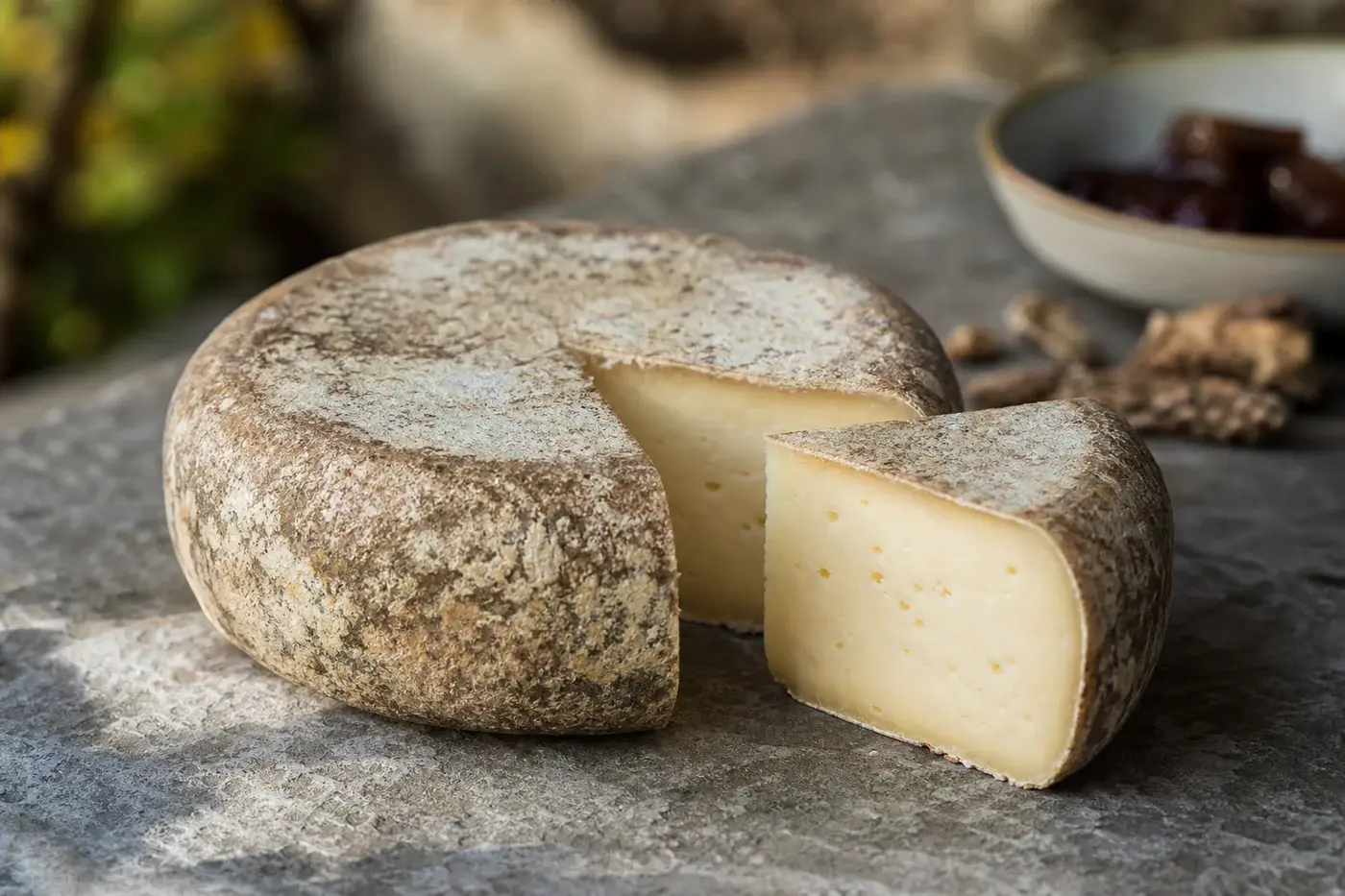
Cut through Sheep Rustler’s mottled rind and a firm, pale centre comes into view. Taste it and you find savoury flavour with a hint of caramel. Made with sheep’s milk at White Lake Cheese’s Bagborough Farm dairy in Somerset, this compact, semi-hard cheese has a rind washed in brine. [1, 2, 4]
The maker’s notes and the British Cheese Awards’ account point towards its particular charm: firm texture, mellow flavour and sweetness woven through the savoury notes. Give it a little attention before your hand wanders back to the crackers. Cheese deserves an audience, however small. [1, 2, 4]
| At a glance | Your quick guide |
|---|---|
| Name | Sheep Rustler [1] |
| Maker and home | White Lake Cheese, Bagborough Farm, Pylle, Somerset, England [1, 2] |
| Milk | Sheep’s milk [4] |
| Milk treatment | Thermised, described by White Lake as unpasteurised [1] |
| Rennet | Vegetarian; specific type unconfirmed [1] |
| Style | Semi-hard, brine-washed rind [1] |
| Usual maturation | Around three months [4] |
| Shape | Small round wheel [3] |
| Eating the rind | Edibility unconfirmed |
| Product information date | November 2026 [1] |
Come down to the Somerset dairy
White Lake dates its beginnings to 2004, but the family farm’s cheesemaking roots reach back to the 1930s. Today, you will find its dairy at Bagborough Farm in Pylle, near Shepton Mallet. The maker describes a facility designed for small-batch production. [1, 2]
Sheep Rustler is one member of a varied dairy family. White Lake makes cheeses from goat’s, sheep’s and cow’s milk, with supplies that include milk from its own goat herd. Those goats belong in the farm’s story, but their milk does not belong in this wheel: Sheep Rustler is made with sheep’s milk. [2]
Keep that distinction in mind as you explore the range. White Lake presents Sheep Rustler as the sheep’s milk counterpart to Rachel, giving you another way into its place in the dairy’s repertoire. [1]
Take a closer look at that rind
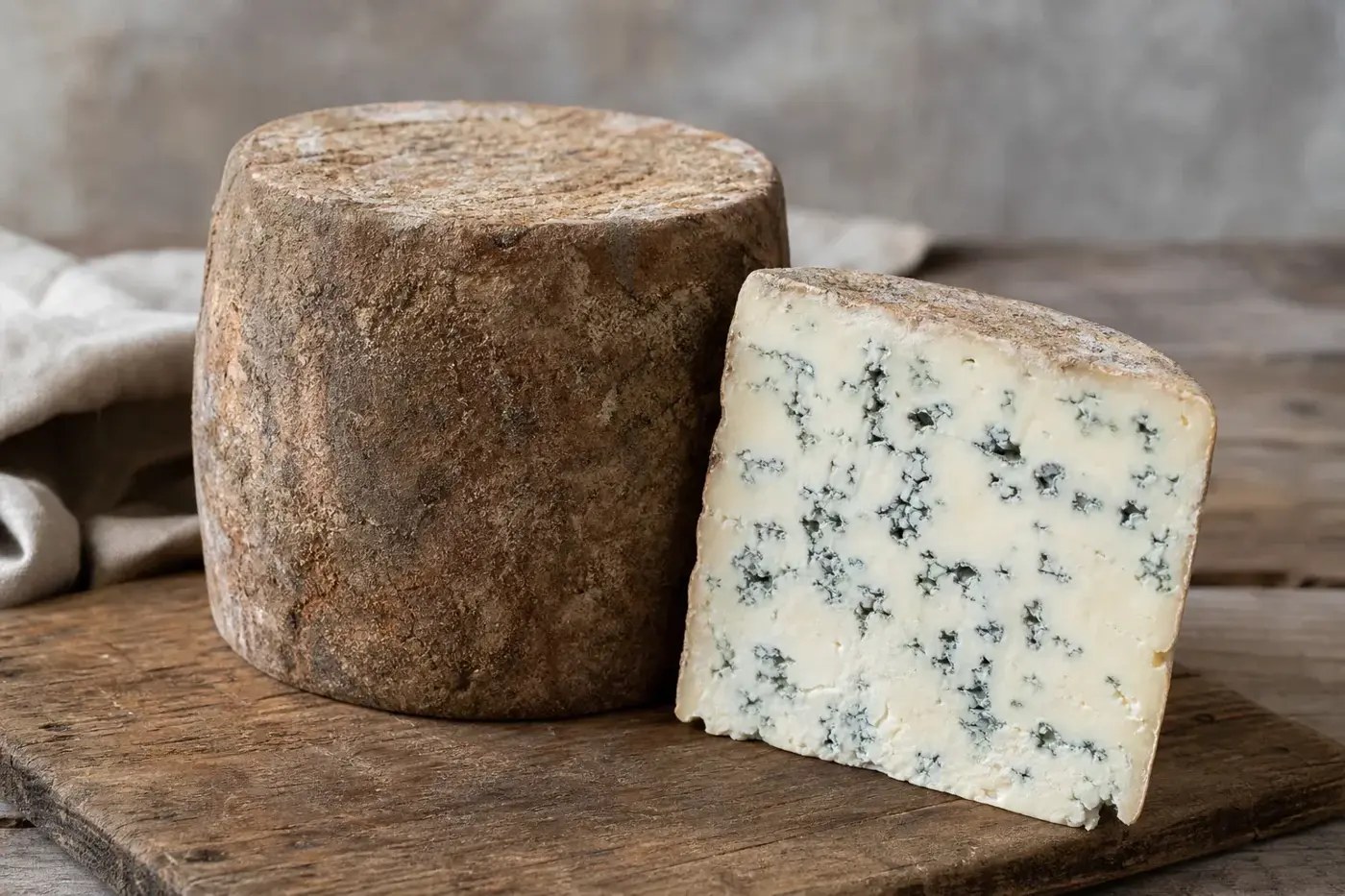
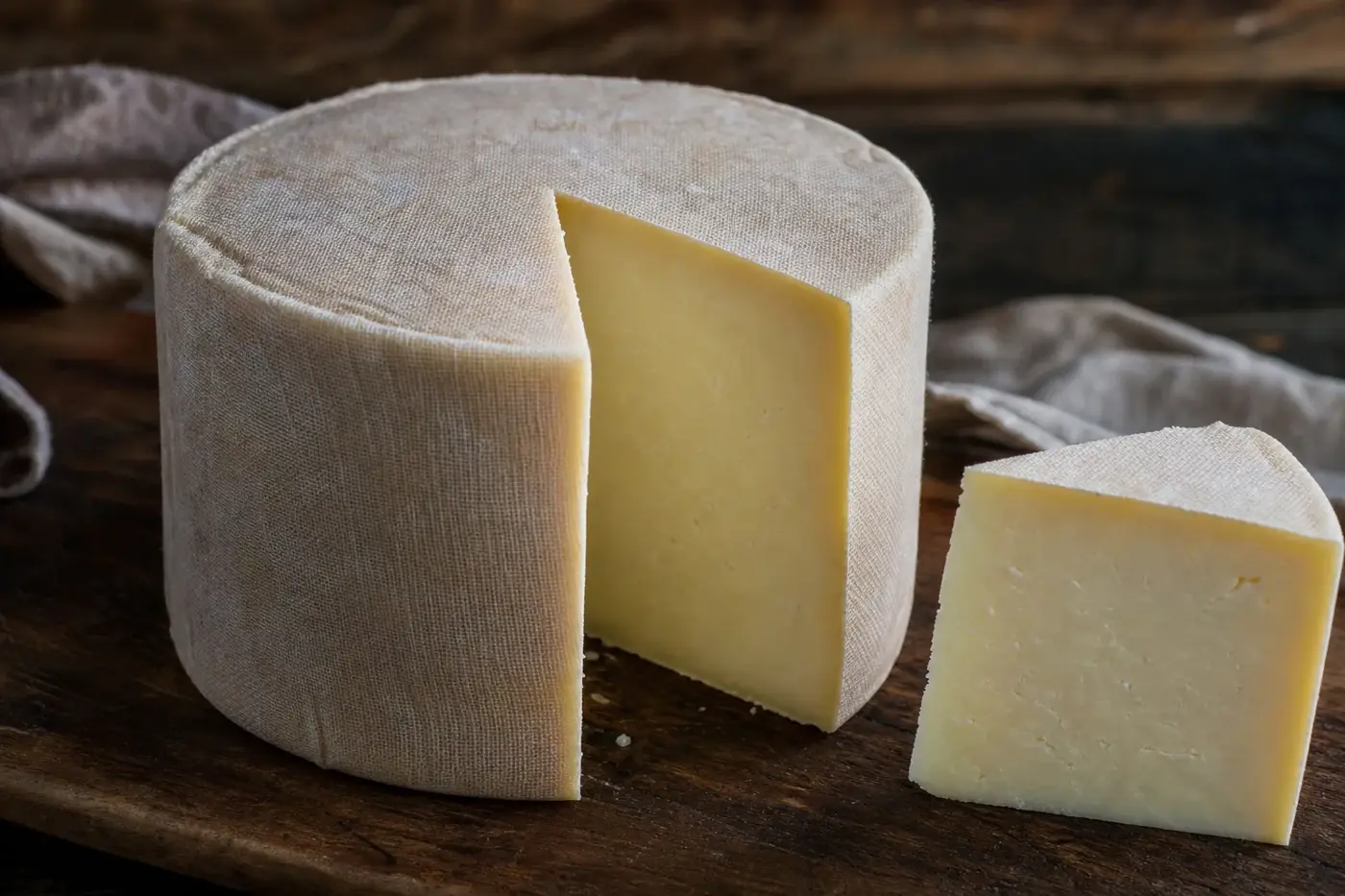
In the maker’s cut-wheel photograph, Sheep Rustler is squat and round, with a textured rind worth lingering over. Brown and greyish areas mingle with pale patches and small yellowish spots. You get rather more clues to its appearance from the picture than from the name. [3]
Inside, the colours settle into something quieter. The paste, meaning the body beneath the rind, appears pale ivory to light straw, close and mostly even, with a few small openings. A broad wedge holds a clean outline. [3]
Look at that structure and “washed rind” becomes only part of the picture. Beneath the textured surface, you can see a firm-looking body rather than having to guess from the cheese’s style alone. [3]
Get acquainted with the milk and rennet
White Lake describes the milk as thermised and the rennet as vegetarian. It also describes the cheese as unpasteurised. Keep those terms together when you read the label or ask a cheesemonger about your choice; the specific rennet type remains unconfirmed. [1]
If the milk terminology gives you pause, turn to raw milk, thermised and pasteurised cheese. For the language behind that vegetarian declaration, read rennet explained.
Give brine and three months their due
Sheep Rustler’s rind is washed in brine. The British Cheese Awards’ 2018 account records maturation of around three months, the same period White Lake gives today. [1, 4]
| Part of the making | What the maker tells you |
|---|---|
| Curd preparation | Details unconfirmed |
| Pressing method | Details unconfirmed |
| Rind treatment | Brine washing [1] |
| Maturation | Around three months [1] |
For White Lake, that maturation period goes hand in hand with the cheese’s small format and the firm texture it wants to preserve. Time matters here, alongside the attention given to the rind. Both belong to the maker’s approach to the finished wheel. [1]
Taste your way from nuttiness to caramel
Start with the British Cheese Awards’ 2018 description: medium and mellow in flavour, slightly nutty, with a hint of caramel. That gives you a useful starting point when arranging a board. Give Sheep Rustler your attention before anything forceful or heavily flavoured takes over. [4]
White Lake’s notes bring salt, savoury flavours, butterscotch and an oily quality into the picture. Read the two accounts together and you find a common thread: sweetness within the cheese’s savoury character. It is not sweetness borrowed from something sitting beside it. [1, 4]
The maker’s notes are its assessment of its own cheese. The Awards account offers a second description to taste against. Neither is an exam, and nobody needs to identify butterscotch under pressure. [1, 4]
Begin with a small piece of paste, without bread or fruit. Notice the aroma, then the resistance as you bite. Look for the balance between salt and sweetness, and notice what remains after swallowing.
If you like, jot those impressions down separately. Your own record will tell you more than a determined search for every word in somebody else’s tasting note.
Meet the wheel with a champion’s record
Sheep Rustler was named Supreme Champion at the British Cheese Awards in 2018. The organiser’s report, dated 31 May 2018, names both the cheese and White Lake. It also sets out the judging criteria: presentation, texture, aroma, flavour and balance. [4]
The organiser’s published Artisan Cheese Awards results for 2026 bring the story forward. Sheep Rustler won class 20, Affinage, and was Highly Commended in class 7, Sheep. [5]
Affinage means the care and maturing of cheese. For a wheel whose rind receives attention as it ripens, that category feels particularly fitting. It draws your eye back to the work behind the finished cheese. [5]
Find it a place on your board
Give Sheep Rustler the firm-textured role at the centre of a small board, with plain bread and one fresh accompaniment. Taste the cheese alone first, then bring in the accompaniments one at a time. You can discover which combinations you enjoy without several strong flavours competing for your attention.
Keep the main piece refrigerated and take out only what you plan to serve. In England, Wales and Northern Ireland, the FSA advises keeping chilled food out of the fridge for the shortest possible time during preparation. [6]
If you have a whole wheel, cut wedges, then slice a wedge across its cut face. Put out a few manageable pieces and leave the rest together, so guests can cut another slice. For these serving suggestions, trim the rind; if you would like to eat it, ask White Lake for confirmation specific to your cheese.
Building a mixed board? Choose a contrasting soft cheese rather than another similarly firm wedge. Give each cheese a little space and its own utensil, and put chutney in a separate dish.
Plain crackers are a useful alternative to bread. They also make it easy to take a smaller mouthful with each taste, giving you room to pay attention to the cheese itself.
Keep good company around the cheese
Let the published descriptions of mellow, nut-like and caramel flavours guide you, then keep the accompaniments modest. These suggestions are starting points for tasting, not instructions to cover the cheese. You should still be able to recognise Sheep Rustler in each mouthful. [1, 4]
- Fresh pear or apple: serve thin slices alongside plain bread, keeping the board centred on cheese rather than preserves. Taste the fruit and cheese separately before putting them together. Then decide whether the combination adds something you enjoy.
- Walnuts or a little quince paste: begin with one or the other. Walnuts let you explore the nut-like description; quince paste takes you towards sweetness. Keep the preserve beside the cheese rather than on it, so everyone can choose how much to add.
- Alcohol-free drinks: start with sparkling water, or try an unsweetened apple drink. Water is the simplest choice when you want to concentrate on the cheese. With apple juice, take a small sip alongside a plain piece before adding fruit or chutney to that same mouthful.
Invite Sheep Rustler to supper
White Lake suggests slicing Sheep Rustler into sandwiches or using it to top meals. For a simple kitchen use, shave a little over freshly cooked potatoes. Finish with chopped parsley and black pepper. [1]
Taste before adding salt, and adjust the finished plate to suit you. You are using the cheese as a finishing ingredient here, giving it a clear place in the dish rather than folding it into a more elaborate preparation. [1]
Wrap it carefully, and ask about the rind
White Lake advises refrigerating cut cheese in its original packaging or in foil. Keep the wrapper with the remaining piece, so the product information, date and batch details stay to hand. The maker says its cheeses carry a best-before date and batch information on the back of the pack. [8]
In England, Wales and Northern Ireland, the FSA advises keeping a home fridge between 0 and 5 °C and following the packaging’s storage instructions. Use a fridge thermometer to check the temperature rather than relying on the dial alone. Return the cheese to the fridge between servings, following any product-specific instructions supplied with your piece. [6]
If you want to eat the rind, ask White Lake about the actual cheese you have and read its wrapper. The mottled surface in the maker’s photograph helps you recognise Sheep Rustler. Whether to eat that surface is a question for the maker and the information supplied with your cheese. [1, 3]
If an unexpected patch of mould leaves you unsure what to do, consult mould on cheese. Not every surface change calls for the same response. For practical help with wrapping and arranging the fridge, see how to store cheese at home.
Choose your next cheese adventure
- How to Tell Cheese Styles Apart: Milk, Rind, Texture and Method: get to know the characteristics used to describe Sheep Rustler.
- Cheese and Wine Pairing: The Complete Guide: explore a wider approach to choosing drinks for your board.
General information only, not medical advice: follow the official guidance where you live.
Questions people ask
Where is Sheep Rustler made and what milk is used?
Sheep Rustler is made with sheep’s milk by White Lake Cheese at Bagborough Farm in Pylle, Somerset. White Lake presents it as the sheep’s milk counterpart to Rachel.
Is Sheep Rustler pasteurised and does it use vegetarian rennet?
White Lake describes the milk as thermised and the cheese as unpasteurised. It describes the rennet as vegetarian, although the specific type is not verified.
What does Sheep Rustler taste like?
The British Cheese Awards describes it as medium and mellow, slightly nutty, with a hint of caramel. White Lake also notes salt, savoury flavours, butterscotch and an oily quality.
Can you eat the rind of Sheep Rustler?
The edibility of the rind has not been verified. Ask White Lake about the cheese you have and check its wrapper for instructions.
How should Sheep Rustler be stored?
White Lake advises refrigerating cut cheese in its original packaging or in foil. In England, Wales and Northern Ireland, the FSA advises keeping a home fridge between 0 and 5 °C and following the storage instructions on the packaging.
Sources
- White Lake Cheese. Sheep Rustler. Current product description and product information, undated, accessed November 2026. Maker’s source for product characteristics, ingredients declarations and intended maturation.
- White Lake Cheese. Introduction to Your Cheese. “Our story”, undated, accessed November 2026. Maker’s account of its history, milk sources and production setting.
- White Lake Cheese. Sheep Rustler cut-wheel photograph. Current product-page image, undated, accessed November 2026. Visual evidence for the photographed cheese’s shape, rind and cut face.
- British Cheese Awards. Sheep Rustler Wins Supreme Champion at the British Cheese Awards 2018. 31 May 2018. Organiser’s contemporary award announcement and published cheese description.
- Artisan Cheese Awards. Results 2026. 2026 edition, accessed November 2026. Organiser’s class results.
- Food Standards Agency. How to chill, freeze and defrost food safely. Published 18 December 2017, current online text accessed November 2026. Applies to England, Northern Ireland and Wales.
- Food Standards Agency. Keeping food safe on a picnic. Published 11 January 2018, current online text accessed November 2026. Applies to England, Northern Ireland and Wales.
- White Lake Cheese. Caring for Your Cheese. Undated, accessed November 2026. Maker’s general packaging, refrigeration and date-marking advice.
- Food Standards Agency. Alerts. Live official alert index, accessed November 2026; used for the editorial recall check recorded below.
Researched from White Lake’s published product information and photography, competition organisers’ records and current FSA guidance; serving and pairing suggestions are editorial synthesis.
Last checked: November 2026
Last checked November 2026.
The editors suggest you read next
West Country Farmhouse Cheddar Cheese
Large pieces of curd turn and stack under the cheesemaker’s hands.