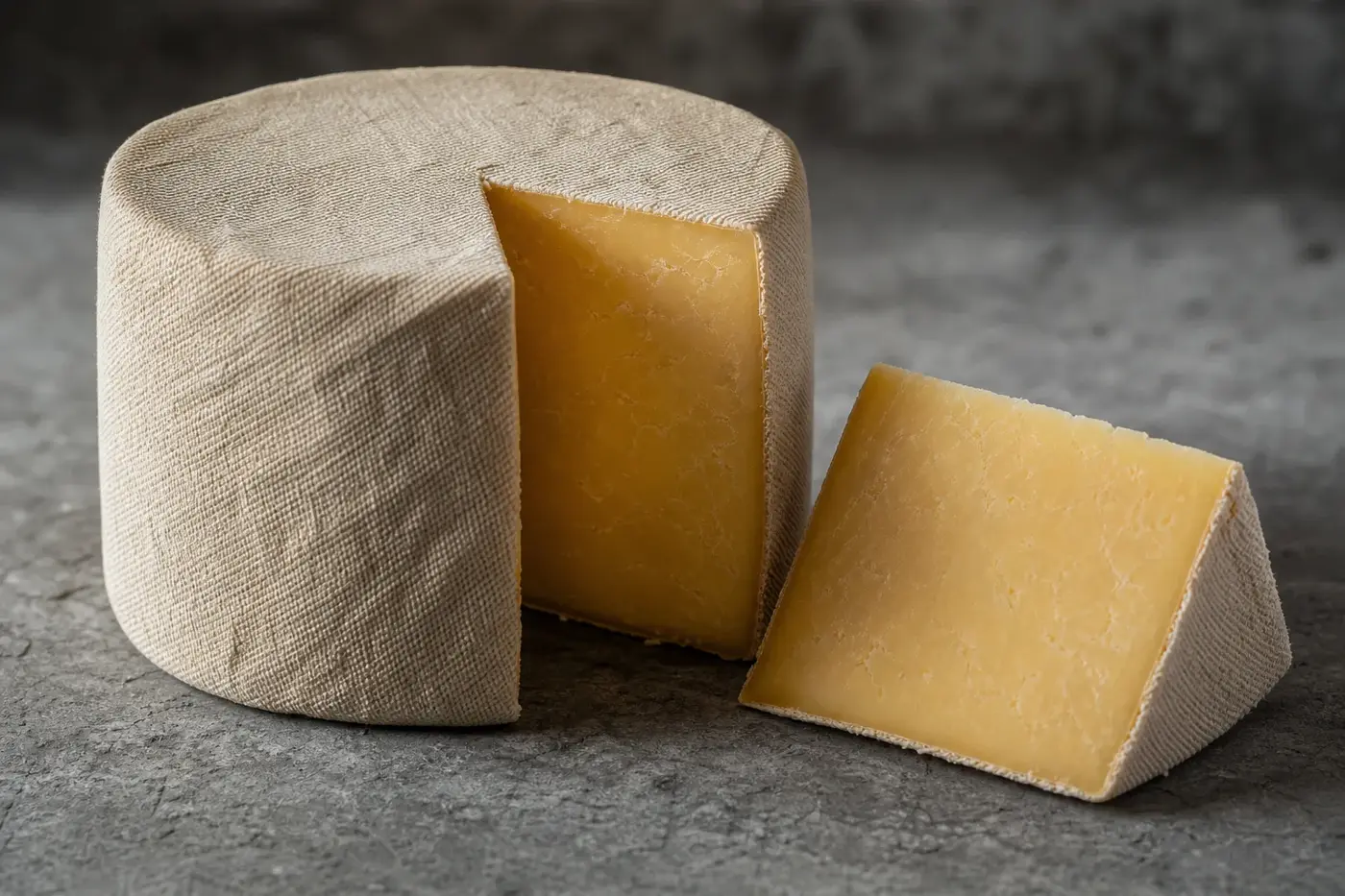
Your first bite yields softly, almost like fudge. Then comes the salt and a steely blue finish. Strathdon Blue, a Scottish cow’s milk cheese threaded with conspicuous blue veins, makes a gentle entrance before offering a firm opinion. Its maker, Highland Fine Cheeses, describes that finish, gives its address in Tain in the Scottish Highlands and says the milk is pasteurised. [2][3]
| At a glance | What to know |
|---|---|
| Name | Strathdon Blue [1] |
| Maker | Highland Fine Cheeses [3] |
| Maker’s address | Blarliath Farm, Tain, Scotland [3] |
| Milk | Pasteurised cow’s milk [2] |
| Style | Soft, blue-veined cheese [5] |
| Coagulant | Rennet; type unconfirmed [1] |
| Rind | Classified by the maker as washed rind [1] |
| Maturation | Two months in foil at around 3 °C after blue development [1] |
| Declared allergen | Milk [1] |
Take a closer look at those blue veins
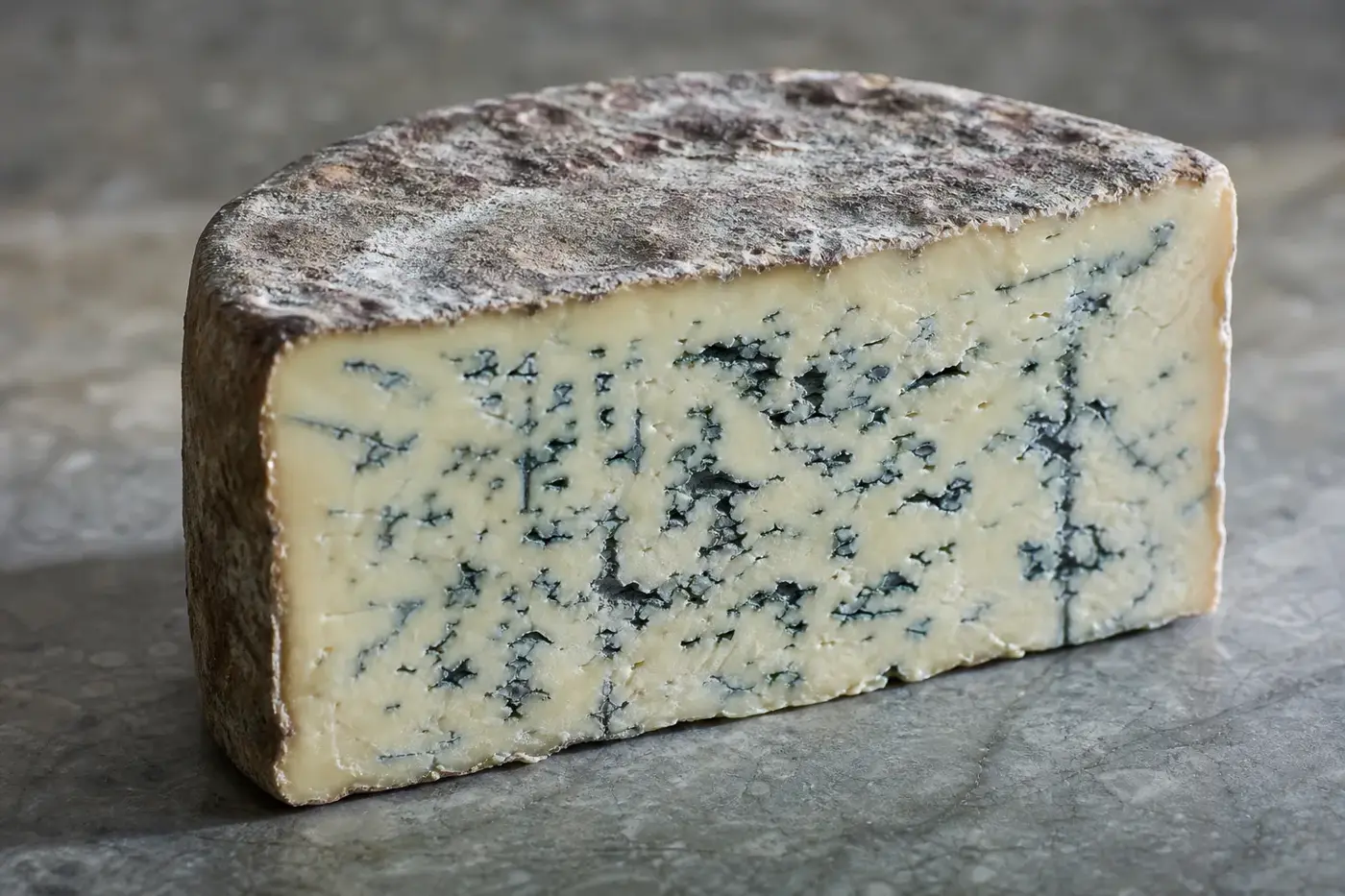
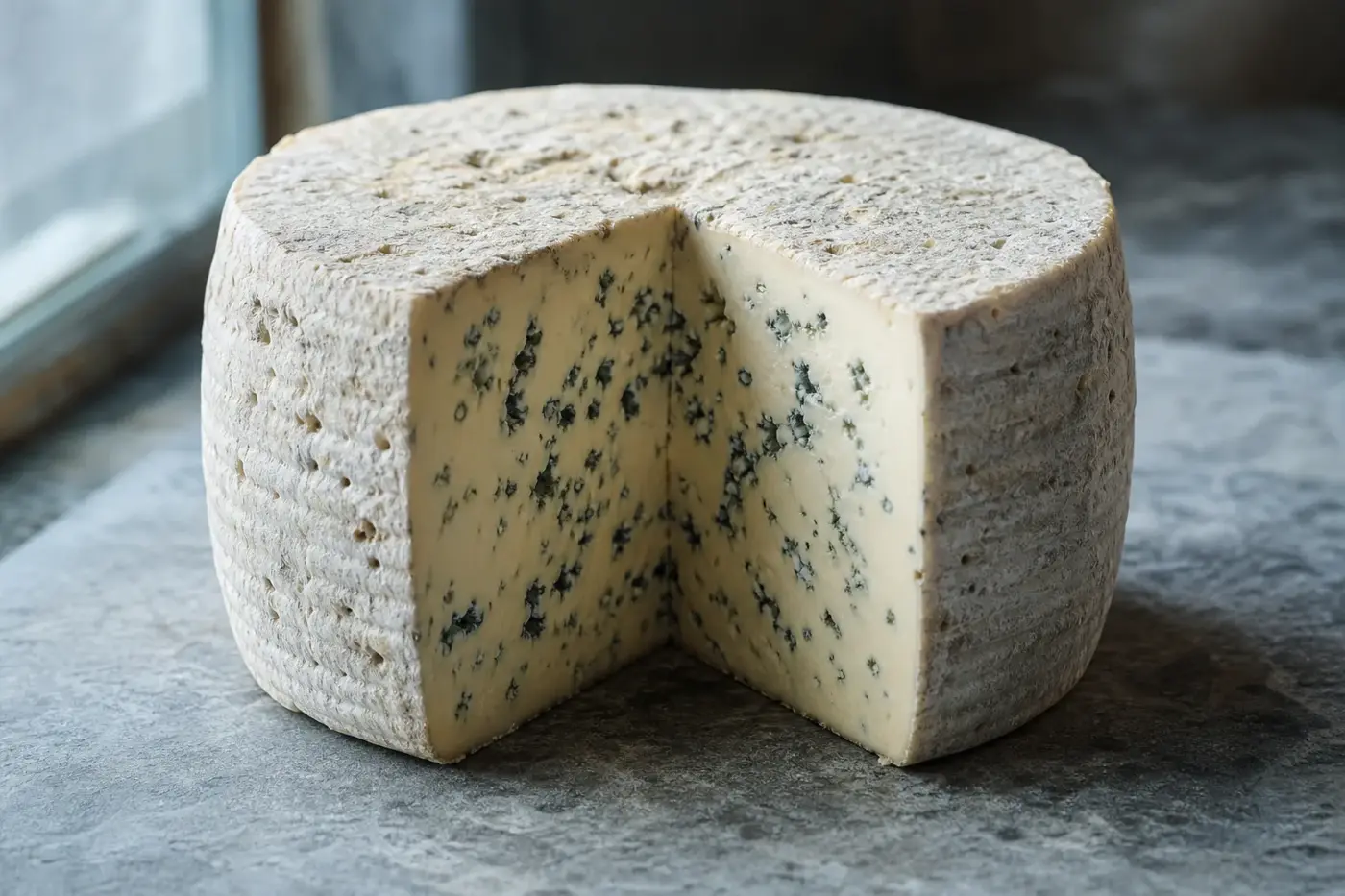
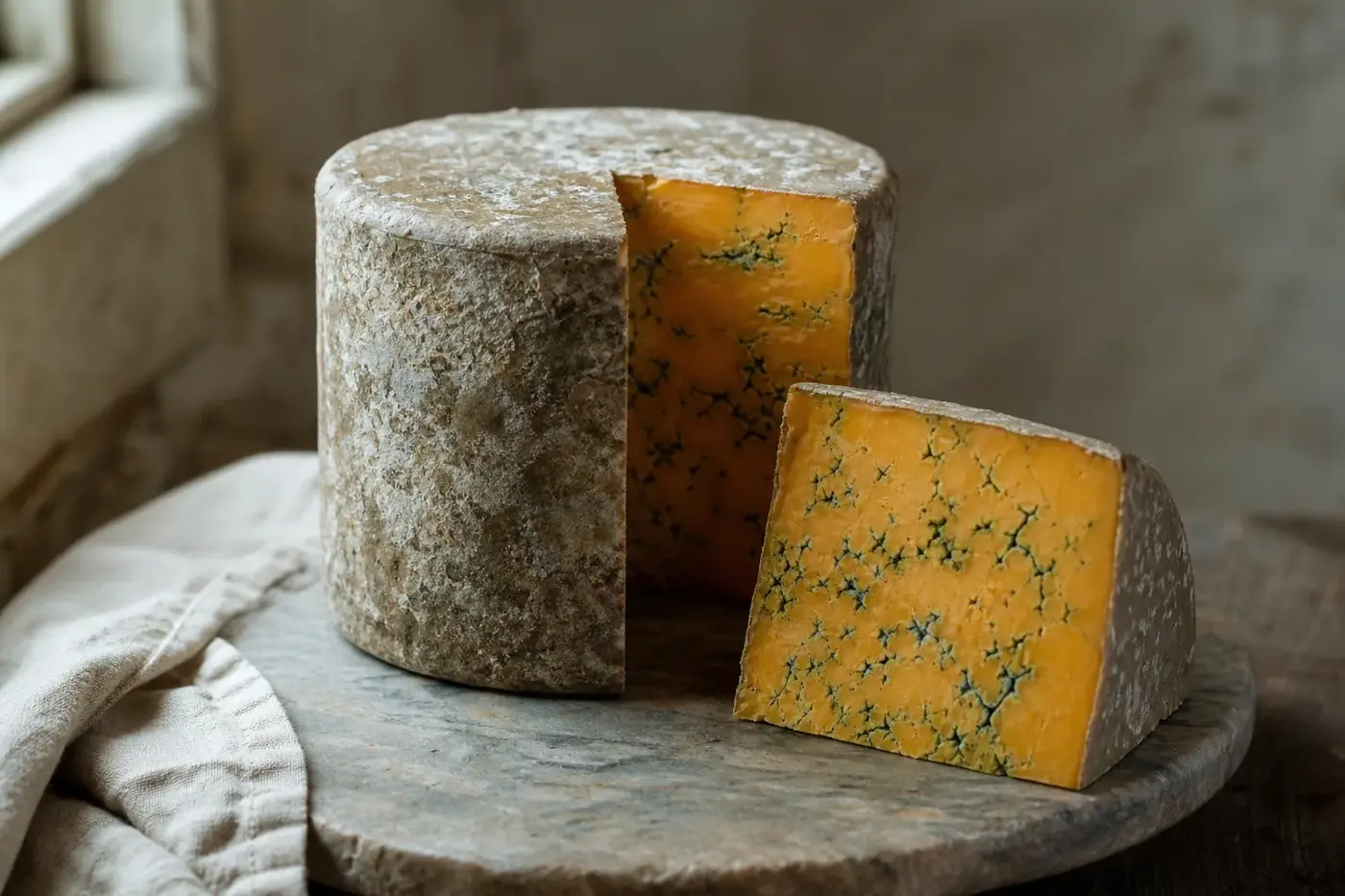
In the maker’s photographs, blue-green patches and branching streaks spread across an ivory to pale yellow interior. Small openings sit between them, giving the cut face a marbled look rather than an even wash of blue. Step back to the whole cheese and you see a round, upright wheel with a pale, textured exterior. [4]
Look closer at the whole-wheel photograph and you can pick out shallow horizontal impressions and scattered small holes. The wedge reveals smooth, pale paste, the cheesemaking term for the interior, broken by darker blue pockets. Alongside the label and storage instructions, these details give you useful reference points when looking at a cut piece. [4]
Give the outside and the cut face a moment each. One shows you the cheese’s form; the other reveals how unevenly its pale and blue areas are distributed. When sharing a wedge, cut across the face rather than taking one corner, so everyone gets both.
Meet the family dairy in the northern Highlands
Highland Fine Cheeses began as a small family dairy making Crowdie, a fresh Scottish cheese. Today, you will find Crowdie and Caboc in its range alongside soft mould ripened cheeses and blues. Strathdon Blue’s own beginnings remain an open part of the story. [3]
The company gives its address as Blarliath Farm on Shore Road in Tain, in the Ross and Cromarty area of the northern Highlands. If you want to trace a particular cheese, its maker and production address are your starting points. [3]
Most of the company’s milk comes from Rootfield Farm on the Black Isle, according to Highland Fine Cheeses. Its FAQ says the entire range uses pasteurised cow’s milk. That sourcing information describes the dairy’s supply; the cheese’s own label identifies the particular product in your hands. [2][3]
Planning a vegetarian board? Start here
Strathdon Blue uses pasteurised milk, as both the maker’s general FAQ and its production account explain. Rennet sets that milk into a gel, which is cut and drained to separate curd from liquid whey. For a closer look at the different coagulants, try rennet explained. [2][6]
For a vegetarian table, ask for the current ingredient declaration and an explicit suitability statement for the cheese being sold. Make that your first step, before planning the rest of the board. Then you can choose your bread, accompaniments and other cheeses together.
Follow the milk, curd and blue
That fudgy texture begins with decisions in the dairy. Relatively large pieces of curd help preserve moisture: the maker adds acidifying cultures to pasteurised milk, follows with rennet, then cuts and stirs the curd before draining and moulding it. Salt is rubbed onto the surface. Setting the milk, removing whey and retaining moisture all help shape the texture you eventually taste. [1]
After around five days, Highland Fine Cheeses pierces the cheese to encourage the blue mould, Penicillium roqueforti, inside. Blue development can take 14 days. The maker’s production account then describes wrapping the cheese in aluminium foil and holding it at around 3 °C for two months. [1]
Curious about the rest of the transformation? Follow the journey from milk through curd and whey to ripening in how cheese is made.
Let the texture lead your tasting
Soft and juicy, with a fudgy mouthfeel: Highland Fine Cheeses’ tasting notes give texture as much attention as flavour. The finish balances salt with a steely blue character. You have rather more to explore here than “strong”, that hardworking word on so many cheeseboards. [5]
The product page offers another inviting detail: the maker likens the aroma to buttercream icing. Give your nose a moment with that before you take a bite. [1]
Start with a small piece of pale paste, then try one containing a visible blue pocket. Notice the texture of each, followed by the flavour left after swallowing. The maker’s general tasting guide takes the same useful route: appearance, aroma, texture and flavour, before accompaniments join in. [6]
Fancy a comparison with Stilton? Begin with the maker’s description of Strathdon Blue: soft and fudgy, with a salty, steely blue finish. [5] Put small pieces on separate plates, then compare their texture, blue veining and lingering flavour.
Give every slice its share of blue
Start with a small wedge, plain bread and one fruit accompaniment, leaving yourself room to taste the cheese alone. Remove the wrapping completely and use a clean knife. Cut across the wedge so each portion includes pale paste and veining, rather than giving one person the blue-rich end.
With a whole wheel, cut a wedge first, then divide it into manageable portions. You may find cutting easier on a separate plate. Transfer the portions to your board afterwards.
Ask the maker for current product information about whether you can eat the rind. Until you have that information, trim it away rather than eating it.
In Scotland, Food Standards Scotland advises keeping dairy foods covered on the upper shelves of the fridge, at a temperature below 5 °C. Use a thermometer and follow the cheese’s own storage instructions. Serve a smaller portion and leave the rest refrigerated. [8][9]
For England, Wales and Northern Ireland, published FSA guidance specifies a fridge temperature of 0 to 5 °C. Keep chilled food out for the shortest possible time, with a maximum of four hours. Treat that as a ceiling, not a target for warming cheese, and follow the pack’s date and after-opening instructions. [8]
For serving temperature, use the applicable agency and pack guidance above rather than a maker-specific figure. Put out a smaller portion and refrigerate the rest. For wrapping and fridge organisation, see how to store cheese at home.
Bring bread, pears and something to sip
Crusty bread and sliced pear make a simple starting combination for Strathdon Blue. Keep both plain for your first mouthful, then decide whether you want more sweetness. A little dried fig offers an alternative to a separate preserve. The maker’s general suggestions also include crackers, apples and grapes, alongside crusty bread, pears and dried figs. [6]
Sweetness against saltiness is the idea behind Highland Fine Cheeses’ wine recommendation. Its April 2025 pairing article, produced with wine merchant Corney & Barrow, recommends a sweet Austrian Trockenbeerenauslese for Strathdon Blue. Bear in mind that the producer and merchant both have a commercial interest in the pairing. [5]
For an alcohol-free option, try pear juice diluted with still or sparkling water, or simply water with fresh fruit alongside. Diluting the juice lets you adjust the sweetness while exploring that same sweet accompaniment idea. Keep your first comparison simple: taste the cheese, take a sip and decide which combination you prefer.
Alcoholic pairings are for adults of legal drinking age; keep any serving small. People who are pregnant, driving, taking medicines that interact with alcohol or recovering from alcohol dependence should not drink. Consult the NHS or the equivalent national authority for current advice, and explore wider pairing principles in cheese and wine pairing.
Find your next cheese clue
- How to Tell Cheese Styles Apart: Milk, Rind, Texture and Method: compare Strathdon Blue’s rind and interior with other cheese families.
- How to Read a Cheese Label: find the milk treatment, ingredient declaration and storage instructions on the pack you have bought.
General information only, not medical advice: follow the official guidance where you live.
Questions people ask
What does Strathdon Blue taste like?
Highland Fine Cheeses describes it as soft and juicy, with a fudgy mouthfeel. Its finish balances salt with a steely blue character.
Where does Strathdon Blue come from?
It is a Scottish cheese made by Highland Fine Cheeses, whose address is Blarliath Farm in Tain. The production site has not been verified.
Is Strathdon Blue suitable for vegetarians?
Its vegetarian suitability has not been verified. The cheese is made with rennet, but the type has not been verified.
Can you eat the rind of Strathdon Blue?
The rind’s edibility has not been verified with the maker. The page recommends checking current product information and trimming the rind away until then.
How should Strathdon Blue be stored?
In Scotland, Food Standards Scotland advises keeping dairy foods covered on the upper shelves of the fridge, below 5 °C. For England, Wales and Northern Ireland, the Food Standards Agency specifies a fridge temperature of 0 to 5 °C. Check the relevant agency’s current guidance and follow the cheese’s own storage instructions.
Sources
[1] Highland Fine Cheeses, Strathdon Blue, undated product page and manufacturing account, retrieved November 2026. Sections consulted: product description, allergen information and “The Making of Strathdon Blue”.
[2] Highland Fine Cheeses, FAQ’s, undated, retrieved November 2026. The milk treatment answer states that the dairy uses pasteurised cow’s milk.
[3] Highland Fine Cheeses, About Us, undated, retrieved November 2026. Company history, product range, milk sourcing and Tain address.
[4] Highland Fine Cheeses, Strathdon Blue product photographs, undated, retrieved through the product page in November 2026. The photographs show the whole wheel, cut paste, veining and exterior. Consultation establishes appearance only; reproduction requires permission.
[5] Highland Fine Cheeses, 7 Perfect Pairing Wines for Our Highland Fine Cheeses!, 22 April 2025. Strathdon Blue tasting description and wine recommendation developed with Corney & Barrow.
[6] Highland Fine Cheeses, Artisan Cheese: Guide to Craftsmanship, Flavours, and Pairings, 27 February 2025. Sections consulted: curd formation, tasting sequence and accompaniment suggestions. Its general historical and environmental assertions were not used.
[7] Highland Fine Cheeses, Awards, undated, retrieved November 2026. Strathdon Blue entries under Global Cheese Awards and Royal Highland Show.
[8] Food Standards Agency, How to chill, freeze and defrost food safely, published 18 December 2017, retrieved November 2026. Guidance expressly applies to England, Northern Ireland and Wales.
[9] Food Standards Scotland, Storing Food Safely, undated interactive guidance, retrieved November 2026. Dairy placement, covered storage and fridge temperature.
[10] Food Standards Agency, Alerts, live index retrieved November 2026; Food Standards Scotland, News, live index retrieved November 2026. These checks were preliminary; the recall verification limitation is recorded below.
This piece was researched from the maker’s published product information, photographs and dated articles, with storage advice checked against the relevant UK food agencies.
Last checked: November 2026
Last checked November 2026.
The editors suggest you read next
Shropshire Blue
Cut into Shropshire Blue and you get quite a colour scheme: orange crossed by blue-green veins.