Fourme d'Ambert
Long needles slip through a tall cylinder of Fourme d'Ambert, opening little airways for the blue mould inside.
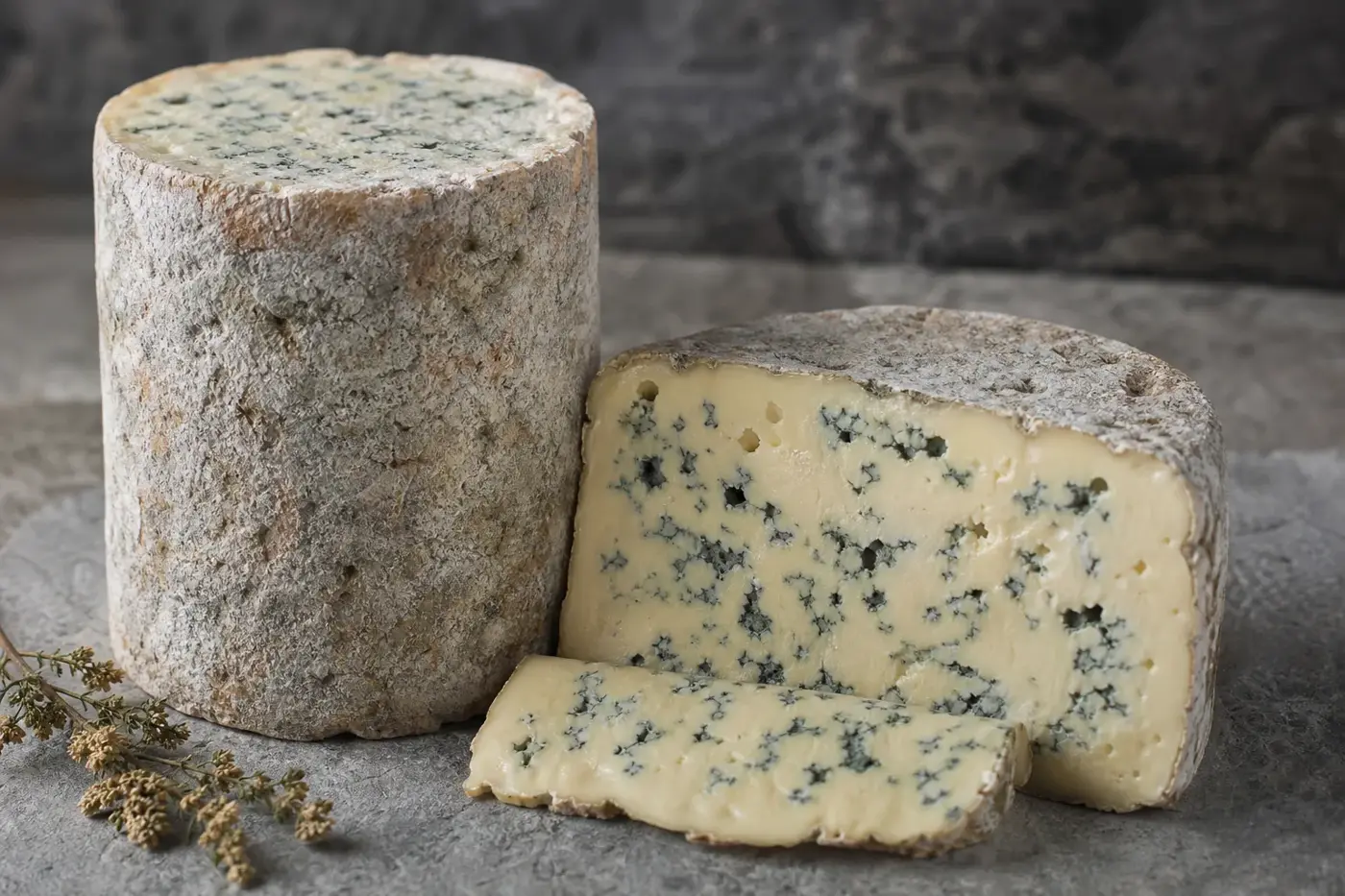
Long needles slip through a tall cylinder of Fourme d'Ambert, opening little airways for the blue mould inside. Cut through its grey-blue natural rind and the reward is ivory paste threaded with blue: supple, smooth and gentle on your tongue. This is a cheese with a surprisingly elaborate breathing arrangement. [1,2,5]
In each piece, you taste something of central France's cattle-farming uplands. You also taste painstaking dairy work: tiny spaces between the curds, careful piercing and patient maturation. None of that character happens by accident. [1,2,5]
| What to know | The details |
|---|---|
| Name to look for | Fourme d'Ambert. [4] |
| Kind of cheese | Cow's milk blue cheese. [5] |
| Registration authority | Great Britain: Defra, PDO register. [4] |
| Great Britain status | Registered PDO; registration dated 31 December 2020; status as of November 2026. [4] |
| Where it's made | Defined area in Puy-de-Dôme, Cantal and Loire, France. [1] |
| Milk | Cow's milk; raw or pasteurised. [5] |
| What sets the curd | Rennet; animal origin for every product: unconfirmed. [2] |
| Typical size | About 19 cm high, 13 cm across and 2 kg. [5] |
| Time to mature | Industry guidance: at least 28 days; current legal minimum: unconfirmed. [2] |
| UK pregnancy guidance | NHS advice on cheese in pregnancy, November 2026. [13] |
Follow Fourme d'Ambert into the uplands
Look beyond Ambert itself and the cheese's home opens out across the Massif Central, particularly the Auvergne uplands and the Monts du Forez. France's agriculture ministry describes its territory as the mountain area of Puy-de-Dôme and adjoining parts of Cantal and Loire. You're looking at a regional cheese, not one that must be made within the town. [1,6]
Those uplands do more than pose for the scenery. The interprofessional body describes grass-based milk production, with cattle grazing for at least 150 days annually and winter forage coming from the appellation area. Back in the dairy, keeping the curd open, avoiding pressing and managing maturation all help shape the finished texture. [2,14]
Mountain jasseries, dairy life and a good legend
Picture a building with three jobs: summer home, cowshed and cheesemaking space. That is how the industry's published history describes the mountain jasseries, tying Fourme d'Ambert to the rhythms of seasonal cattle farming. Production later moved towards dairies; according to the agriculture ministry, modern recognition began with French AOC status in 1972. [1]
Then comes the more colourful story, reaching back to Gaul. Druids supposedly used the cheese in ceremonies on Pierre-sur-Haute, although the French agriculture ministry explicitly calls that Gaulish origin a legend. You can enjoy the tale without asking it to carry the history: the jasseries offer firmer ground. [1,3]
What the protected name means for your cheese
Fourme d'Ambert's protected identity goes well beyond its tall cylindrical shape. It covers geographical origin, milk production and cheesemaking, with controls described by the interprofessional body stretching from animal feeding through manufacture to maturation. AOP, appellation d'origine protégée, is the French term for protected designation of origin, or PDO; protected names explained helps you distinguish origin protection from a brand name. [1,2,4]
At the counter, start with the full name on the label. Look for the maker, milk treatment and date information, or ask for those details. Defra records Fourme d'Ambert as a registered PDO in Great Britain: that establishes its British status, not protection in every country where it is sold. [4]
How little gaps make room for the blue
Blue needs air, and the dairy work prepares its route long before the needles arrive. Cultures including Penicillium roqueforti go into the milk, along with rennet, the coagulant that turns milk into curd. Cutting and stirring firm up the curd grains' surfaces, helping them retain small gaps when gathered in the mould. [2]
Drainage follows, without pressing but with repeated turning. The cheeses are salted, then pierced with long needles so oxygen can reach the interior. The industry's account places piercing from the fourth day after renneting and release under the name from the twenty-eighth day: the needles bring air, not mould, which has already gone in with the milk. [2]
The milk is always cow's milk, but its treatment varies. The Auvergne AOP cheese association describes both raw-milk and pasteurised-milk versions. Look at the particular cheese rather than guessing from the name; the guide to milk treatments explains the differences. [5]
Beneath the stony rind, a softer story
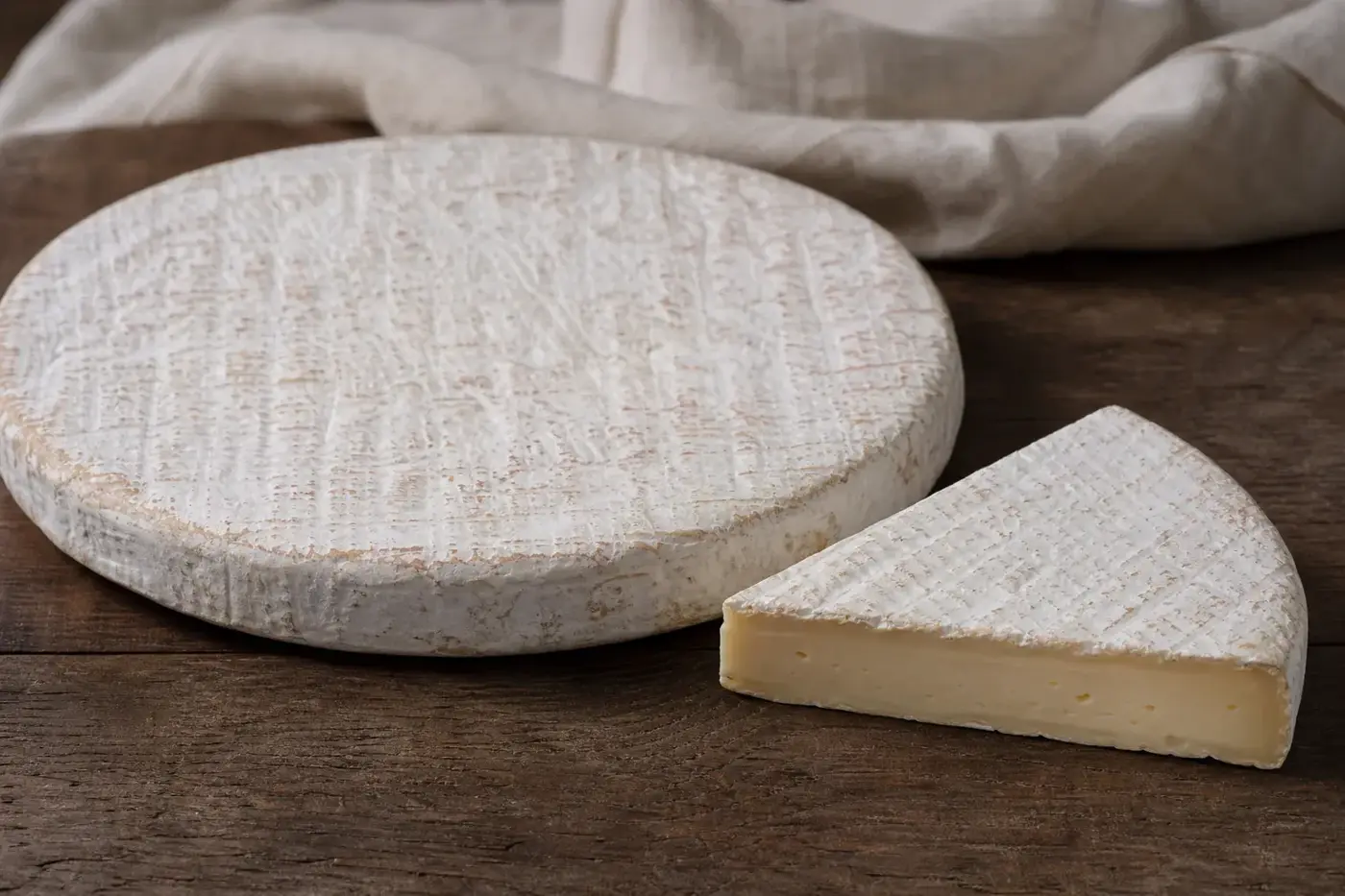
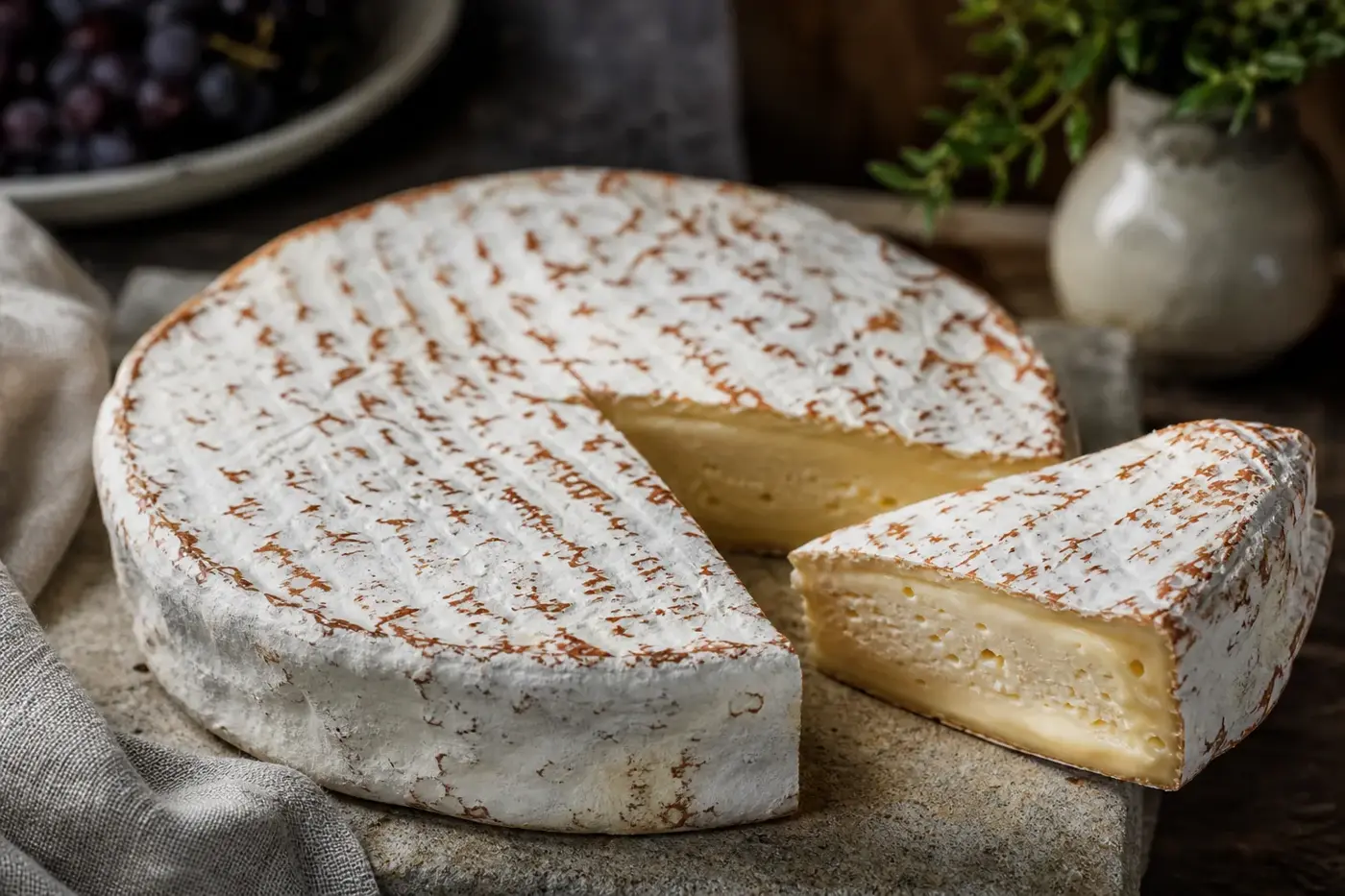
The outside looks weathered and stony; the cut face gives you something altogether softer. The Auvergne cheese association describes a grey-blue rind surrounding shiny ivory paste marked with blue mould. The interprofessional body's tasting notes add woodland aromas, a supple, smooth paste and rounded blue flavour: this is no dry, crumbly hard cheese. [5,6]
Tell your cheesemonger when you plan to eat it. Ask about younger and more developed pieces, then use their assessment of maturity to help you choose between producers and ages. Older does not automatically mean better, however persuasive your inner cheese collector becomes. [7]
Meet four French blues with different characters
A single scale of blue strength only gets you so far. Milk and handling tell you more about why these cheeses taste and feel different. These distinctions draw on the cheeses' industry bodies and the Livradois-Forez regional park, as of November 2026. [8,9,10]
| Cheese | Milk | What makes it different |
|---|---|---|
| Fourme d'Ambert | Cow | Tall cylinder; grey-blue rind and supple ivory paste. [5] |
| Roquefort | Raw sheep's milk | Sheep's milk distinguishes it from these three cow's milk blues. [8] |
| Bleu d'Auvergne | Cow | Distinguishing feature: unconfirmed. [9] |
| Fourme de Montbrison | Cow | Orange rind; curd salted in the mass and drained on wooden channels. [10] |
Give Fourme de Montbrison a closer look. Behind its similarly upright shape lies a different approach to salting and draining: the regional park describes conifer-wood drainage channels and an orange rind. Set beside Ambert's grey-blue exterior, the contrast is easy to spot. [5,10]
Choose your wedge and give it a moment
Ask to see the cut face before you choose. Look for the ivory paste and fairly regular blue veining described by the interprofessional body, and ask how to store your freshly cut portion. The cheese is customarily sold in rounds, which you can divide into wedges so everyone gets both paste and outer rind. [7]
For flavour, the industry suggests taking Fourme d'Ambert out of the fridge about an hour before tasting. Balance that with Food Standards Agency guidance for England, Wales and Northern Ireland: chilled food should stay out for the shortest possible time, with a maximum of four hours during preparation. Put out only what you expect to serve and leave the rest refrigerated. [7,11]
Start with a small wedge, leaving room for bread and fruit. You can always offer more. If several cheeses follow a meal, keep those first portions smaller than when Fourme d'Ambert takes the starring role in a simple lunch.
Bread, pears and room to experiment
Baguette, country bread and rye all feature among the interprofessional body's suggested accompaniments, alongside pears, fresh figs and dried fruit. Start simply: spread the supple paste against bread, or try pear for a juicy contrast. Taste the cheese first, then decide how much company you want to give it. [7]
If you're an adult of legal drinking age and choose wine, the body's suggestions include a rounded Chardonnay or a sweet white wine. Serve a small amount, or choose still or sparkling water with pear alongside for an alcohol-free option that keeps the woodland character in focus. For other approaches, explore the wine pairing guide. [6,7]
Your wedge needn't stay on the cheeseboard. The interprofessional body publishes a recipe collection; try crumbling a little over cooked vegetables or making it the blue component in a savoury tart. Taste before adding other salty ingredients, leaving the cheese to supply the main savoury note. [12]
Keep tomorrow's wedge in good shape
Keep your Fourme d'Ambert cool in its original wrapping, as the interprofessional body recommends. FSA guidance for England, Wales and Northern Ireland gives a precise domestic fridge range: between 0 and 5 °C (32 to 41 °F). Follow the pack's storage instructions and dates, including any directions for after opening. [7,11]
Buy a portion that fits your plans rather than relying on a general shelf life. Keep the wrapping and label together so you can still identify the maker, batch and date. The home storage guide covers the wider routine, while mould on cheese explains why intended blue veining and unexpected spoilage need different treatment.
This page summarises published guidance from the official sources it cites. It is not medical advice. Guidance differs between countries and changes over time, so check the current source for where you live, and ask your doctor, midwife, pharmacist or dietitian about your own circumstances.
Vegetarian or pregnant? Here's what to ask
For vegetarian suitability, ask the maker or retailer for a product-specific declaration and the coagulant's origin. Rennet appears in the industry's making description, but the word alone cannot tell you whether a particular cheese suits vegetarians. The rennet guide explains the terminology to look for. [2]
If you're pregnant in the UK, the NHS says pasteurised and unpasteurised soft blue-veined cheeses must be thoroughly cooked. It lists cheese cooked until steaming hot among foods you can eat. Consult the current NHS advice, November 2026, and ask your midwife or doctor how it applies to your circumstances. [13]
Questions people ask
Where is Fourme d'Ambert made?
It comes from a defined area in Puy de Dôme, Cantal and Loire in central France. The protected area extends beyond the town of Ambert.
What does Fourme d'Ambert taste like?
It has a rounded blue flavour and woodland aromas. Its ivory interior is supple and smooth, with blue veining beneath a grey blue rind.
Is Fourme d'Ambert vegetarian?
The industry's making description includes rennet, but that alone does not establish whether a particular cheese is suitable for vegetarians. Ask the maker or retailer for a product specific declaration and the origin of the coagulant.
How should I store Fourme d'Ambert?
The interprofessional body recommends keeping it cool in its original wrapping. The Food Standards Agency recommends a fridge temperature between 0 and 5 °C in England, Wales and Northern Ireland. Follow the pack's storage instructions and dates.
Can I eat Fourme d'Ambert during pregnancy?
The NHS says pasteurised and unpasteurised soft blue cheeses must be thoroughly cooked, and lists cheese cooked until steaming hot among foods that can be eaten. Consult the current NHS advice on foods to avoid in pregnancy and ask your midwife or doctor how it applies to you.
Sources
- French Ministry of Agriculture, La Fourme d'Ambert AOP, le fromage doux d'Auvergne, 6 May 2020. Geographical overview, designation history and identification of the Gaulish story as legend. Official article.
- Syndicat interprofessionnel de la Fourme d'Ambert, Sa fabrication, undated, retrieved November 2026. Industry account of feeding, curd handling, piercing and maturation. Making account.
- Syndicat interprofessionnel de la Fourme d'Ambert, Son histoire, undated, retrieved November 2026. Industry account of legends, jasseries and dairy development. History account.
- Department for Environment, Food & Rural Affairs, Fourme d'Ambert, register page published 4 January 2021, retrieved November 2026. Registered name, British PDO status and registration dates. British register entry.
- Association des fromages AOP d'Auvergne, AOP Fourme d'Ambert, undated, retrieved November 2026. Typical format, milk treatments, rind and paste. Cheese profile.
- Syndicat interprofessionnel de la Fourme d'Ambert, The cheese, undated, retrieved November 2026. Attributed description of aroma, texture and flavour. Product description.
- Syndicat interprofessionnel de la Fourme d'Ambert, Sa dégustation, undated, retrieved November 2026. Selection, cutting, wrapping and accompaniment recommendations. Tasting guidance.
- Confédération générale de Roquefort, Roquefort, website edition retrieved November 2026. Identification as a raw sheep's milk cheese. Industry website.
- Syndicat interprofessionnel régional du Bleu d'Auvergne, Bleu d'Auvergne PDO, website edition retrieved November 2026. Cow's milk and attributed intensity description. Industry website.
- Parc naturel régional Livradois-Forez, La Fourme de Montbrison, le plus délicat des bleus, undated, retrieved November 2026. Description of salting, wooden drainage channels and rind. Regional park account.
- Food Standards Agency, How to chill, freeze and defrost food safely, published 18 December 2017, current retrieved edition November 2026. Applies to England, Northern Ireland and Wales. Official guidance.
- Syndicat interprofessionnel de la Fourme d'Ambert, Recipes, collection retrieved November 2026. Commercially interested industry recipe resource. Recipe collection.
- NHS, Foods to avoid in pregnancy, current retrieved edition November 2026. Cheese categories and thorough-cooking advice. Official pregnancy guidance.
- Syndicat interprofessionnel de la Fourme d'Ambert, AOP Fourme d'Ambert: dossier de presse, 2020 hosted edition. Historical chronology and grass-based production account. Press dossier.
This piece was researched from official government records and guidance, alongside attributed cheese-industry and regional accounts, without a site tasting or recipe test.
Last checked: November 2026
Last checked November 2026.
The editors suggest you read next