Waterloo
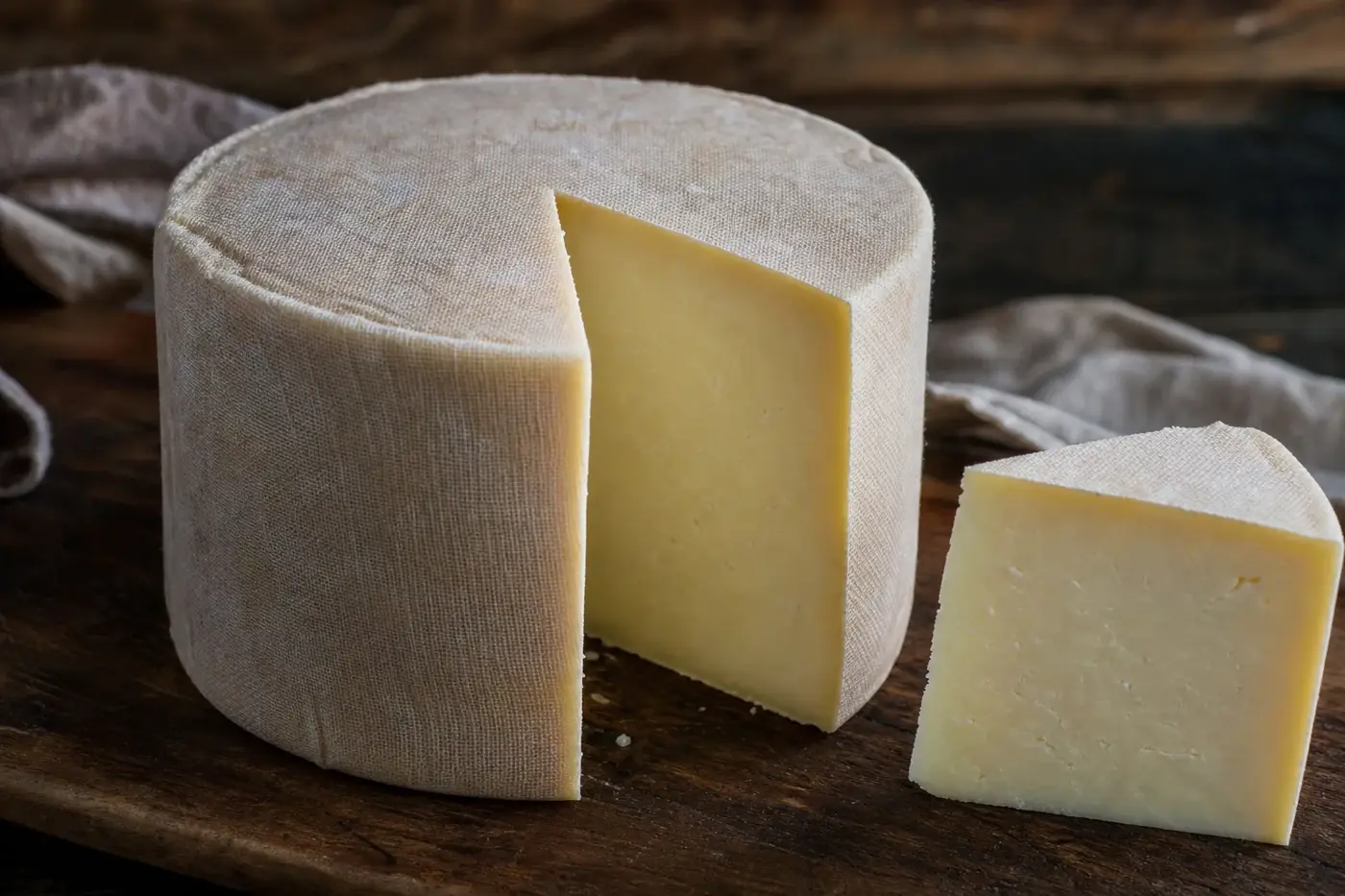
Cut through Waterloo’s white rind and there it is: a golden centre, growing softer as the cheese ripens.
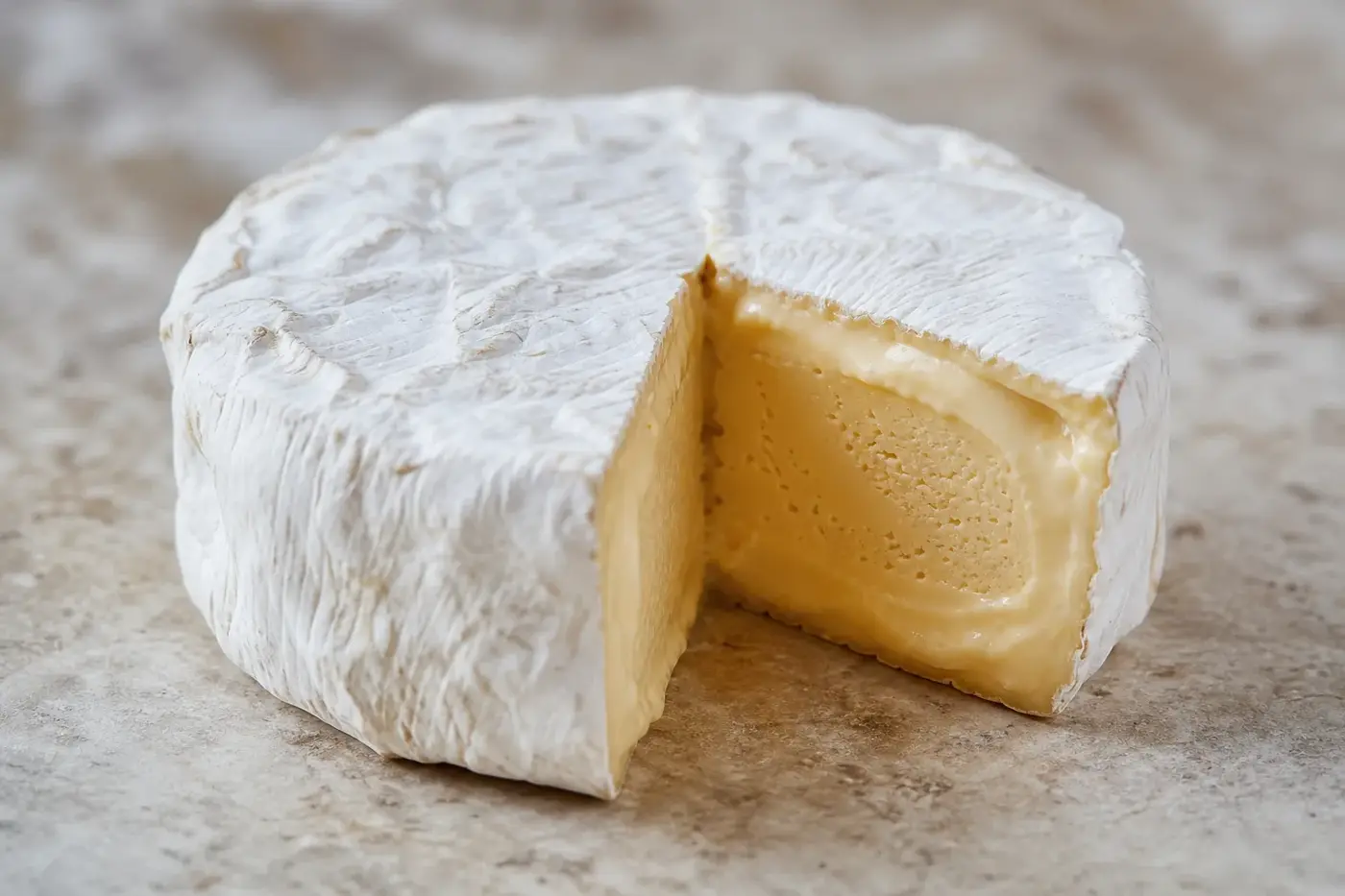
Cut through Waterloo’s white rind and there it is: a golden centre, growing softer as the cheese ripens. That mellow character begins in the vat at Village Maid Cheese in Riseley, Berkshire. Washing the curds gives this semi-soft cheese a little structural bite, while Guernsey cow’s milk sits at the heart of the maker’s development story. [1][2][7]
| Waterloo at a glance | Your useful details |
|---|---|
| Maker and place | Village Maid Cheese Ltd, Riseley, Berkshire, England. [2][3] |
| Style | Semi-soft, washed-curd cheese with a white rind. [1][7] |
| Milk | Cow’s milk; the maker’s history identifies Guernsey milk. [2] |
| Current milk treatment | Not specified here |
| Coagulant | Vegetarian rennet, according to the maker. [1] |
| Sizes listed by the maker | 180 g, 350 g and 750 g; handmade weights vary. [1] |
| Typical maturation period | Not specified here |
| Maturation temperature and humidity | Not specified here |
| What you can expect | Golden paste; mild and milky when young, becoming softer and more mushroomy with ripeness, according to published cheesemonger tasting notes. [7] |
Before the white rind, a little water
Waterloo’s defining moment happens before its white coat appears. Village Maid removes some whey, the liquid separated from the solid curds, and replaces it with water. The maker connects this washed-curd method with gentler flavour and a slightly firmer texture. [1]
That small intervention sets Waterloo apart among Britain’s white-rinded soft cheeses. When you choose a piece, look beyond the surface and ask what is happening inside. A neat wedge and a considerably softened cheese offer different pleasures; cheesemongers describe Waterloo’s yielding outer paste and firmer centre as part of its appeal. [6]
From a Berkshire garden to the dairy
Village Maid began in 1986, in a garden outbuilding in Spencers Wood, near Reading. Its founder had worked at the National Institute for Research in Dairying in Shinfield, first in microbiology and then in the research dairy. Cheesemaking experiments and visits to other makers helped shape the business. [2]
In 1991, the dairy moved to Riseley. Its current published address is on Basingstoke Road, placing Waterloo firmly in Berkshire, not the Channel Islands suggested by the cattle’s name. Later extensions added maturing and packing space, giving the business room to develop its cheesemaking and its care of the finished cheeses. [2][3]
Before Waterloo came Wellington, a Guernsey-milk cheese made in connection with the Stratfield Saye estate. Village Maid tells Waterloo’s story alongside experiments with semi-soft washed-curd cheeses needing shorter maturation. You get a sequence rather than a precise launch date: Wellington first, then Waterloo taking its place. [2]
Follow that golden centre
Waterloo’s colour is more than a handsome contrast with its rind. Village Maid attributes the yellow to naturally occurring carotene in Guernsey milk, while cheesemongers note how strikingly it stands against the white surface. If you see the word “paste”, it simply means the body of the cheese beneath that surface. [1][6]
Colour catches your eye, but texture tells you more about ripeness. Ask whether the centre is still firm or has softened, and tell the seller how you plan to serve it. A sliceable wedge for bread and a softer cheese for sharing call for different choices, even with the same make.
Village Maid lists vegetarian rennet for Waterloo. This coagulant helps milk form a gel before it is cut into curds, a stage you can explore in how cheese is made. For the differences between raw, thermised and pasteurised milk, turn to milk treatments. [1]
What a wash does for the curds
Washing curds gives the cheesemaker a way to limit acid development. Replacing whey with water removes or dilutes some lactose, the milk sugar that starter bacteria ferment into lactic acid. That changes the material from which the finished cheese develops. [4]
Acidity does more than determine sharpness. It affects the cheese’s protein structure and the conditions for ripening. Alongside cultures, drainage, salting and temperature management, curd washing helps the cheesemaker steer that process. [4]
A University of Wisconsin study brings the importance of washing technique into focus. Researchers compared four washing treatments in Colby cheese, measuring lactose, lactic acid, calcium and physical properties. Results differed, including meltability: this was Colby, not Waterloo, but it shows how washing can materially change a cheese’s eventual texture. [5]
For Waterloo, Village Maid links the method with restrained acidity, mellow flavour and a little structural bite. If you want to understand what makes this cheese itself, the connection between making and eating tells you more than “Brie-like”. A white rind is not a full character reference. [1]
This page summarises published guidance from the official sources it cites. It is not medical advice. Guidance differs between countries and changes over time, so check the current source for where you live, and ask your doctor, midwife, pharmacist or dietitian about your own circumstances.
Into the mould, on with the white coat
After washing, Waterloo’s curd is drained and scooped into lined moulds, according to a published dairy visit by L’Affinage du Fromage. The account describes stacked moulds moving through different positions as whey drained away. Brining followed the next day, then a move to a maturation room. [8]
The mould gives the cheese its shape; the white coat follows later. In a separate visit account, The Cheese Lady describes Waterloo at different stages in the maturing room, with surfaces ranging from comparatively bare to fluffy white. Together, these visits take you from shaping through to rind development. [8][9]
At the counter, ask about the particular cheese, not just its size. Tell the seller when you want to eat it and whether you prefer a firmer centre or softer paste. Their assessment of that piece is more useful than a blanket instruction to leave it longer.
Taste from the centre to the rind
Young Waterloo is mild and milky, with a centre that softens as it ripens, according to Cheeses of Muswell Hill. Its published tasting notes move towards butter, grass and gentle mushroom character. Think of youthful milkiness gradually giving way to fuller flavour. [7]
Cheese Etc., which collects Waterloo from the dairy, describes firm centres in newly collected cheeses. Softening travels from the outside towards the middle. In ripe examples, its tasting account finds a custard-like texture, with savoury and mushroom notes towards the rind. [6]
Try a small piece from the centre, then one that includes the rind. Notice resistance before flavour: does the centre hold its shape, and how does the outer paste differ? Milkiness, grass and mushroom are prompts, not an entrance exam for the cheese counter.
Smell the cut surface and rind separately before tasting, too. Write down what you notice, even if the aroma or flavour seems quiet beside those published descriptions. Your own short, specific observation captures the cheese better than borrowed tasting vocabulary.
Waterloo and Brie: look past the white coats
Brie gives you a useful visual reference, but Village Maid’s comparison stresses the differences. The maker describes Waterloo as less acidic, milder and slightly firmer than traditional Brie or Camembert. The washed-curd step is central to that distinction. [1]
Choosing between them? Focus on texture and flavour at the moment you intend to eat them, and ask about each cheese separately. Similar white rinds need not mean similar makes; the guide to Brie takes you further into that neighbouring subject.
Leave a little space on the plate
Start with Waterloo, plain bread and water. Taste before reaching for anything sweet, pickled or strongly seasoned. Give the centre and rind room to register separately, then decide what you would like beside your next piece.
Cheese Etc. suggests sourdough. [6] Another simple option is water to drink and a slice of fresh apple on the side. Keep the apple separate and alternate bites rather than covering the cheese, so you get a clear impression of its texture and flavour.
For current advice on keeping chilled food out during preparation and serving, consult the Food Standards Agency guidance for England, Wales and Northern Ireland. [10] Put out the portion you expect to eat rather than your whole supply.
Planning a larger board? Use cheese and wine pairing to choose contrasting accompaniments. Every cheese need not arrive with an entourage of competing additions.
Keep it cool and choose your moment
For home storage, FSA guidance advises a fridge temperature between 0 and 5 °C, measured with a thermometer. Follow the storage instructions and dates on the packaging. This guidance applies to England, Wales and Northern Ireland; the reference point here is November 2026. [10]
Keep the wrapper and its information with your cheese. If you buy a cut piece, ask the seller about storage instructions and its intended eating window before leaving. That conversation matters especially when you are buying Waterloo for a particular meal rather than eating it straight away.
Let the occasion guide your choice of ripeness. Ask for a firmer piece if you want distinct slices, or discuss a softer example if that is your favourite texture. The softening from outside to centre described by Cheese Etc. makes this more useful than simply requesting the oldest cheese. [6]
Want practical help with wrapping, refrigerator organisation and handling cut cheese? Continue with storing cheese at home.
Questions people ask
Is Waterloo cheese suitable for vegetarians?
Village Maid lists vegetarian rennet for Waterloo. Rennet helps milk form a gel before it is cut into curds.
Is Waterloo made with pasteurised milk?
The current milk treatment is not verified on the page. The maker’s history identifies Guernsey cow’s milk.
What does Waterloo cheese taste like?
Young Waterloo is described as mild and milky. As it ripens, its flavour develops towards butter, grass and gentle mushroom, while the centre softens.
How is Waterloo different from Brie?
Village Maid describes Waterloo as less acidic, milder and slightly firmer than traditional Brie or Camembert. Its washed curds are central to that distinction.
How should Waterloo be stored?
The Food Standards Agency advises a fridge temperature between 0 and 5 °C, checked with a thermometer, and says to follow the storage instructions and dates on the packaging. See its guidance for England, Wales and Northern Ireland.
Sources
- Village Maid Cheese, Waterloo, current undated product page, retrieved November 2026. Maker’s product information.
- Village Maid Cheese, Our Story, current undated company history, retrieved November 2026. Maker’s history.
- Village Maid Cheese, Contact, current undated address page, retrieved November 2026. Dairy address.
- American Society for Microbiology, Mesophilic and Thermophilic Cultures Used in Traditional Cheesemaking, Microbiology Spectrum, 2013, DOI 10.1128/microbiolspec.CM-0004-2012. Published review.
- American Dairy Science Association, Effect of different curd-washing methods on the insoluble Ca content and rheological properties of Colby cheese during ripening, Journal of Dairy Science 94(6), 2011, pages 2692 to 2700. Abstract retrieved through the US National Library of Medicine. Study record and abstract.
- Cheese Etc., The Pangbourne Cheese Shop, Waterloo Cheese, current undated product page, including its own tasting observations and pairing preferences, retrieved November 2026. Commercial retailer of the cheese. Cheesemonger’s account.
- Cheeses of Muswell Hill, Waterloo, current undated product page with attributed tasting notes, retrieved November 2026. Commercial retailer of the cheese. Published tasting notes.
- L’Affinage du Fromage, Village Maid Cheese, part 2 ‘The Visit’, undated dairy-visit account, retrieved November 2026. Commercial cheesemonger describing its own visit. Observed production stages.
- The Cheese Lady, Behind the Cheese: My Visit to Village Maid Cheese, undated dairy-visit account, retrieved November 2026. Commercial cheesemonger describing its own visit. Observed rind development.
- Food Standards Agency, How to chill, freeze and defrost food safely, published 18 December 2017, current retrieved text, November 2026; applies to England, Northern Ireland and Wales. Official refrigeration and handling guidance.
- Food Standards Agency, Alerts, live official recall and allergy-alert index, accessed November 2026. Official alert index.
Researched from the maker’s published records, first-hand trade visit accounts, attributed cheesemonger tasting notes, published dairy science and official food-handling guidance.
Last checked: November 2026
Last checked November 2026.
The editors suggest you read next
West Country Farmhouse Cheddar Cheese
Large pieces of curd turn and stack under the cheesemaker’s hands.