Why Are Some Cheeses Waxed or Coated?
A glossy wheel catches your eye at the cheese counter.
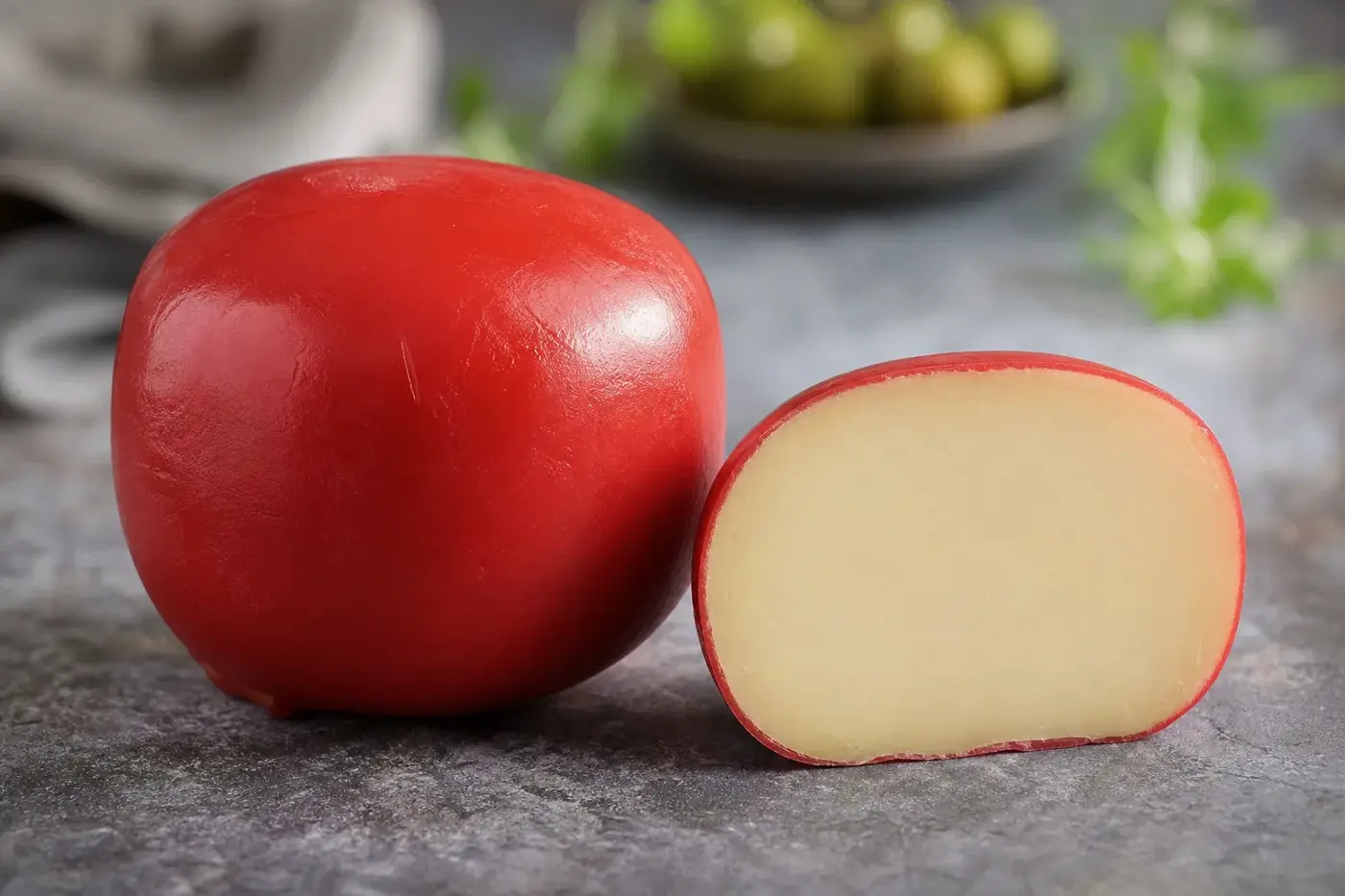
A glossy wheel catches your eye at the cheese counter. That wax may be its second covering: after brining and drying, a maker can apply a thin plastic film that lets more moisture escape. Wax follows when the cheese reaches its target moisture, while ripening carries on underneath. There is more going on beneath that polished appearance than you might suspect.[1]
A glossy coat with work to do
For a cheesemaker, moisture is a delicate balancing act. Let too much escape and the outside grows increasingly dry. Keep more in and maturation follows a different course, as the covering moderates exchange with the ripening room and helps shape the texture.[1][4]
That coat also protects against abrasion and contamination during handling, transport and distribution. Dairy industry guidance from EDA and EUCOLAIT makes a useful distinction here. Coatings applied during ripening regulate moisture; those added afterwards chiefly protect the cheese and improve its appearance.[5]
Two equally glossy wheels may have led quite different lives before you meet them at the counter. Their coverings can protect the surface and help manage unwanted mould while the cheese matures inside.[1] For the earlier chapters, turn to how cheese is made.
First a brine bath, then time to dry
Before a cheese gets dressed, its surface needs preparing. After brining, excess brine must come off, and the cheese must dry sufficiently for its chosen treatment. For plastic coating, the University of Wisconsin's Center for Dairy Research specifies a clean, dry surface without cracks.[1]
The centre describes coating one face, letting it dry, then turning the cheese to treat the other. It also explains the layered coverings you might encounter. A plastic coat allows further moisture reduction; wax follows when the cheese reaches its target moisture.[1]
There is no single timetable for getting dressed. The dairy science chapter Gouda and Related Cheeses describes waxing matured cheese to limit further drying. It also records some baby Gouda and baby Edam cheeses being waxed early, after brief drying following brining. One waiting period would not suit both approaches.[2]
Wax, plastic and oil: different coats, different jobs
Wax usually forms a continuous outer covering chosen to retain moisture. Liquid plastic coating starts as a dispersion and dries into a thin film. Both can give you that smooth, coloured finish, but their transmission of water vapour and gases can differ substantially.[3][5]
The American Cheese Society describes paraffin as permeable to carbon dioxide. Flexible wax overlays give particularly low water transmission, while its guidance distinguishes breathable plastics from barrier plastics. What gets through depends on the formulation and coating system. Neither wax seals everything nor plastic always breathes gives you the full picture.[3]
Wax manufacturer Paramelt offers an example from its own vegetable-based coating range. It describes these products as allowing some gas passage while limiting moisture loss. That tells you about those particular formulations, not every vegetable wax.[6]
Oil has a history here too. Gouda and Related Cheeses records the practice of rubbing cheese with linseed oil, which hardened into a coat that reduced evaporation and helped keep the rind supple. This was a particular historical treatment, not a method for you to try at home.[2]
Under that quiet surface, ripening carries on
The outside may look settled, but the chemistry inside keeps moving. A coating changes the cheese's surroundings without stopping enzymes from milk, rennet and cultures breaking down proteins during maturation. This process, called proteolysis, changes the protein structure and helps develop texture and flavour.[4]
At the surface, the maker may want quite the opposite of a mould-ripened cheese. An intact coating helps hinder unwanted mould, sometimes with support from an antifungal ingredient. Oxygen exchange matters too: deliberately surface-mould-ripened cheeses need air, while internally ripened hard cheeses can mature in barrier packaging.[3]
Moisture helps determine how different the edge feels from the centre. The Gouda chapter describes a drying rind becoming tough as protein breakdown there slows markedly. Holding moisture in, releasing it gradually and encouraging a living surface are different routes towards a cheese's finished character.[2]
The ripening room still has a say. Tetra Pak's Dairy Processing Handbook identifies room temperature and humidity as controls over ripening, weight loss, rind formation and surface flora. To understand what a covering does, you need to consider the conditions around it too.[4]
Rind or coating? Get to know the layers
A cheese can wear both, but they are not the same thing. The rind is the cheese's outer layer and may include surface microorganisms; a coating is a separate material applied to it. EDA and EUCOLAIT distinguish these layers in their technical guidance, including a developed cheese surface beneath a protective film.[5]
A washed rind takes another route. Washing supports the surface organisms that help develop the cheese's character, with their enzymes acting inwardly during ripening. A coloured film might look similar, but that resemblance does not make it the work of those organisms.[1][3]
Cloth binding uses fabric rather than a continuous wax film. The American Cheese Society places bandage-wrapped cheeses among aged hard styles that can subsequently be vacuum packed.[3]
For more on how the outside relates to what you find within, explore how to tell cheese styles apart.
Gouda and Edam: look beyond the colour
You will recognise Gouda and Edam among coated cheeses, but neither has one standard covering. Gouda-type cheeses can ripen under a moisture-permeable coating or in low-permeability plastic bags. Some small Gouda and Edam cheeses receive wax. The process tells you more than the familiar wheel shape.[2]
Colour is a less reliable storyteller. Paramelt supplies cheese wax in a range of colours and offers bespoke colouring, allowing producers to use it for presentation or product coding. You will find more useful clues in the name and maturity information on the label.[6]
Treat a stated age as the maker's information for that cheese. Red, yellow and black do not form a universal maturity scale, however much your inner cheese detective might fancy the shortcut.[6]
The Gouda guide explores the cheese itself. For help choosing at the counter, turn to how to read a cheese label.
Food contact is not permission to eat
When you unwrap a wheel, keep this distinction in mind: suitable for contact with food does not necessarily mean suitable to eat. In Great Britain, food-contact materials must meet the framework requirements described by Food Standards Scotland. Article 3 of assimilated Regulation (EC) No 1935/2004 requires manufacture under good manufacturing practice.[7][8]
In normal or foreseeable use, those materials must not transfer constituents in quantities that endanger health. Nor may they unacceptably change the food's composition or impair its sensory characteristics. These requirements concern intended contact with food, not permission to eat the covering.[7][8]
Food Standards Scotland includes packaging among food-contact materials. It identifies additional rules for categories including plastic monomers and additives, active materials, recycled plastic processes and regenerated cellulose film. The substance matters: coating tells you its job, while composition determines which requirements need checking.[7][8]
For a maker choosing a system, the supplier's documentation must cover that material and intended use, alongside the applicable legislation. Colour cannot provide that information. Neither can a resemblance to the covering on another cheese.[7][8]
A physical barrier and an antifungal ingredient have different jobs too. Plastic film provides the barrier; an antifungal acts against mould or yeast. The American Cheese Society identifies natamycin as a mould inhibitor used in some plastic cheese coatings.[3]
For your particular cheese, find out whether it has a surface treatment and whether the covering must come off. Check what the maker declares about the finished product, using the label or asking the maker. Coloured coatings need not share a recipe.
What is your cheese wearing?
Not all cheese waxes have the same ingredients. Paramelt describes conventional versions made from refined mineral hydrocarbon waxes, alongside a separate range based on vegetable oils. These describe distinct formulations, not interchangeable ingredient lists.[6]
If vegetarian suitability matters to you, ask about the complete product, including its surface treatment. Coating colour cannot answer that question. The milk-clotting ingredient matters too: rennet can come from animals or other sources, independently of the cheese's outside finish.[4][6]
Before your first bite, remove the covering
Remove wax, plastic film and cloth before eating the cheese. They are protective coverings, not the cheese itself. The Center for Dairy Research specifically advises against eating the dried plastic coating it describes, despite its suitability for food contact.[1][5]
Follow the maker's instructions for removing the covering and dealing with any rind underneath. Keep the product information so you can return to it when needed.[5]
Once you cut it, protect the open face
Your first cut exposes the paste, the cheese beneath the rind. Any remaining wax still covers only the original outside, not that newly opened face. Protect the cut face as well as the coated edge with suitable wrapping or a clean food container.[9][10]
- Let the pack guide your storage. For England, Wales and Northern Ireland, FSA guidance recommends a fridge between 0 and 5 °C, checked with a fridge thermometer. Dairy products are among the foods it says to refrigerate.[9]
- Keep the cut face covered. In the United States, Alabama Cooperative Extension's November 2026 guidance recommends moisture resistant wrapping for cheese. Reclose suitable original packaging or use appropriate food wrapping. Do not leave that cut surface exposed.[10]
- Give ready-to-eat cheese its own safe space. FSA guidance recommends covered containers, with raw meat and fish stored below ready-to-eat food. That arrangement helps prevent contamination from drips.[9]
- Keep the label and follow its instructions after opening. Wax cannot protect a newly cut face. Use the product's stated storage directions rather than giving every waxed cheese the same keeping time.[9]
For wrapping choices and fridge organisation, continue with how to store cheese at home. Unexpected surface growth needs a separate assessment, not an assumption that the coating explains it. See mould on cheese for the relevant official guidance.
General information only, not medical advice: follow the official guidance where you live.
Questions people ask
Why are some cheeses coated in wax?
A coating helps control how much moisture leaves the cheese, influencing its texture as it matures. It also protects the surface during handling and transport.
Can you eat cheese wax or plastic coating?
Remove wax, plastic film and cloth before eating the cheese. The Center for Dairy Research advises against eating the dried plastic coating it describes, even though it is suitable for food contact. Follow the maker's instructions for the covering and any rind beneath it.
What is the difference between a cheese rind and a coating?
A rind is the cheese's outer layer and may include surface microorganisms. A coating is a separate material applied to the cheese, so a wheel can have both.
Does the colour of cheese wax tell you how mature the cheese is?
Wax colour is not a universal maturity scale. A producer can use colour for presentation or product coding, so check the name and maturity information on the label instead.
How should you store waxed cheese once it has been cut?
The FSA advises following the pack's storage instructions and, in England, Wales and Northern Ireland, keeping the fridge between 0 and 5 °C. Wax covers only the original outside, so the cut face also needs protection. See the FSA's storage guidance and keep the product label for instructions after opening.
Sources
[1] University of Wisconsin Center for Dairy Research. Dairy Pipeline, volume 20, number 3, “Curd clinic”, 2008. Institutional technical explanation of plastic coating, drying, subsequent waxing and removal.
[2] Wageningen University & Research institutional repository. Gouda and Related Cheeses, chapter 33 in Cheese: Chemistry, Physics and Microbiology. Edition and publication year not verified in the retrieved record.
[3] American Cheese Society. Best Practices Guide for Cheesemakers, second edition, February 2017. Sections 6.6, 6.8.3 and 7.3.
[4] Tetra Pak. Dairy Processing Handbook, chapter 16, “Cheese”, online edition, revision date not displayed. A dairy equipment supplier's technical reference.
[5] European Dairy Association and EUCOLAIT. Guidance on Cheese as Raw Material in the Manufacture of Food Products, final version, 1 February 2018. Industry guidance, including coating definitions in section 4.1 and removal in section 5.4.1. Its operational scope is industrial further processing.
[6] Paramelt. Natural and colored cheese waxes, manufacturer documentation, publication date not displayed. Product composition, colour options and permeability claims are attributed to the supplier.
[7] Food Standards Scotland. Food contact materials, current online guidance, publication date not displayed. Great Britain framework and material-specific requirements.
[8] UK legislation publisher. Regulation (EC) No 1935/2004, Article 3, “General requirements”, assimilated text retrieved November 2026.
[9] Food Standards Agency. How to chill, freeze and defrost food safely, published 18 December 2017, current online text retrieved November 2026. Applies to England, Northern Ireland and Wales.
[10] Alabama Cooperative Extension System. Better-Safe-Than-Sorry Food Storage Charts, 21 August 2020. US extension guidance, including moisture-resistant wrapping for cheese.
This piece was researched through institutional dairy references, technical industry documentation, official food-contact legislation and published household storage guidance.
Last checked: November 2026
Last checked November 2026.
The editors suggest you read next
What Happens as Cheese Ripens?
Your knife slips through the rind and finds a supple band, beginning to flow around a still firm centre.