Wigmore
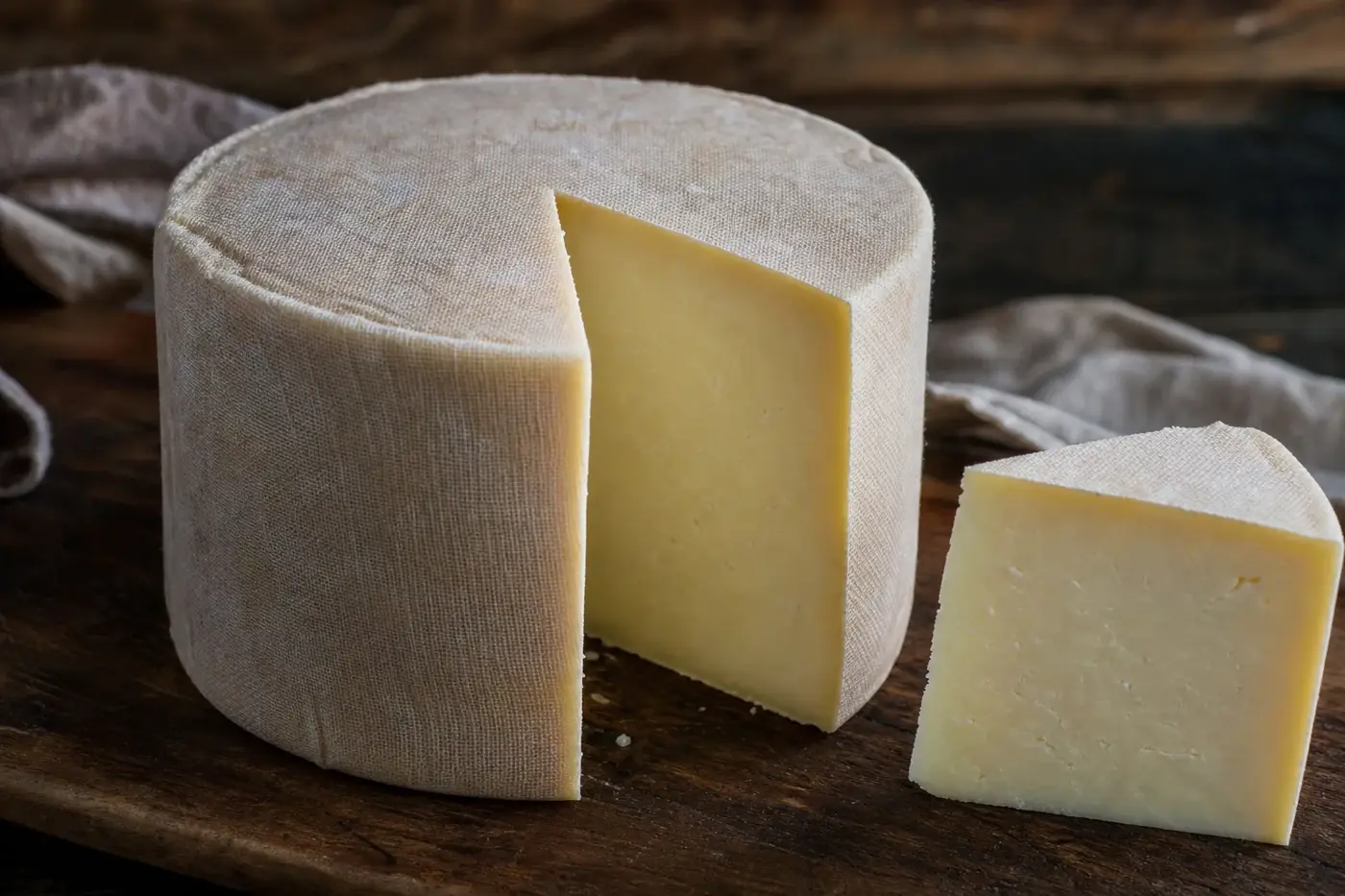
Your knife slips through Wigmore’s soft layer beneath the white rind, then meets a firmer, chalky centre.
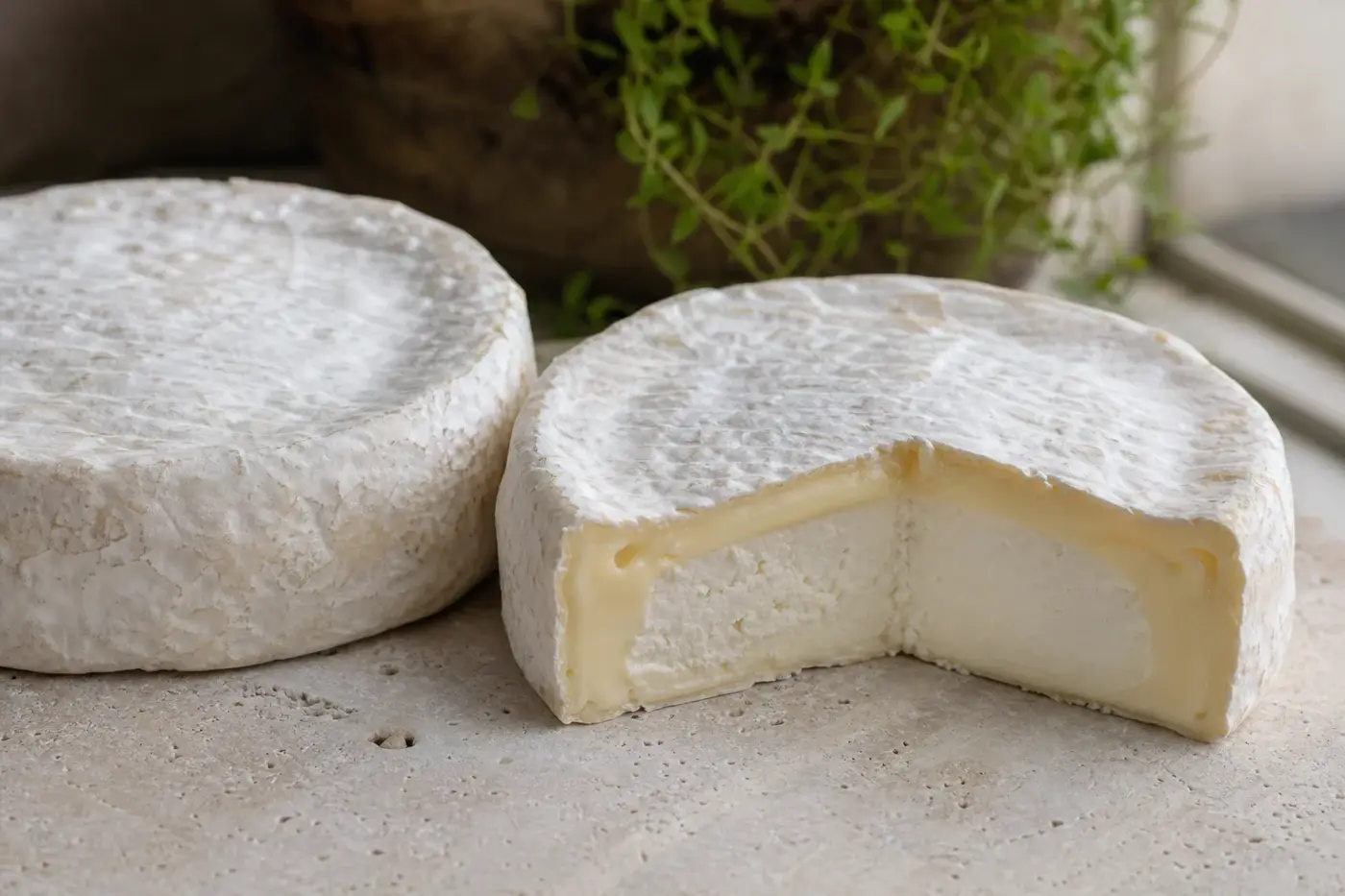
Your knife slips through Wigmore’s soft layer beneath the white rind, then meets a firmer, chalky centre. Taste it young for mild milkiness, or let age bring out its meaty, nutty side. Village Maid Cheese makes this semi-soft sheep’s milk cheese in Riseley, Berkshire, using a washed-curd method it credits with gentler acidity and a slightly firmer, fudgy texture. [1, 2, 4]
Get to know Wigmore at a glance
| What you want to know | Here’s the detail |
|---|---|
| Name | Wigmore [1] |
| Maker | Village Maid Cheese [1] |
| Made in | Riseley, Berkshire, England [3, 7] |
| Style | Semi-soft, washed-curd, white mould-ripened [1, 2, 4] |
| Milk | Pasteurised sheep’s milk [1] |
| Rennet | Vegetarian, as declared by the maker [1] |
| Maker’s sizes | 180 g, 350 g and 750 g [1] |
| Age when sold | Average of two months at Neal’s Yard Dairy [4] |
| Protection status | EU: Unconfirmed; Great Britain: Unconfirmed; Northern Ireland: Unconfirmed |
Production details: November 2026.
From a garden outbuilding to a Berkshire dairy
Village Maid’s story starts in a garden outbuilding at Spencers Wood, near Reading, in May 1986. Its founder had worked at the National Institute for Research in Dairying at Shinfield, moving from microbiology into cheesemaking in the experimental dairy. Research and hands-on cheesemaking were companions from the beginning. [2, 3]
Today, Village Maid describes itself as a second-generation cheesemaker in rural Riseley, where it moved in 1991. Wigmore appeared around that move, after Neal’s Yard Dairy encouraged the maker to develop a semi-soft sheep’s milk cheese alongside Spenwood, its established hard sheep’s milk cheese. Months of development gave the same milk another expression: a white rind and soft interior rather than a hard cheese’s structure. [2, 3]
The new dairy had a previous life. In the family’s 2024 interview, the Riseley building was described as a barn formerly used as a motorcycle workshop. Quite a change of occupants. The next generation joined the business in May 2017, continuing the family involvement Village Maid still emphasises. [3, 5]
You can place the dairy firmly in Berkshire, but that does not establish where every ingredient comes from. Village Maid says it works with local milk suppliers and names Heckfield Home Farm among them; its history links that farm to Guernsey cows and another cheese. The flock supplying Wigmore’s sheep’s milk is a separate question from where the cheese is made. [2, 3]
Start with the milk, keep an eye on the label
The maker’s current product information lists pasteurised ewe’s milk and vegetarian rennet. An ewe is an adult female sheep; rennet is the coagulant that sets milk into curd, the solid material cheese is made from. Whey is the liquid that separates out, and you can explore the differences between coagulants in rennet explained. [1]
If vegetarian suitability matters to your purchase, check the label on the cheese you receive. Anything unclear? Ask the seller for the current product details rather than relying on an older description.
A wash in the vat, not on the rind
Wigmore’s defining move happens before there is a rind for you to admire. Village Maid removes some whey from the vat and replaces it with water. The maker says this produces a less acidic cheese with a slightly firmer, fudgy texture, and describes the flavour as milder than traditional Brie or Camembert. [1]
That word “washed” is worth pausing over. Here it means washed curd, not washed rind: the first concerns what happens inside the cheesemaking vat, while the second involves treating a formed cheese’s surface during ripening. Wigmore’s white rind and gentle character make more sense once you know which washing is involved. [1, 2]
Think of the description as three clues to what you are buying. Sheep’s milk tells you the ingredient, washed curd names a step in the make, and white mould-ripened describes the surface character. For a broader view, cheese styles shows how milk, rind, texture and method fit together. [1, 2]
Follow Wigmore into the maturing room
The maturing room changes Wigmore inside and out. Village Maid expanded its Riseley site in 2013, adding maturing and packing rooms. Those spaces belong in the cheese’s story just as much as the vat where the milk first sets. [2]
In a 2024 interview, Village Maid described its general dairy routine. Cultures went in before renneting, curds went into moulds, and the previous day’s cheeses came out of their moulds and into brine. You get a glimpse of the dairy’s rhythm here, rather than a complete account of the current Wigmore process. [5]
Neal’s Yard Dairy offers a closer look at its own maturing work. Wigmore arrives at about three weeks old and spends another two to three weeks in its cool maturation rooms; its product information separately gives an average selling age of two months. Those figures describe that cheesemonger’s handling and stock, so ask your seller about the age and condition of the piece before you. [4]
The rind begins white, but it need not stay that way. Neal’s Yard Dairy says brownish-mauve or yellow patches sometimes develop with age, so an older Wigmore can look different from a newly ripened one. Ask how far it has developed, and whether its texture will suit the way you want to eat it. [4]
Taste your way from milky to savoury
“Delicate”, “floral” and “nutty” are the descriptions given in the maker’s 2024 interview, which also mentions a comparison with vanilla ice cream. Think softness and delicacy, rather than letting that comparison take over. Its affineur, the specialist who matures the cheese, describes a more explicitly savoury side. [5]
Neal’s Yard Dairy describes the soft layer beneath the rind wrapped around a firmer, chalky centre. With age, mild and milky flavours turn towards meaty and nutty. If texture is your deciding pleasure, ask for a more defined centre or a more yielding piece, whichever appeals to you. [4]
For your first taste, try a little of the centre on its own, then a piece nearer the rind. Notice the change in firmness before you reach for bread or fruit. The published descriptions are useful reference points, not a tasting exam you have forgotten to revise for.
Ask your cheesemonger for the right piece
Tell the cheesemonger when you plan to serve it. If your board is for later in the week, ask for a piece suited to that timing; if you are eating it straight away, ask what is ready now. Request a description of the centre as well as the rind, because “soft cheese” tells only half this particular story.
Find out whether you will receive a whole cheese or a cut piece, since the maker supplies both. That helps you plan your cheese board’s layout and decide how to divide the cheese between your guests. A small question now makes serving simpler later. [1]
Once home, follow the pack’s storage instructions and date marking. Official guidance published on GOV.UK for England, Wales and Northern Ireland says dairy products should be refrigerated, with the fridge kept between 0 and 5 °C. Use a fridge thermometer to check the actual temperature, and follow the packaging instructions, including those for storage after opening. [6]
Need more help with wrapping and caring for a cut piece? You’ll find practical advice in storing cheese at home.
Make a little room for Wigmore on your plate
Before serving, consult the current food safety guidance for your country about keeping chilled food out of refrigeration. Then keep the first taste simple, so you can get to know the cheese before adding accompaniments.
Start with plain bread or an unflavoured cracker, with fruit and preserves alongside rather than on top. Everyone can taste the cheese alone before adding sweetness. In the published maker interview, Village Maid recommends fig paste and fresh strawberries; a little of either gives you a more focused first pairing than a board crowded with strongly seasoned extras. [5]
Still or sparkling water gives you an alcohol free choice that keeps attention on the cheese. A little fruit on the plate can bring sweetness without complicating that first taste.
Cheese, bread and one accompaniment are enough to begin with. Add more after tasting if you wish, and notice what draws you back: the firmer centre, the softer edge or the combination with fruit. You will have both a pleasurable plate and a useful description to take back to the cheesemonger next time.
General information only, not medical advice: follow the official guidance where you live.
Questions people ask
What milk is Wigmore made from?
Wigmore is made with pasteurised sheep’s milk. It is made by Village Maid Cheese in Riseley, Berkshire.
Is Wigmore suitable for vegetarians?
Village Maid says Wigmore is made with vegetarian rennet. Check the label on the cheese you receive and ask the seller if anything is unclear.
What does washed curd mean for Wigmore?
Village Maid removes some whey from the vat and replaces it with water. The maker says this produces a less acidic cheese with a slightly firmer, fudgy texture.
What does Wigmore taste like as it ages?
Neal’s Yard Dairy describes its flavour as moving from mild and milky towards meaty and nutty. It also describes a soft layer beneath the rind surrounding a firmer, chalky centre.
What goes well with Wigmore?
Village Maid recommends fig paste and fresh strawberries. The page also suggests starting with plain bread or an unflavoured cracker.
Sources
- Village Maid Cheese, [Wigmore](../wigmore/), undated current product page, checked November 2026. Maker’s declarations on milk treatment, vegetarian rennet, washed-curd method, texture and formats.
- Village Maid Cheese, Our Story, undated current company history, checked November 2026. Maker’s account of its beginnings, locations, Wigmore’s development and dairy expansion.
- Village Maid Cheese, Village Maid Cheese Ltd, current homepage, 2026, checked November 2026. Current location, second-generation description and company-level milk-sourcing statements.
- Neal’s Yard Dairy, [Wigmore](../wigmore/), undated current product and maturation account, checked November 2026. Primary account of its own maturing and stock descriptions; Neal’s Yard Dairy sells the cheese commercially.
- Paxton & Whitfield, Meet the Maker, Wigmore, 19 April 2024, checked November 2026. Published interview with Village Maid’s second-generation cheesemaker; primary evidence of the maker’s statements. Paxton & Whitfield sells the dairy’s cheeses commercially.
- Food Standards Agency, GOV.UK, How to chill, freeze and defrost food safely, published 18 December 2017, current retrieved version checked November 2026. The page states that it applies to England, Northern Ireland and Wales.
- Village Maid Cheese, [Contact](../contact/), undated current contact page, checked November 2026. Confirmation of the dairy’s Riseley, Berkshire address.
This piece was researched from the maker’s current information, a published maker interview, an affineur’s account of its own maturation and official refrigeration guidance.
Last checked: November 2026
Last checked November 2026.
The editors suggest you read next
West Country Farmhouse Cheddar Cheese
Large pieces of curd turn and stack under the cheesemaker’s hands.