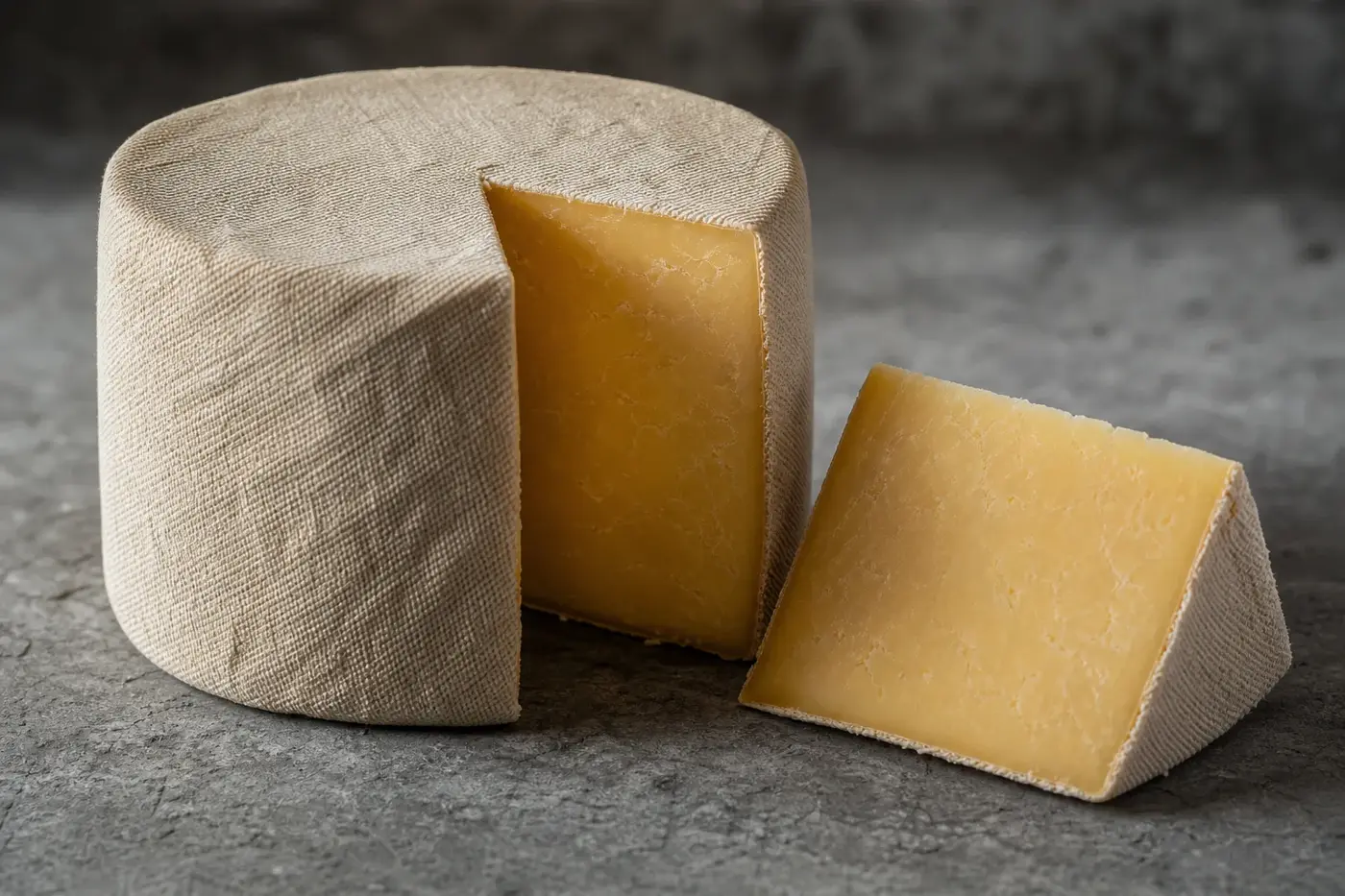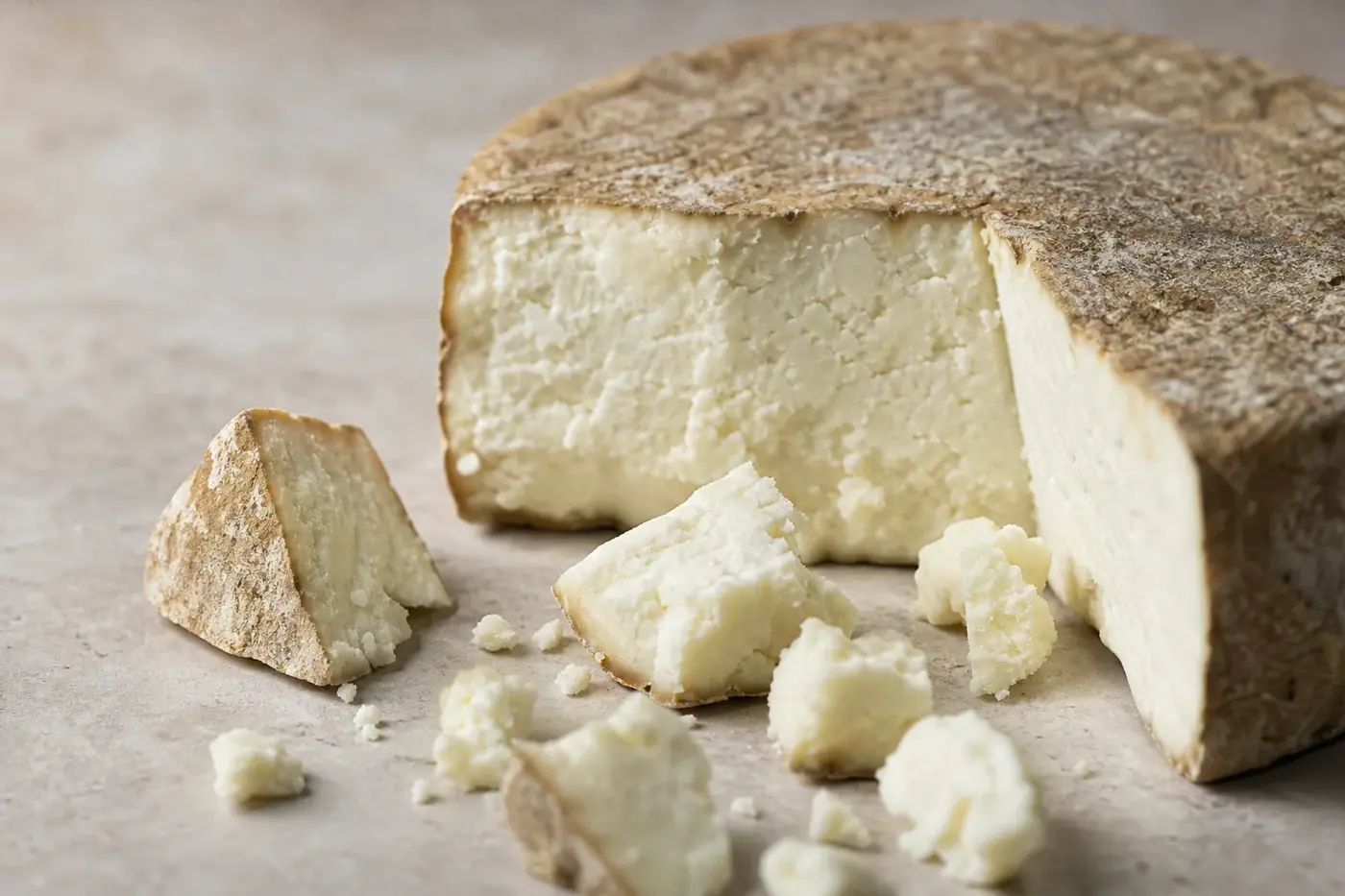
A piece from the centre crumbles under your knife. Take another from beside the natural rind and the mild flavour and citrus finish turn more cellar-like, almost mushroomy. Pale, firm and crumbly, Anster comes from Falside Farm in Fife, where St Andrews Farmhouse Cheese Company makes it with cow’s milk from the same farming business’s herd. [1][2][3][6]
Get acquainted with Anster
| What you might want to know | The details |
|---|---|
| Name | Anster [1] |
| Maker | St Andrews Farmhouse Cheese Company [2] |
| Home | Falside Farm, Pittenweem, Fife, Scotland [2] |
| Milk | Unpasteurised cow’s milk from the farm’s own Friesian Holstein herd [3][4] |
| Style | Firm, crumbly, with a natural rind [1][4][6] |
| Usual time maturing | 2 to 4 months, according to the maker [1] |
| What sets the milk | Rennet; precise source uncertain [5] |
Follow Anster’s name into Fife
Anster takes its name from the local nickname for Anstruther, according to The Courtyard Dairy, which has selected and sold the cheese. That explanation comes from the retailer, rather than the maker. Follow the production address and you arrive at Falside Farm, Pittenweem, in the East Neuk of Fife. [2][6]
Think pale, firm and crumbly, rather than something you can shave into long, supple ribbons. The maker compares Anster with Caerphilly, while its profile in the producer association Fine Cheesemakers of Scotland calls it Cheshire-style. Those give you useful bearings before your first bite; how to tell cheese styles apart supplies the broader vocabulary. [1][4]
A farm with a view of the Firth
Anster’s home is a mixed farm overlooking the Firth of Forth. Alongside its dairy cattle, Falside grows winter wheat, winter barley, spring barley and oilseed rape, according to the company’s website. Cheese is part of that larger agricultural life, with a working dairy sharing the farm with crops. [3][7]
The family’s farming history at Falside reaches back to the 1930s in the farm’s own account. Cheesemaking arrived much later, following practical training in Wales and the transfer of cheesemaking equipment to Fife. The company made its first batch in January 2008. [3][5]
The farm says its cows are born and raised there, and describes a robotic milking system. In the producer’s account, you can trace the connection from herd to farm to cheesemaking business. It gives you a much fuller sense of where your cheese comes from than “Scottish cheese” alone. [3][7]
Meet the herd behind the crumble
Anster begins with unpasteurised cow’s milk from the farm’s own herd, which the company identifies as Friesian Holstein. Its awards page describes the business’s use of milk from its own cows, heritage cultures and traditional rennet. The producer association’s profile places Anster specifically within that unpasteurised range. [4][8]
Rennet is the enzyme preparation that sets milk into curd, the solid material from which cheese is formed. The maker describes adding it during production. For a closer look at its different sources, try rennet explained; to explore milk treatments, turn to raw milk, thermised and pasteurised cheese. [5]
From warm milk to a waiting truckle
First comes warming the milk, adding rennet and working the curd. In the company’s general cheesemaking account, the set curd is cut, stirred and heated further before the whey, the liquid that separates from it, is drained. This describes the general process, rather than every step of an Anster-specific recipe. [5]
Once drained, the curd is cut into blocks and piled up. Milling, salting, moulding and pressing follow. Milling breaks the curd down again before the pieces are brought together as the final cheese, ready for maturation. [5]
The maker calls these cheeses truckles, and their next home is a cheese store with controlled temperature and humidity. Its description brings cave-like conditions to mind, although this is a store, not a cave. The maker’s current Anster listing gives a typical maturation of 2 to 4 months. [1][5]
So Anster belongs among matured farmhouse cheeses, even when its tasting descriptions emphasise freshness. The producer association describes a natural rind surrounding a white, crumbly interior. You have two places to explore: the central paste, meaning the cheese beneath the rind, and the outer edge. [4]
Let the centre and rind have their say
Start in the middle, then work outwards. The maker describes mild flavour with a citrus finish, becoming more cellar-like and almost mushroomy close to the rind. Put those two pieces beside each other and you can taste the contrast directly. [1]
The Courtyard Dairy describes its selection as milky, lactic and fresh. It chose Anster made with a particular starter culture, a preparation of bacteria used in cheesemaking, after preferring those batches. Those notes describe its selected cheese; the maker’s tasting notes remain the broader reference for Anster. [6]
Give aroma its own moment, rather than assuming those flavour notes tell you exactly how the cheese will smell. Pay attention to texture and finish, too. Does your piece fracture into small crumbs or larger flakes, and what can you smell before your first bite? Notice whether the tang arrives straight away or lingers afterwards; you will learn more than by simply calling it strong or mild.
Make room on your plate for the crumbs
Begin with Anster, plain bread or an oatcake, and sliced apple or pear. These accompaniments leave space for the mild flavour and citrus finish described by the maker. Taste the cheese alone first, before anything sweet, sharp or strongly seasoned joins the plate. [1]
On a mixed cheeseboard, give Anster its own space and a separate knife. Taste it before cheeses with more assertive flavours. Cut manageable pieces and welcome the crumbs rather than demanding tidy slices; Anster has not signed up for precision work. A small dish beside the board keeps loose pieces together and easy to share.
Still or sparkling water makes a useful starting point as you follow the cheese through several bites. You could also try an alcohol-free apple drink alongside fresh apple. Compare a mouthful with the accompaniment and one without, keeping the pairing if the cheese’s flavour still comes through clearly.
Leave bread and fruit separate, with the pale paste visible rather than buried beneath accompaniments. That gives each person room to explore the centre and the portion near the rind at their own pace. You can also notice the contrasts more easily: crumbly cheese, crisp fruit and a dry oatcake.
Choose your Anster and ask about the batch
Anster, Red Anster and Smoked Anster have separate listings in the maker’s range. The producer association describes Red Anster as containing chives and garlic, and Smoked Anster as smoked over oak chips. If you want the plain cheese’s crumbly paste and restrained flavour, choose the one named simply Anster. [2][4]
The Courtyard Dairy’s specially selected batches offer a useful question for your seller: has this cheese been chosen for a particular make or stage of maturity? Its listing describes an eight-week cheese, while the maker gives the wider typical maturation of 2 to 4 months. Ask about the actual piece being cut, especially if you are hoping to repeat a previous experience. [1][6]
Ask your seller to describe that batch, then use the answer as the starting point for your tasting notes. You will have something specific to compare with the cheese on your plate. It is a good excuse for a cheese conversation, should you be the sort of person who needs one.
Keep Anster cool, and serve a little at a time
Follow the storage instructions and date on the wrapping, and keep Anster covered between servings. In Scotland, Food Standards Scotland advises keeping your fridge between 0 °C and 5 °C and checking it with a thermometer. It also says to return food to the fridge as quickly as possible and follow ‘keep refrigerated’ instructions. [9]
For tasting, put out only the portion you intend to eat shortly. Leave the rest refrigerated, and keep your serving away from direct sun or a heat source. Let that portion lose its fridge chill during preparation rather than warming the whole cheese for an extended display, staying within the official time and temperature limits below. [9]
For party food in Scotland, Food Standards Scotland says not to leave it out for more than four hours. In the United States, CDC advises refrigerating perishable foods, including dairy, within two hours, or one hour above 32 °C (90 °F). Its recommended fridge temperature is 4 °C (40 °F) or below. Count preparation and serving time together when applying these limits to your cheeseboard. [9][10]
For wrapping, fridge organisation and handling cut pieces, turn to how to store cheese at home. Keep the product’s instructions with the cheese, especially when a cheesemonger has cut and rewrapped your portion.
Keep your cheese curiosity going
- Cheese: The Complete Guide: explore Anster’s place in the wider world of milk, cheesemaking and cheese styles.
- How to Read a Cheese Label: get to know the information supplied with your cut portion or packaged cheese.
General information only, not medical advice: follow the official guidance where you live.
Questions people ask
Where is Anster cheese made?
Anster is made at Falside Farm in Pittenweem, Fife, Scotland. The farm overlooks the Firth of Forth.
What does Anster taste like?
The maker describes a mild flavour with a citrus finish. Near the rind, it has a cellar-like, almost mushroomy character.
Is Anster made with unpasteurised milk?
Yes, Anster is made with unpasteurised cow’s milk. The milk comes from the farm’s own Friesian Holstein herd.
Is Anster suitable for vegetarians?
Its vegetarian suitability has not been verified. The cheese is made with rennet, but the precise source of the rennet has not been verified.
How long is Anster matured?
The maker gives a typical maturation of 2 to 4 months. The Courtyard Dairy’s listing describes an eight-week cheese.
Sources
- St Andrews Farmhouse Cheese Company, Anster, undated product page, retrieved November 2026. Maker’s product description and typical maturation.
- St Andrews Farmhouse Cheese Company, Our Cheese, undated catalogue, retrieved November 2026. Product names and production address.
- St Andrews Farmhouse Cheese Company, Our Farm, undated farm account, retrieved November 2026. Farming history, herd, crops and milking system.
- Fine Cheesemakers of Scotland, St Andrews Farmhouse Cheese Co Ltd, undated producer profile, retrieved November 2026. Producer association account of milk, cheese styles and product variants.
- St Andrews Farmhouse Cheese Company, Cheesemaking, undated production account, retrieved November 2026. First production date, curd handling, pressing and maturation store.
- The Courtyard Dairy, Anster, undated product and selection account, retrieved November 2026. Commercial cheesemonger’s account of the name, its selected batches and their character.
- St Andrews Farmhouse Cheese Company, Home, undated company introduction, retrieved November 2026. Farm setting overlooking the Firth of Forth and milk provenance.
- St Andrews Farmhouse Cheese Company, Awards, undated page containing dated results, retrieved November 2026. Introductory statement about milk, cultures and rennet only.
- Food Standards Scotland, Chilling food, undated consumer guidance, retrieved November 2026. Scottish household refrigeration and party-food advice.
- Centers for Disease Control and Prevention, Preventing Food Poisoning, 24 November 2025, retrieved November 2026. United States consumer refrigeration and time-limit advice.
Researched from the maker’s published records, a producer association profile, a selecting cheesemonger’s account and official consumer food-safety guidance, with serving suggestions identified as editorial judgement.
Last checked: November 2026
Last checked November 2026.
The editors suggest you read next
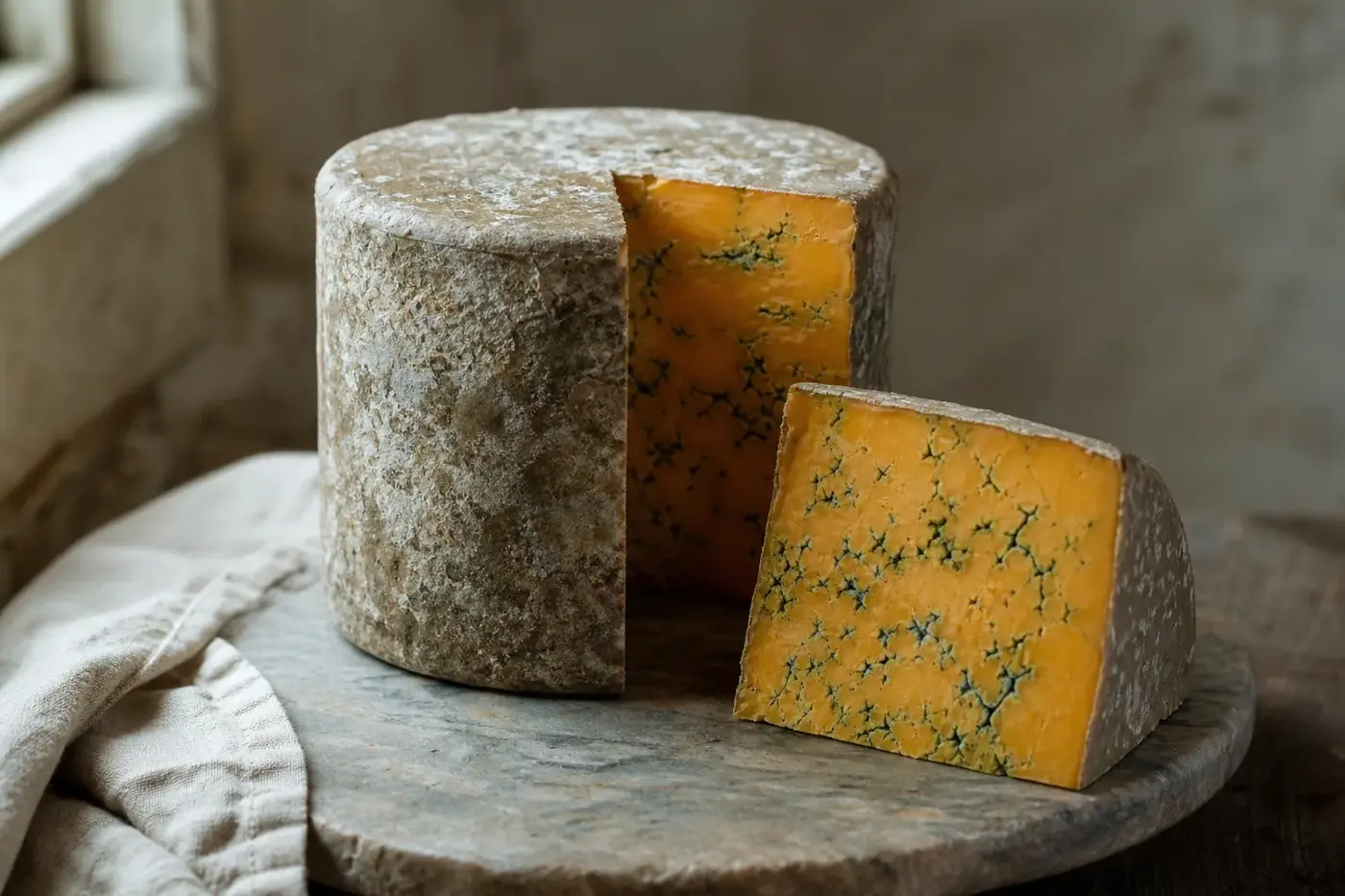
Shropshire Blue
Cut into Shropshire Blue and you get quite a colour scheme: orange crossed by blue-green veins.