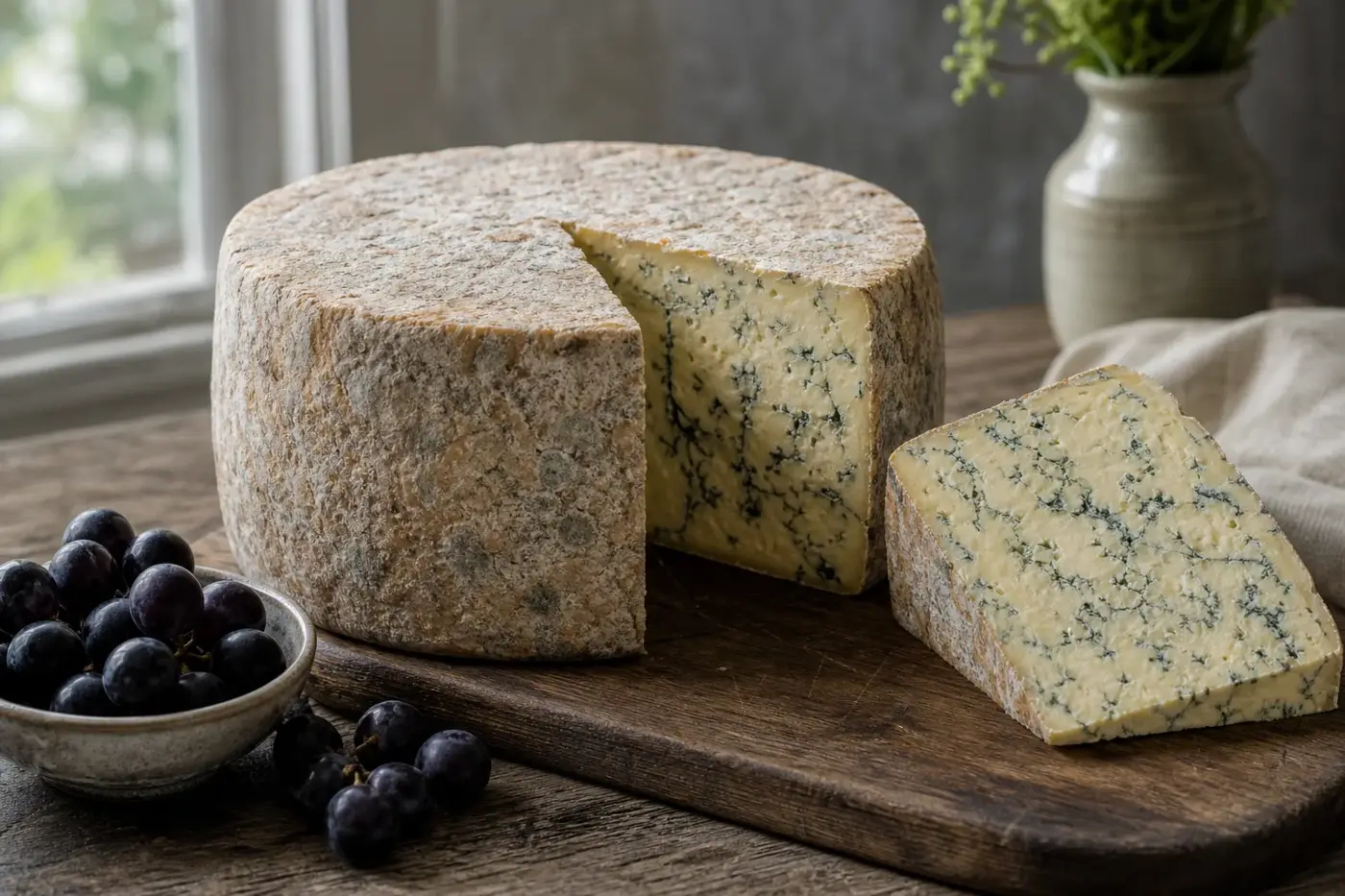
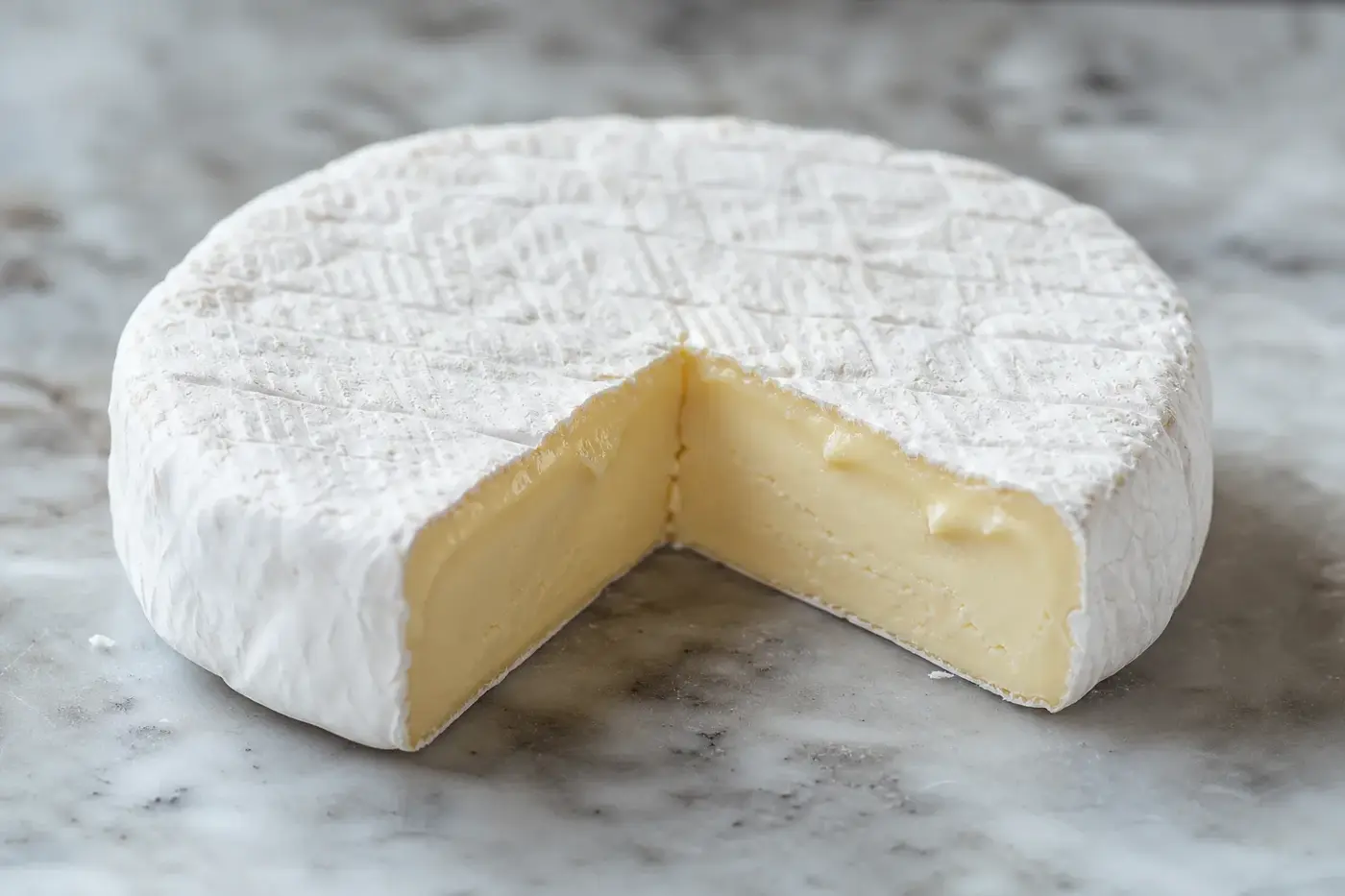
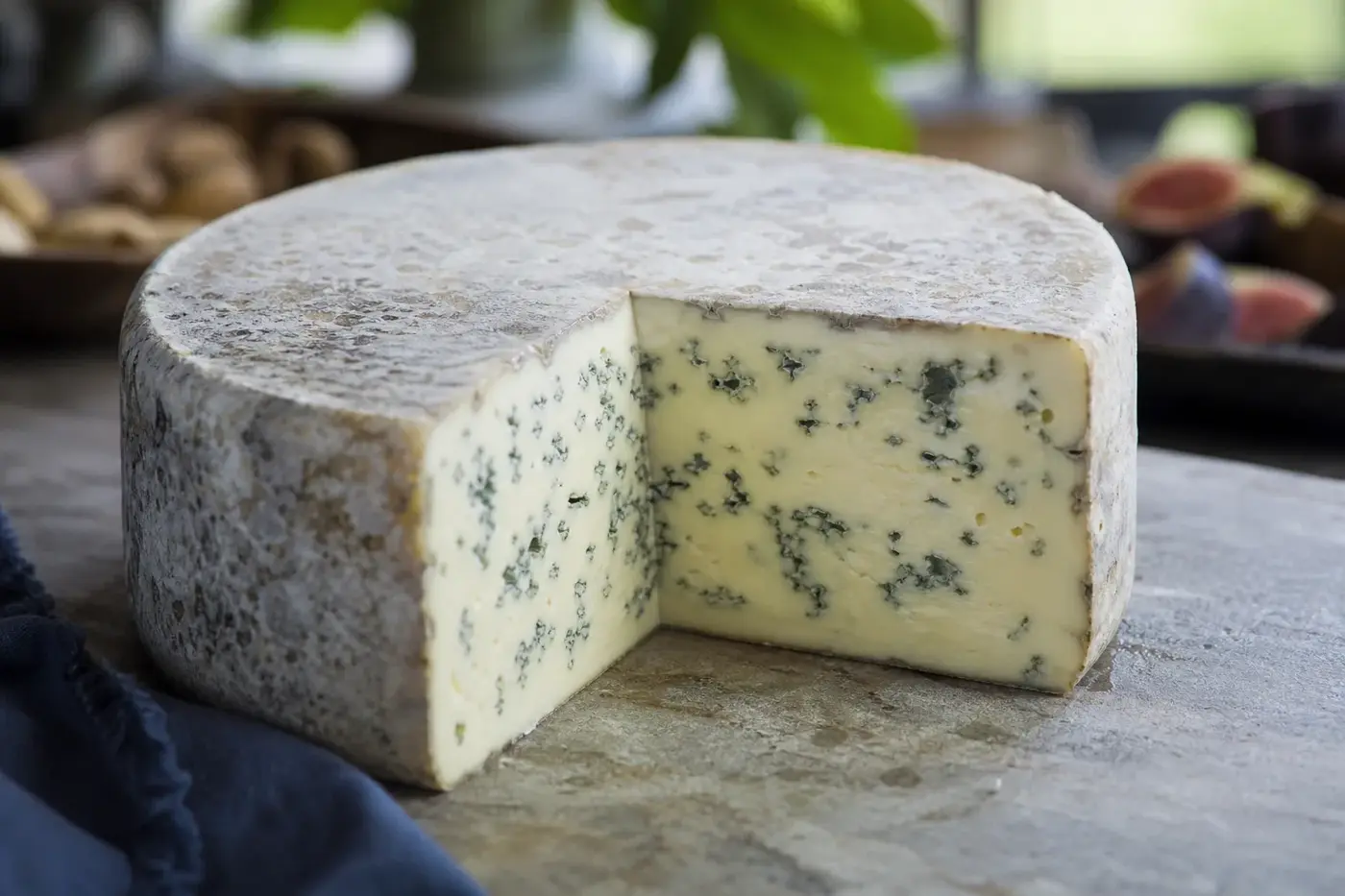
Caws Preseli
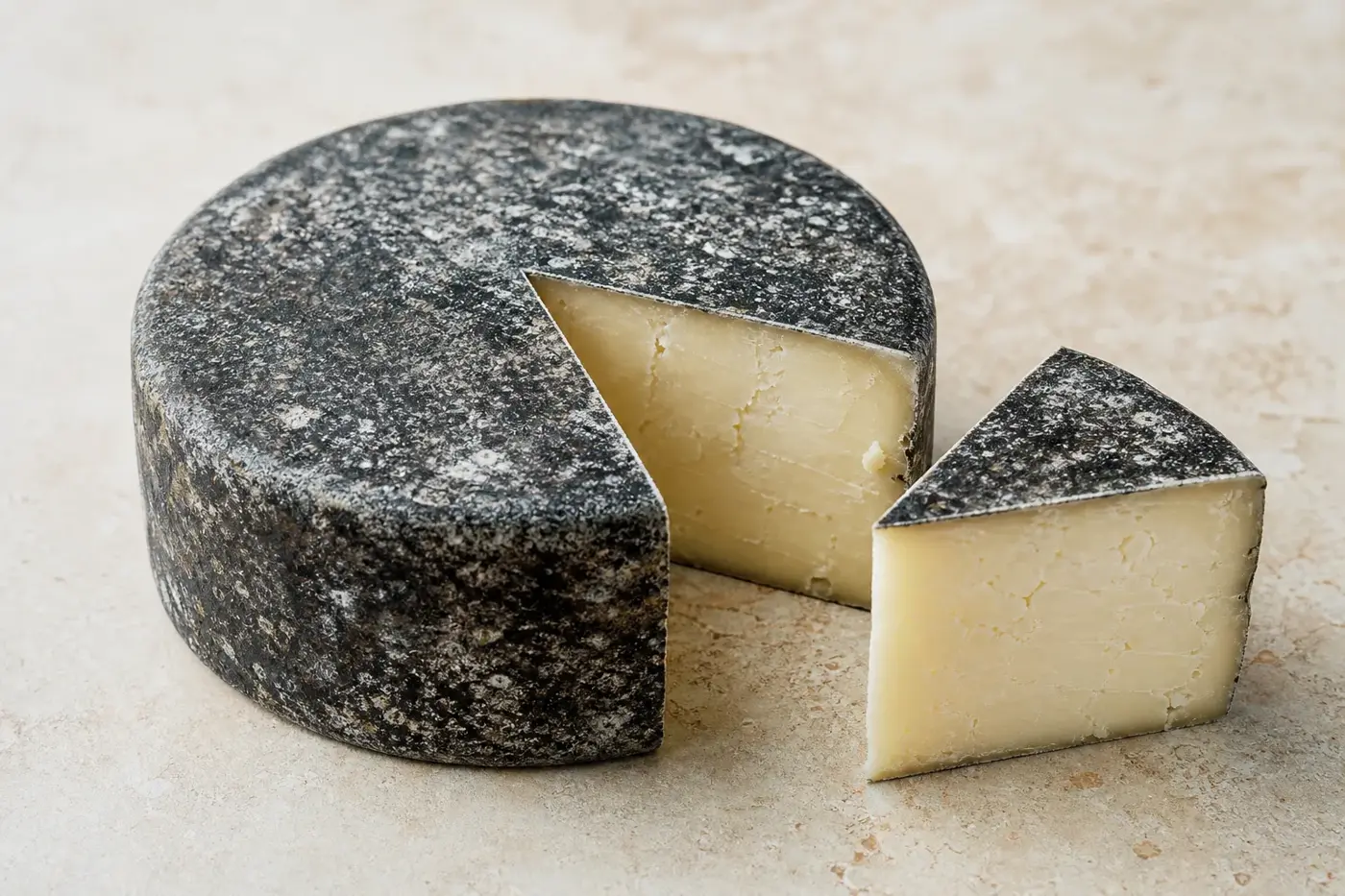
Cut through the pale rind of Caws Preseli and a glossy, straw-coloured interior comes into view.
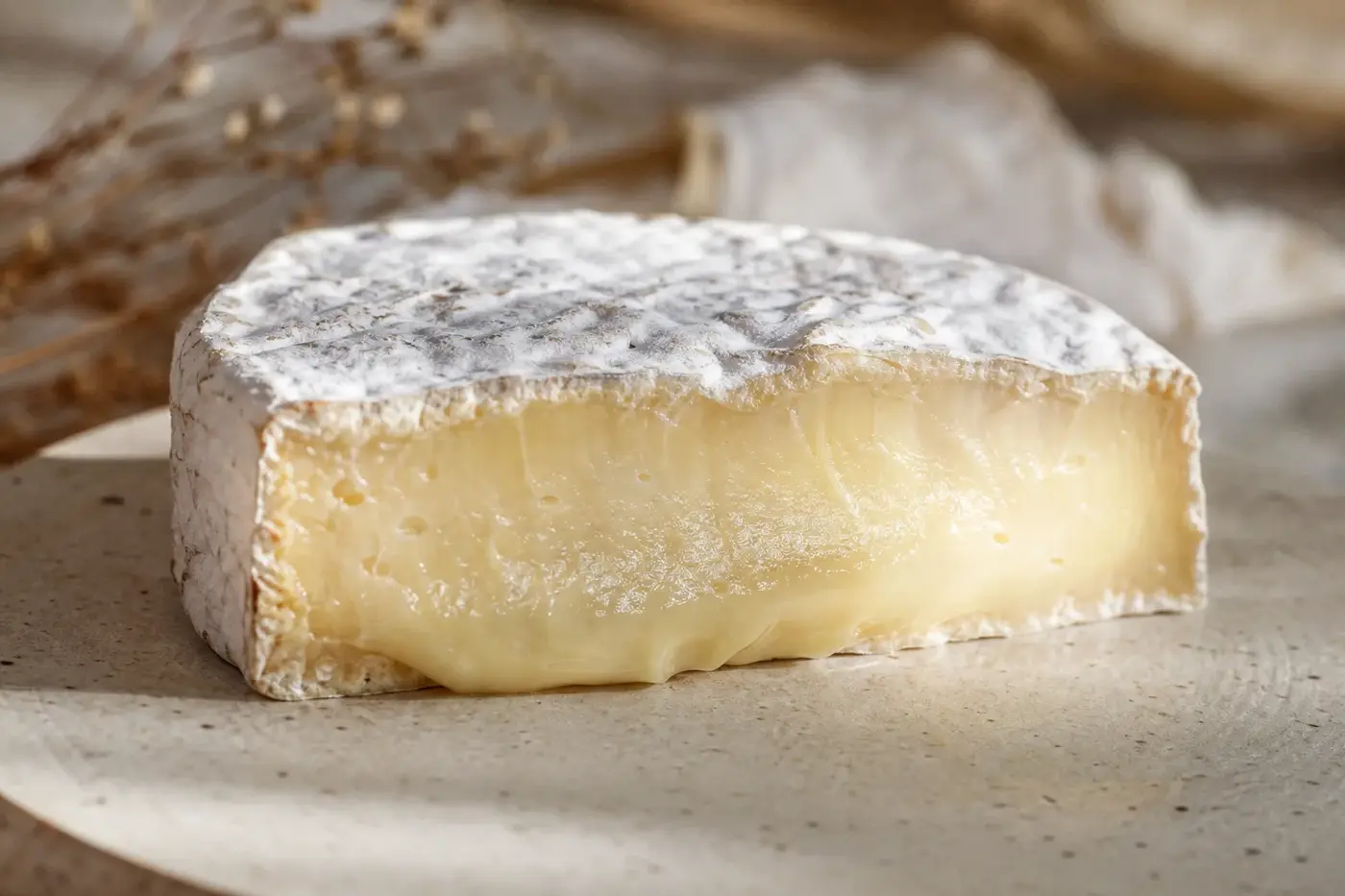
Cut through the pale rind of Caws Preseli and a glossy, straw-coloured interior comes into view. Its maker promises mild tang, fruitiness and richness. You have good reason to linger over that slice. [1]
This soft, white mould-ripened cow’s milk cheese comes from Pant Mawr Farmhouse Cheeses at Rosebush, Pembrokeshire. Its home is a Welsh hill farm in the foothills of the Preseli Mountains. To understand what is on your plate, start with the place and the family behind it. [1][2][4]
Your introduction to Caws Preseli
| What you might ask | What to know |
|---|---|
| Name | Caws Preseli.[1] |
| Maker | Pant Mawr Farmhouse Cheeses.[2] |
| Home | Rosebush, Pembrokeshire, Wales.[2] |
| Milk | Cow’s milk; pasteurised according to two stockists. Confirm the treatment with the maker or current label.[4][5] |
| Coagulant | Vegetarian rennet, according to the maker.[2][3] |
| Style | Soft, white mould-ripened.[1][4] |
| Milk supplier | Llaeth Cymreig cooperative, according to the maker.[3] |
| Maturation period | Unspecified. |
| Named rind cultures | Unspecified. |
| Registered name and register ID | Unspecified. |
The family road back to the Preseli hills
Before Pant Mawr, there were dairy enterprises in Libya and North Yemen. The family returned to Wales after working abroad and established Pant Mawr in 1984. The maker traces its recipes to both that commercial dairying experience and the family’s own cheesemaking at home in Pembrokeshire. [2]
So you are getting something more particular than an anonymous “Welsh soft cheese”. Caws Preseli belongs to a farm business with its own history and collection of recipes. Its roots reach beyond Wales, but its home is firmly beneath the Preseli hills. [2]
At Rosebush, Pant Mawr describes a family operation using locally produced milk. Its environmental statement names Llaeth Cymreig, a farmer-owned cooperative, as the supplier. The farm makes the cheese, while the published account describes milk supplied through that cooperative, rather than exclusively from a herd at Pant Mawr. Those are distinct parts of the story, and both deserve their place. [2][3]
What goes into the slice you choose
Two stockists, Welsh food wholesaler Blas ar Fwyd and The Welsh Cheese Company, list Caws Preseli as made from pasteurised cow’s milk. Before you choose your piece, confirm the milk treatment on the current packaging or with the supplier. [4][5]
Pant Mawr says it uses vegetarian rennet throughout its cheeses. Rennet is the coagulant that helps milk proteins gather into a gel, ready to separate into curd and whey. The curd becomes cheese; the whey is the liquid released along the way. Picture that separation and the first stages of cheesemaking become much easier to follow. [2][3][6]
If you would like to untangle the terminology, start with rennet explained. Then turn to milk treatments for the differences between pasteurisation, raw milk and thermisation.
Beneath that white rind, things are happening
The white rind is not wrapping added to a finished cheese. It is an active part of ripening, a living surface around the softer cheese beneath. Once you understand the general process, you can make more sense of both the covering and the changes across a cut face. [6][7]
The groundwork begins in the milk. Starter bacteria develop acidity, while rennet sets the milk into curd. Separating and draining removes whey and determines how much moisture remains. Shaping and salting prepare the cheese for ripening, with acidity, moisture and salt already shaped by those early decisions. [6]
Next comes the surface growth. White mould cheeses commonly use Penicillium camemberti, a mould that needs oxygen and grows on the outside. Its fine fungal growth creates the white covering often called a bloomy rind, while yeasts can join this surface community too. That pale coat has a proper job, not just a presentable appearance. [7]
As ripening continues, surface organisms alter acidity and release enzymes that break down proteins. This process, called proteolysis, progressively softens the cheese from the outside towards the centre. Research on Irish farmhouse Camembert has examined the protein fragments produced during ripening and compared them with the action of Penicillium camemberti enzymes. It helps explain how a rind influences the cheese within. [7][8]
When you look at a cut piece of Caws Preseli, give the inside as much attention as the rind. Compare the outer paste with the centre, looking for differences that help describe its stage of development. That progression from outside to centre is the useful principle to bring to your plate. [7]
Follow the gentle tang, fruit and gloss
“Creamy” does rather a lot of overtime in cheese descriptions. Pant Mawr gives you more useful starting points for Caws Preseli: rich flavour, a mild tang, fruitiness and a glossy, straw-coloured interior. Look for that balance of gentle acidity and fruit. A white rind does not promise exactly the flavour of Brie or Camembert. [1]
Give texture a moment of its own. In white mould-ripened cheeses, the paste, meaning everything beneath the rind, can develop a softer outer layer while keeping a firmer centre. As you taste, ask how evenly your particular piece has softened. Compare a little from near the rind with some from its heart. [7]
There is no specific aroma description or account of flavour changes with age to guide you here. Let the piece in front of you provide those details. It need not borrow another cheese’s tasting notes.
Let the first mouthful speak for itself
Taste Caws Preseli alone first. Then try plain bread or an unsalted cracker, with a little fruit or preserve alongside. Keeping that first mouthful uncomplicated helps you pick out Pant Mawr’s mild tang and fruitiness before anything sweet or sharp joins in. [1]
The maker includes Welsh crackers and preserves in its Everyday Cheese Selection. The Welsh Cheese Company suggests chutney or courgette and pepper relish specifically with Caws Preseli. Put the relish beside the cheese rather than over the whole slice, so everyone can choose their balance. A small spoonful lets you explore the difference without handing the chutney the microphone. [5][9]
For chilled food served in England, Wales and Northern Ireland, follow current Food Standards Agency guidance and the instructions on the packaging. Include those practical details in your serving plan. [10]
Set out a modest piece and leave the rest refrigerated, replenishing only as needed. Bring bread, crackers and accompaniments to the table before the cheese. You can enjoy a relaxed tasting without leaving the whole cheese on display through a long meal.
For a drink, try still water or an alcohol free apple drink. These are editorial suggestions, not pairings prescribed by the maker. Taste the cheese first and the drink second. Then ask yourself whether that gentle tang still comes through clearly.
A cool home for the piece you bring back
Start with the storage instructions and date on the piece you buy. For home refrigeration in England, Wales and Northern Ireland, the Food Standards Agency recommends a fridge temperature between 0 and 5 °C (32 to 41 °F), measured with a fridge thermometer. The reference point for this guidance is November 2026. The agency advises keeping dairy products refrigerated and following the packaging’s instructions. [10]
If you buy a cut portion, ask the seller to keep the original label with it, or provide the storage and date information with the wrapping. Keep those details beside the cheese. The product’s instructions are more useful than your memory of the purchase date, especially when you have cheeses from different suppliers or pieces opened at different times.
Read the whole picture when judging condition: the expected white surface, the cut face, the storage history and the label. Softening belongs to the general ripening process described above. Unfamiliar growth or doubtful condition is a reason not to eat the cheese. Consult current official food safety guidance for your country; mould on cheese explains the difference between an intended rind and unwanted mould. [7]
Date wording matters too. Official UK guidance distinguishes a use-by date, which concerns safety, from a best before date, which concerns quality. Do not eat a refrigerated piece after its use-by date. Follow instructions for use after opening as well as the date itself, because the label’s storage conditions are part of the guidance for that product. [11]
Take your cheese curiosity a little further
- How to Store Cheese at Home: practical help with wrapping, refrigeration and keeping your cut cheese in good condition.
- How to Tell Cheese Styles Apart: Milk, Rind, Texture and Method: a wider framework to help you recognise what a rind tells you.
General information only, not medical advice: follow the official guidance where you live.
Questions people ask
What does Caws Preseli taste like?
Pant Mawr describes it as rich, mildly tangy and fruity. Beneath its pale rind, it has a glossy, straw coloured interior.
Is Caws Preseli made with pasteurised milk?
Two stockists list it as made from pasteurised cow’s milk, but this has not been verified with the maker. Check the current packaging or ask the supplier about the piece you are choosing.
Is Caws Preseli vegetarian?
Pant Mawr says it uses vegetarian rennet throughout its cheeses. Rennet helps milk proteins gather into a gel that can be separated into curd and whey.
What is the white rind on Caws Preseli?
It is a white mould rind that takes part in ripening rather than a wrapping added to the finished cheese. In this style, ripening progressively softens the cheese from the outside towards the centre.
How should I store Caws Preseli?
The Food Standards Agency advises keeping dairy products in the fridge and following the packaging instructions. For homes in England, Wales and Northern Ireland, it recommends a fridge temperature between 0 and 5 °C, checked with a fridge thermometer. Consult current Food Standards Agency guidance for details.
Sources
- Pant Mawr Farmhouse Cheeses, Caws Preseli, undated product page, accessed November 2026. Maker’s description of the cheese and its appearance. Verified source.
- Pant Mawr Farmhouse Cheeses, About Pant Mawr Farmhouse Cheeses, undated, accessed November 2026. Maker’s account of establishment, location, recipes and vegetarian rennet. Verified source.
- Pant Mawr Farmhouse Cheeses, Environmental Responsibility, undated, accessed November 2026. Maker’s statement identifying its milk supplier and rennet policy. Verified source.
- Blas ar Fwyd, Pant Mawr, Caws Preseli, approx 1kg round, undated product listing, accessed November 2026. Wholesaler’s declarations of white mould-ripened style, cow’s milk and pasteurisation. Verified source.
- The Welsh Cheese Company, Caws Preseli, undated product listing, accessed November 2026. Stockist’s milk-treatment declaration and accompaniment suggestions. Verified source.
- American Society for Microbiology, The Basics of Cheesemaking, Microbiology Spectrum, published 31 October 2013. Scientific account of cheesemaking and ripening principles. Verified source.
- University of Guelph, CMC1: Introduction to Cheesemaking, Unit 3b. Secondary Cultures in Cheese making, undated online teaching material, accessed November 2026. Surface moulds, yeasts and outside-to-centre softening. Verified source.
- National Library of Medicine, PubMed record for Proteolysis in Irish farmhouse Camembert cheese during ripening, 2019, PMID 31782198. Abstract describing analysis of protein fragments and fungal enzyme activity. Verified source.
- Pant Mawr Farmhouse Cheeses, The Everyday Cheese Selection, undated product page, accessed November 2026. Contents include Welsh crackers and preserves. Verified source.
- Food Standards Agency, How to chill, freeze and defrost food safely, published 18 December 2017, current retrieved text checked November 2026. Applies to England, Northern Ireland and Wales. Verified source.
- UK Government, Understanding food labelling: Best before and use-by dates, current online guidance, checked November 2026. Date meanings, refrigeration and instructions after opening. Verified source.
This piece was researched from the maker’s published accounts, attributed stockist information, scientific literature and official food-handling guidance.
Last checked: November 2026
Last checked November 2026.
The editors suggest you read next
Caerphilly
Your knife meets a rind-ripened Caerphilly, and one wedge offers two pleasures: a fresh, crumbly centre and a softer, creamy layer just beneath the rind.