Charolais
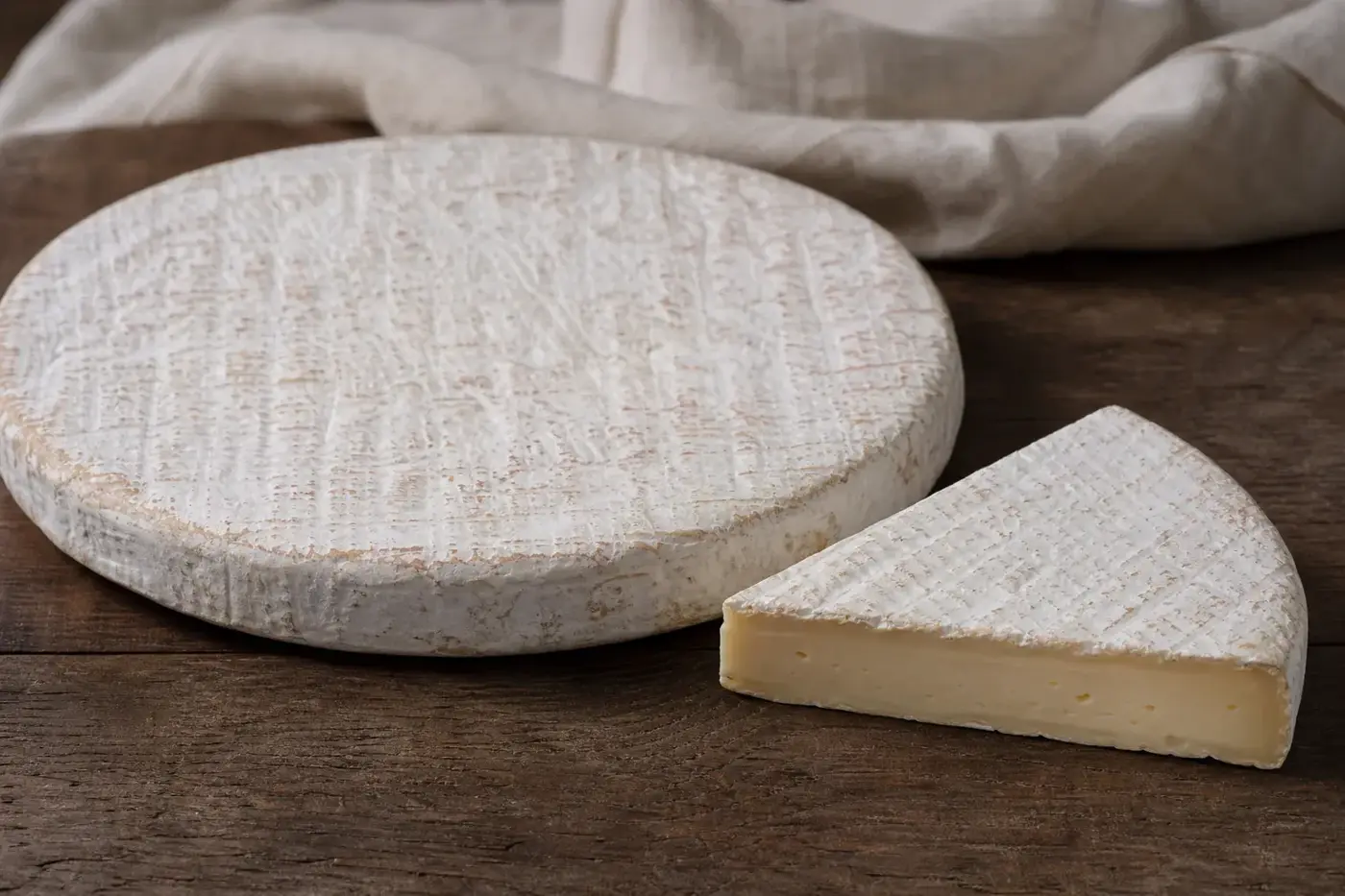
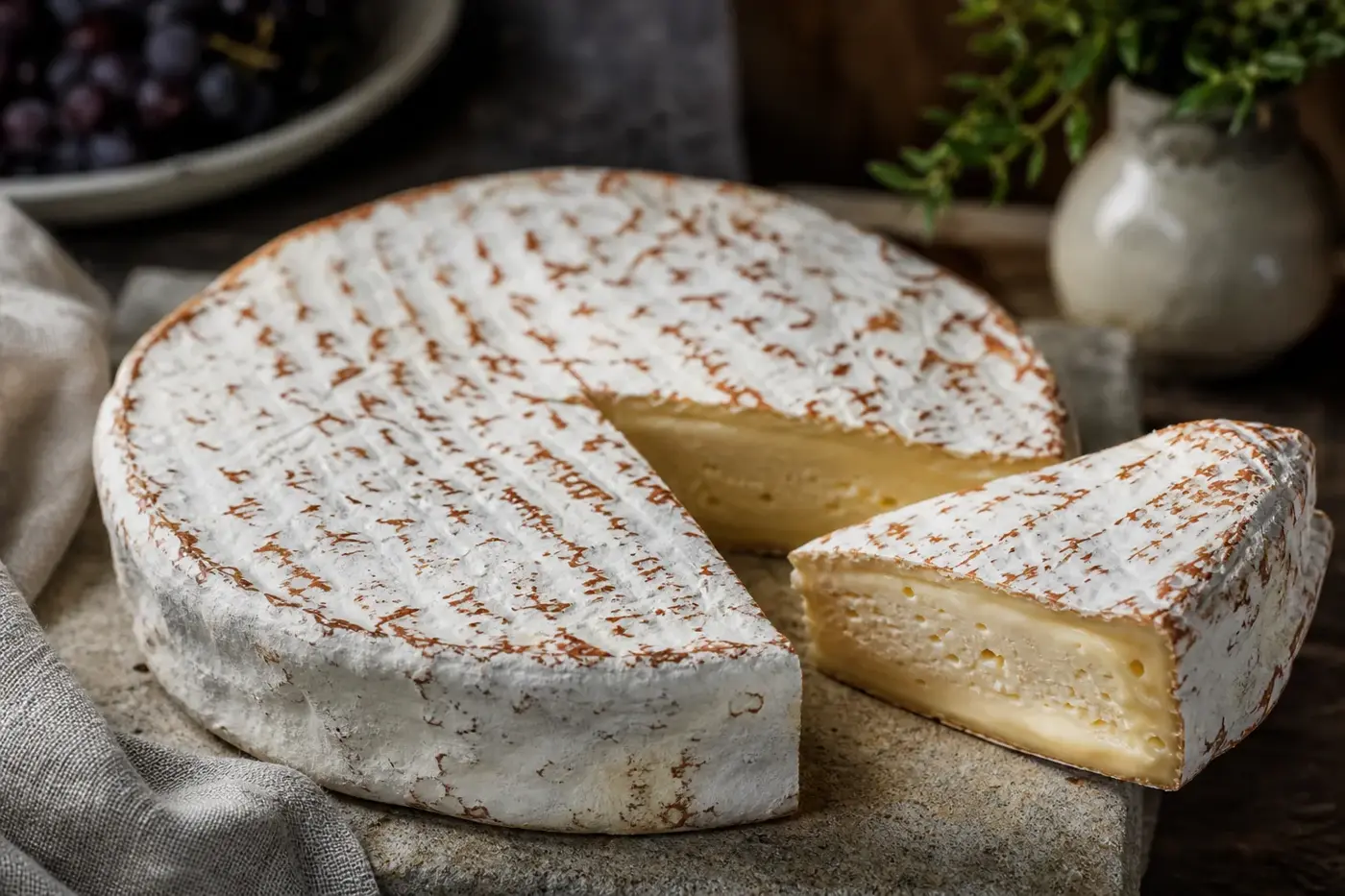
A small barrel of cheese stands on the board, taller than it is wide, its ivory rind touched with blue.
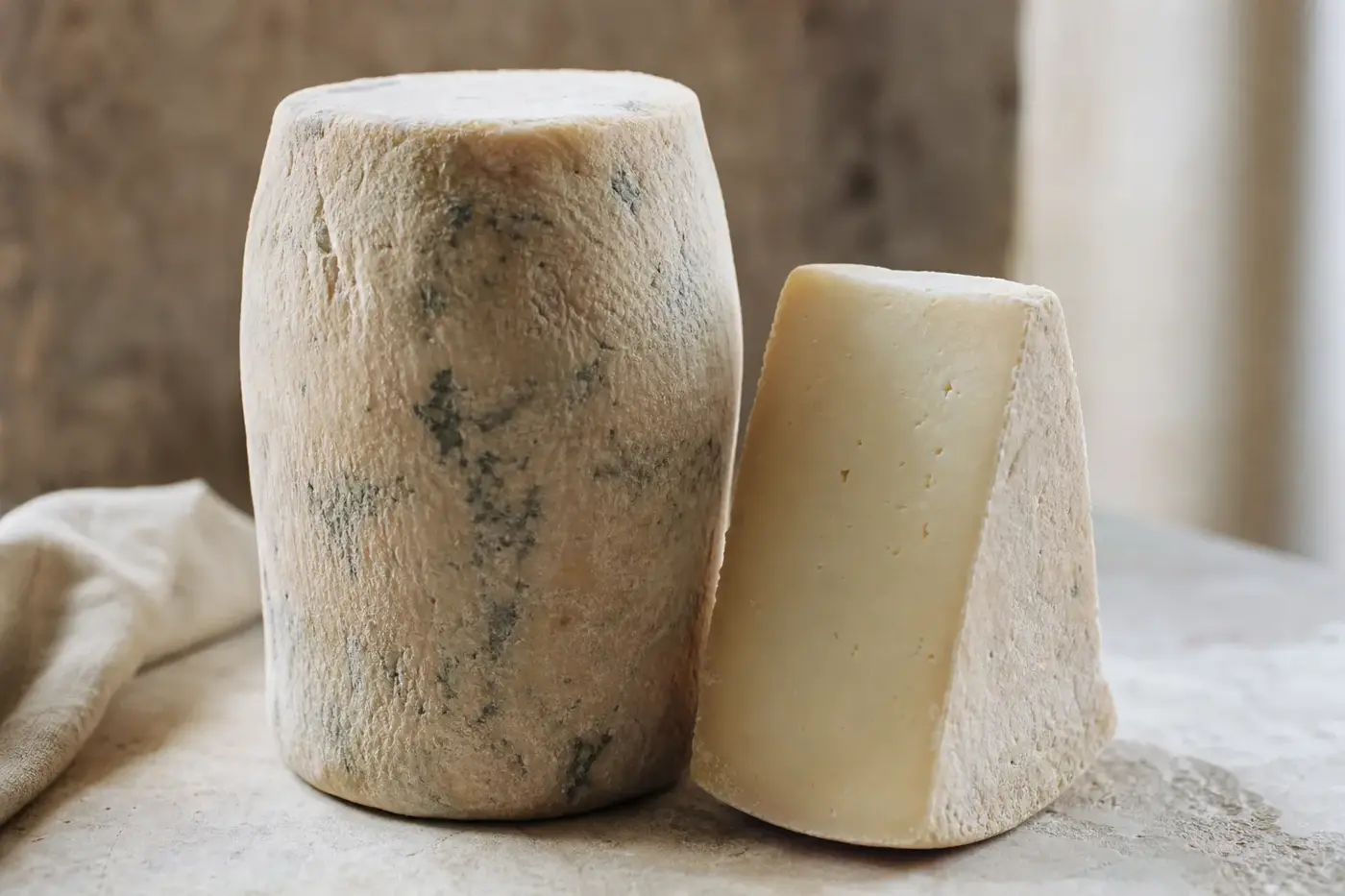
A small barrel of cheese stands on the board, taller than it is wide, its ivory rind touched with blue. Cut into it and you reach a cream-coloured centre, made from raw whole goat’s milk. This is Charolais, a substantial French goat’s cheese from around Charolles in southern Burgundy, with permanent grassland, goat husbandry and patient cheesemaking behind every piece.[1][2]
| Get to know it | Charolais |
|---|---|
| Familiar and registered name | Charolais.[3][5] |
| EU authority and published reference | European Commission; published dossier reference, rather than current register ID: FR-PDO-0005-0838-15.11.2010.[3] |
| EU designation | PDO registered by Commission Implementing Regulation (EU) No 674/2014; this records registration rather than current register status.[4] |
| Great Britain designation | Registered PDO; UK scheme registration recorded at 23:00 on 31 December 2020; November 2026 reference.[5] |
| Where it must come from | Specified communes in Saône-et-Loire, Allier, Loire and Rhône, France.[2][3] |
| Milk | Raw whole goat’s milk.[2] |
| Size at minimum maturity | 250 to 310 g; 7 to 8.5 cm high; 6 to 7 cm diameter at mid-height.[3] |
| Minimum maturity | 16 days from adding rennet, subject to the cold-storage adjustment below.[2] |
| Rind and centre | Natural rind, principally Geotrichum, sometimes with blue Penicillium; cream-coloured paste.[2] |
| Allergen to know | Contains goat’s milk.[2] |
Follow the hedges towards Charolles
Permanent grassland, hedges and dry-stone walls shape the countryside around Charolles. INAO calls this landscape bocage: fields divided by hedges, with walls marking the land too. Goat keeping developed here alongside cattle husbandry, giving farmers another use for their land and another source of income.[1]
You may recognise the regional name from Charolais cattle. For this cheese, though, the milk must come from goats. The permitted herds are Alpine goats, Saanen goats or crosses between them.[2]
Burgundy is at the heart of the story, but the legally defined area reaches into Allier, Loire and Rhône. The published EU document places Charolais in the hills between the Auvergne uplands and the Morvan. Follow the cheese and you travel beyond Charolles itself.[3]
A protected name rooted in the fields
The Charolais name ties a place to a controlled chain of milk production, cheesemaking and ripening. PDO means protected designation of origin, or appellation d’origine protégée, AOP, in French.[2][3] For help finding your way through the schemes, start with the guide to protected names.
France recognised Charolais as an appellation of origin in 2010. EU registration followed: the regulation was adopted on 12 June 2014 and published on 20 June 2014. Its twentieth-day entry-into-force provision made it operative on 10 July 2014.[1][4]
The rules reach right back to the goats’ feed, long before milk meets mould. The published specification requires locally sourced forage, prohibits fermented forage in the goats’ ration and forbids permanent confinement. Goats can graze the grass or have it brought fresh to them.[2]
This page summarises published guidance from the official sources it cites. It is not medical advice. Guidance differs between countries and changes over time, so check the current source for where you live, and ask your doctor, midwife, pharmacist or dietitian about your own circumstances.
Tall moulds and the patience of the maker
Charolais begins with raw whole goat’s milk and a predominantly lactic set. Acidification does most of the work, helped by a small addition of rennet, the preparation that coagulates milk. Normally, the specification requires goat’s whey from the holding’s own production for inoculation, with defined alternatives allowed during temporary manufacturing difficulties.[2]
The curd takes 18 to 36 hours to set. Neither cutting nor pre-draining is permitted. Instead, the maker puts it by hand into tall, perforated moulds, topping them up at least twice as the curd settles and releases whey, the liquid that drains away.[2]
Regular turning accompanies at least 48 hours of drainage before the cheeses leave their moulds. Dry salt is applied by hand.[2] The substantial shape comes from repeated filling and drainage, not from pressing curd into a compact wheel.
If you would like to see where these steps fit, turn to how cheese is made. It takes you through the wider process.
A little barrel made for sharing
At minimum maturity, Charolais stands taller than it is wide. The official description calls for a vertical cylinder with gently bulging sides. Once you have seen one, the small-barrel comparison needs little explanation.[3]
INAO places it among the larger French goat’s cheeses.[1] There is enough here to share, even if your first instinct is to negotiate the terms. Cut upright wedges through the middle if you want each portion to include both rind and centre.
The specified dimensions apply at the end of minimum maturation.[3] They are a production reference, not a reason to dismiss an older cheese. It may simply have lost some weight.
See how the ivory rind gathers blue
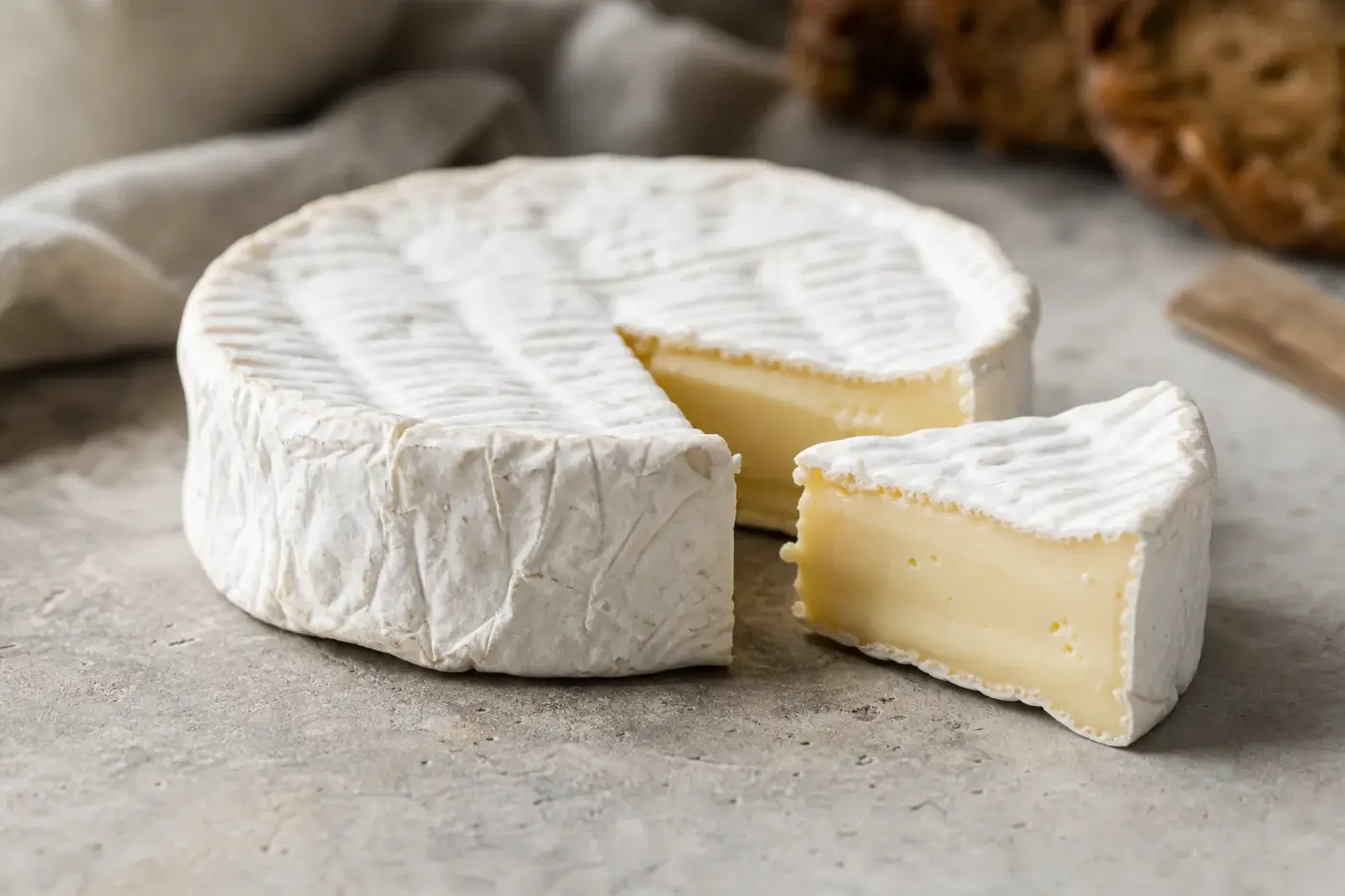
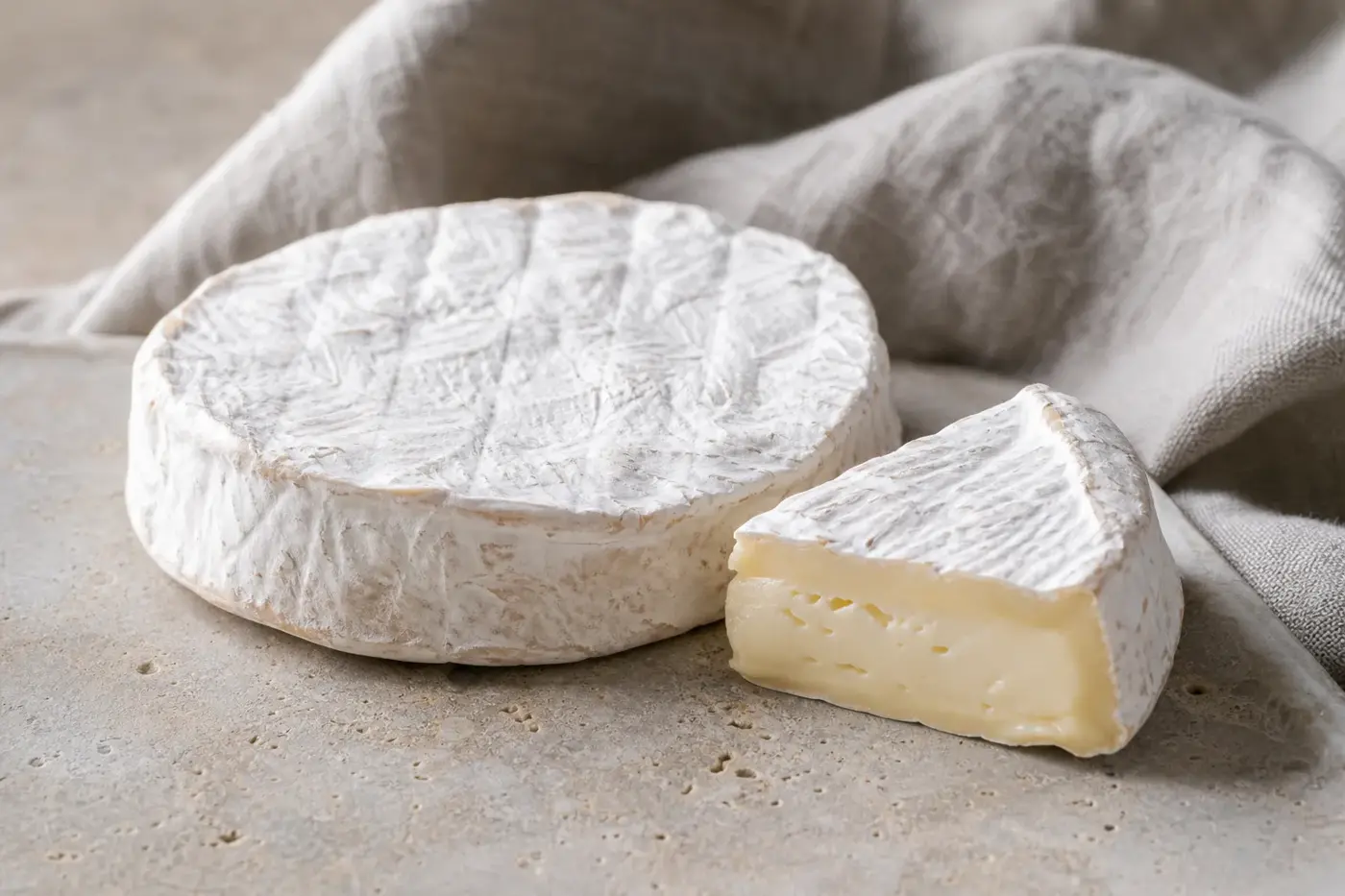
Look closely and you may find beige, ivory and patches of blue across the surface. Geotrichum is principally responsible for the initial rind; Penicillium can add blue patches later.[3] Under that surface-ripened exterior, you find the cream-coloured paste.[2][3]
Affinage, the controlled ripening of cheese, begins here with drying. More humid conditions follow, while turning continues throughout.[2] You are looking at a cheese that changes as it matures, rather than one with a fixed colour chart.
The minimum maturation clock starts at rennet addition, not unmoulding. Normally, it runs for 16 days. If cheeses collected by an affineur undergo the specified refrigerated holding, every day in that cold storage must be added to the maturation period.[2]
Look for grass, hay and mushroom in each bite
Dense yet yielding, fine and smooth: that is how the specification describes Charolais’s cream-coloured paste. Its flavour vocabulary takes you through grass, hay, fresh straw, mushroom, hazelnut and butter.[3] There is plenty to notice before you reach for “strong” or “mild”.
Pay attention to the substantial centre, then to the aromas developing at the surface. Compare the two as you taste. Each gives you a different part of the cheese’s character.
Chevenet’s account of its own Charolais follows those changes with age. It describes young cheese as slightly acidic, with a supple paste; from 21 days, the bluer stage becomes mushroom-scented, fruity and lightly herbaceous.[6] These producer tasting notes offer you an example of maturity shifting the emphasis.
Ask for your kind of Charolais
Tell the seller what you enjoy, rather than simply asking for the oldest cheese. A younger Charolais may appeal if you like a little acidity and supple texture. If mushroom aromas draw you in, ask about a more developed rind, using Chevenet’s descriptions as a documented starting point.[6]
Keep three questions handy:
- When was this cheese made, and how has it been matured?
- How does this batch’s centre compare with the paste beneath its rind?
- Will it be ready on the day you plan to serve it?
Age helps, but the seller’s account of the actual cheese matters too. For a restrained plate, consider a younger stage. When Charolais is the main event, you may prefer a more developed example.
For the exact name and milk declaration, turn to how to read a cheese label. Keep those details alongside your conversation about flavour.
Take a plain bite before inviting company
Taste a plain piece first, so you have something to compare. Then try the walnuts or little honey suggested by Chevenet, or the jam or dark chocolate proposed by GAEC des Bien Vivants.[6][7] Add one accompaniment at a time: the cheese does not need an entire supporting cast at once.
If you are choosing wine, Chevenet recommends whites from the Mâconnais or Côte Chalonnaise, naming Viré-Clessé and Montagny.[6] For an alcohol-free option, consider still or sparkling water. That leaves the cheese and its accompaniment to supply the flavour.
Wine suggestions are for adults of legal drinking age, in small servings. During pregnancy, the NHS advises that the safest approach is not to drink alcohol.[9] You can explore further principles in cheese and wine pairing.
Keep the practical side simple. For England, Wales and Northern Ireland, the Food Standards Agency recommends a fridge temperature of 5 °C or below. Follow its current chilled-food advice when serving cheese, and keep the remainder refrigerated.[8]
Give your Charolais a good home in the fridge
Keep the storage instructions supplied with your cheese, and follow them. For England, Wales and Northern Ireland, the Food Standards Agency’s consumer guidance recommends a refrigerator between 0 and 5 °C. Dairy products should stay refrigerated.[8]
The NHS advises using ready to eat food within two days of opening, or by the use by date if sooner, unless the packaging says otherwise.[10] Save any wrapping or label carrying those instructions. For wider handling principles, see storing cheese at home.
Blue patches can develop naturally on Charolais during maturation.[2][3] Follow the maker’s instructions on whether to eat the rind. If unexpected mould appears during storage, turn to current official food safety guidance rather than deciding by colour alone.
Read the raw milk guidance before you choose
Raw milk is a requirement for Charolais.[2] The NHS lists dairy products made from unpasteurised milk among foods that can carry Listeria. Its UK guidance identifies pregnant people, newborn babies, older people and people with weakened immunity as at higher risk of serious illness.[10]
During pregnancy, the NHS advises against soft cheeses made from unpasteurised milk and mould ripened soft goat’s cheese unless cooked until steaming hot all the way through. Consult its current foods to avoid in pregnancy guidance, with November 2026 as this page’s reference point.[9]
For other higher-risk circumstances, consult the NHS listeriosis guidance, also referenced here for November 2026, and your healthcare professional.[10] If you live outside the UK, follow your own national authority’s advice.
Milk treatment, maturity and handling are separate questions when you choose cheese. The companion guide to raw, thermised and pasteurised milk explains the production distinction.
Take the next step with safety in mind
- Mould on Cheese: When to Cut and When to Bin: guidance for unexpected mould during home storage.
- Listeria and Cheese Safety: a fuller explanation of official precautions.
Questions people ask
Where does Charolais cheese come from?
Charolais comes from the countryside around Charolles in southern Burgundy, France. Its legally defined area also includes specified communes in Allier, Loire and Rhône.
What does Charolais taste like?
Its recorded flavours include grass, hay, fresh straw, mushroom, hazelnut and butter. Chevenet describes its young Charolais as slightly acidic, while from 21 days it describes a bluer stage as mushroom scented, fruity and lightly herbaceous.
Why does Charolais sometimes have blue patches?
Blue Penicillium can develop on the rind as Charolais ripens. The page has not verified whether the rind is edible and advises consulting the maker’s instructions.
Can you eat Charolais during pregnancy?
Charolais must be made with raw goat’s milk. The NHS advises against soft cheeses made from unpasteurised milk and mould ripened soft goat’s cheese during pregnancy unless cooked until steaming hot all the way through. See the NHS foods to avoid in pregnancy guidance for current advice.
How should Charolais be stored?
Follow the storage instructions on the cheese. The Food Standards Agency recommends a fridge temperature between 0 and 5 °C and keeping dairy products refrigerated. The NHS advises using ready to eat food within two days of opening, or by the use by date if sooner, unless the packaging says otherwise.
Sources
[1] Institut national de l’origine et de la qualité. Charolais. Undated product record, retrieved November 2026. Official product record.
[2] French Ministry of Agriculture. Cahier des charges de l’appellation d’origine « Charolais » associé à l’avis n° AGRT1415063V. Bulletin officiel No 28, 2014, 14 pages; specification linked by INAO at retrieval. Official specification.
[3] European Commission. Publication d’une demande en application de l’article 50, paragraphe 2, point a), du règlement (UE) no 1151/2012. Charolais single document, 2014/C 28/11, Official Journal C 28, 31 January 2014, pages 16 to 20. Published single document.
[4] European Commission. Commission Implementing Regulation (EU) No 674/2014 of 12 June 2014 registering a name in the register of protected designations of origin and protected geographical indications [Charolais (PDO)]. Official Journal L 180, 20 June 2014. Binding registration regulation.
[5] Department for Environment, Food & Rural Affairs. Charolais. UK protected food and drink names register, published 4 January 2021; retrieved November 2026. Official GB register entry.
[6] Chevenet. AOP Charolais. Undated producer product and tasting account, retrieved November 2026. Commercial producer source, used for its own maturity descriptions and pairing suggestions. Producer account.
[7] GAEC des Bien Vivants. Le Charolais AOP. Undated producer product account, retrieved November 2026. Commercial producer source, used for its accompaniment suggestions. Producer account.
[8] Food Standards Agency. How to chill, freeze and defrost food safely. Published 18 December 2017; retrieved November 2026. Applies to England, Northern Ireland and Wales. Official consumer guidance.
[9] NHS. Foods to avoid in pregnancy. Current page retrieved November 2026. Official pregnancy guidance.
[10] NHS. Listeriosis. Current page retrieved November 2026. Official listeriosis guidance.
This desk-researched article compares the official specification and registration records with attributed producer descriptions and current UK consumer guidance.
Last checked: November 2026
Last checked November 2026.
The editors suggest you read next