Cheeses of Provence and Corsica
Untie the natural raffia.
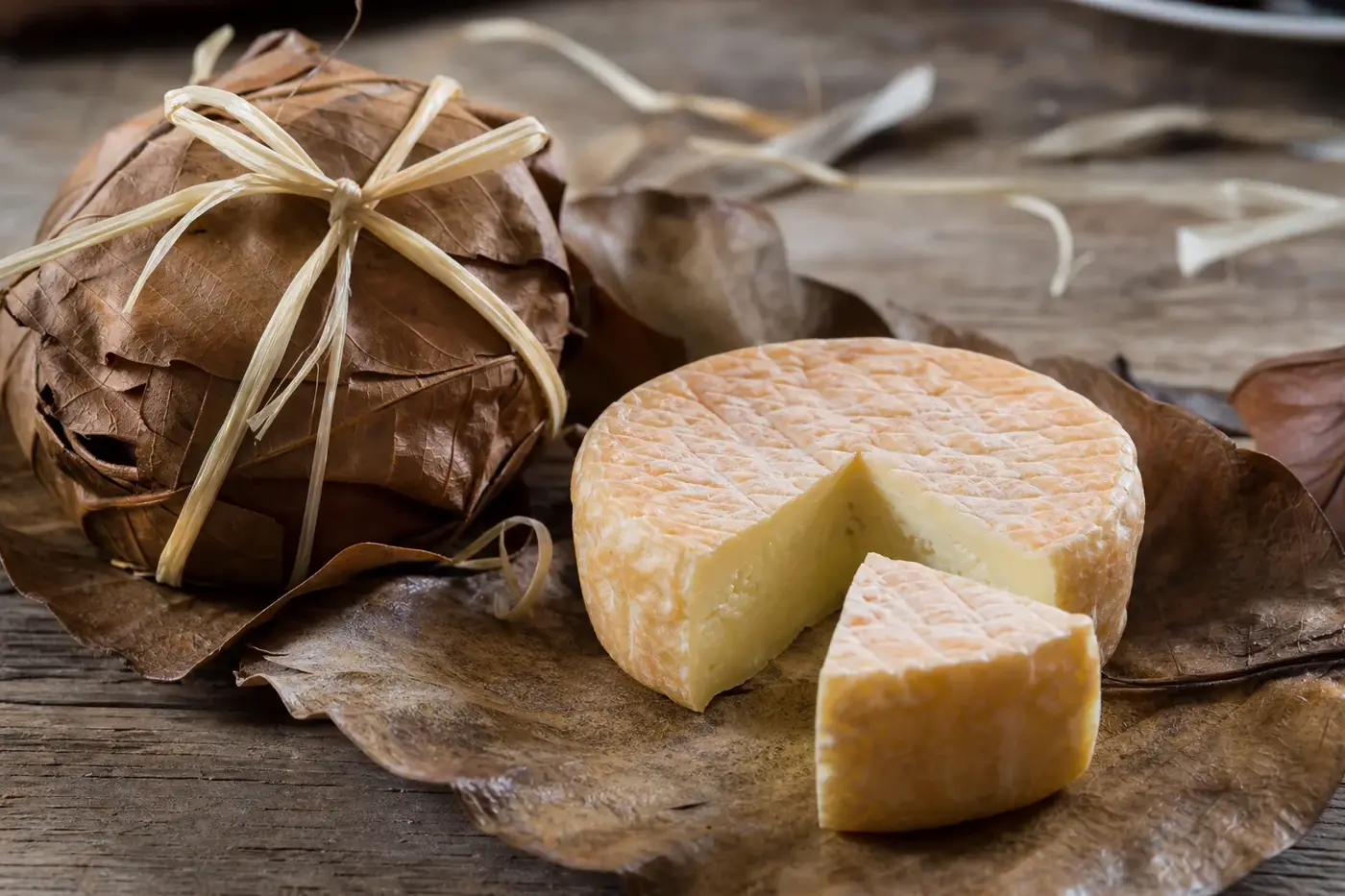
Untie the natural raffia. Peel back the brown chestnut leaves. Inside sits Banon, one of Provence’s most distinctive goat cheeses, wrapped rather more thoughtfully than most presents. Across the Mediterranean, Corsican makers turn sheep and goat milk into washed-rind cheeses, pressed cheeses and whey-based Brocciu. [1,2,4,7]
From rapid curdling to patient rind washing, these cheeses let you taste the work of the dairy as well as the landscape. Follow them from mainland hills to island pastures, and the differences become part of the pleasure. [1,2,4,7]
Get your bearings, then find the cheese
Picture the hills and plateaux of Haute-Provence, then Corsica’s inland valleys, winter grazing grounds and summer mountain pastures. Banon belongs to the first landscape; Corsican cheese traditions connect the others. Provence sits in south-eastern mainland France, while Corsica is a mountainous Mediterranean island. Keep that distinction in mind at the cheese counter. [1,2,8,9]
Banon has boundaries of its own, beyond Provence as its customary geographical frame. Its legally defined production area reaches into Alpes-de-Haute-Provence, Hautes-Alpes, Drôme and Vaucluse. Brocciu’s specification covers Haute-Corse and Corse-du-Sud. Corsica’s other cheese traditions often take their names from much smaller places. [2,5,8]
Follow the flocks through the seasons
In Banon country, goats browse as well as graze on dry limestone land, among scrub and grassland. INAO describes Mediterranean middle mountains with garrigue, the open scrub vegetation familiar across southern France. Your cheese’s connection to the pasture begins with what the animals eat, not a garnish added at the dairy. [1,2]
And which goats are doing the browsing? The published 2011 Banon specification names Provençal, Rove and Alpine goats, plus crosses between those breeds. The documented Provençal herd picture is broader than a single breed. [13]
Corsica has sheep and goat breeds of its own. The published 2013 Brocciu specification names the Corsican sheep breed and Corsican goat breed, with parcours, extensive rough grazing land, predominant in their diet. ODARC’s educational material describes the Corsican sheep as a small, hardy walking animal. Here, the terrain shapes husbandry, not just the view. [5,8]
Transhumance means moving livestock between grazing grounds with the seasons. Corsican accounts connect summer pastures with lower wintering areas, including historical links between Niolu shepherds and the Calenzana district. Settled producers work alongside mobile flocks, so ask a maker about the flock’s grazing calendar. A mountain-associated name alone cannot tell you where it spent the summer. [8,9]
Fresh cheese has a farming season, too: milk supply follows reproductive and milking cycles. Regional accounts describe winter production for traditional bastelicacciu and summer movement for some southern flocks. Let those patterns guide your questions about availability. Each dairy, though, keeps its own calendar. [8,9]
Banon: unwrap the little leaf parcel
Beneath Banon’s chestnut leaves, you find a cream-yellow rind and a homogeneous, supple paste. It begins with raw, whole goat milk and a rapid rennet-set curd, called caillé présure in the specification. Rennet is a milk-coagulating preparation. Here, its job is to form that curd quickly. [2]
Natural brown chestnut leaves completely enclose the cheese, secured with natural raffia. Maturation takes at least 15 days, including at least 10 under the leaves. INAO attributes part of Banon’s distinctive aromatic character to tannins passing from leaf to cheese and describes woodland aromas. The wrapping has work to do. [1,2]
Unwrap yours at the table and try a small piece on its own. INAO suggests fig preserve alongside it. Add plain bread for your first comparison, so you can distinguish the leaf-matured cheese from the preserve’s sweetness. [1]
Brousse du Rove: ask for it by name
Leave a little room in your Provençal cheese exploration for Brousse du Rove. INAO lists it among its AOP cheeses in the fresh-cheese category. Ask for that exact name, rather than simply requesting brousse. It deserves your attention separately from leaf-matured Banon. [3]
Brocciu: where whey gets another turn
Brocciu starts where another cheese leaves off. Its starting point is whey, the liquid separated from curd when making rennet-set sheep or goat cheeses. Add whole sheep or goat milk, then heat. The proteins come together to form the cheese. [4,5]
The milk and whey, production and maturation all belong within Corsica’s defined area. INAO describes fresh Brocciu as tender, with a lightly salty flavour. The producers’ organisation distinguishes it from the matured form, Brocciu passu. Before you start cooking, find out which one your recipe needs. [4,5,6]
Maturity makes a real difference on your plate. Fresh Brocciu is moist and yielding; the organisation describes its salted form as white, soft and slightly damp. Longer-matured secu is firmer and more crunchy. Ask about maturity when you buy, rather than expecting these forms to do the same job. [6]
Pull up a chair for Corsica’s five cheese families
Start with five names. Corsica’s traditional cheeses fall into five broad families in the account published by ODARC, the island’s agricultural and rural development office. Look closer, and individual makers come into focus. The local cheese-fair association’s accounts show how milk, season and a maker’s handling shape cheeses within each family. [7,9]
| Cheese family | Places to know | What you can expect |
|---|---|---|
| Bastelicacciu, or Bastelicaccia | Lower Gravona and Prunelli valleys | Soft, with a natural or bloomy rind. [7,8] |
| Niulincu, or Niolu | Niolu, Golu valley and Cortenais | Usually square, soft and washed-rind. [7,8] |
| Venachese, or Venacu | Venaco district and Cortenais | Round, soft and washed-rind. [7,8] |
| Calinzana | Calenzana and associated winter grazing districts | Soft and washed-rind, traditionally matured for prolonged periods in wooden chests. [7,8] |
| Sartinese, or Casgiu Sartinesu | Southern Corsica, including Taravu and Rizzanese | Firm, pressed, uncooked-curd cheese. [7,8] |
Ripening is a job, not simply an exercise in leaving cheese alone. Affinage means managing that process: washing a rind, leaving a natural surface or pressing the curd sends a cheese along a different path to maturity. Patience helps, but it is not the whole job description. [7]
ODARC reports fresh milk and hazelnut aromas in young Corsican cheeses, developing towards spice, cooked fruit and cocoa notes with age. Ask your maker how those regional tendencies emerge in the cheese in front of you. It is a good way to move from a family name to an individual flavour. [7]
AOP: find the place behind the name
A protected name ties your cheese to both a place and a method. In France, appellation d’origine protégée, or AOP, corresponds to the EU protected designation of origin, or PDO. Each designation links a named product to a defined area and production requirements. [1,2,3,4]
The five Corsican families above are regional traditions, distinct from Brocciu’s AOP. Read the exact product name alongside the maker’s name. For the difference between a regional style and a registered name, turn to protected names explained.
Give these cheeses a place in your kitchen
Brocciu is as at home in savoury dishes as in desserts. The Corsican cheese-fair association records omelettes with wild mint, stuffed artichokes, courgettes and tomatoes, and pastries including imbrucciata, fritella and fiadone. Your purchase might be the beginning of dinner, rather than the finishing touch to a cheeseboard. [9]
For a comparison at home, put out a fresh cheese, a leaf-matured Banon and one Corsican rind-ripened or pressed cheese. Add bread and water, then taste the differences. There is plenty to notice without giving the table any more homework.
If fresh Brocciu is unavailable for a filling, consider fresh ricotta and adjust for its moisture and salt. Name the substitution plainly and follow a recipe written for that ingredient.
At the counter and back at home
Ask for the maker, milk species, milk treatment and maturity. Read the storage instructions before buying, and choose only as much soft fresh cheese as you can use within its labelled life. The cheese label guide explains what to look for; the home storage guide covers wrapping and refrigeration.
UK NHS guidance from November 2026 says to keep chilled ready-to-eat foods at 5 °C or below and follow storage instructions. Use opened food within two days unless the packaging says otherwise. Eat ready-to-eat foods within four hours of removal from refrigeration, and observe use-by dates. [12]
Raw milk: find the advice that applies to you
If you are pregnant in the UK, the NHS advises avoiding unpasteurised milk and soft cheeses made from unpasteurised milk unless the cheese is cooked until steaming hot. Mould ripened soft cheeses should also be cooked until steaming hot, even when made from pasteurised milk. Hard cheeses made from unpasteurised milk and pasteurised soft goat cheese without a white rind can be eaten. Consult the current NHS guidance. [10]
NHS dietary guidance also identifies infants and young children, people over 65, and people with long-term conditions or weakened immunity as groups needing to avoid mould-ripened soft cheeses, ripened goat cheeses and soft blue cheeses. It permits their use in cooked recipes. Follow its group-specific advice and ask your clinician about your circumstances. For the underlying distinction, read milk treatments explained. [11]
Where will your cheese curiosity take you next?
- Cheese: The Complete Guide: explore milk, methods and styles more broadly.
- How to Tell Cheese Styles Apart: Milk, Rind, Texture and Method: compare the structures you have encountered here.
General information only, not medical advice: follow the official guidance where you live.
Questions people ask
What is Banon made from?
Banon begins with raw, whole goat milk and a rapidly set rennet curd. INAO says tannins passing from its chestnut leaf wrapping contribute to its distinctive aromas.
What is Brocciu and how is it made?
Brocciu starts with whey from sheep or goat cheeses. Whole sheep or goat milk is added, and heat brings together the proteins that form the cheese.
What is the difference between fresh Brocciu and Brocciu passu?
Fresh Brocciu is tender, moist and lightly salty. Brocciu passu is the matured form; the longer matured secu is firmer and more crunchy.
How is Brocciu used in cooking?
The Corsican cheese fair association records its use in omelettes with wild mint and in stuffed artichokes, courgettes and tomatoes. It also appears in pastries including imbrucciata, fritella and fiadone.
Can I eat Banon during pregnancy?
The NHS advises avoiding soft cheeses made from unpasteurised milk unless cooked until steaming hot. Banon is made from raw milk, so check the current NHS pregnancy guidance and ask your clinician about your circumstances.
Sources
- INAO. [Banon](../banon/), official product record, undated, accessed November 2026. Product description, aromatic character, geographical setting and suggested accompaniment.
- French Ministry of Agriculture. Cahier des charges de l’appellation d’origine « Banon » associé à l’avis n° AGRT1413719V, Bulletin officiel no. 27, 2014.
- INAO. [Brousse du Rove](../brousse-du-rove/), official catalogue record, undated. Retrieved catalogue extract identifies the AOP and fresh-cheese category; the full specification was not retrieved.
- INAO. [Brocciu](../brocciu/), official product record, undated, accessed November 2026.
- French Ministry of Agriculture. Cahier des charges de l’appellation d’origine « Brocciu corse » ou « Brocciu », homologated by Decree no. 2013-849 of 23 September 2013. Historical specification, read alongside the current INAO product record.
- Syndicat interprofessionnel de défense et de promotion de l’AOP Brocciu. Un fromage corse, le Brocciu, undated, accessed November 2026. Producers’ organisation’s descriptions of fresh, salted and matured forms.
- ODARC. Le fromage, 31 March 2022. Five regional families, principal structures and attributed aromatic tendencies.
- ODARC educational material hosted by Educorsica. Fromages, educational booklet section, undated, pages 18 to 20. Local breeds, customary cheese areas and pastoral associations; historical statistics were not used.
- Association A Fiera di u Casgiu. Les fromages de Corse, 8 February 2007. Historical regional account of cheesemaking, seasonal movement and culinary uses.
- NHS, United Kingdom. Foods to avoid in pregnancy, live guidance accessed November 2026.
- NHS, United Kingdom. Dairy and alternatives in your diet, live guidance accessed November 2026.
- NHS, United Kingdom. Listeriosis, page last reviewed 10 November 2023, accessed November 2026. Refrigeration, opened-food guidance, use-by dates and cooking advice.
- French Ministry of Agriculture. Cahier des charges de l’appellation d’origine « Banon », homologated by Decree no. 2011-1564 of 16 November 2011. Superseded specification used only for the explicitly dated historical breed statement.
Researched through official product records and published specifications, Corsican agricultural and regional cheese organisations, and UK NHS guidance, with historical accounts distinguished from current product descriptions.
Last checked: November 2026
Last checked November 2026.
The editors suggest you read next
French Cheese: The Complete Guide
Picture Normandy’s pastures, then follow the milk towards the Loire’s goat dairies, the Jura’s shared cheesemaking traditions and the sheep country of the Pyrenees.