Croque Monsieur
Your knife breaks through golden cheese and toasted bread.

Your knife breaks through golden cheese and toasted bread. Beneath it: hot ham and melting Gruyère, the pleasures of a French café sandwich in one mouthful. A few well-chosen ingredients do the work, though a little restraint helps if you add béchamel: toast the bread, keep the sauce thick, spread it thinly, then bake until the filling is hot and the topping browned. [1,2]
Meet the café favourite with a 1915 paper trail
Open The Belgian Cook-book, published in 1915, and you will find Croque-Monsieur among the entrées. That places the name in a contemporary cookery collection by that year. The sandwich belongs to the café and bistro repertoire, although its precise invention is less firmly established than the date often repeated for it. [3]
Then you reach the sauce question. Béchamel, the white sauce thickened with butter and flour, is an established modern option: Good Food spreads it inside and over the sandwich, while PBS's Cooking School version puts it on top. You can leave it out altogether, keeping the ham and cheese filling and toasting the sandwich instead. [1,2]
Let your cheese have its say
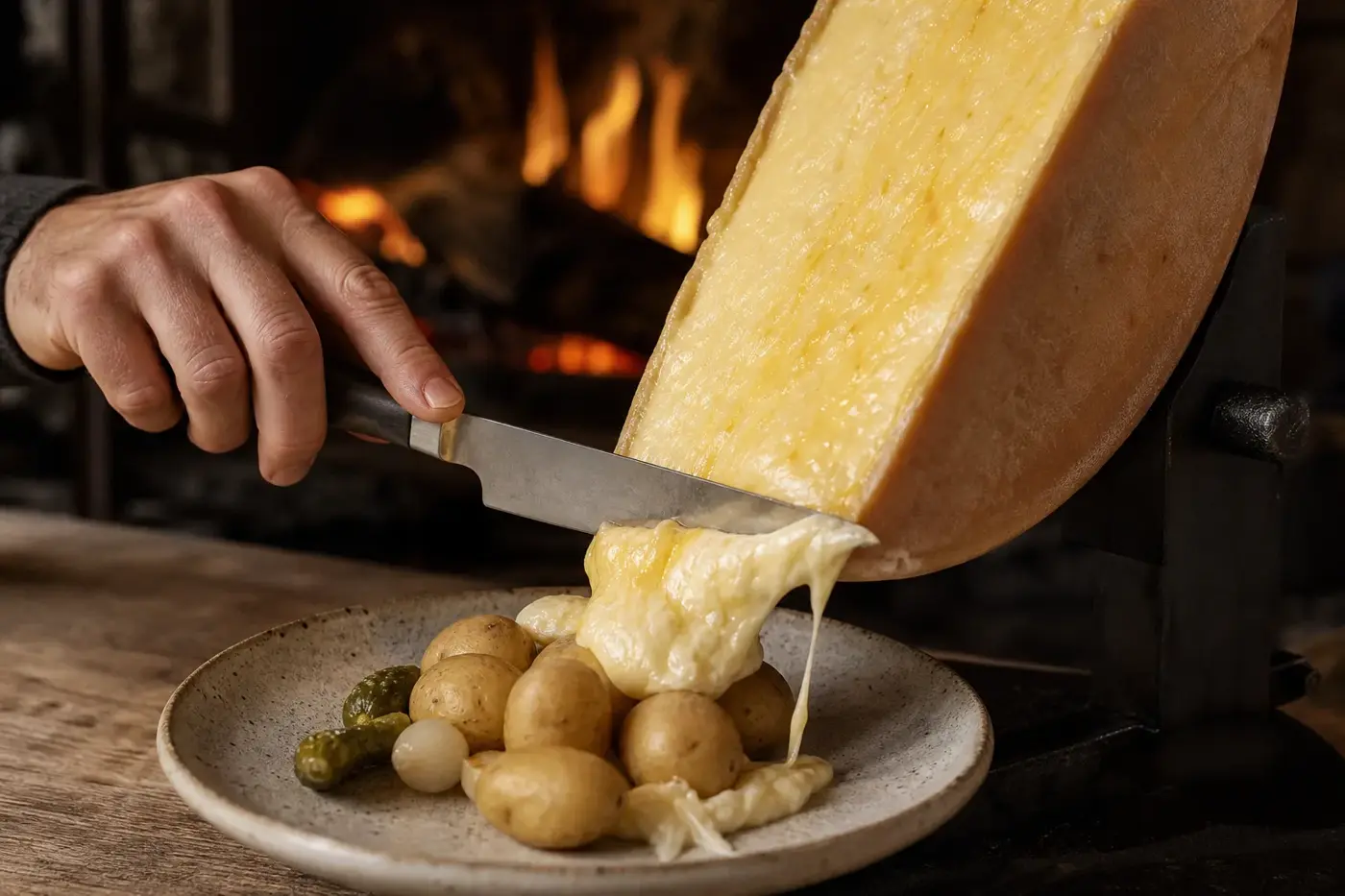
Start with Gruyère, the choice in both Good Food and PBS. Grate it so you can spread it evenly through the filling and across the top. Thick pieces take longer to melt, leaving your toast ready while the cheese is still considering its options. [1,2]
The Gruyère interprofession describes its younger cheese as gentle in flavour, while longer-matured Réserve is more intense and fruity. Think about how boldly you want the cheese to speak alongside your ham and mustard. You can explore those differences in le gruyère. [5]
Comté belongs here too, appearing in the two-sandwich recipe handout cited below. Its industry body identifies season, cheesemaking and maturation as influences on flavour, so choose a piece you enjoy rather than letting age alone make the decision. The comté guide takes you further into the cheese itself. [4,6]
If you prefer a gentler filling, Emmental is another practical substitution. Emmentaler Switzerland describes one of its products as Mild/Classic, a useful starting point. Use the same weight, then taste your cheese and ham before seasoning: their salt, moisture and flavour will shape your finished sandwich. [7]
Make béchamel that stays where you put it
Your smooth sauce begins with a roux: butter and flour cooked together. Whisk in the milk gradually, smoothing out each addition before pouring in more, then let the sauce bubble gently as you stir. The published methods follow this sequence, turning flour paste into smooth béchamel. [1,2,4]
Watch as you add the milk: it should blend in, not gather around lumps of flour. You want a sauce that spreads with a spoon and stays put. If it runs across the bread, cook it a little longer; if it is too stiff, whisk in milk a small splash at a time. [1,4]
Your Croque Monsieur for two
Recipe status: adapted from Good Food, PBS Cooking School and the recipe handout listed in Sources. Here, you make plain milk béchamel, without the infused aromatics and mayonnaise served with the Good Food recipe. [1,2,4]
Makes: two sandwiches. Preparation: about 20 minutes. Baking: 10 to 15 minutes, plus toasting. Oven: 220 °C conventional, 200 °C fan (425 °F). [1]
Equipment: kitchen scales, measuring jug, small saucepan, whisk, grater, baking tray, grill and fish slice.
Gather everything for that golden finish
For the sandwiches:
- 4 slices close-textured white bread, approximately 160 g
- 20 g butter, melted
- 80 g ready-to-eat cooked ham, thinly sliced
- 100 g Gruyère, rind removed, grated
- 10 g Dijon mustard
For the béchamel:
- 20 g butter
- 20 g plain wheat flour
- 250 ml whole milk, plus a little extra if needed
- A small pinch of ground nutmeg and black pepper
- Salt, only if needed after tasting
Allergen check: these specified ingredients contain milk, wheat and mustard. Read every pack, including the ham and bread, for additional ingredients and precautionary warnings. [1]
Build it, bake it, take it straight to the table
-
Start with your sauce. Melt the 20 g butter in your saucepan over gentle heat. Stir in the flour and cook, stirring, for about 2 minutes, then gradually whisk in the milk, keeping everything smooth. Bring to a gentle bubble and cook, stirring, until thick enough to spread. Add nutmeg and pepper, then taste before adding salt. [2,4]
-
Give the bread a golden start. Brush the bread with the melted sandwich butter, place it on the tray and grill until golden on the buttered side, watching closely. Set the oven to the temperature above. Those toasted faces will become the outside of your sandwiches. [1]
-
Build a level filling. Turn two slices toasted-side down on the tray, spread their inner faces with mustard and add half the grated cheese. Divide the ham between them, keeping it within the bread's edges in a flat layer rather than a thick, folded mound. Close with the remaining bread, toasted-side up. [1,2]
-
Top it, then bake. Spread each top with a thin, even layer of béchamel and scatter over the remaining cheese. Keep surplus sauce separate rather than forcing it onto the bread. Bake for 10 to 15 minutes, until the top is golden in patches and the cheese has melted. The filling should be steaming hot all the way through, following Food Standards Agency advice for England, Wales and Northern Ireland. [9] [1,2]
-
Look underneath, then serve. Lift a corner with your fish slice: the underside should still be toasted, not wet. Transfer straight to plates while the contrast between crisp bread and soft filling is at its best.
Protect that beautifully crisp base
A little restraint during assembly rewards you at the first bite. Choose bread with an even crumb, giving the filling a continuous surface to sit on, and lay your ham flat. Save most of the sauce for the top rather than soaking both inner faces; pre-toasting and a thin topping follow the published recipes' approach. [1,2]
Have your salad ready before the sandwiches leave the oven. A croque waiting on a plate gradually loses that lovely contrast between crisp bread and soft filling. This is one occasion when keeping lunch waiting is less impressive than skipping the elaborate garnish.
Make room for Madame, or bring in mushrooms
Add a fried egg and your sandwich becomes a Croque Madame, as shown in the published Monsieur and Madame recipe handout. Make the sandwich as above, then put the cooked egg on just before serving. With that extra soft component, keeping the bread and sauce layers restrained matters just as much. [4]
For a meat free variation, swap the ham for browned mushrooms. Slice them, cook until their released liquid has evaporated, then let them stop steaming before you assemble your sandwich. Keep the layer thin: a heap of wet mushrooms will soften that crisp base.
If you want a fully vegetarian dish, replace the Gruyère with a cheese labelled suitable for vegetarians and check the remaining ingredients. The rennet explained guide takes you through the different sources.
Bring something sharp to the plate
A small green salad with a sharp vinaigrette gives you a welcome contrast to the rich sandwich. Put it beside your croque, not underneath: try lettuce with a few bitter leaves, lightly dressed with olive oil, wine vinegar and mustard. Cornichons make another straightforward companion, also served with the PBS version. [2]
Let your drink follow the same principle. Look for something fresh against the sauce and filling, rather than adding another layer of heaviness.
| Your choice | Something to sip | What it brings |
|---|---|---|
| Wine | Dry, unoaked Chardonnay | A fresh contrast to butter and cheese. |
| Beer | Pale lager | A restrained partner for ham and mustard. |
| Alcohol free | Sparkling water or a tart apple drink | Freshness without another heavy flavour. |
Alcoholic options are for adults of legal drinking age who choose to drink. Offer small servings, with alcohol free choices alongside. For the broader principles, turn to cheese and wine pairing.
Give your croque a little helping hand
A soggy base or a darkening top need not leave you guessing. If your sandwich is not quite behaving, these practical fixes address the likely causes of common texture and finishing problems.
| What has happened? | The likely reason | Your next move |
|---|---|---|
| Soggy base | Too much sauce or insufficient pre-toasting | Use a thinner topping; toast the bread before assembly. |
| Lumpy sauce | Milk added faster than it was incorporated | Take it off the heat; whisk smooth before adding more milk. |
| Top darkens before cheese melts | Strong surface heat | Move it lower in the oven; keep cooking and check frequently. |
| Uneven cheese coverage | Cheese piled in the centre | Spread grated cheese across the whole topping before baking. |
This page summarises published guidance from the official sources it cites. It is not medical advice. Guidance differs between countries and changes over time, so check the current source for where you live, and ask your doctor, midwife, pharmacist or dietitian about your own circumstances.
Save leftovers safely and reheat with care
If you follow UK advice, the Food Standards Agency guidance for England, Wales and Northern Ireland says to keep your fridge between 0 °C and 5 °C (32 °F to 41 °F). Cool cooked food and refrigerate it within 1 to 2 hours. Eat refrigerated leftovers within 48 hours or freeze them, and follow the ingredients' storage instructions too. [8,9]
Reheat leftovers only once, until steaming hot throughout, following the same agency's advice. In an oven, check the centre as well as the top: a browned surface cannot tell you whether the filling is hot through. The time needed depends on your sandwich's thickness, its starting temperature and your appliance. [9]
Chilled sandwiches lose some crispness as the bread rests against the sauce and filling. For the best texture, make only what you will eat immediately and keep any properly cooled surplus sauce separately. That sauce has the same FSA leftover limits, not a longer storage life. [8,9]
When texture matters, choose the oven for reheating, since a microwave tends to soften the bread. Leave space around your sandwich on the tray and assess the centre separately from the crust. For unused cheese, follow its packaging and consult the home storage guide. [9]
Questions people ask
How do you keep a Croque Monsieur from getting soggy?
Toast the bread before assembly and spread the ham in a flat layer. Keep the béchamel thick and use a thin layer on top rather than soaking the inner faces.
Can you make a Croque Monsieur without béchamel?
Yes. For a simpler croque, keep the ham and cheese filling and toast the sandwich without sauce.
What cheese can you use instead of Gruyère?
Comté and Emmental are alternatives mentioned on the page. For Emmental, substitute the same weight, then taste the cheese and ham before deciding on seasoning.
Can you make a vegetarian Croque Monsieur?
Try browned mushrooms instead of ham, cooking them until their released liquid has evaporated and letting them stop steaming before assembly. For a fully vegetarian dish, use a cheese labelled suitable for vegetarians and check the remaining ingredients.
How should you store and reheat leftover Croque Monsieur?
The Food Standards Agency advises cooling cooked food and refrigerating it within 1 to 2 hours, then eating refrigerated leftovers within 48 hours or freezing them. It advises reheating leftovers only once, until steaming hot throughout. See its guidance for England, Wales and Northern Ireland.
Sources
- Good Food, Croque monsieur, recipe published in Good Food magazine, August 2017. Ingredients, buttered bread pre-toasting, assembly, oven settings and baking interval. Source.
- PBS Food, Croque Monsieur, Cooking School recipe, 13 November 2014. Toasted bread, ham, mustard, Gruyère, top-applied béchamel, cooking method and cornichons. Source.
- Project Gutenberg, The Belgian Cook-book, 1915 edition, electronic text updated 3 May 2013. Title page and contents entry for “Entrée (Croque-Monsieur)”. Source.
- Unattributed recipe handout, Croque Monsieur & Croque Madame, undated. Two-sandwich quantities, plain milk béchamel, Comté filling and fried egg variation. Source.
- Interprofession du Gruyère, Our types of Le Gruyère AOP, undated current webpage. Industry body's descriptions of younger cheese and Réserve. Source.
- Comité Interprofessionnel de Gestion du Comté, Questions de goût, undated current webpage. Season, cheesemaking and maturation as influences on flavour. Source.
- Emmentaler Switzerland, Emmentaler AOP Mild/Classic, undated current product page. The organisation's Mild/Classic product designation. Source.
- Food Standards Agency, How to chill, freeze and defrost food safely, published 18 December 2017, current online text. Household refrigeration, cooling and leftover storage guidance for England, Wales and Northern Ireland. Source.
- Food Standards Agency, Cooking your food, published 18 December 2017, current online text. Leftovers, reheating thoroughly and reheating only once. Source.
Researched through published recipes, a digitised historical cookery collection, cheese industry descriptions and official household food safety guidance.
Last checked: November 2026
Last checked November 2026.
The editors suggest you read next