Danish Cheese
On Funen, straw smoke curls around fresh white cheese.
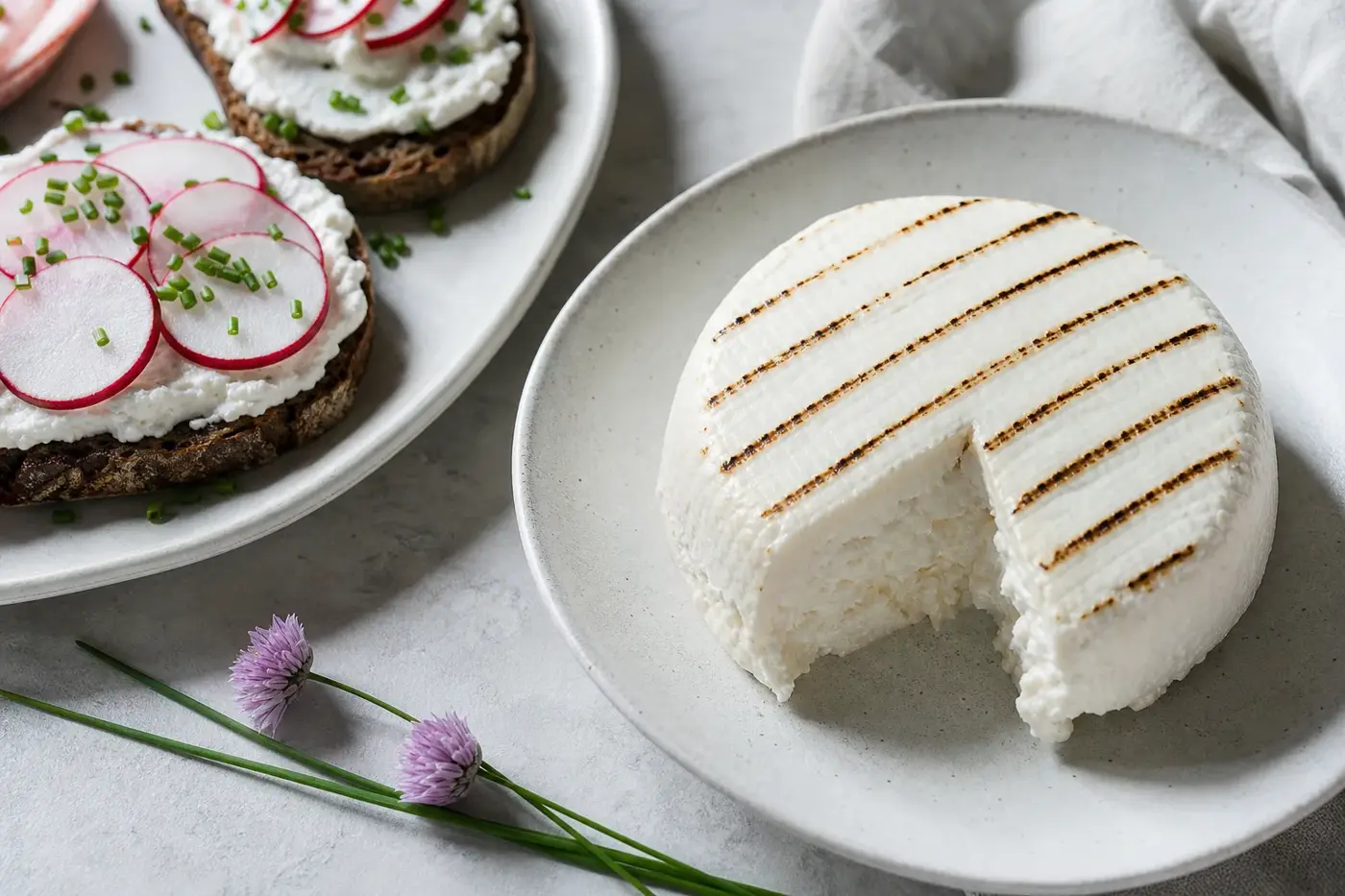
On Funen, straw smoke curls around fresh white cheese. A smoking rack draws dark lines across the surface, while the inside stays soft and gently smoky. Put this rygeost on rye bread with radishes and you have a local speciality worth lingering over, not just a supporting act for Denmark's famous exports. From here, your next mouthful might be a supple sandwich cheese, assertive mature Danbo or blue-veined Danablu. [1,2,4,8]
| Your bearings | What to know |
|---|---|
| Where to explore | Denmark, including Jutland, Funen and the other islands. [9,10] |
| Main milk | Cows' milk, notably in Danbo, Havarti and Danablu. [4,5,6] |
| EU registered names | Danablu, Danbo, Esrom and Havarti, all PGIs; November 2026 register information. [3] |
| Registration authority | European Commission, eAmbrosia register. [3] |
| Industry body | Mejeriforeningen, the Danish Dairy Board. [7] |
Follow the smoke to Funen
Fynsk rygeost belongs firmly to Funen, or Fyn in Danish. Slow Food's Ark of Taste describes a white, soft cheese with a fresh, lightly sour smell, mellow flavour and gentle smoke. Traditionally, oat or rye straw and nettles provide that smoke. Some versions invite caraway along, too. [1]
Beneath the dark rack marks described by the Danish Dairy Board, the cheese remains fresh and soft, ready for you to spread or slice. Try it on rye bread with chives and radishes. Smoke, sour milk and crisp vegetables meet in one mouthful, each with room to make itself known. [1,2]
You can learn as much from this everyday meal as from a famous export cheese. It puts a local speciality where it belongs: at the table. It also gives you a lovely way into Danish cheese more broadly. Start with the bread, then notice what the cheese brings.
Meet the farms behind the cheese
Cows' milk underpins Denmark's best-known cheeses, but that is only the beginning. Danbo, Havarti and Danablu all use it, according to their specifications, yet you will find markedly different textures. Ripening matters, as does the treatment of the curd, the solids separated from whey. [4,5,6]
Behind those cheeses lie different farming histories across Jutland and the islands. Denmark's heritage agency describes how western Jutland's soils suited cattle farming during the nineteenth-century agricultural transition. The Green Museum brings you into the story of island cattle, including Funen's important role in developing the Red Danish Dairy breed. [9,10]
Picture pasture, certainly, but leave room for dairies collecting milk from several farms. Them describes a supply structure that has moved towards fewer, larger farms over time. A village address on your cheese need not mean a single farm. Your purchase in town may connect you to a whole farming community. [12]
Organic dairying has its own place in this landscape. Thise, in north-western Jutland, traces its beginnings to 1988 and describes itself as an organic cooperative; Them's history includes organic and other supplying farms. Look at the producer and the particular cheese you are buying. Danish dairying has more than one farming model. [11,12]
If you fancy widening your tasting, ask a specialist about Danish sheep's and goat's milk cheeses. Compare their texture and maturity with your cows' milk selection. The distinctions in cheese styles give you a useful guide.
Find your way through Denmark's signature cheeses
Danbo: begin with a good slice
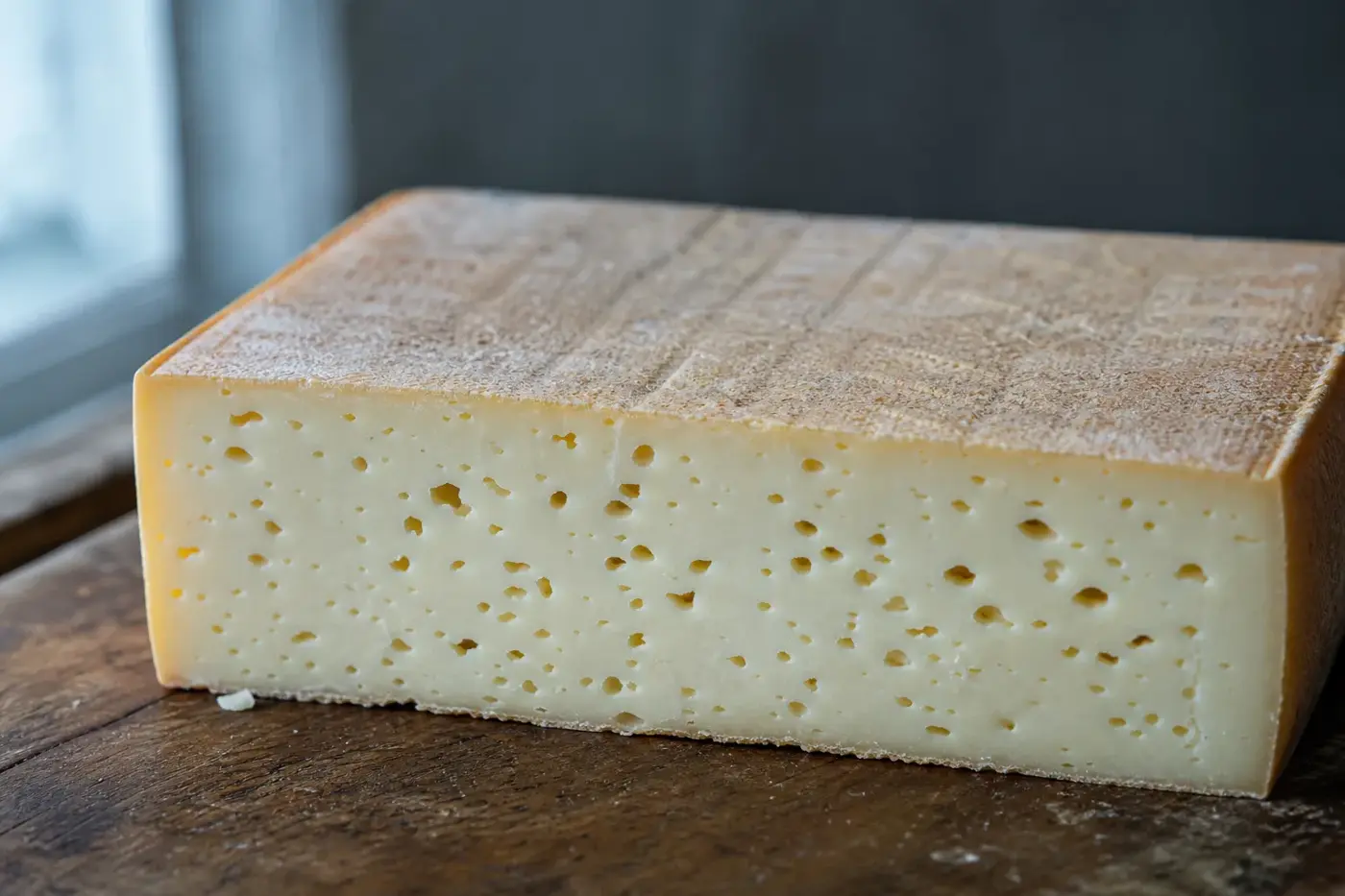
Danbo is a welcoming place to begin exploring Denmark's slicing cheeses. Its specification describes a supple paste, soft but sliceable, scattered with evenly distributed round holes. Young Danbo tastes mild and slightly acidic. Give it age and the flavour becomes more pronounced. [5]
Its characteristic aroma comes from smear ripening, which cultivates microorganisms on the surface. Caraway is an allowed flavouring, too. That unassuming sandwich slice has rather more on its CV than you might expect. [5]
Havarti: take a closer look
Put Havarti beside Danbo and give yourself a moment to look. Havarti's current single document describes a sliceable cheese with some bite and numerous small, irregular openings, rather than Danbo's rounder holes. Its specified flavour is mild, acidic and aromatic, growing more pronounced as it matures. Try plain Havarti against Danbo before moving on to versions with herbs or spices. [6]
Make this a sandwich tasting rather than a crowded cheeseboard. Cut comparable slices and use the same bread: Danbo brings its characteristic smear-ripened aroma, while plain young Havarti offers a different starting point. Leave the toppings aside for now. You will find the differences easier to recognise without differently dressed sandwiches getting in the way. [5,6]
Esrom: save room for another name
Keep Esrom in mind as you explore beyond those first slices. It has its place among the Danish cheeses listed by the Danish food authority. [3]
Danablu: welcome a bolder mouthful
Danablu changes the mood with blue-green marbling and a more forceful flavour. Its specification describes white to pale yellow cheese with a generally soft consistency, suitable for both cutting and spreading. Expect piquancy, sometimes sharpness, salt and tartness, with slight bitterness. [4]
That blue-mould character gives you a clear contrast with young Danbo and Havarti. Taste the milder cheeses first, then return to Danablu. You will not have to search hard for the difference. [4,5,6]
Get to know the protected names
Danablu, Danbo, Esrom and Havarti all appear among the registered EU geographical indications listed by Denmark's food authority. Each is a protected geographical indication: PGI in English, BGB in Danish. For Danablu, Danbo and Havarti, the geographical area is Denmark. [3,4,5,6]
| Cheese | EU protection | What the specification tells you | Register information |
|---|---|---|---|
| Danablu | PGI | Blue-veined cows' milk cheese; all production stages take place in Denmark. [3,4] | November 2026 |
| Danbo | PGI | Sliceable cows' milk cheese with specified smear ripening in Denmark. [3,5] | November 2026 |
| Esrom | PGI | A separately registered cheese name with its own product specification. [3] | November 2026 |
| Havarti | PGI | Cows' milk cheese with characteristic irregular openings; all production stages take place in Denmark. [3,6] | November 2026 |
These specifications reach well beyond the name you see on the packet. They cover appearance, texture, composition and production conditions. Havarti's document, for instance, distinguishes rindless maturation from maturation with a smear-ripened rind; Danablu's sets a minimum maturation of five weeks. When you want the protected Danish products, the EU records are the relevant reference. [4,6]
For the wider distinction between origin schemes, turn to protected names explained. At the counter, look at the producer's label for the cheese's identity and place of production. You will find practical pointers in reading a cheese label.
Make time for cheese on bread
An ostemad is a piece of bread with cheese, an everyday fixture in Denmark's open-sandwich culture. Danbo's specification records it on rye bread, wheat bread and breakfast rolls, with cheese on bread eaten morning, noon and evening. A breakfast selection lets you meet Danish cheese in its everyday setting. If you have ever wanted cheese to count as a plan for the whole day, here is encouragement. [5]
Butter may come between bread and cheese, but it need not. The Dairy Board notes that rygeost is eaten with or without it; rye bread, radishes and chives keep you close to the Funen tradition. Taste the fresh cheese alone first. Then add bread and garnish to discover how its smoke and acidity work in the complete mouthful. [1,2]
Older Danbo takes your open sandwich somewhere more assertive. The Dairy Board describes aromas and flavours sharpening with age, with some examples developing savoury depth and caramel-like sweetness. Its traditional garnish is raw onion and sky, a savoury jelly, served with the cheese on rye bread. Try the onion and jelly separately before bringing them together. [8]
Meet the farmers who pooled their milk
In 1882, farmers at Hjedding in western Jutland committed their milk to a shared enterprise. Denmark's heritage agency records it as the country's first cooperative dairy. Members shared responsibility and received returns according to their deliveries, yet each member had one vote. Many separate milk supplies had become a common undertaking. [9]
Butter was the strong early focus; cheese later grew into a more specialised business. At Them, cheese became the dairy's main product during the 1970s, followed by investment in automated pressing in 1984. Its later account of an export business aimed at Asian demand shows you just how far a village cooperative's local milk could travel. [12]
Organisation was only part of the story. Danablu's official account links its modern character to experiments with homogenised milk in 1927 and subsequent production controls for export. Danish cheesemaking gained increasingly deliberate control over texture, ripening and consistency. Meanwhile, those local habits of eating cheese endured. [4]
Plan your next Danish cheese tasting
In Copenhagen, start planning with TorvehallerneKBH and specialist cheese counters. Arla Unika's website points you towards stockists and cheese tastings for contemporary Danish selections. Confirm current locations and booking arrangements directly, then ask at the counter for Danish-made cheeses from different producers. Familiar names give you a starting point, not the whole selection. [13]
On Funen, make rygeost the centre of your visit. VisitNyborg identifies it as a local food and directs you to Osteboden Fru Hansen in Nyborg for rygeost salad. For farm-dairy visits, enquire directly about public access and current production. That matters especially if fresh smoked cheese is your reason for travelling. [14]
In Jutland, Thise near Roslev and Them offer useful starting points for exploring cooperative cheese. Consult each dairy's official information for shop or visitor enquiries, and confirm accessibility, bookings and tasting arrangements before setting out. Ask which cheeses best express that dairy's work. The answer gives your visit a sharper focus. [11,12]
Bring Denmark to your cheese board
Build your selection around contrasts: fresh rygeost, mild Havarti or young Danbo, mature Danbo and Danablu. Add Esrom as a fifth cheese if you want to explore all four protected names alongside the Funen speciality. The sequence follows the contrasting styles described in the specifications and the Dairy Board's accounts. [1,3,4,5,6,8]
Start gently, leaving the mature and blue cheeses until later. Set out rye bread, butter, radishes and chives, with onion and savoury jelly beside the mature cheese. Taste each cheese plain, then make a small open sandwich. Bread, cheese and garnish together tell you as much about Danish cheese culture as the cheese alone. [1,2,8]
Questions people ask
What is rygeost and how is it eaten?
Rygeost is a fresh, soft cheese associated with Funen, with a lightly sour smell and gentle smoke. It is often eaten on rye bread with radishes and chives, with or without butter.
What is the difference between Danbo and Havarti?
Danbo has evenly distributed round holes and a characteristic aroma from surface ripening. Havarti has numerous small, irregular openings and a mild, acidic and aromatic flavour that grows more pronounced as it matures.
Which Danish cheeses have protected names?
Danablu, Danbo, Esrom and Havarti are all registered as EU protected geographical indications, known as PGIs. For Danablu, Danbo and Havarti, the geographical area is Denmark.
What does Danablu taste like?
Danablu has a piquant flavour that can be sharp, salty and tart, with slight bitterness. It has blue and green marbling and a generally soft consistency suitable for cutting and spreading.
What is an ostemad?
An ostemad is a piece of bread with cheese and an everyday part of Denmark's open sandwich culture. Danbo's specification describes cheese on bread as something eaten morning, noon and evening.
Sources
- Slow Food Foundation for Biodiversity, Fynsk Rygeost, Ark of Taste entry, undated. Food-heritage account used for traditional smoking, sensory descriptions and accompaniments. Source.
- Mejeriforeningen, Rygeost, undated. Industry body's account of appearance, texture and serving customs. Source.
- Danish Veterinary and Food Administration, Produktspecifikationer for geografiske betegnelser, current online index, accessed November 2026. Lists the registered Danish names and links their specifications. Source.
- European Commission, Publication of the communication of an approved standard amendment to a product specification of a geographical indication, Danablu, C/2025/6673, 15 December 2025, including the updated single document. Source.
- Danish Veterinary and Food Administration, Produktspecifikation for Danbo, version dated 11 September 2025, including annexes. Source.
- Danish Veterinary and Food Administration, Enhedsdokument: Havarti, version dated 8 September 2025. Source.
- Mejeriforeningen, Danish Dairy Board, current institutional website, accessed November 2026. Source.
- Mejeriforeningen, Danbo ekstra lagret, undated. Industry body's account of mature Danbo and traditional garnishes. Source.
- Danish Agency for Culture and Palaces, Hjedding Andelsmejeri, undated heritage record. Source.
- The Green Museum, Old Danish breeds: cattle, undated museum account. Source.
- Thise Mejeri, About Thise, undated producer account, accessed November 2026. Source.
- Them Andelsmejeri, Our Dairy, undated producer history and current account, accessed November 2026. Source.
- Arla Unika, official website, accessed November 2026, navigation to stockists and cheese tastings. Source.
- VisitNyborg, Rygeost, undated destination account, accessed November 2026. Source.
Researched through official specification documents, Danish heritage and museum records, and attributed industry, producer and destination accounts; tasting suggestions are editorial synthesis.
Last checked: November 2026
Last checked November 2026.
The cheeses of Denmark
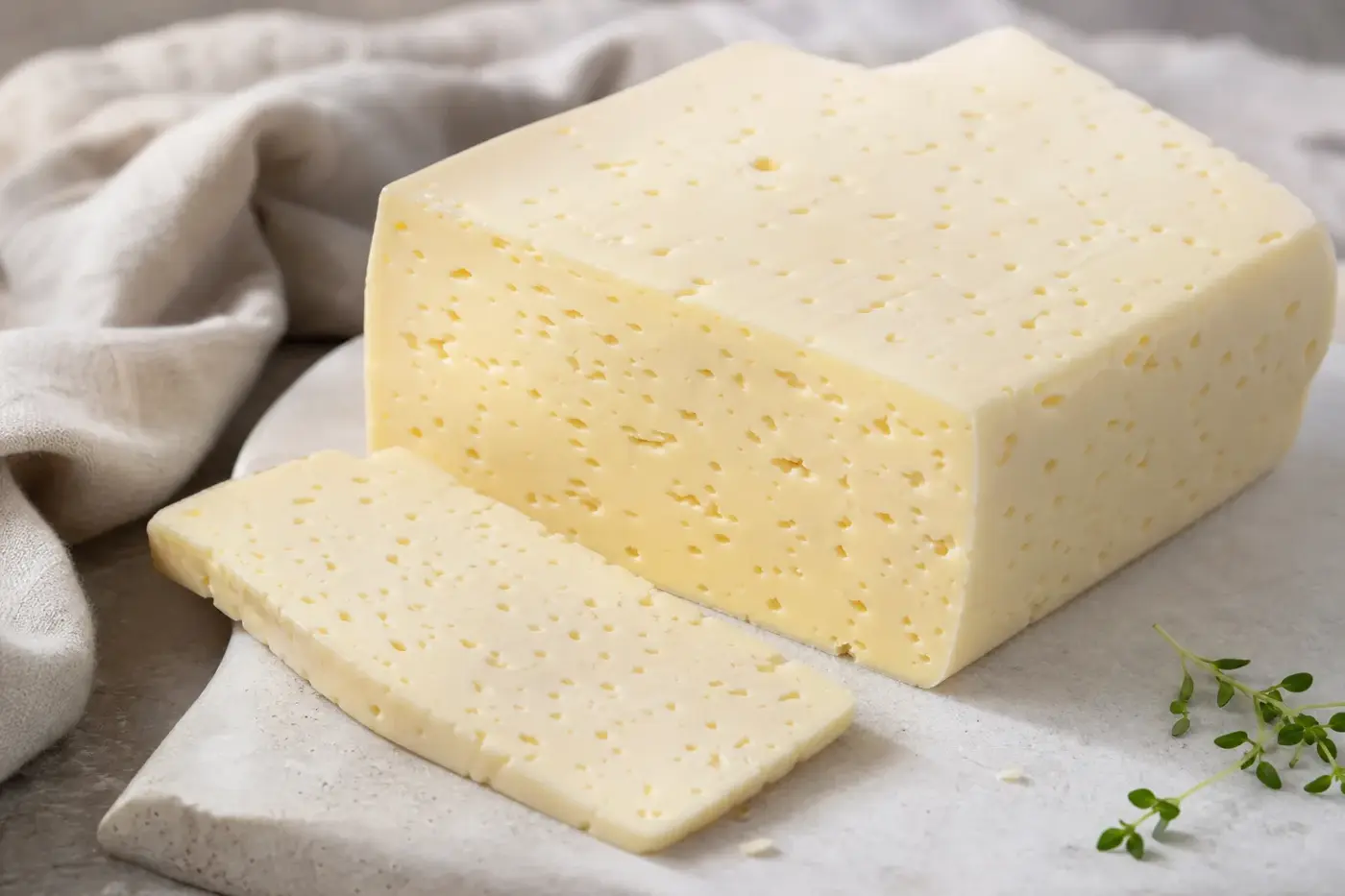
Havarti
Your knife meets a little resistance, then a neat slice of Havarti falls away.
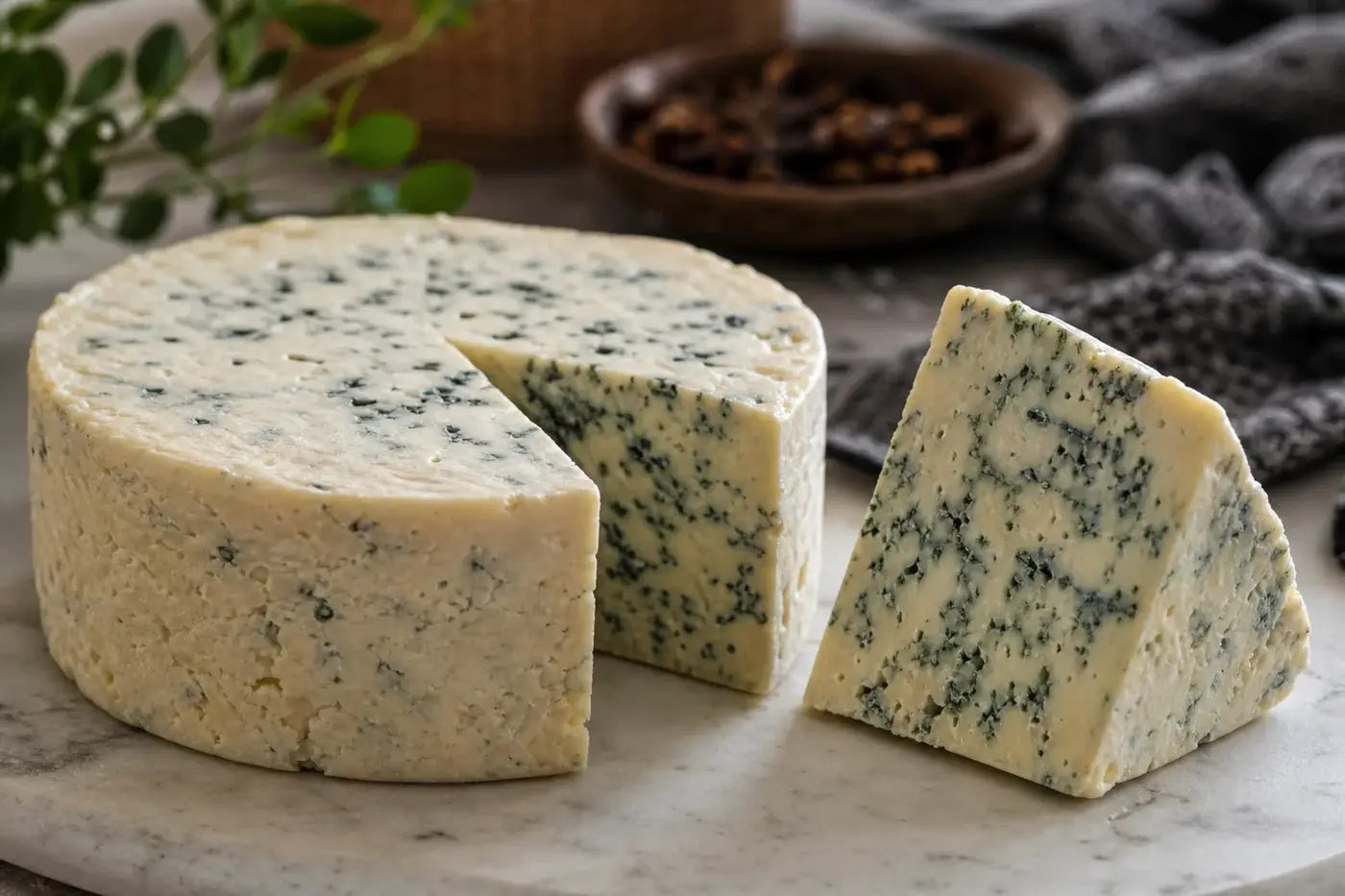
Danablu
Steel needles pierce the salted cheese.
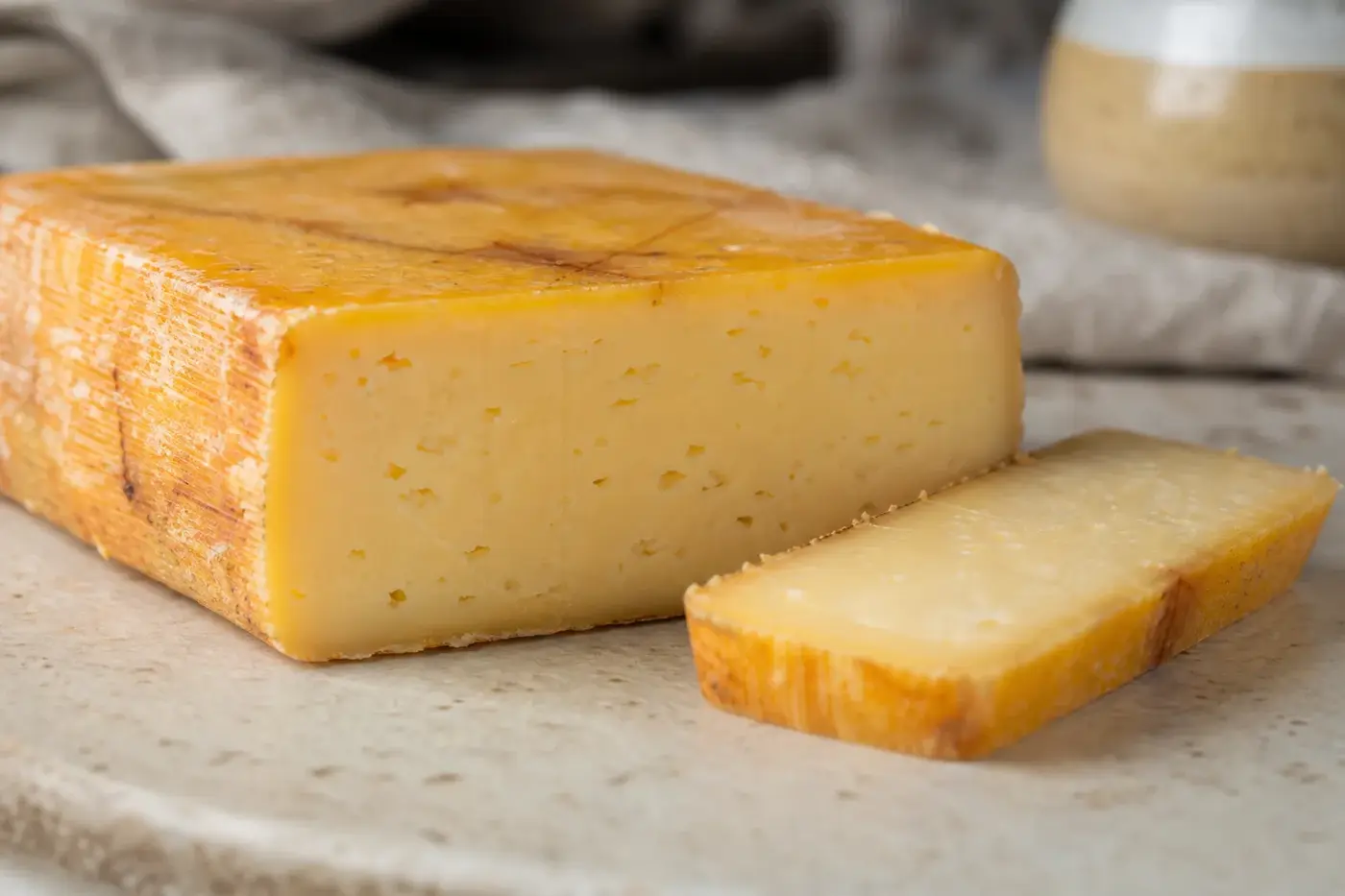
Esrom
Bring a piece of Esrom close and the yellow-orange rind catches your eye.
Danbo
Picture Kirkeby dairy on Fyn in 1897.
The editors suggest you read next

French Cheese: The Complete Guide
Picture Normandy’s pastures, then follow the milk towards the Loire’s goat dairies, the Jura’s shared cheesemaking traditions and the sheep country of the Pyrenees.


