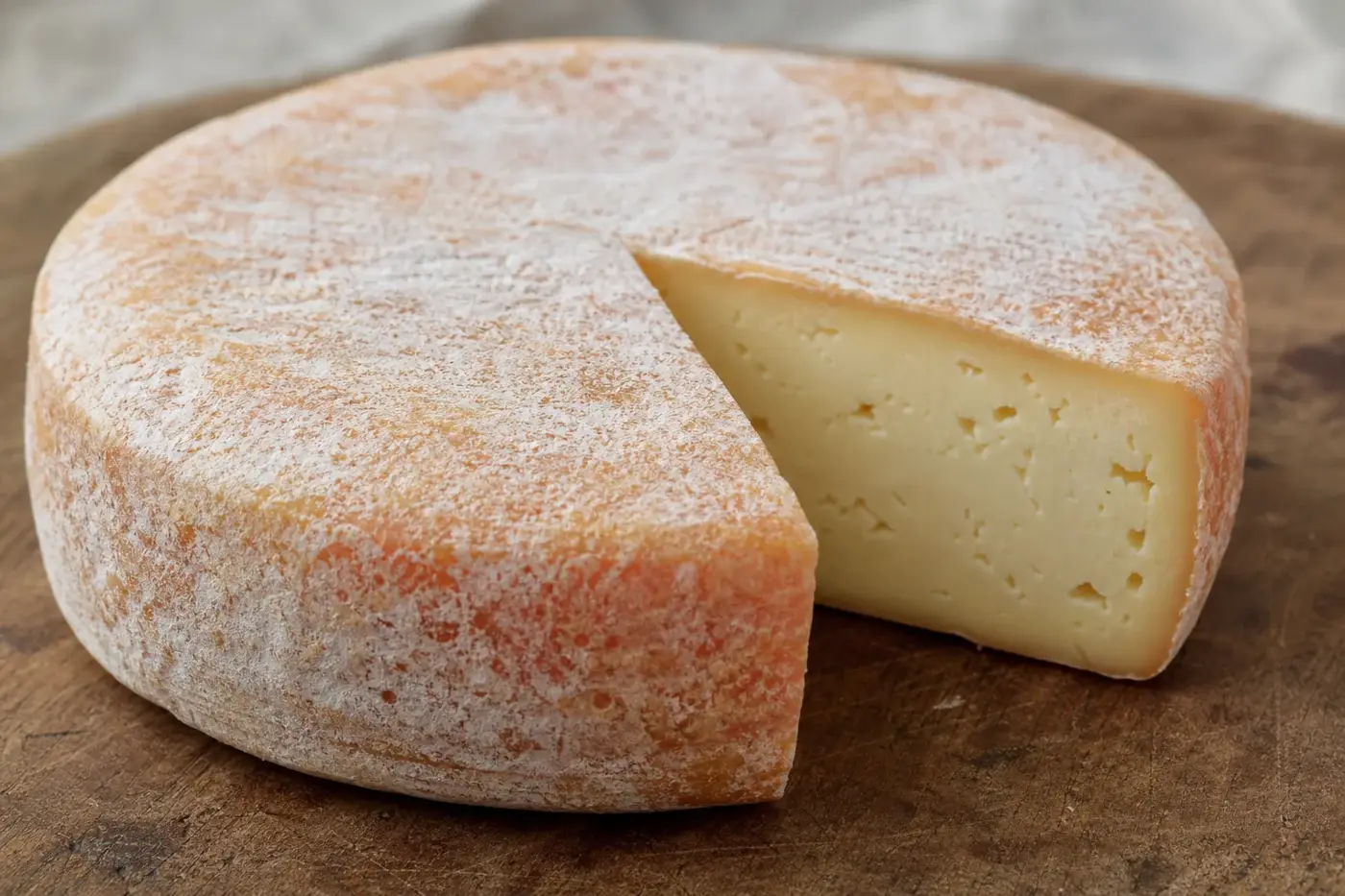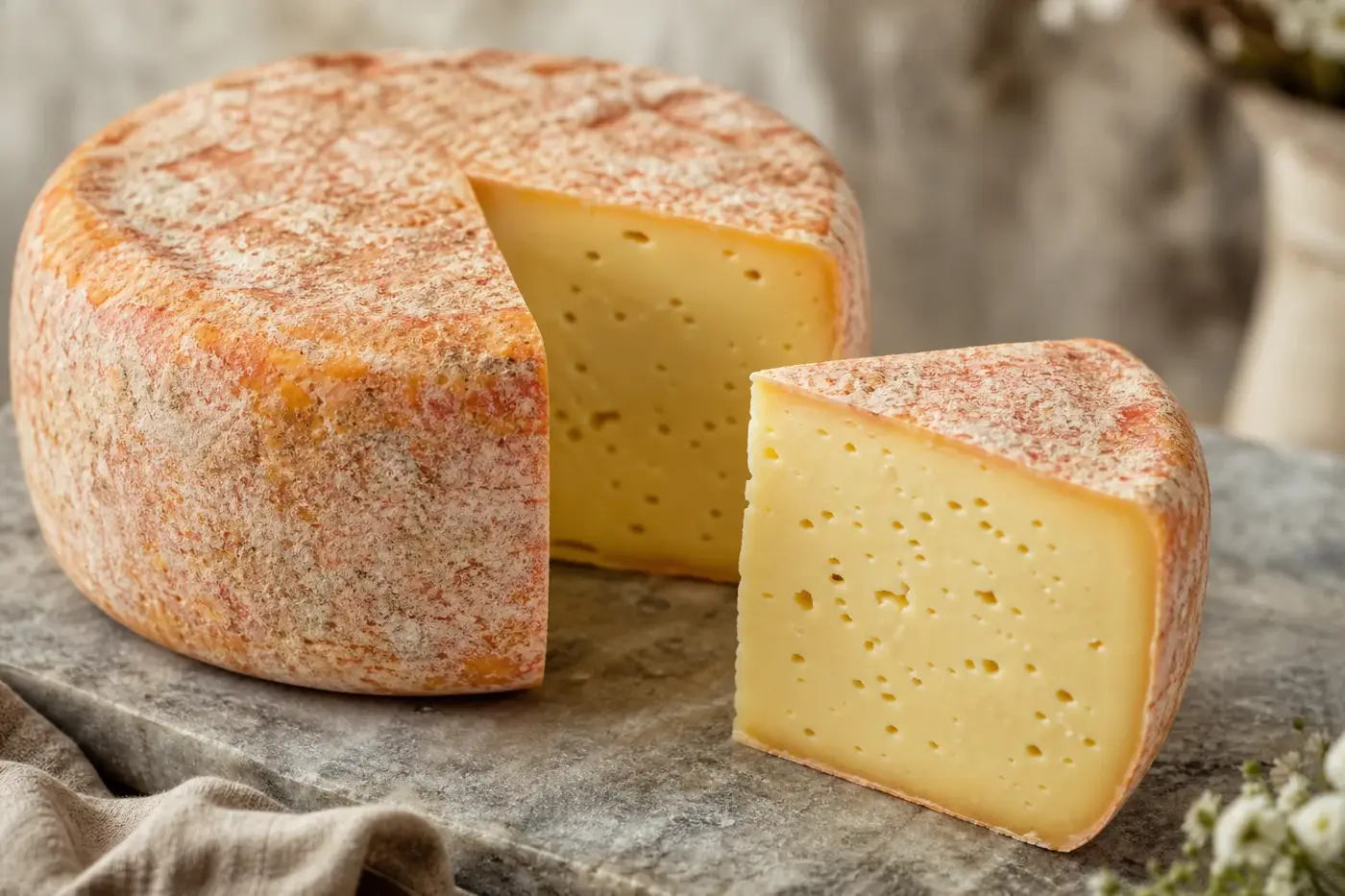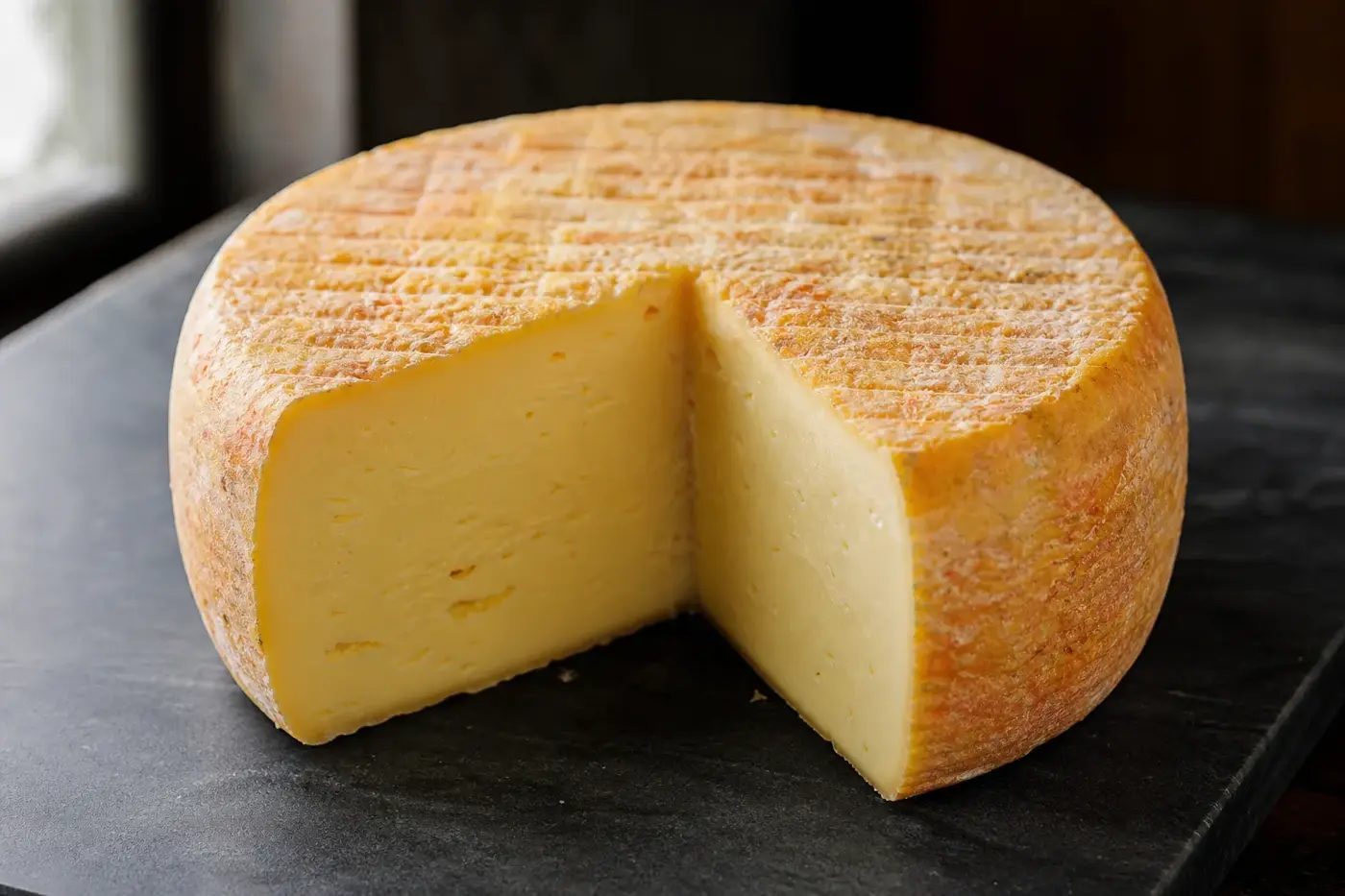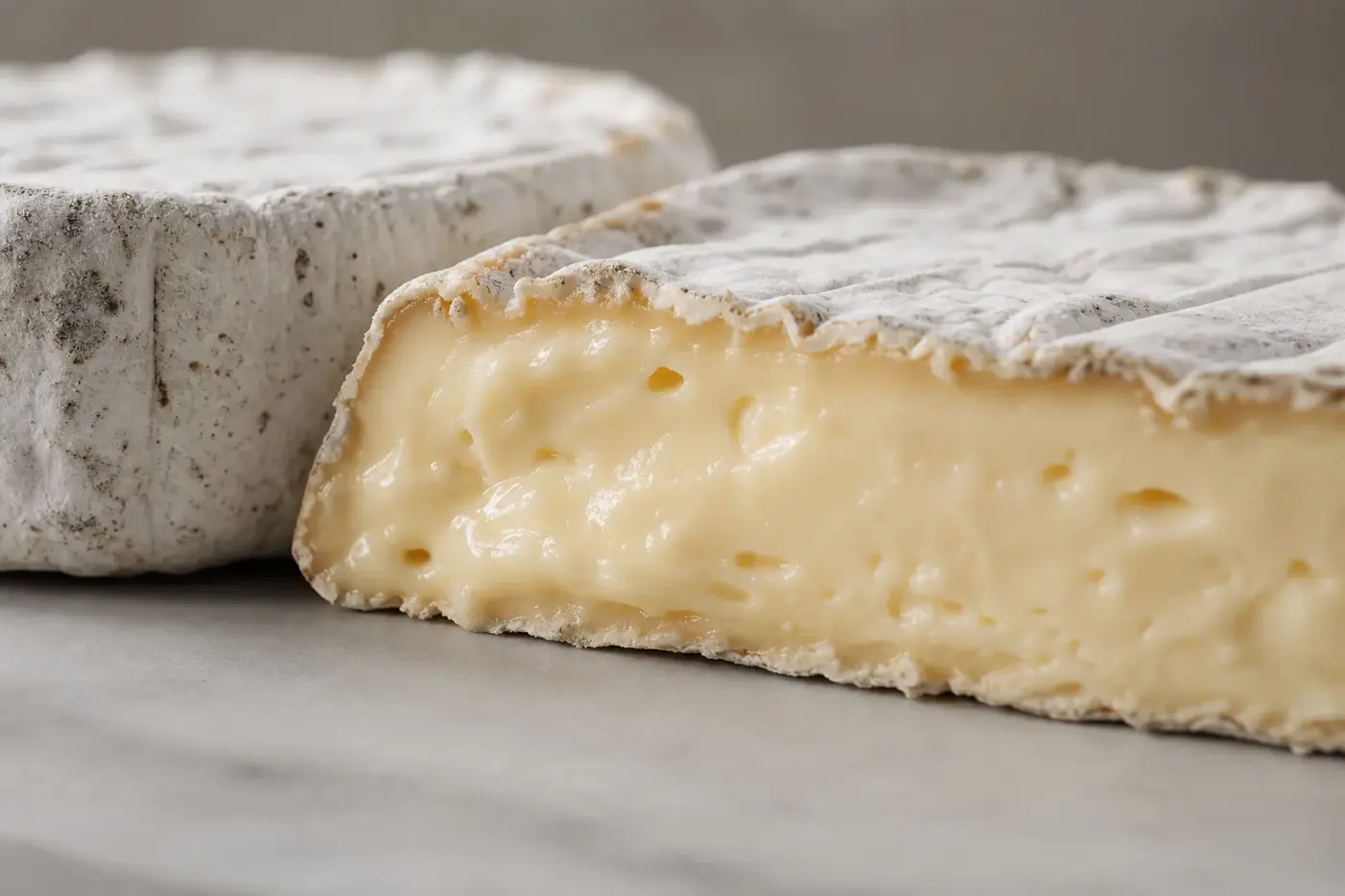
A knife slips through a white rind into a yielding middle. Your first mouthful is mild, a gentle welcome if you like white-rinded cheeses without a forceful flavour. Dunbarra comes from Cooleeney Farm in County Tipperary: an Irish cow’s milk cheese with a soft to semi-soft, Brie-style character. The maker’s export description emphasises that mild taste and semi-soft texture. [1,2]
Your quick introduction to Dunbarra
| What you want to know | The detail |
|---|---|
| Name | Dunbarra. [1] |
| Maker | Cooleeney Farm. [1] |
| Home | Cooleeney, Moyne, Thurles, County Tipperary, Ireland. [1] |
| Milk | Pasteurised cow’s milk from the maker’s own herd. [2] |
| Rennet | Declared vegetarian by the maker. [2] |
| Outside and inside | White mould rind; semi-soft paste. [2,4] |
| Sizes to look for | 180 g minis and 1.7 kg cheeses. [1,2] |
| Maturity | Maker describes full maturity at 8 to 10 weeks. [2] |
| Protection status | Unconfirmed for the EU, Great Britain and Northern Ireland |
A white rind with its own Irish identity
At the cheese counter, look for Dunbarra as a particular cheese in Cooleeney’s range, rather than another name for everything the farm makes. Its export listing offers three versions: natural, pepper and garlic. Begin with natural if you want to meet the cheese before getting to know its seasonings. [1]
Brie-style gives you a useful starting point, but it is not the only comparison. Bord Bia’s farmhouse cheese guide places Dunbarra alongside Camembert as a similar style, with a white mould rind over a semi-soft paste. “Paste” simply means the interior. Here, rind and texture tell you more than a French place name. [4]
Four generations, one Tipperary farm
Follow Dunbarra home and you reach Cooleeney, Moyne, near Thurles in County Tipperary. Cooleeney’s farm account describes four generations of the same family building the dairy herd, with attention paid to each batch through production and maturation. Behind the broad description “Irish cheese”, you find a particular farm and the people making it. [1,3]
That family name also helps you navigate the counter. Cooleeney is the maker’s name, shared by other cheeses in the range; Dunbarra is this cheese’s name. Look for both, then choose between plain, pepper and garlic. Cheese counter bewilderment is best resolved before you have nodded confidently at the wrong thing. [1]
Meet the herd behind the milk
Dunbarra begins with pasteurised cow’s milk from Cooleeney’s own herd, according to the maker. The milk connects the cheese directly to the farm’s animals. Its description also tells you which heat treatment the milk has received. [2]
The same product description declares the rennet vegetarian. Rennet helps milk set into curd, the solid material from which cheese is made. If you would like to follow that transformation, explore rennet explained. For the differences between raw, thermised and pasteurised milk, turn to milk treatments. [2]
Into the brine, then time to ripen
Once the cheese has taken shape, there is still work to do. Cooleeney’s farm account describes brining cheese the following day, then moving it into controlled ripening rooms to develop flavour. Brining means using a salt solution. Maturation, too, is a deliberate part of making cheese, not simply leaving it on a shelf. [3]
You will find the maker’s full-maturity period for Dunbarra in the table above. Treat it as a description of development, not a countdown to follow in your home fridge. When buying a piece, ask the cheesemonger about its condition now, along with the date and handling instructions that apply to it. [2,5]
As you get to know Dunbarra, keep those two visible clues in mind: white rind and semi-soft interior. They give you useful features to recognise on the counter and on your plate. To follow the wider journey, from setting milk through draining and ripening, dip into how cheese is made. [4]
Slow down for the cream and butter notes
The maker’s export page describes Dunbarra as mild. Bord Bia’s guide adds cream and butter notes, giving you good reason to leave it some space on the plate rather than cover it with accompaniments. [1,4] Specific aroma details and the way its flavour changes with maturity remain unspecified here.
For your first taste, try a small piece alone, then another with plain bread. Notice how readily the paste yields and how long the flavour stays after you swallow. Does the bread make it seem gentler? You are enjoying the piece in front of you, not taking an examination in somebody else’s tasting notes.
If you have several versions to compare, begin with natural and leave pepper and garlic until afterwards. Eat a little plain bread between samples. This lets you concentrate on the base cheese before exploring what the seasonings bring. [1]
Home to the fridge, with the label attached
For home storage in Ireland, the Food Safety Authority of Ireland advises a fridge temperature between 0 °C and 5 °C, alongside following the product’s storage instructions. Put Dunbarra in the fridge promptly after buying it. Keep the wrapper and label with the remaining cheese so you can refer to the directions. [5]
Follow the pack’s instructions for once it is opened, as well as its date marking. If you buy a cut piece, ask the cheesemonger to include storage directions. This is particularly useful when several cheeses are coming home together and their wrappers could become separated. [5]
For broader advice on wrapping and arranging your cheese drawer, see how to store cheese at home. Then consider the piece you have bought. How much remains, what does its label say, and when do you plan to serve it?
Make a little space for Dunbarra
For serving and storage, follow the pack instructions and consult the current Food Safety Authority of Ireland guidance. [5]
Set out a plain plate and a clean cheese knife, keeping accompaniments separate. Give everyone enough room to cut a piece without drawing it through chutney or crumbs. On a mixed board, leave Dunbarra its own space and taste it before the more strongly seasoned selections. [6]
For a simple lunch, put bread and an undressed salad alongside it, with fruit to finish. Try a little Dunbarra in a sandwich before dressing the whole salad or adding a strong relish. You can then decide how much company you want each mouthful to have.
Sharing a mixed board? Put accompaniments in small separate dishes so everyone can make their own combinations. Keep a plain piece available for anyone tasting Dunbarra for the first time. Let that first mouthful introduce the cheese itself.
Bread, fruit and something good to sip
Keep your first selection short: bread, one fresh fruit and perhaps a little chutney on the side. Aim for contrast rather than a crowded plate. Dunbarra’s published mild character is a good reason to start simply, then add sweetness, sharpness or crunch as you please. [1]
| Your choice | How to serve it | What it brings |
|---|---|---|
| Plain bread | Thin slices, with some cheese tasted separately | Keeps your first comparison focused on the cheese |
| Apple or pear | A few fresh slices on the side | Adds crisp texture beside the semi-soft paste |
| Chutney | A small spoonful in a separate dish | Lets everyone choose how much sweetness or acidity to add |
For wine, Cooleeney recommends sparkling wines and Beaujolais with Dunbarra. Let the occasion guide you: sparkling wine might suit a plate before dinner, while Beaujolais might fit a mixed board with bread. These are possible directions, not instructions to open two bottles. [2]
If you would prefer an alcohol-free option, start with sparkling water. Alternatively, try a dry apple drink whose label confirms that it is alcohol free. Water keeps the comparison straightforward; the apple drink adds a separate fruit flavour for you to consider.
Keep the bread and fruit the same when you change drinks. You will find it easier to notice the difference without several flavours changing at once. A small tasting can stay simple and still give you plenty to enjoy.
Alcoholic pairings are for adults of legal drinking age who choose to drink, served in small amounts. For more on matching flavour and texture, explore cheese and wine pairing. One cheese, plain bread and a carefully chosen drink already make a complete tasting.
Where your next cheese curiosity might lead
- Brie: get to know the style comparison behind Dunbarra’s description.
- How to Tell Cheese Styles Apart: Milk, Rind, Texture and Method: find where white-rinded, semi-soft cheeses sit in the wider cheese world.
General information only, not medical advice: follow the official guidance where you live.
Questions people ask
Where is Dunbarra made?
Dunbarra is made by Cooleeney Farm in County Tipperary, Ireland. The farm is at Cooleeney, Moyne, near Thurles.
What does Dunbarra taste like?
The maker describes it as mild, while Bord Bia notes cream and butter flavours. It has a white mould rind and a soft interior.
Is Dunbarra vegetarian and made with pasteurised milk?
The maker declares its rennet vegetarian. Dunbarra is made with pasteurised cow’s milk from the farm’s own herd.
How should I store Dunbarra?
For home storage in Ireland, the Food Safety Authority of Ireland advises keeping the fridge between 0 °C and 5 °C and following the product’s storage instructions. See the authority’s current storage guidance and check the pack’s date marking and any once opened instructions.
What can I serve with Dunbarra?
The page suggests plain bread, apple or pear, and chutney served separately. Cooleeney recommends sparkling wines and Beaujolais with Dunbarra.
Sources
- Cooleeney Farm, [Dunbarra](../dunbarra/), Cheeses for Export, undated web edition, retrieved November 2026. Maker’s description of milk treatment, texture, flavour, varieties, formats and farm address.
- Cooleeney Farm, [Dunbarra](../dunbarra/), Our Cheeses, undated web edition, indexed text retrieved November 2026. Maker’s declarations covering milk source, vegetarian rennet, rind, texture, full maturity and wine pairings.
- Cooleeney Farm, Cooleeney Farm, undated web edition, indexed text retrieved November 2026. Maker’s account of the family dairy herd, batch attention, brining and controlled ripening.
- Bord Bia, Your Guide to Irish Farmhouse Cheeses, undated retrieved edition, Dunbarra entry, printed page 40. Historical industry reference for the white mould rind, semi-soft paste, flavour and style comparison.
- Food Safety Authority of Ireland, Storing food safely, undated consumer guidance, indexed text retrieved November 2026. Irish advice on fridge temperature, prompt refrigeration and following product storage instructions.
- Food Safety Authority of Ireland, Safe Food to Go, undated retrieved edition. Irish food-handler guidance on hygiene, cross-contamination and time at room temperature.
- U.S. Dairy, How Long Can Cheese Sit Out?, 10 April 2026. Dairy industry serving guidance suggesting 20 to 30 minutes before serving, counted within the overall refrigeration limit.
Researched through the maker’s published descriptions, Bord Bia’s cheese reference and official Irish handling guidance, with serving suggestions identified as editorial recommendations.
Last checked: November 2026
Last checked November 2026.
The editors suggest you read next