Emmental Français Est-Central
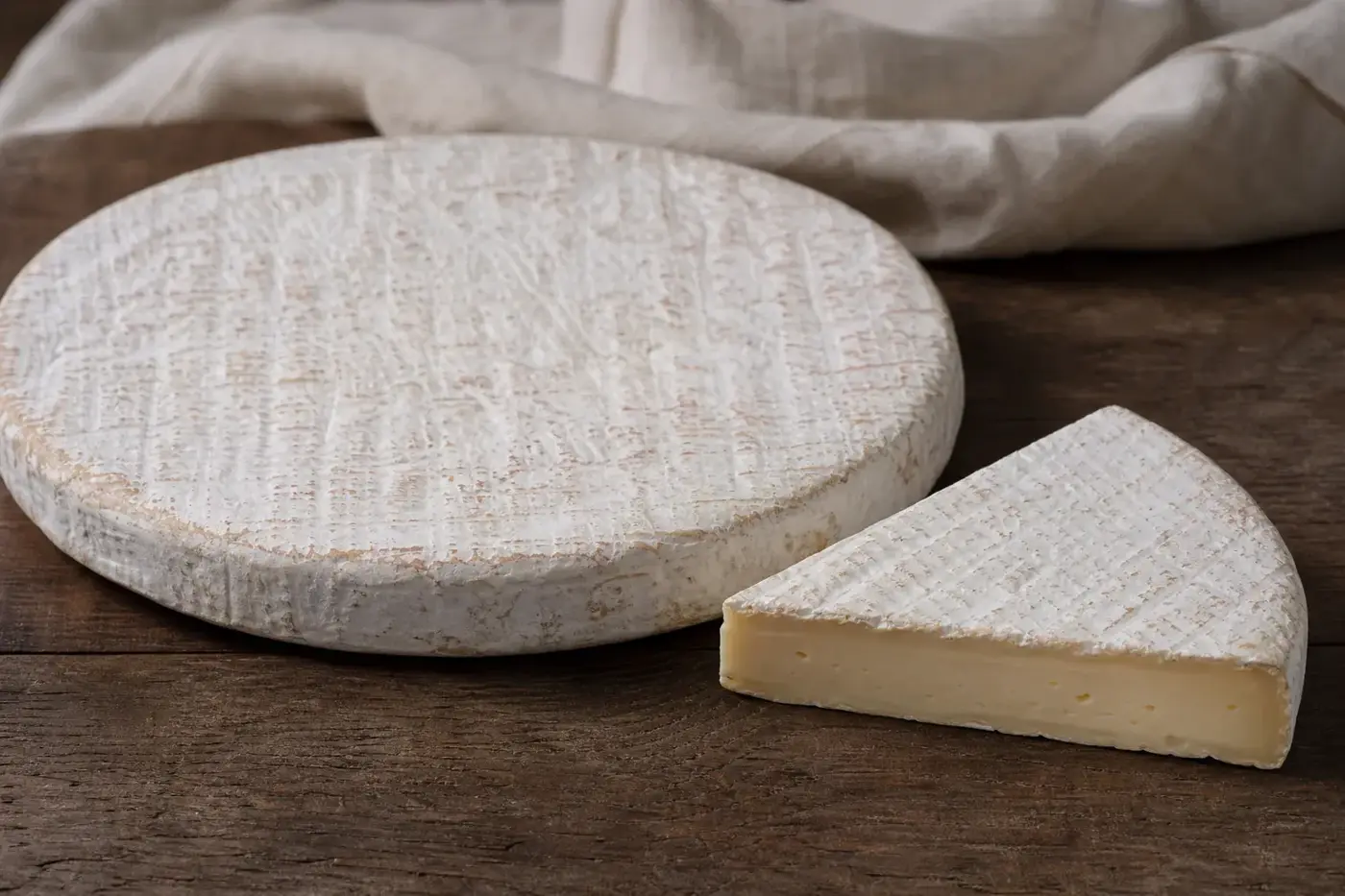
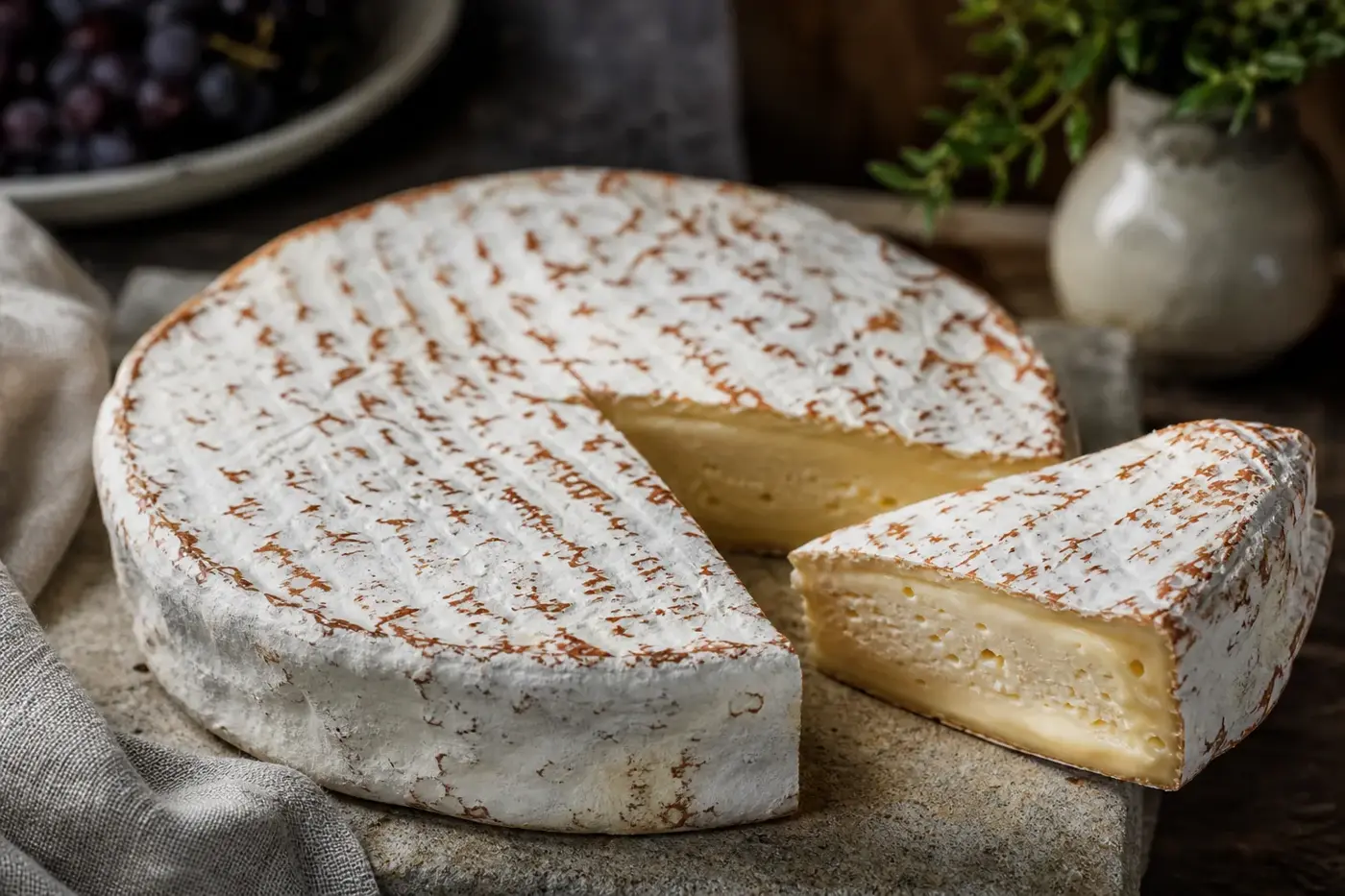
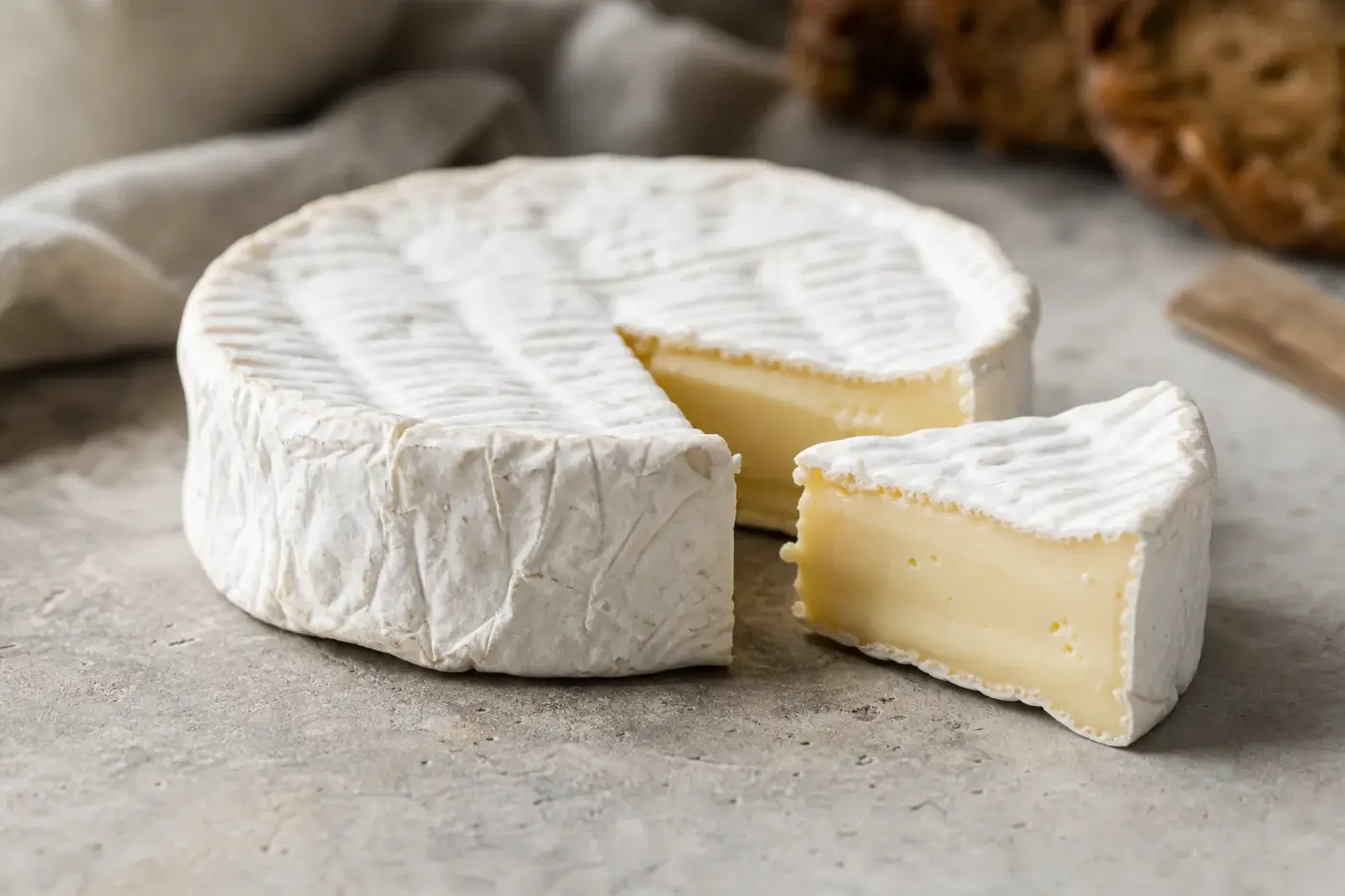
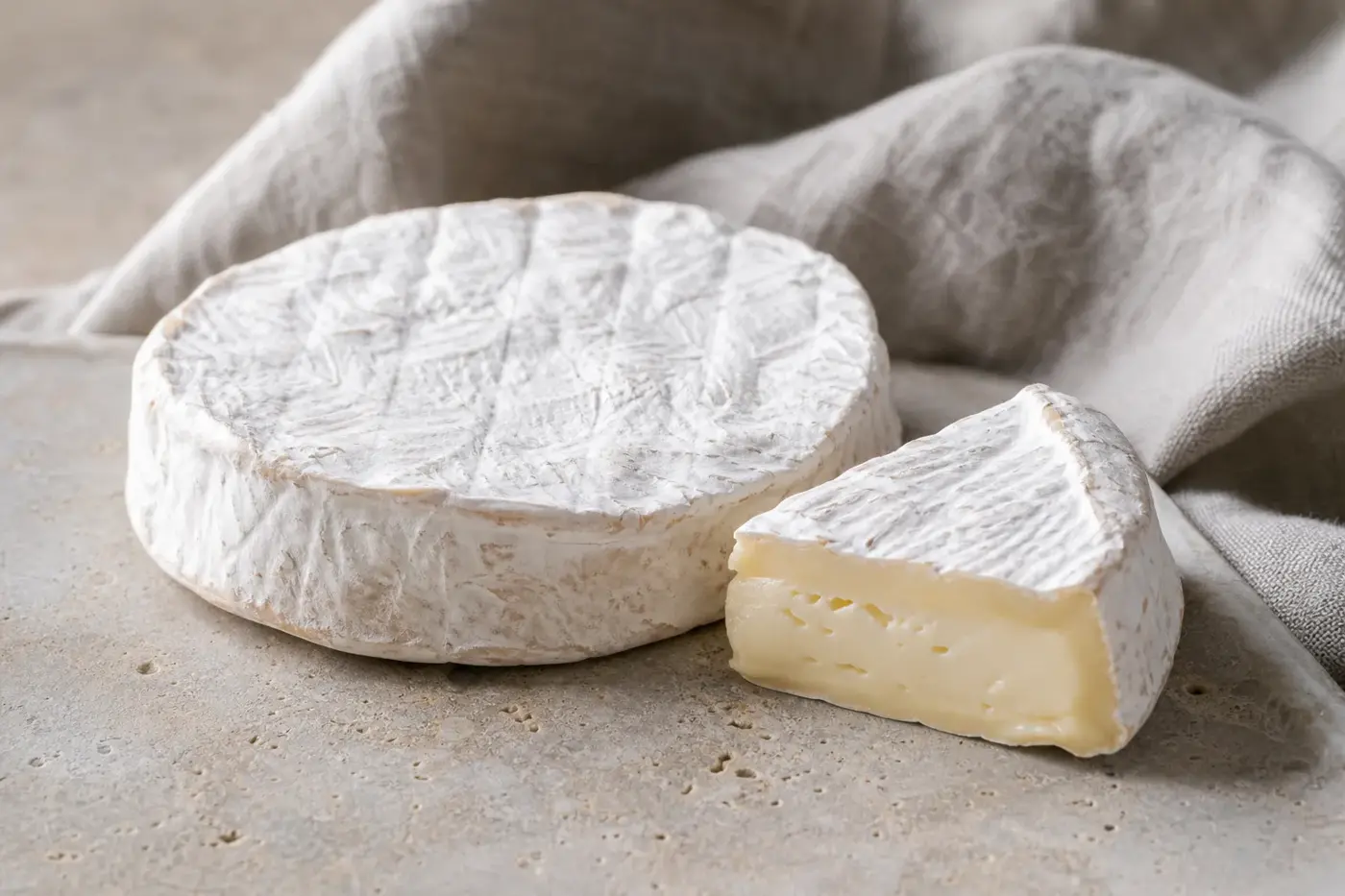
Your knife passes through a hard, dry rind into ivory paste, with conspicuous holes opening across the cut face.
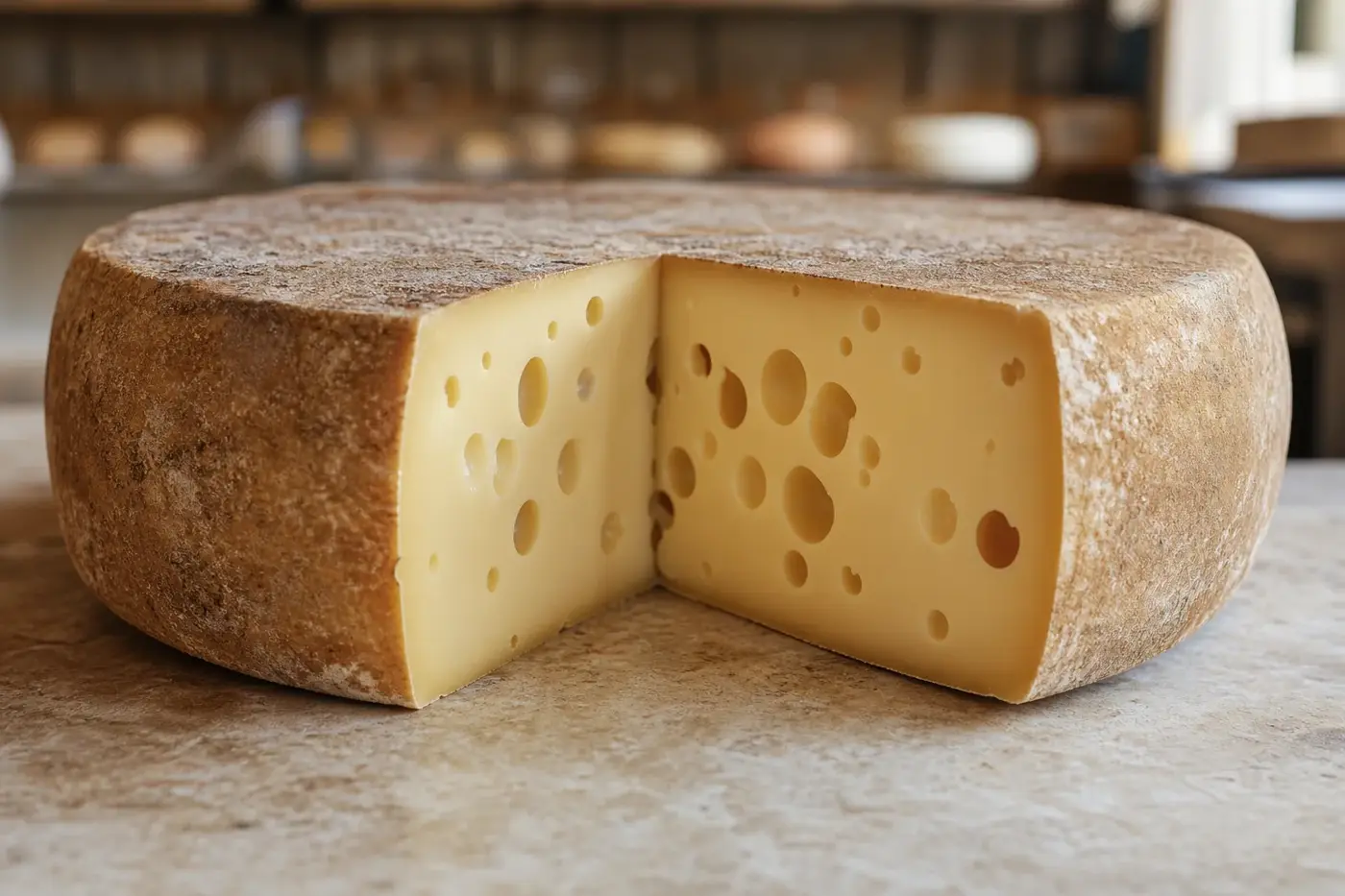
Your knife passes through a hard, dry rind into ivory paste, with conspicuous holes opening across the cut face. The wheel in front of you can weigh 130 kg. Emmental français est-central is not a cheese that travels light: raw cow’s milk, cooked curds and pressing give it that substantial form.[1][4]
The holes arrive during ripening. Its EU protected geographical indication, or PGI, ties milk production, cheesemaking and maturation to six departments around the Vosges and Jura. There is a whole landscape tucked into your slice.[1][2][3]
| What you want to know | The detail |
|---|---|
| Name you will recognise | Emmental Français Est-Central |
| Exact registered name | Emmental français est-central.[2][3] |
| Registration authority and identifier | European Commission; PGI-FR-9180. Approved amendment application: PGI-FR-9180-AM01.[2] |
| EU protection | Registered PGI under Regulation (EC) No 1107/96; amendments approved by Regulation (EU) 2023/494.[3] |
| Its legally defined home | Doubs, Haute-Marne, Haute-Saône, Jura, Territoire de Belfort and Vosges.[1] |
| Milk and coagulant | Raw cow’s milk; calf rennet or calf abomasum, the stomach compartment from which that rennet comes.[1] |
| Minimum ageing | 12 completed weeks, or 84 days, from manufacture to departure from the ripening cellars.[1] |
| Typical ageing | No typical period given here |
| The whole wheel | 60 to 130 kg; 70 to 100 cm diameter; minimum edge height 14 cm.[1] |
| Rind and interior | Hard, dry rind; ivory paste with conspicuous openings.[1][4] |
Follow the grass from the Vosges to the Jura
Grass and hay do more than make a handsome backdrop here. Lactating cows must graze for at least six months, while silage and fermented forage are prohibited. The landscape has a place in the rules, not just on the postcard.[1]
The production area links the Vosges and Jura through six eastern French departments. Milk production, cheesemaking and ripening must all take place there. Read “est-central” and you are tracing a route from farm to cellar.[1][2]
The producers’ organisation describes grassland, haymaking and the seasonal shift between grazing and housed feeding. It connects that rhythm to the local dairy tradition. Montbéliarde, Vosgienne and Simmental are among the cattle breeds it associates with production.[5]
The wider Emmental story crosses borders. INAO, France’s national institute for origin and quality, identifies the name as Swiss in origin and records production spreading into neighbouring territories during the nineteenth century. Eastern France developed its own recognised version within that larger tradition.[4]
From raw milk to the heat of the vat
“Raw milk” and “cooked curd” can sound like contradictory instructions. They describe different stages: the milk is raw when cheesemaking begins, and the curds are heated later. Both are part of this PGI’s method.[1]
Rennet, the enzyme preparation that sets milk, turns it into a gel. That gel is divided into curds, the solids, and whey, the surrounding liquid. The specification permits calf-derived rennet; if the coagulant matters to your choice, rennet explained takes you through the distinction.
For all its scale, this cheese depends on precise timings and temperatures. Here is what the method requires.[1]
| Stage in the vat and beyond | What must happen |
|---|---|
| Setting the milk | Rennet added at 31 to 33 °C |
| Cooking curd and whey | Above 50 °C and below 55 °C for at least 30 minutes |
| Pressing | At least four hours |
| Salting | Brine immersion for 24 to 90 hours |
The great wheel takes shape in its mould. It is not assembled into that impressive size after maturation. Pressing and brining come first, followed by the cellar work that develops its openings and eating character.[1]
For the wider journey, explore how cheese is made. Here, hold on to four essentials: raw milk, cooked curd, pressing and carefully managed ripening.
Step into the warm cellar, where the eyes appear
Those holes are the cellar’s work, not a trick of the mould. Called eyes or openings, they develop during the intermediate warm-cellar phase of the three ripening stages described in the approved EU account. You should see separate, well-defined eyes rather than an irregular network of cracks.[2]
Warmth encourages propionic fermentation. Research on Swiss-type cheese identifies Propionibacterium freudenreichii as one bacterium involved. It produces gas, but the paste has work to do too: carbon dioxide needs starting points for bubbles, and the cheese must accommodate their growth.[6][7]
A 2015 experimental study investigated those starting points with eight Emmental cheeses made from microfiltered milk, with a replicate, different additions of powdered hay and 130 days of ripening. The researchers found that microscopic particles of plant origin could influence eye formation. Getting consistent numbers, sizes and distribution of holes takes more than gas alone.[6]
These were experimental Emmental cheeses, not a survey of this French PGI. Even so, the study gives you a way to picture the process. Bacteria generate gas; microscopic starting points help determine where the eyes develop.[6]
Flavour develops alongside the openings. The approved EU account connects the clean, fruity character with extended ripening and proteolysis, the breakdown of proteins. Affinage, the management of maturation, shapes much more than the pattern you uncover with your knife.[2]
Take a closer look at your freshly cut piece
Think cherry to walnut. That is the everyday size comparison the approved description gives for the openings. They should be spherical to oval, distinct from one another and well distributed.[2]
Your retail portion reveals only part of the pattern. Look at what you can see, rather than expecting every slice to be its neighbour’s twin. A small piece cannot tell you everything about such a substantial wheel.[2]
Around that open centre sits a hard, dry rind, golden yellow to light brown according to the specification. INAO describes ivory paste with numerous openings spread harmoniously through it. The contrast between the solid outer wheel and its open interior makes this cheese instantly recognisable.[1][4]
For your cheeseboard, choose a piece with both paste and some rind. You will get a better sense of how the cheese is built, especially if you usually meet Emmental sliced or grated.
Give that supple paste a moment
INAO describes a supple paste that softens readily in your mouth, with pronounced fruity flavours. The approved EU description also calls its character clean and fruity. These are the published descriptions of the expected profile, rather than a fromage.co.uk tasting account.[2][4]
“Fruity” is cheesemaking vocabulary here. It does not mean fruit has been added. Take it as your starting point, then notice sweetness, savouriness and what lingers as the paste yields.
Smell a freshly cut surface first. Taste a small piece plain, then try it with bread. Is the aroma restrained or pronounced, and does the paste bend, resist or soften quickly?
Give yourself time to notice before reaching for a familiar adjective. Ask the cheesemonger about age and selection, too. The approved production account gives the affineur an explicit role in selecting wheels by their openings, paste, flavour and aroma.[2]
The protected name gives you a recognisable framework, but individual cheeses still have room to differ. That is your invitation to pay attention to the particular piece in front of you.[2]
Look for the full name, not just “Emmental”
“Emmental français est-central” identifies this registered French PGI. “Emmental” alone does not tell you that a cheese meets its specification. The full protected name connects milk origin, manufacture and maturation within the defined area.[2][3]
EU registration dates from 1996. An amendment approved in 2023 reduced the geographical area to the six departments listed above. Descriptions covering a much broader area, including Alpine departments, reflect the earlier boundary.[2][3]
Look for the registered name and EU PGI logo together. The approved labelling provisions require them in the same visual field, so they are more useful buying clues than a general statement of French origin. For the differences between these schemes, see protected names explained.[2]
Get to know its Swiss and French neighbours
Swiss Emmentaler belongs to the same broad cooked, pressed, eye-forming tradition. Its Swiss AOP nevertheless has a separate specification. Minimum maturation is four months, expressed as the average age of a month’s production, whereas this French PGI requires at least 12 completed weeks.[1][8]
In November 2026, Emmental de Savoie is another French cheese registered as a PGI in the EU, with its own specification.[9] It has a distinct geographical identity. Its name is not an alternative spelling of Emmental français est-central.
For another eastern French comparison, read Comté alongside this page. Compare the named production rules and the actual pieces on offer. You need not let the presence or absence of large holes choose your cheese for you.
Make room for it at your table
Gratins, melted preparations and salads feature among the uses presented by the producers’ organisation.[10] Begin with a plain piece, though. Once you know the cheese, you can decide how much of the conversation it should carry in a dish.
For a cheeseboard, try a piece large enough to slice, plain bread and fresh apple or pear. Keep strongly seasoned accompaniments separate. That lets you return to the cheese alone between contrasting bites, rather than asking every flavour to speak at once.
In the kitchen, consider grated cheese over a vegetable gratin, thin slices in a toasted sandwich or small pieces in a salad. Grating distributes it evenly; slices give you a more distinct layer. Follow your chosen recipe’s cooking and handling instructions.
For a drink, a lightly sparkling alcohol free apple drink is a suggested pairing. Its freshness offers a contrast with the supple paste and the fruity character described by INAO.[4]
Bring home the right cheese, and keep its label
Start with the exact name and PGI identification. If you are buying a cut portion, ask to see the original wheel label and keep the retailer’s product information with your cheese. The specification includes traceability requirements for whole wheels, portions and grated cheese.[1][2]
Raw milk and animal rennet are defining details. The specification requires raw cow’s milk and calf-derived coagulant.[1] If either affects your choice, ask the retailer to confirm the product against its label and supplier information.
Packaging can tell several stories at once. How to read a cheese label explains the difference between the food’s name, its brand and other packaging information. Keep those distinctions in mind when you choose your piece.
In England, Northern Ireland and Wales, the Food Standards Agency advises keeping your home fridge at 5 °C or below.[11] Follow the product’s storage and after opening instructions. When you rewrap a cut piece, retain its identity and date information; how to store cheese at home offers further guidance.
General information only, not medical advice: follow the official guidance where you live.
Questions people ask
Where is this Emmental made?
Milk production, cheesemaking and ripening must all take place within six eastern French departments: Doubs, Haute-Marne, Haute-Saône, Jura, Territoire de Belfort and Vosges. A 2023 amendment reduced the protected area to these six departments.
Is this cheese made from raw milk?
Yes, it is made from raw cow’s milk. The curds are heated later in the cheesemaking process.
How do the holes form?
The holes develop during the intermediate warm cellar phase of ripening. Bacteria produce gas, while microscopic starting points help determine where the holes develop.
What rennet is used?
The specification requires calf rennet or calf abomasum, the stomach compartment from which that rennet comes. Rennet sets the milk into a gel.
How long is the cheese aged?
It must spend at least 12 completed weeks, or 84 days, from manufacture to departure from the ripening cellars. The page does not verify a typical ageing period.
Sources
[1] French Ministry of Agriculture, Cahier des charges de l’Indication Géographique Protégée « Emmental français est-central », Bulletin officiel 2023-10, 2023. Approved specification.
[2] European Commission, Publication of an application for approval of an amendment, which is not minor, to a product specification, 2022/C 431/08, including the single document for Emmental français est-central, 14 November 2022; amendments subsequently approved by source [3]. Official publication.
[3] European Commission, Commission Implementing Regulation (EU) 2023/494, adopted 28 February 2023, published 7 March 2023. Article 2 provides for entry into force on the twentieth day following publication. Binding amendment approval.
[4] INAO, Emmental français Est-Central, undated product profile and printable account. Product profile; printable account.
[5] Syndicat de l’Emmental Grand Cru, Emmental Français Est-Central, une production locale dès le pré, undated. Producer-group account, with a commercial interest in the cheese. Published account.
[6] Guggisberg and colleagues, Mechanism and control of the eye formation in cheese, International Dairy Journal, volume 47, 2015, pages 118 to 127, DOI 10.1016/j.idairyj.2015.03.001. Research article.
[7] Agroscope institutional repository, The total eye volume of cheese is influenced by different fat-levels, 2023. Research paper.
[8] Swiss Federal Office for Agriculture, Pflichtenheft für Emmentaler (GUB), published specification incorporating the 2025 eye-starter-powder provisions, Article 8. Swiss specification.
[9] INAO, Emmental de Savoie, official product and specification record, including the temporary amendment published in September 2026. Official record.
[10] Syndicat de l’Emmental Grand Cru, official website, undated cooking-use summary. Producer-group source with a commercial interest. Published uses.
[11] Food Standards Agency, How to chill, freeze and defrost food safely, published 18 December 2017; landing page states applicability to England, Northern Ireland and Wales. Official guidance.
Researched through official specifications and registration legislation, INAO descriptions, primary research and attributed producer-group material, with editorial serving suggestions identified separately.
Last checked: November 2026
Last checked November 2026.
The editors suggest you read next