Golden Cross
Cut across a log of Golden Cross and three layers greet you: white mould bloom, fine charcoal coating, pale goat’s milk paste.
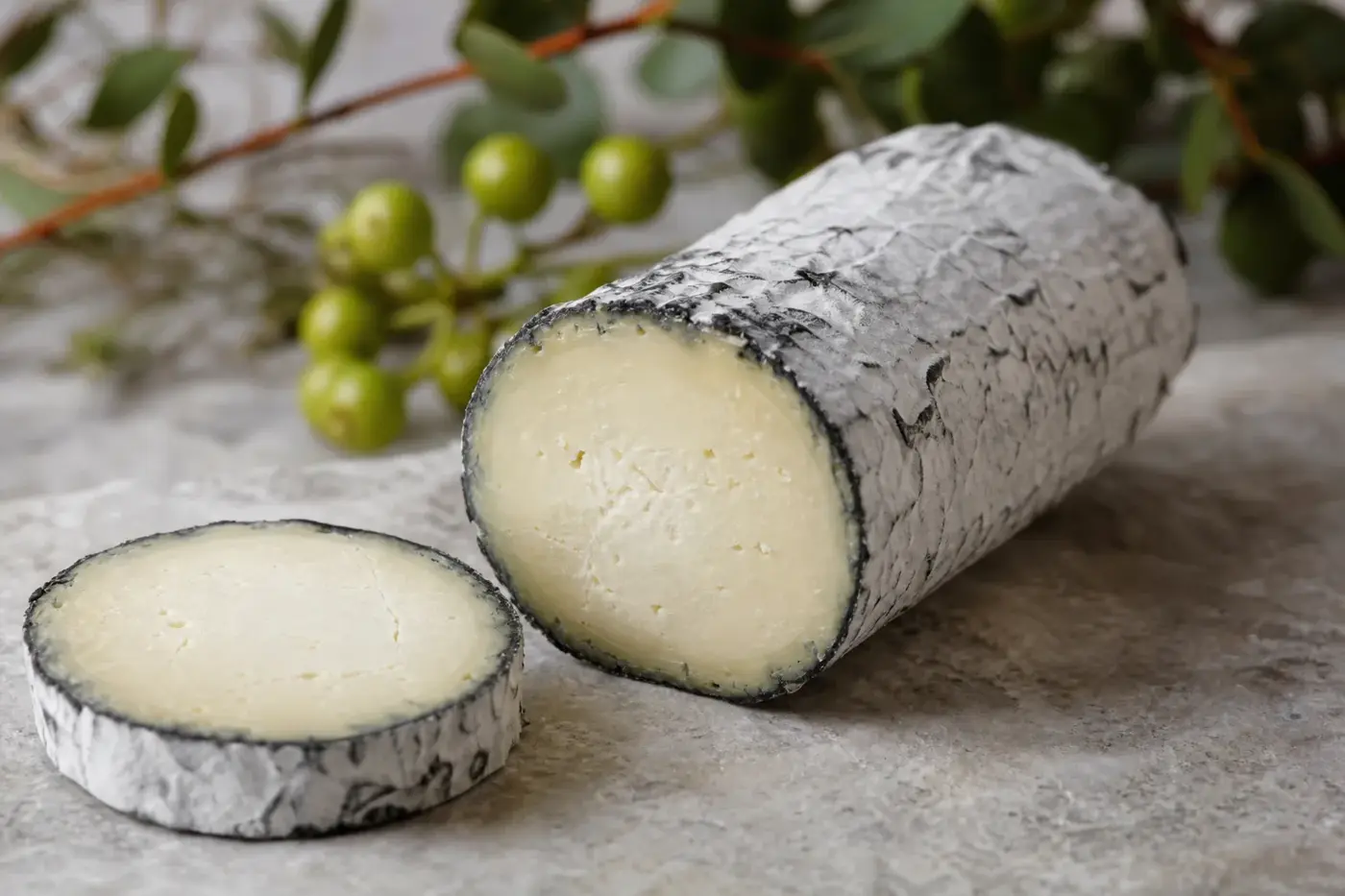
Cut across a log of Golden Cross and three layers greet you: white mould bloom, fine charcoal coating, pale goat’s milk paste. It is a small reveal with plenty to say. This soft, ash-coated cheese comes from Greenacres Farm in East Sussex, England, where Golden Cross Cheese makes it with raw milk from the farm’s own goats. [1,2,3]
Get to know your Golden Cross
- Young Golden Cross offers a firm, silky texture and fresh citrus flavour, according to the maker. [1]
- The farm’s goats graze outside during the day from spring to autumn. [3]
- At home in England, Wales and Northern Ireland, keep your fridge at 5 °C or below, as the Food Standards Agency advises. [7]
| What you might like to know | The detail |
|---|---|
| Name | Golden Cross [1] |
| Maker | Golden Cross Cheese [2] |
| Home | Greenacres Farm, Holmes Hill, East Sussex, England [2] |
| Milk | Raw goat’s milk from the maker’s own herd [1,3] |
| What sets the milk | Vegetarian rennet, declared by the maker [1] |
| Rind | Charcoal beneath a white Penicillium mould bloom [1] |
| Listed retail size | 250 g, listed by La Fromagerie [5] |
| Current maker-stated maturation period | Not specified here |
| Registered name, authority and register ID | Not specified here |
| Maker’s advice on eating the rind | Not specified here |
A Sussex family story, told through three cheeses
Behind your slice is a family-owned business at Holmes Hill in East Sussex. Its published history follows farming experience, the purchase of a smallholding and the acquisition of an existing goat-farming and cheesemaking business. This soft, surface-ripened goat’s cheese belongs firmly to that farm’s story. [2]
The company dates its cheesemaking to 1989. In 2014, a second generation joined full-time, taking the family business into its next chapter. [2,3]
Today, the published range brings together the goat’s milk cheeses Golden Cross and Chabis, alongside Flower Marie, made with sheep’s milk. Here is a useful distinction when you browse: Golden Cross is the cheese in front of you; Golden Cross Cheese is the business behind all three. [2,3]
Meet the herd behind your slice
Every drop of milk for Golden Cross comes from the maker’s own herd. The farm identifies British Saanen, Toggenburg and British Alpine goats, which graze outside during the day from spring to autumn. At night, and throughout winter, their home is in straw-bedded yards. [3]
Apart from breeding males brought in, the goats have been born and reared on the farm, according to its account. The place they call home is also where their milk becomes cheese. You could hardly ask for a closer connection between herd and cheesemaking. [3]
The maker uses raw, rather than pasteurised, goat’s milk and vegetarian rennet. Rennet is the coagulant that helps milk set into curd. If you would like those terms untangled, turn to milk treatments and rennet explained. [1]
From hand-ladled curd to that white coat
Golden Cross gets hands-on attention from the ladling of its curd to the wrapping of the finished cheese. The maker describes that handwork, while La Fromagerie’s published farm visit of July 2022 takes you into the process. The cheesemonger recorded milk being combined with starter, vegetarian rennet and the white-rind mould Penicillium candidum. [1,4]
First came a 24-hour set. The curd, the solid part of the set milk, was then hand-ladled into moulds and drained for another 24 hours, with a turn along the way. This draining releases whey, the liquid separated from the curd. [4]
Next, the logs were unmoulded, salted and moved to drying rooms. After one or two days, charcoal was sifted over them by hand. As white surface growth appeared, it was gently patted down; the visit account recorded packing after 11 days of maturation in the drying room. [4]
The maker’s current description follows the same essential sequence: a light charcoal coating before maturation, then the development of white mould. That charcoal does not have the last word on the colour. The white bloom grows over it; for the wider story of setting and draining, see how cheese is made. [1,4]
Taste your way from citrus to roasted nuts
Try Golden Cross young and, according to the maker, you will find a fine-textured, firm and silky cheese with fresh citrus flavour. With further maturation, it becomes denser and creamier, its flavour stronger and more complex. There is no need to declare a winner: your favourite may depend on the day. [1]
La Fromagerie describes dense, fudgy paste and an increasingly pronounced roasted-nut character at peak ripeness, compared with peanut butter. Its farm-visit account also records mushroom-like and sesame-like qualities. Those notes give you a sense of the savoury flavours that can develop alongside the freshness. [4,5]
Take a look at your cut round. The centre and the paste just beneath the rind can feel quite different: La Fromagerie’s farm-visit account describes a dense, chewy middle with softening near the surface. You can see ripening at work in a single slice. [4]
For your first taste, leave the bread alone for a moment. It can cope without you. Notice the resistance of the centre, then the texture nearer the rind, following the balance between citrus freshness and the savoury notes described by the maker and cheesemonger.
When you buy, ask whether that particular log is young and firm or further developed. Tell the cheesemonger which texture you enjoy, rather than simply requesting the oldest example. The maker offers Golden Cross both fresh and matured, leaving room for different preferences. [1]
Make a little room on your plate
Plain bread or an unflavoured cracker keeps your attention on the cheese. Set a few slices of ripe pear alongside, rather than covering your slice with accompaniments. Taste it plain first, then give the next mouthful whatever sweetness or crunch you fancy.
For a shared board, cut across the log into rounds so each portion has a white centre and darker outline. If your cheese is softer, offer a small serving utensil so guests can take a piece gently. Keep strongly flavoured chutneys separate: even a good chutney need not chair the meeting.
To serve it at room temperature, take out only what you plan to eat and let that portion lose its refrigerator chill. Follow the Food Standards Agency’s advice for England, Wales and Northern Ireland: chilled food should stay out for the shortest possible time, with a maximum of four hours. [7]
Let the meal set the timing. If cheese follows several courses, keep your serving portion refrigerated until it is needed, rather than putting it on the table at the start. Leave the rest wrapped and chilled for another occasion, within its labelled storage instructions. [7]
Pour something that gives the cheese room
If you are an adult of legal drinking age and choose wine, dry Sauvignon Blanc is one option. A small serving can echo the citrus flavour the maker describes in young Golden Cross. [1] People who are pregnant, driving, taking medicines that interact with alcohol, or recovering from alcohol dependence should not drink. Consult current NHS advice.
For an alcohol-free glass, start with plain sparkling water. Its restrained flavour leaves you room to notice the contrast between the centre and outer paste. Still water is an equally neutral choice, keeping your attention on what is happening in the cheese.
Try a mouthful alone, then another followed by your drink. Can you still taste the freshness, or does the drink overwhelm the texture? Your preference matters; for more on matching intensity and flavour, explore the cheese and wine pairing guide.
Keep your cheese chilled and know when to discard it
Follow the pack’s storage instructions and the FSA’s advice for England, Wales and Northern Ireland. Keep your refrigerator between 0 and 5 °C (32 and 41 °F), and store dairy products chilled. Use a fridge thermometer rather than trusting the dial alone; the agency recommends checking the temperature weekly. [7]
La Fromagerie advises refrigerating its cheese in the two sheets of waxed paper it supplies. Keep the wrapping and label together, especially once you have cut a portion, so you still have the storage instructions to hand. For more on wrapping and cut surfaces, visit storing cheese at home. [5]
Golden Cross’s intended white bloom is part of its normal development, as is the stronger flavour described by the maker. Unfamiliar growth or a marked change from its usual condition calls for caution. The FSA’s mould guidance distinguishes mould deliberately introduced into cheese from unwanted mould on food. [1,8]
If a log develops unfamiliar mould or smells distinctly spoiled, discard it. Do not taste it to investigate. Follow any use-by date and after-opening instructions: the FSA advises throwing food away after its use-by date. For help distinguishing an intended rind from unwanted growth, read mould on cheese. [7,8]
General information only, not medical advice: follow the official guidance where you live.
Questions people ask
What is Golden Cross cheese?
Golden Cross is a soft, ash-coated goat’s cheese made at Greenacres Farm in East Sussex. It is made with raw milk from the farm’s own goats.
Is Golden Cross suitable for vegetarians?
The maker specifies vegetarian rennet for Golden Cross. Rennet is the coagulant that helps the milk set into curd.
What does Golden Cross taste like?
The maker describes young Golden Cross as fresh and citrusy, with a firm, silky texture. With further maturation, it becomes denser and creamier, with a stronger, more complex flavour.
Can you eat the rind of Golden Cross?
The page does not verify the maker’s guidance on eating the rind. The rind has a charcoal coating beneath a white Penicillium mould bloom.
How should I store Golden Cross?
Follow the pack’s storage instructions and keep the cheese chilled. For England, Wales and Northern Ireland, the Food Standards Agency advises keeping the fridge between 0 and 5 °C and checking its temperature weekly.
Sources
-
Golden Cross Cheese, Products, undated, retrieved November 2026. Maker’s declarations on milk treatment, vegetarian rennet, handwork, charcoal, mould development and maturation-related sensory changes. Source.
-
Golden Cross Cheese, About Us, undated, retrieved November 2026. Maker’s account of its location, family business and development. Source.
-
Golden Cross Cheese, Home, undated, retrieved November 2026. Maker’s account of its establishment, range, milk supply, goat breeds and husbandry. Source.
-
La Fromagerie, Golden Cross Farm Visit, 14 July 2022. A cheesemonger’s first-hand published visit account, used for its dated observations of production and sensory character. La Fromagerie sells the cheese. Source.
-
La Fromagerie, Golden Cross, undated, retrieved November 2026. Retailer’s product description, documented format and wrapping advice. Its tasting descriptions are attributed in the article. Source.
-
Royal Bath & West Society, Burford named Supreme Champion at British & Irish Cheese Awards 2025, 2025. Official competition announcement confirming Golden Cross’s Reserve Champion Cup. Source.
-
Food Standards Agency, How to chill, freeze and defrost food safely, published 18 December 2017, retrieved November 2026. Official consumer guidance expressly applying to England, Northern Ireland and Wales. Source.
-
Food Standards Agency, Natural Toxins Factsheet, publication reference FSA/0486/0302, 2002. Published guidance on deliberately introduced cheese moulds, unwanted mould and use-by dates; its age is recorded for specialist review. Source.
This piece was researched from the maker’s published information, a cheesemonger’s documented visit and product notes, official competition results and Food Standards Agency publications.
Last checked: November 2026
Last checked November 2026.
The editors suggest you read next
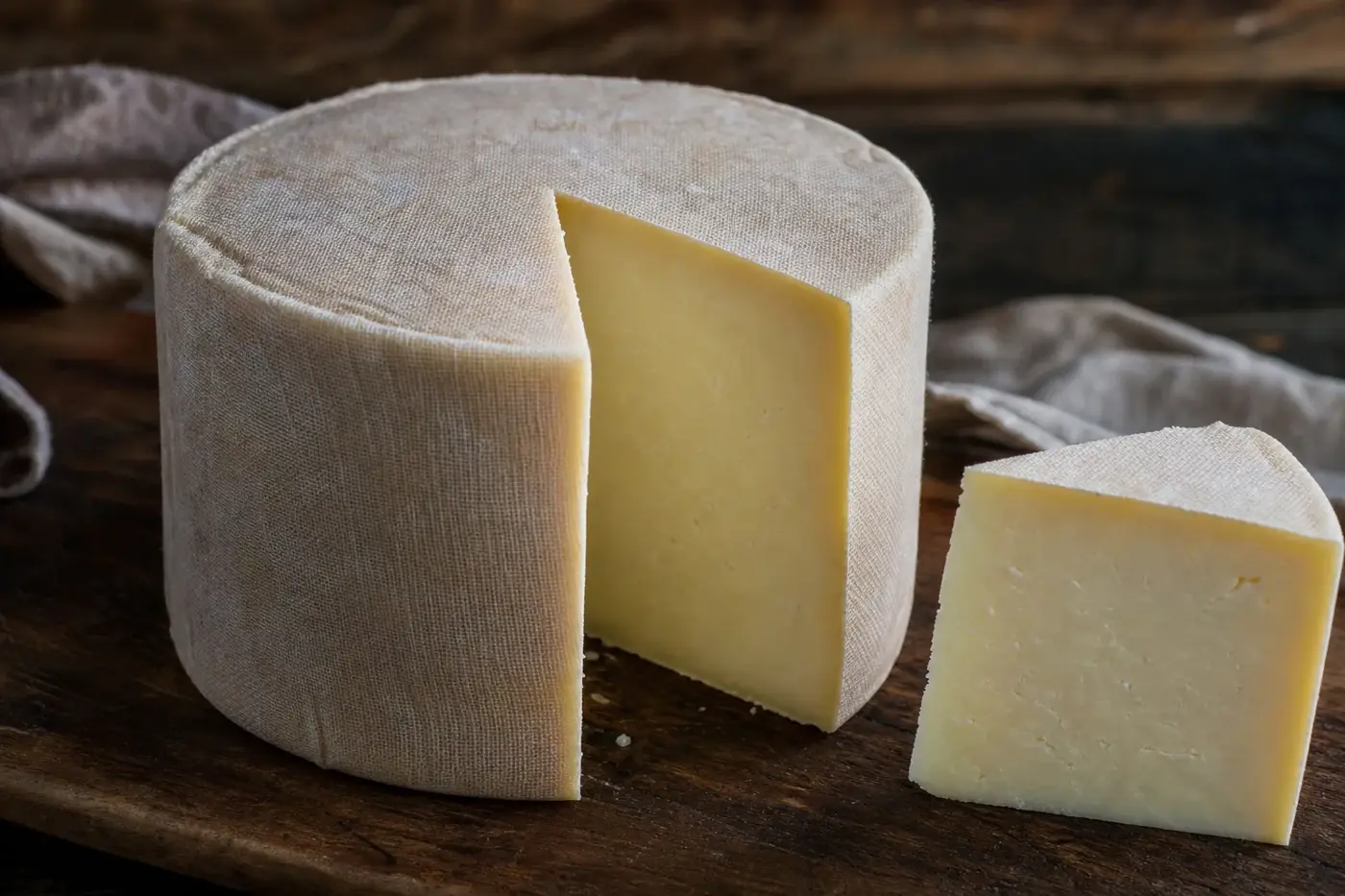
West Country Farmhouse Cheddar Cheese
Large pieces of curd turn and stack under the cheesemaker’s hands.