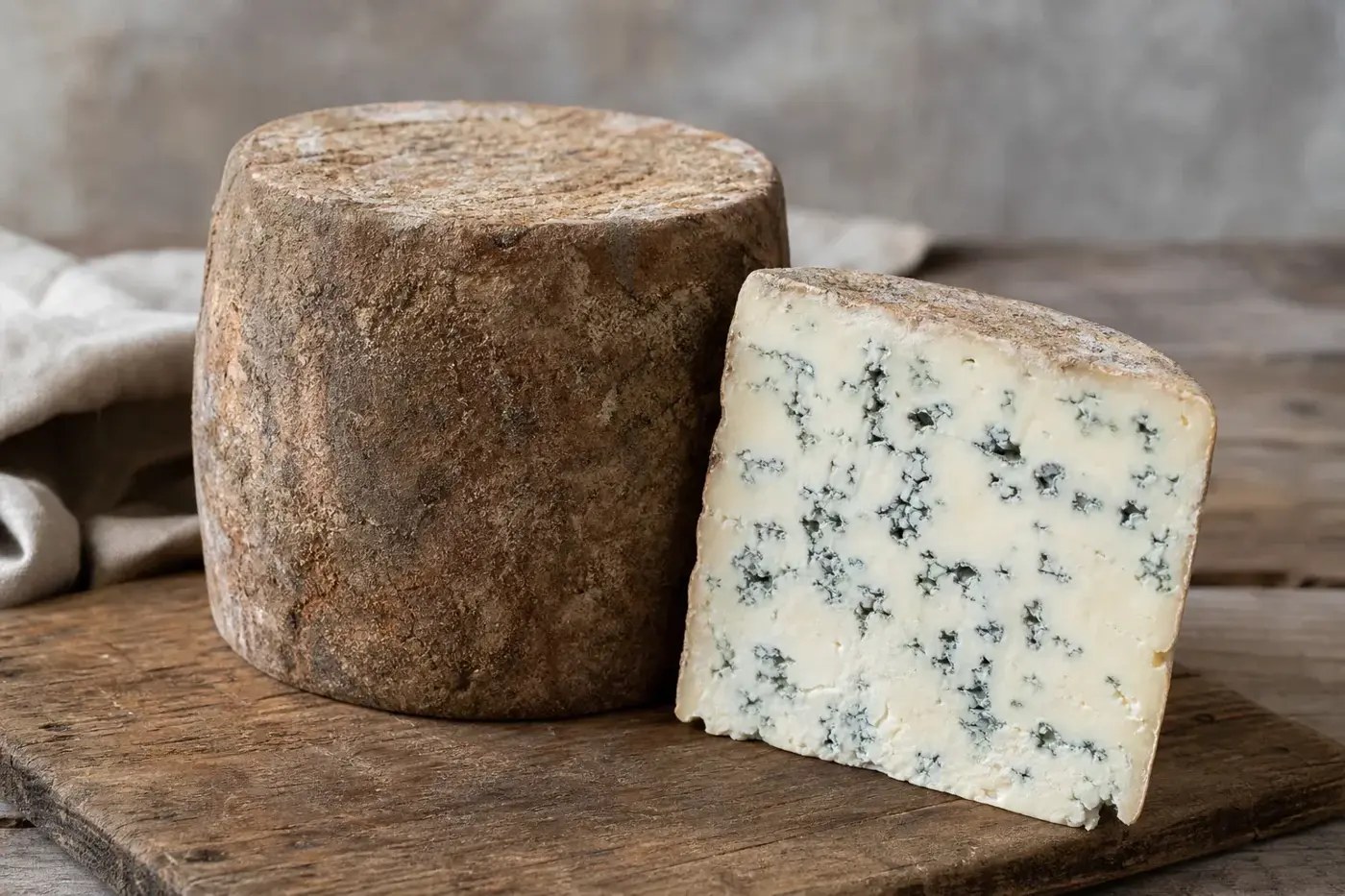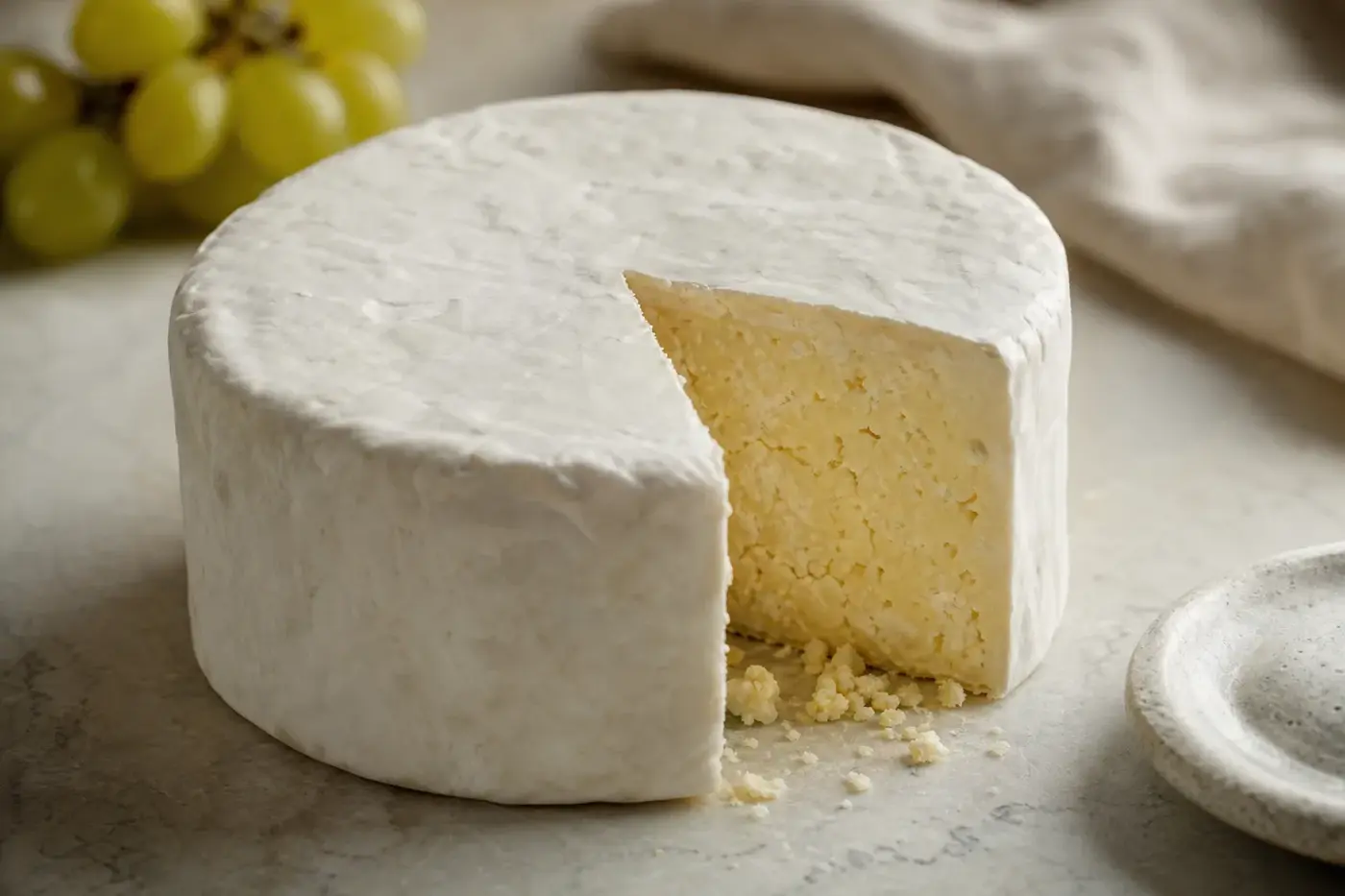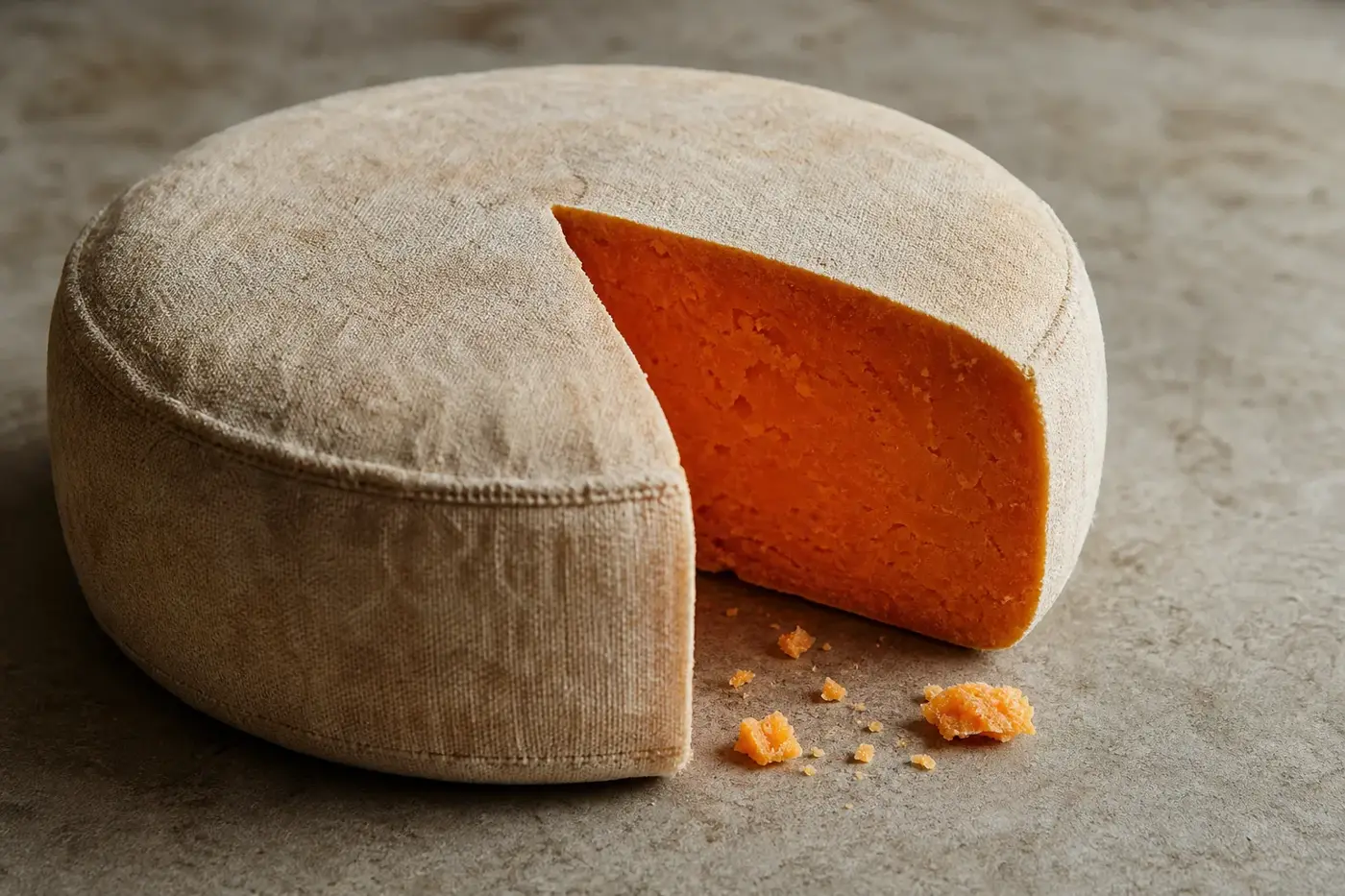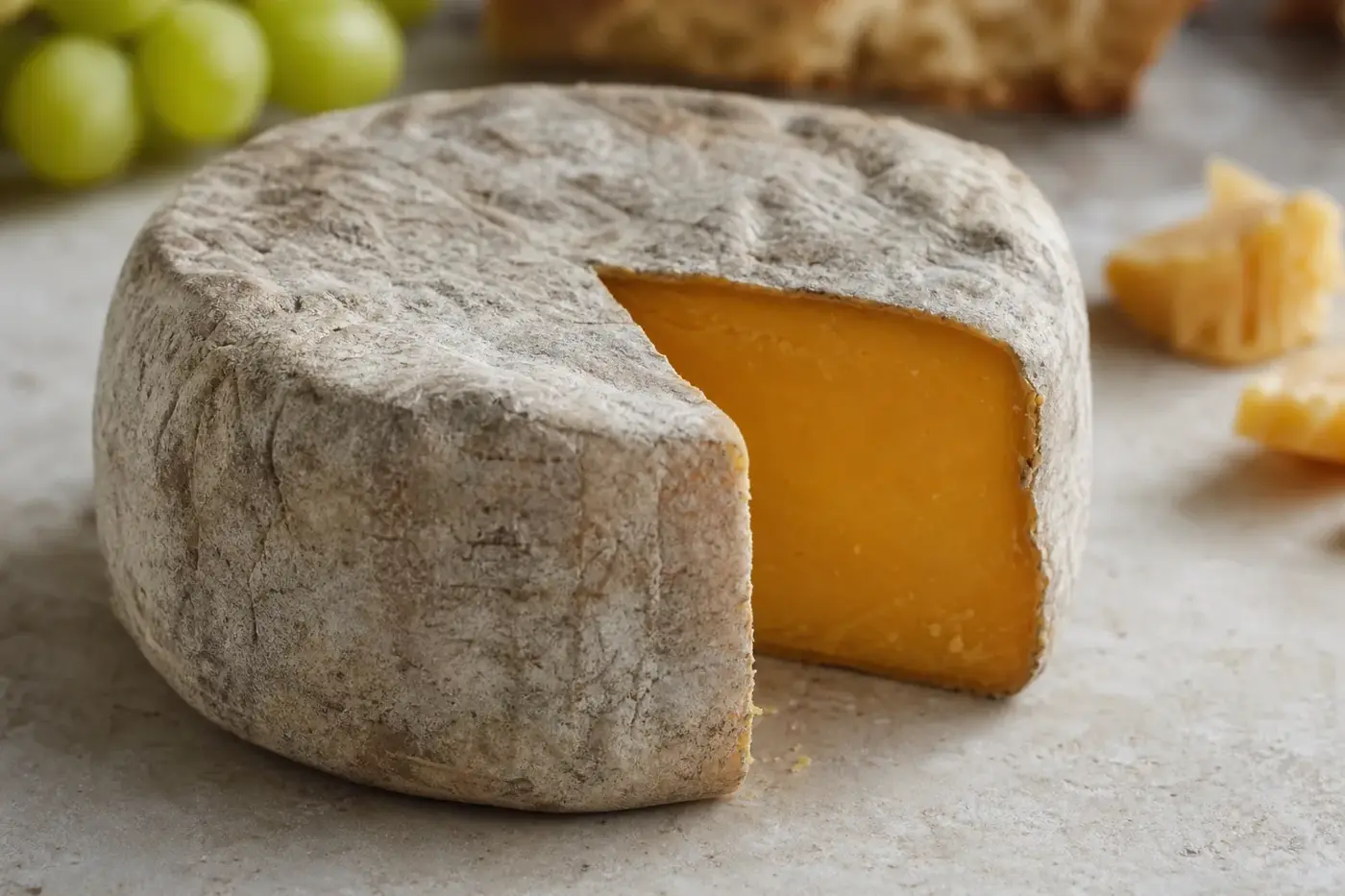
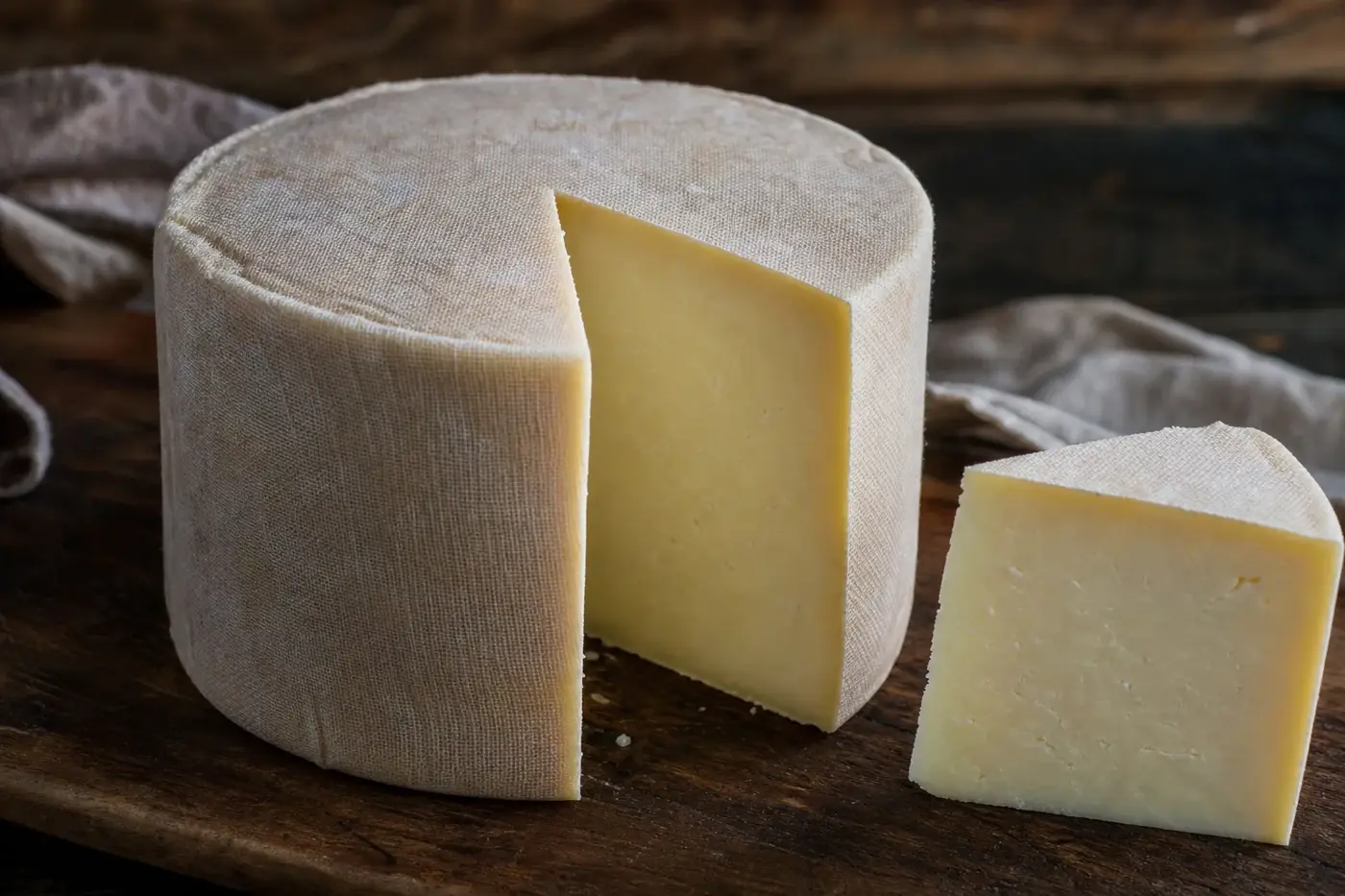
Cut through the greyish white rind and there it is: gold. Beneath it, Golden Saye brings gentle savouriness and a finish of caramel sweetness, according to its maker in Riseley, Berkshire. Village Maid Cheese has taken its Spenwood recipe into cow’s milk, giving you a hard, natural-rind cheese with a familiar family background and a character of its own. [1,2,3]
A garden beginning, a Berkshire name
Village Maid’s story starts in a garden outbuilding in Spencers Wood in May 1986. By 1991, according to the maker’s history, the business had moved to Riseley. Its contact address remains on Basingstoke Road there, keeping this cheese story firmly rooted in Berkshire. [2,3]
Follow Golden Saye’s name and you reach Stratfield Saye. Village Maid says the estate’s Guernsey herd supplied an early chapter in its cow’s milk cheesemaking during the late 1980s. The name brings that Saye connection together with the golden colour waiting beneath the rind. [1,2]
Golden Saye joined the range in June 2025 with a particular purpose: to bring Village Maid’s long-developed Spenwood recipe to Guernsey cow’s milk. You are not tasting the same cheese at a different age. This is a familiar method meeting a different milk, and an excellent excuse to put the two beside each other. [2]
Meet the family, then taste the difference
Spenwood uses ewe’s milk; Golden Saye uses cow’s milk. Village Maid describes both as pasteurised. Golden Saye’s product page calls its milk Channel Island milk, while the maker’s history specifies Guernsey. The family resemblance is deliberate, but each milk gives the recipe its own voice. [1,2,4]
Put them side by side and ask yourself three questions. How does each yield when you bite? Where does the sweetness appear, and how long does the savoury finish linger? Their stated maturation periods differ too, so both milk and age shape the finished cheeses you are comparing. [1,4]
For help untangling the milk terminology, turn to raw milk, thermised and pasteurised cheese. When you buy Golden Saye, look for the maker’s pasteurised declaration. Read it alongside the information supplied with your particular piece. [1]
Four months, and room for a little give
At four months, Golden Saye is the youngest of Village Maid’s hard cheeses. The maker says this maturation leaves it supple. When you are choosing a cheese, think about the texture you want rather than assuming extra age always means an upgrade. Cheese need not win a seniority contest. [2]
The published outline gives you a Spenwood-based recipe, four months of ageing and a natural rind. Village Maid describes Spenwood itself as hard-pressed, with a thin natural rind and seven to eight months of maturation. For Golden Saye, the outline covers its hard style and natural rind rather than a detailed making process. [1] [1,2,4]
Neal’s Yard Dairy describes keeping Spenwood on wooden shelves to develop a firmer texture and deeper flavour. That gives you a sense of maturation’s importance within this family, although Golden Saye follows its own shorter timetable. For the wider story of curd formation and whey removal, explore how cheese is made. [1,5]
Follow the gold to the caramel finish
Village Maid describes a greyish white rind surrounding a golden paste, the cheesemaking word for the interior. Its tasting notes bring together gentle savouriness, a subtle umami tang and caramel sweetness. Think of umami here as savoury character, rather than simply saltiness. [1]
Before you reach for anything strongly flavoured to eat alongside it, find that balance between savoury flavour and sweetness. Give the texture just as much attention: the maker calls Golden Saye supple, and a hard cheese can still give under your teeth. Try a thin slice, then a thicker bite, and notice what changes with the cut. [1,2]
For aroma, make your own notes rather than looking for a characteristic scent in the maker’s published descriptions. Smell a freshly cut surface before you taste, jot down what you notice, then return to the tasting notes. Keep smell, texture and flavour separate at first, so each gets your attention.
If you compare different purchases, note the purchase date and any batch information. Those details give differences some context and a starting point for exploring them. You do not need to turn every variation into an immediate verdict on quality.
Let the first bite speak for itself
Start with Golden Saye, plain bread or an unsalted cracker, and water. Taste the cheese alone before adding anything else. That first bite gives you a reference point: an accompaniment might bring the finish into focus, or cover the very thing you came to taste.
The sequence below draws on the American Cheese Society’s advice to keep accompaniments simple and leave room for cutting and serving. Give yourself a little breathing space around the cheese, too. A tasting need not become a plate-juggling exercise. [6]
- Cut only the portion you intend to serve. Keep the rest refrigerated.
- Set out a clean knife and leave space around the cheese for slicing.
- Try a plain bite, then one with bread. Notice the texture first, then the finish.
- Add one accompaniment at a time, returning to water between comparisons.
- Bring out small portions as needed, rather than displaying your whole supply.
Follow the storage instructions and date on your purchased piece. For help with wrapping and arranging the refrigerator, see how to store cheese at home. [7]
Find the pairing that brings you back
Let Golden Saye lead the tasting. These suggestions follow the maker’s savoury and sweet description and the American Cheese Society’s principle of balancing intensity. Start gently and change one thing at a time. Keep the combination you enjoy, rather than the one you feel you ought to enjoy. [1,6]
| Try it with | What to look for |
|---|---|
| Plain bread | Begin here to get to know the cheese’s own flavour. |
| Apple slices | Try a small bite with cheese, then taste the cheese alone again. |
| Pear slices | Try these instead if apple overwhelms your piece. |
| Unsalted walnuts | Compare a small piece with your plain-bread pairing. |
| Still water | An alcohol-free starting point that keeps your attention on the cheese. |
Put chutney or relish in a separate dish, so everyone can choose how much to add. Compare a plain bite with one carrying a small dab. If the condiment takes over, try a little less and taste again.
Treat strongly seasoned crackers in the same way. Bring them in after the plain tasting, once you have a clear sense of the texture and finish. Keeping accompaniments separate lets you repeat a comparison without committing your entire serving to one combination.
Give your Berkshire board some contrast
Let Golden Saye fill the hard-cheese position, then give it some textural company. For a three-cheese board, add Wigmore for a semi-soft ewe’s milk texture and Barkham Blue for blue veining. Village Maid describes Wigmore as delicate and fruity, while its Barkham Blue notes emphasise smooth texture and measured blue sharpness. [8,9]
You stay within one Berkshire maker’s range, but each cheese has a distinct part to play. Use separate knives, especially for the blue, and leave enough room to cut comfortably. The American Cheese Society recommends contrasting flavour and texture profiles and avoiding a crowded board. [6]
Curious about the milk comparison? Replace one companion with Spenwood. For a broader British selection, keep the soft and blue positions but choose those cheeses from other makers. Three distinct textures give you more to explore than three hard cheeses picked simply because you recognise their names.
Keep bread and fruit on separate plates. Your board stays clear, and you can reach each cheese without negotiating the accompaniments. Every addition becomes a choice rather than an unavoidable part of the next bite.
Wrap up well for the next tasting
If you live in England, Wales or Northern Ireland, the Food Standards Agency recommends a fridge temperature between 0 and 5 °C (32 to 41 °F), checked with a fridge thermometer. Its advice is to refrigerate dairy products. Follow the storage instructions and dates on their packaging, too. [7]
After cutting, the American Cheese Society recommends fresh waxed, parchment or specialist cheese paper, with an outer wrapping to protect quality. Store cheeses separately so their aromas do not mingle. Keep Golden Saye’s original label with it, especially when you transfer the cheese into fresh wrapping. [6]
As you put it away, think about how you would like to eat it next. Set aside a manageable piece for another plain tasting, then compare your impressions with the first occasion. Give the texture and finish another moment of your attention, without several accompaniments competing for it.
For a fuller meal, try a simple bread-and-cheese lunch with fruit alongside. Keep the cheese recognisable rather than burying it beneath several strong additions. Add your accompaniments bite by bite, following whichever combination you enjoy most.
Keep your cheese curiosity going
- How to Tell Cheese Styles Apart: Milk, Rind, Texture and Method: a practical way to compare Golden Saye with softer and blue styles.
- How to Read a Cheese Label: help with reading the information attached to your own piece.
General information only, not medical advice: follow the official guidance where you live.
Questions people ask
What does Golden Saye taste like?
Village Maid describes it as gently savoury, with a subtle umami tang and caramel sweetness. It has a supple texture beneath a greyish white rind.
What milk is Golden Saye made from?
Golden Saye is made from pasteurised cow’s milk. The maker’s history specifies Guernsey milk.
How is Golden Saye different from Spenwood?
Golden Saye uses cow’s milk, while Spenwood uses ewe’s milk. Both are pasteurised, but Golden Saye matures for four months and Spenwood for seven to eight months.
Is Golden Saye suitable for vegetarians?
The maker declares Golden Saye vegetarian. It is a hard cheese with a natural rind.
How should I store Golden Saye?
The Food Standards Agency recommends refrigerating dairy products and following the storage instructions and dates on the packaging. For households in England, Wales and Northern Ireland, it recommends a fridge temperature between 0 and 5 °C, checked with a fridge thermometer.
Sources
[1] Village Maid Cheese. Golden Saye. Undated live product description, retrieved November 2026. Maker’s account of the recipe relationship, milk treatment, rind, appearance, flavour, vegetarian declaration and listed formats. Product page.
[2] Village Maid Cheese. Our Story. Undated live company history, including its account of adding Golden Saye in June 2025, retrieved November 2026. Company history.
[3] Village Maid Cheese. Contact. Undated live contact record, retrieved November 2026. Maker’s address.
[4] Village Maid Cheese. Spenwood. Undated live product description, retrieved November 2026. Maker’s account of milk, pressing, rind and maturation. Product page.
[5] Neal’s Yard Dairy. Spenwood crib sheet. 2026 edition, retrieved November 2026. Affineur and retailer’s account of its own maturation work with Spenwood. Technical sheet.
[6] American Cheese Society. Tips for Cheese Lovers. Undated live guidance, retrieved November 2026. Sections on wrapping, serving, accompaniments and pairing principles. The society is an industry organisation. Guidance.
[7] Food Standards Agency. How to chill, freeze and defrost food safely. Published 18 December 2017, live edition retrieved November 2026. Applies to England, Northern Ireland and Wales. Official household guidance.
[8] Village Maid Cheese. Wigmore. Undated live product description, retrieved November 2026. Product page.
[9] Village Maid Cheese. Barkham Blue. Undated live product description, retrieved November 2026. Product page.
[10] Food Standards Agency. Alerts. Live official recall and allergy-alert index, accessed November 2026 for the editorial recall check. Official alerts.
This piece combines desk research from the maker’s published descriptions with attributed cheese-care guidance and editorial serving suggestions; no site tasting or dairy visit was undertaken.
Last checked: November 2026
Last checked November 2026.
The editors suggest you read next
West Country Farmhouse Cheddar Cheese
Large pieces of curd turn and stack under the cheesemaker’s hands.