Middle Eastern Cheeses
Hot brine closes around the pressed, salted curd of Nabulsi.
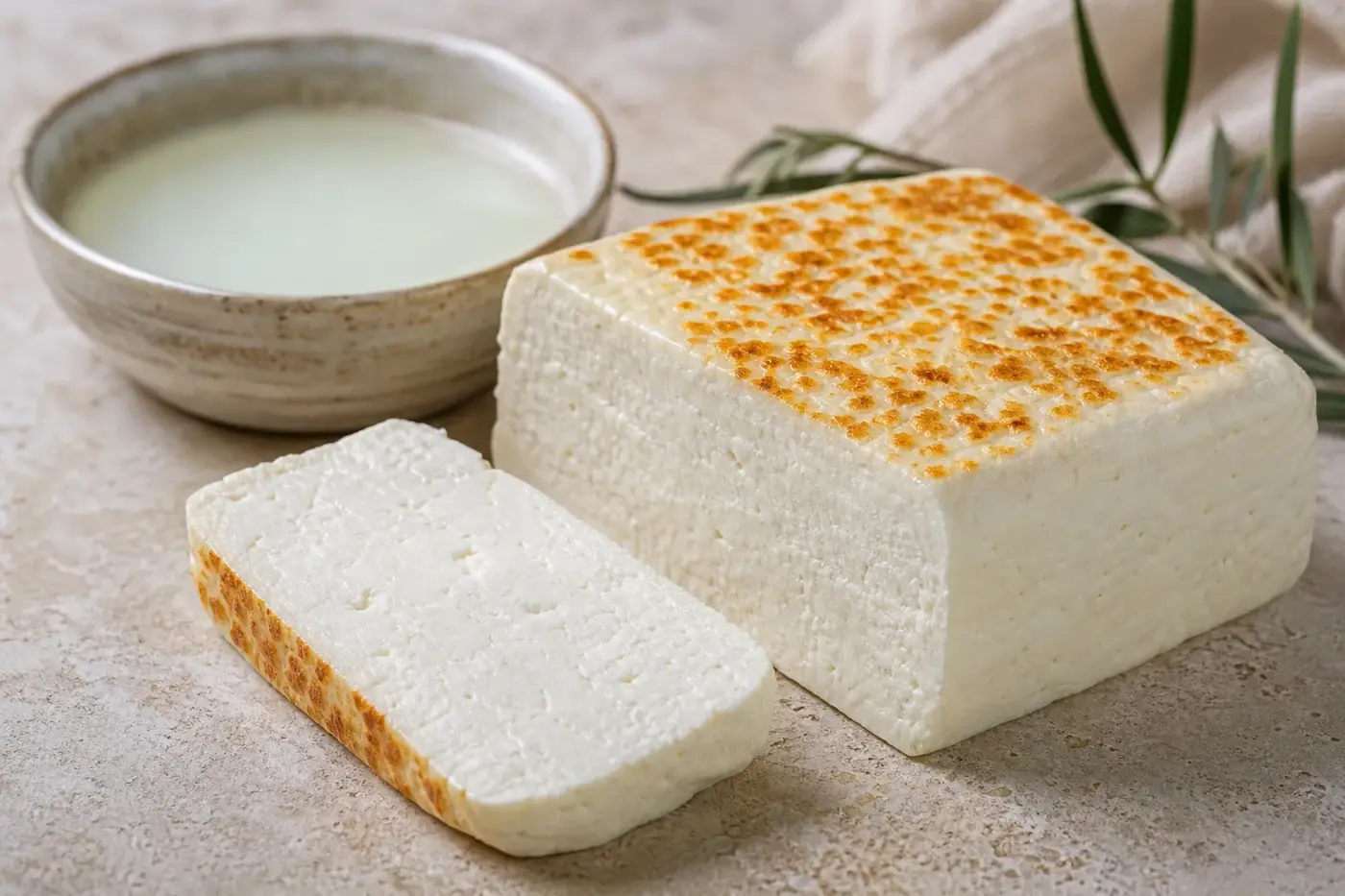
Hot brine closes around the pressed, salted curd of Nabulsi. Elsewhere, fermented milk drains into thick labneh, while a hard ball of fermented dairy waits to become a cooking sauce. Follow the milk and you meet salt, drainage, fermentation, heat and drying, each taking it somewhere different. The methods connect these foods, but their ingredients, textures and places at the table remain distinctly local.[1][2][3]
Follow the dairy beyond the map
The Middle East has no single agreed boundary. Here, your route takes in dairy traditions across the Levant, Türkiye, Iran and Egypt, with Cyprus included for its eastern Mediterranean connections. The Levant here means Palestine, Israel, Jordan, Lebanon and Syria. These are introductions to particular traditions, not complete country inventories.
Food regions rarely fit neatly inside statistical maps. The United Nations’ M49 classification puts Egypt in Northern Africa, Iran in Southern Asia, and Türkiye and Cyprus in Western Asia. The UN explicitly describes these groupings as statistical conveniences, a useful distinction when you are following food culture rather than drawing borders.[4]
Begin with what happens to the milk. White cheese kept in brine, strained fermented milk and dried dairy can share a table despite taking very different routes to reach it. Get to know those preparations and the names, textures and uses become much easier to navigate.[1][2][5]
What milk, pasture and patience bring to your plate
Sheep, goats, cows and buffalo all have a part here. Regional research records sheep’s and goat’s milk in traditional Nabulsi production, with cow’s milk used too. Egyptian Domiati is particularly associated with buffalo’s milk, cow’s milk or mixtures, while Turkish white cheese also draws on several milk species.[1][2][3]
But milk is only the beginning. A Jordanian experiment compared five sheep’s and cow’s milk combinations for Nabulsi, measuring texture, colour and composition. Desalting substantially changed the texture. What reaches your plate depends on drainage, salt and maturation as well as what entered the vat.[1]
Look beyond the vat to the landscape. Cyprus’s halloumi registration describes hot, dry summers, wetter mountain environments, locally adapted animals and their feeding conditions. Jordan’s mansaf heritage record connects meat and dairy with an agro-pastoral way of life. Together, they put pasture, seasonal milk and the practical demands of pastoral households at the heart of the story.[6][7]
Preservation gives that milk several useful futures. Brining holds moist cheese in a salty environment; draining removes liquid, and drying takes that removal further. Fermentation changes the milk itself, creating the acidified starting point for preparations such as labneh.[1][3][5]
Get to know Palestinian Nabulsi and Akkawi
Nabulsi and Akkawi belong to the white-brined cheese traditions associated with Palestine and the wider Levant. Their names give you a starting point, but leave plenty to discover. Read the milk declaration and preparation instructions to understand the particular cheese in front of you.[1][8]
Nabulsi: where salt and heat shape the cheese
Salt and heat work together in Nabulsi’s characteristic preservation method. Rennet, an enzyme preparation that coagulates milk, forms the curd. That curd is drained and pressed, then salted and heated in brine. Research describes traditional sheep’s or goat’s milk production alongside versions made with cow’s milk and mixed milks.[1]
Published descriptions call Nabulsi semi-hard and close-textured: its body lacks the open holes you find in some other cheeses. Its substantial salt content explains the customary desalting before eating. In the Jordanian milk-comparison study, desalting changed several measured texture properties as well as reducing saltiness. This is preparation that reshapes the cheese, not merely a finishing touch.[1]
For Nabulsi’s customary culinary uses, including knafeh, turn to original regional evidence. At home, follow the producer’s desalting directions rather than improvising. Keep the cheese refrigerated throughout.[9]
Akkawi: another brined cheese worth knowing
Akkawi is another semi-hard brined cheese, with a broad regional presence that includes Lebanese production and use. Regional dairy literature treats it as a distinct tradition. It is not another spelling of Nabulsi.[8][10]
When choosing yours, ask about texture and intended use. Cheese for breakfast slicing and cheese for a cooked filling may need different preparation. If your dish depends on softening or stretching, make sure the label, maker’s description and recipe agree before you begin.
Curious about the journey from milk to curd? Visit how cheese is made for the wider explanation. Here, white curd preserved with salt is the connection, with plenty of room for each cheese to keep its own character.[1][3]
Turkish beyaz peynir and Iranian Lighvan: maturity matters
Beyaz peynir means white cheese in Turkish. Research describes a brined cheese made from sheep’s, goat’s or cow’s milk, including mixtures, with an acidic or salty character. Different milks and maturation bring real variety to this family’s texture and flavour. “White cheese” is a modest name for quite so much variation.[3]
For a straightforward serving, choose one the maker describes as suitable for the table. Add bread, tomatoes and cucumber, letting their freshness contrast with the salty, acidified cheese. Take this as a serving suggestion, not a prescription for one national breakfast.
Iranian Lighvan gives you another reason to ask about ripening. Original research followed the cheese through 90 days in brine, measuring chemical changes and assessing sensory properties. Ripening stage was the principal influence on the sensory results in that study.[11]
Ask about maturity as well as milk, then. Two white cheeses can look similar in their packets yet differ because one has ripened more extensively. Those 90 days were the study’s experimental observation window, not a universal legal minimum for every cheese sold as Lighvan.[11]
Egyptian Domiati and mish take different paths
Domiati makes its distinctive move before the curd even forms: salt goes into the milk before rennet coagulation. In many other cheese processes, the main salting comes after curd formation. Egyptian dairy research describes Domiati as a soft cheese, eaten fresh or kept in a pickling liquid.[2]
Buffalo’s milk is important to its identity, alongside cow’s milk and mixtures. Research connects differences between these milks with their solids content and records changes in manufacture, including pasteurisation and starter cultures. A starter culture is a selected population of microorganisms used to guide fermentation.[2]
Mish takes you into a different part of the Egyptian dairy repertoire. For the details of its production method and fermentation, turn to original Egyptian dairy research.[2]
Keep that distinction in mind at the table. Choose fresh Domiati when you want a soft table cheese, and approach mish as a fermented preparation, guided by its maker’s description. If yours is unfamiliar, start with a small amount alongside bread and vegetables.
Jordanian jameed and the pleasure of a shared platter
Jameed is made from fermented dairy, and its best-known culinary setting is Jordanian mansaf. For the details of its production and place in mansaf, turn to a Jordanian cultural or agricultural source.
UNESCO’s heritage account describes mansaf as sheep or goat meat cooked with spices in a yoghurt sauce. It is served with rice, or sometimes bulgur, over thin bread. Fried almonds may garnish the platter, and northern Jordan has additional local variations.[7]
The ingredients are only part of what matters. The heritage record describes collective preparation, hospitality and knowledge passed between generations. Here, preserved dairy becomes part of a shared meal and the practices surrounding it, rather than simply something to eat on its own.[7]
Buying jameed for cooking? Establish the format first: a dried product and a ready-prepared liquid version need different handling. Follow the supplied instructions rather than borrowing the method for one and applying it to the other.
Shanklish: give ageing and seasoning their moment
Dry, semi-hard and mould-ripened: that is how regional dairy literature describes Lebanese shanklish. Ageing and seasoning give it a markedly different identity from fresh cheese lifted from brine.[8]
For local variations in dairy base, seasoning and maturation, look for details specific to the example you are buying. The producer’s description is your best guide to how that particular product is intended to be used.
Try a little crumbled over chopped tomatoes and onion, with olive oil and bread alongside. This gives you a chance to judge the cheese before adding more seasoning. Hold back until you know how salty and assertive your particular shanklish is; the seasoning may already have made its point.
Intentional ripening and accidental spoilage need different judgements. A traditional mould-ripened identity does not make unexpected mould safe to eat. Follow the product instructions and official guidance.[9]
Labneh: yoghurt with a little less liquid
Spoonable or firmer, labneh begins with yoghurt transformed by straining. The Codex standard for fermented milks explicitly includes it among concentrated fermented milks, whose protein content has been increased before or after fermentation. Strained yoghurt is therefore a clearer introduction than automatically calling it cheese.[5]
Codex is an international reference standard, not the binding legal name for every country. Its classification helps explain why labneh belongs among these regional dairy traditions. It also explains why labneh remains distinct from a rennet-set white cheese.[5]
Removing liquid gives yoghurt a thicker consistency. When you buy labneh, distinguish a spoonable version from firmer preparations sold in other formats. The maker’s description should tell you what texture to expect and how to use it.[5]
Try spoonable labneh with olive oil, herbs and flatbread, or as a tangy accompaniment to roast vegetables. These are serving suggestions, not instructions for home preservation. Store packaged versions according to their own directions.[9]
Cypriot halloumi: the island behind the folded cheese
Halloumi belongs clearly to Cyprus, while its white curd, salt and heat connect it with the wider eastern Mediterranean story. In 2021, Commission Implementing Regulation (EU) 2021/591 registered ‘Χαλλούμι’ (Halloumi)/‘Hellim’ as an EU protected designation of origin. For current requirements, consult the register entry and product specification.[6]
The registration text identifies high-temperature cooking of the curd, characteristic folding and the addition of Cypriot mint among its distinguishing features. It also records the cheese’s relationship with the island’s animals, climate and dairy knowledge. That familiar fold carries quite a story.[6]
Serve cooked slices with tomatoes, roasted peppers or a lemon-dressed salad for a fresh contrast to the salted cheese. Read your particular product’s milk treatment and cooking instructions. For the difference between a regional tradition and a registered name, visit protected names explained.
Fresh, brined, dried or aged: find your way around
These descriptions overlap rather than sorting dairy into tidy compartments. A cheese can be both brined and aged, while fermented milk can be strained and then dried. Focus on what each method changes and you will find the picture becomes clearer.[1][2][5]
| Preparation | What happens | Examples to explore here | What your label should tell you |
|---|---|---|---|
| Fresh | Curd forms and drains, without extended ripening | Fresh Domiati | Intended use and refrigeration |
| Brined | Cheese stays in salty liquid | Nabulsi, Akkawi, beyaz peynir, Lighvan | Milk, maturity and desalting directions |
| Concentrated fermented milk | Fermentation is followed by concentration | Labneh | Spoonable or firmer format |
| Dried fermented dairy | Substantial moisture is removed | Jameed | Dried or ready-prepared format |
| Aged preparation | Further microbial and biochemical changes take place | Mish, shanklish | Maker’s description, seasoning and handling |
Salt, acidification and moisture removal help explain traditional keeping qualities. Your household shelf life, however, comes from the actual product’s instructions. Prolonged storage in a study under controlled production conditions does not tell you how long an opened packet will keep at home.[1][9]
This page summarises published guidance from the official sources it cites. It is not medical advice. Guidance differs between countries and changes over time, so check the current source for where you live, and ask your doctor, midwife, pharmacist or dietitian about your own circumstances.
Bring your cheese home and store it well
Start with four questions: which milk is used, is it pasteurised, does the product need preparation, and how should you store it after opening? How to read a cheese label takes you through the label details. For the wider practical routine, turn to how to store cheese at home.
For England, Northern Ireland and Wales, the Food Standards Agency guidance cited here is dated November 2026. It advises keeping a home fridge between 0 and 5 °C. Refrigerate dairy products and foods carrying a use-by date, following the storage instructions on the packaging.[9]
In England, Northern Ireland and Wales, keep chilled food out for the shortest possible time. Follow current FSA guidance and any stricter instructions supplied with your product.[9]
Pregnancy: let the product details guide you
The UK NHS guidance cited here is dated November 2026 and lists pasteurised halloumi among cheeses you can eat during pregnancy. It advises cooking soft cheeses made from unpasteurised milk, mould ripened soft cheeses and soft blue cheeses until steaming hot throughout.[12]
Apply that advice to the product details, because a regional name alone cannot establish milk treatment or ripening category. If you live in the UK, consult the current NHS pregnancy guidance; elsewhere, consult your national authority’s advice. Ask your midwife or doctor about any product you are unsure of.[12]
Questions people ask
What is the difference between Nabulsi and Akkawi?
Both are white cheeses preserved in brine, but regional dairy literature treats them as distinct traditions. Nabulsi curd is drained, pressed, salted and heated in brine.
Is labneh cheese or yoghurt?
Labneh is strained yoghurt. The Codex standard includes it among concentrated fermented milks, making it distinct from a white cheese set with rennet.
What is Jordanian mansaf?
UNESCO describes mansaf as sheep or goat meat cooked with spices in a yoghurt sauce. It is served with rice or sometimes bulgur over thin bread, and may be garnished with fried almonds.
What is shanklish?
Regional dairy literature describes Lebanese shanklish as dry, semi hard and mould ripened. Ageing and seasoning distinguish it from a fresh cheese lifted out of brine.
How long is Lighvan cheese ripened?
One study followed Iranian Lighvan for 90 days in brine and found that the ripening stage was the principal influence on its sensory results. The 90 days were the study’s observation period, not a universal legal minimum.
Sources
- Current Research in Nutrition and Food Science, Quality of White-Brined Nabulsi Cheese Made with Different Proportions of Sheep’s and Cows’ Milk, volume 11, issue 1, 2023. Original experimental research comparing five milk combinations, desalting and storage.
- International Journal of Current Microbiology and Applied Sciences, Characteristics and Technological Aspects of the Egyptian Cheeses, volume 9, issue 6, 2020. Retrieved full-text paper, also recorded by Assiut University’s Faculty of Agriculture.
- Frontiers in Microbiology, Occurrence of Yeasts in White-Brined Cheeses: Methodologies for Identification, Spoilage Potential and Good Manufacturing Practices, 2020. Regional manufacturing descriptions and references to Turkish white cheese and Domiati.
- United Nations Statistics Division, Standard Country or Area Codes for Statistical Use, M49, online edition, checked November 2026.
- Codex Alimentarius Commission, Codex Standard for Fermented Milks, CODEX STAN 243-2003, retrieved edition recording revisions in 2008 and 2010. Section 2 distinguishes fermented and concentrated fermented milks.
- European Commission, Commission Implementing Regulation (EU) 2021/591 of 12 April 2021 entering a name in the register of protected designations of origin and protected geographical indications (‘Χαλλούμι’ (Halloumi)/‘Hellim’ (PDO)), published 13 April 2021.
- UNESCO, Al-Mansaf in Jordan, a festive banquet and its social and cultural meanings, nomination file 01849, inscribed 2022. The retrieved indexed account describes ingredients, service and transmission of knowledge.
- Fermentation, Traditional Fermented Dairy Products in Southern Mediterranean Countries: From Tradition to Innovation, volume 8, issue 12, article 743, 2022. Indexed extracts retrieved; full-text access unsuccessful.
- Food Standards Agency, How to chill, freeze and defrost food safely, published 18 December 2017, current retrieved guidance checked November 2026. Applies to England, Northern Ireland and Wales.
- Milk Supply in Lebanon: Economic Challenges and the Role of Traditional Dairy Products, 2025. Indexed abstract retrieved; full-text access unsuccessful.
- International Journal of Dairy Technology, Changes in physicochemical and organoleptic properties of traditional Iranian cheese Lighvan during ripening, volume 65, issue 1, 2012, first published online 24 October 2011. Original research abstract retrieved.
- NHS, Foods to avoid in pregnancy, current online guidance checked November 2026.
Researched through official standards, legislation, cultural records, food safety guidance and regional dairy research; serving suggestions are editorial rather than recorded site trials.
Last checked: November 2026
Last checked November 2026.
The editors suggest you read next
French Cheese: The Complete Guide
Picture Normandy’s pastures, then follow the milk towards the Loire’s goat dairies, the Jura’s shared cheesemaking traditions and the sheep country of the Pyrenees.