Muenster (American Style)
An orange border, a pale centre, a slice bending into your sandwich.
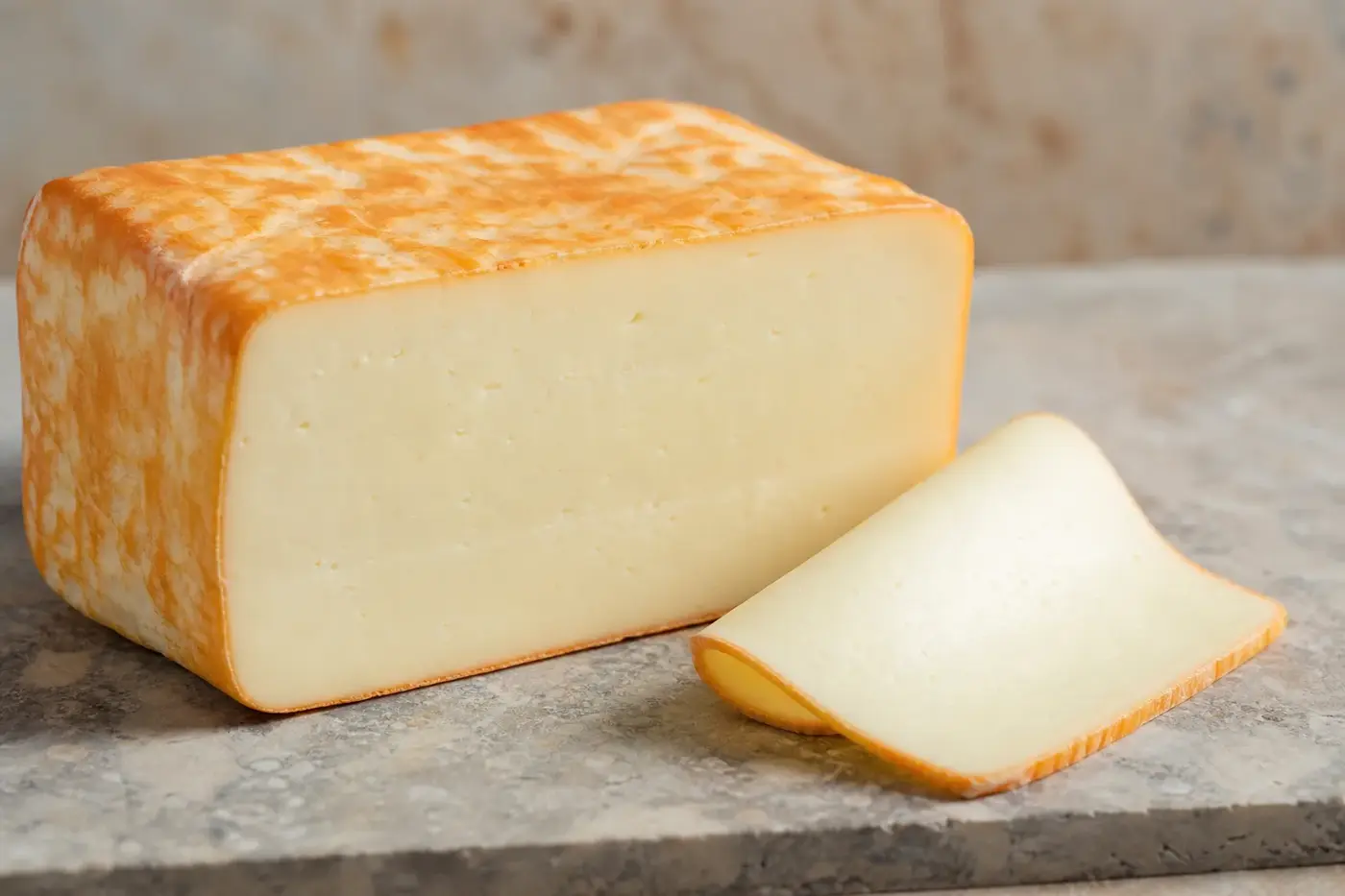
An orange border, a pale centre, a slice bending into your sandwich. Kretschmar's American Muenster gets that colourful edge from annatto seeds, while the cheese inside stays supple and ready for a little heat. Don't mistake it for powerfully aromatic French Munster, shaped by washed-rind ripening. Similar names, quite different company for lunch. [2,3,4]
American Muenster at a glance
| What you're looking for | What to know |
|---|---|
| Name | American Muenster. [1] |
| US statutory names | Muenster cheese or munster cheese. [1] |
| Style | Semi-soft; usually sold in blocks or slices. [2,3,5] |
| Milk and treatment | Pasteurised cow's milk; check your product's ingredients. [1,6] |
| US composition | At least 50% fat in dry matter; no more than 46% moisture in the whole cheese. [1] |
| Permitted coagulants | Animal, plant or microbial clotting enzymes. [1] |
| Legal minimum ageing | None specified in 21 CFR 133.160. [1] |
| Typical current ageing | Ask the maker about its ageing details. |
| Exterior | Commonly coloured with annatto; surface treatment varies by product. [1,2,3] |
| Allergen | Milk. [3] |
| US standard | 21 CFR 133.160, November 2026. [1] |
Meet your sandwich's quieter companion
American Muenster earns its place without a forceful flavour. Sargento describes its version as mild and savoury; Tri-State Cheese calls its own mild, slightly tangy, smooth and soft. Expect gentle savouriness with a little tang, rather than an assertive ripened aroma. Not every cheese needs to chair the meeting. [2,5]
Give the texture equal attention. A supple slice bends around your filling and softens readily under heat. Kretschmar calls its version semi-soft and highlights its melting properties, while Sargento recommends its slices for grilled sandwiches and cheeseburgers. Choose it when you want a yielding bite without the cheese taking over. [2,3]
Get to know that orange edge
The pale ivory centre and thin orange border make American Muenster easy to spot. You'll commonly see rectangular blocks cut into square or oblong slices. Sargento describes a red-orange rind; Kretschmar traces its rind colour to annatto seeds. For the full picture of what's on the surface, turn the pack over and read the ingredients. [2,3,5]
The US colour-additive regulation identifies annatto extract as coming from the seeds of Bixa orellana. Both brands list annatto, but colouring is optional under the federal Muenster standard, which also allows certain surface treatments. Before eating the covering, read the details for your particular product. Remove packaging and any wax or plastic coating. [1,2,3,7]
Follow Muenster into America's cheese dairies
German immigrants helped bring Muenster into America's cheesemaking story. A USDA account of Wisconsin's cheesemaking heritage, published in 1978, linked both Muenster and Limburger with German immigrants. Their contribution belonged alongside several other immigrant traditions. This is a story of shared knowledge, not one person inventing American Muenster. [8]
Go back to a USDA handbook published in 1953 and American production already used pasteurised milk, with some factories making loaf-shaped cheeses. Salting, washing and maturation varied. You can see European cheesemaking knowledge finding an American direction, with a recognisable family connection but considerable variety in how the cheese was made. [9]
Leave room for French Munster's own story
French Munster is a soft, washed-rind cow's milk cheese, also registered as Munster-Géromé. It holds an EU protected designation of origin, or PDO. Its defined production area surrounds the Vosges in north-eastern France, covering specified communes in seven departments. Milk production, cheesemaking and maturation must all take place within that area. [4,10,11]
Its ivory-orange to orange-red surface gets its colour principally from ripening organisms, including Brevibacterium linens. The French specification describes a powerful smell but a mild taste, with lactic and other notes. Your nose and palate may tell you rather different things. Calling it simply “strong” leaves out the interesting part. [4]
For the legal meaning of PDO, explore protected names explained. When you're shopping, look for the origin and full product name, not just an “e”. The US standard permits both “muenster cheese” and “munster cheese”, so spelling alone won't settle what's in your basket. [1]
Watch milk become a supple block
The US standard starts American Muenster with pasteurised dairy ingredients and a bacterial culture that produces lactic acid. A clotting enzyme sets the milk into curd, the solid part that separates from liquid whey. The curd is divided, stirred and heated to control whey separation, then drained in forms and salted. Pressing and turning are permitted too. [1]
Those choices help shape the slice you eventually eat. At Tri-State Cheese, curd goes into stainless-steel mesh forms, where gravity consolidates the blocks rather than heavy presses. The company credits retained moisture for the cheese's softness. It's a glimpse of the practical decisions behind that yielding texture. [5]
Cultures, drainage and maturation each have a part to play. The 1953 USDA account recorded American curing of six to eight weeks, alongside cheese sold after only a week or two. Those figures describe manufacture in 1953, not a timetable for today's cheese. Ask the maker about maturation and intended character, particularly when choosing between a delicate sandwich cheese and a fuller-flavoured example. [9]
If melting is your priority, age alone won't make the choice for you. Look instead at the maker's description of texture and intended use.
Put that gentle melt to work
Quiet flavour and easy melting give American Muenster plenty to do in your kitchen. Sargento recommends it for grilled sandwiches, sliders and cheeseburgers. In a grilled cheese sandwich, let it make the soft centre, then add mustard or pickles for contrast. [2]
You could try folded quesadillas, a layer over baked vegetables, or a mushroom cheese toastie. Treat these as serving ideas based on the makers' stated melting qualities, rather than step-by-step recipes. For a cold plate, try thin slices with apple, radishes or plain crackers. Go gently with strongly flavoured accompaniments, so the cheese still gets a word in. [2,3]
Choose a pack that fits your plans
Start with the legal name, milk treatment and ingredients. The American standard uses cow's milk dairy ingredients, but your pack will tell you whether the maker declares whole milk or another permitted combination. Read the storage instructions before deciding how much to bring home. [1,6]
If you're buying ready-sliced cheese, choose an intact pack and a thickness that suits your sandwiches. At the counter, ask to keep the product information, including its date and ingredients, with your cut piece. A whole block lets you choose the slice thickness and portions for different dishes.
For vegetarian suitability, investigate the enzyme source separately. US rules allow animal, plant and microbial clotting enzymes, but the label may say only “enzymes”. Ask for a vegetarian declaration for that specific product. You'll find the distinctions in the guide to rennet, while reading cheese labels helps you navigate the rest of the pack. [1]
Give your Muenster a cold, covered home
Keep your fridge at 5 °C or below and follow the label's storage instructions, in line with FSA advice for England, Wales and Northern Ireland. Reseal the original wrapping or place the cheese in a clean, closed container. Keep it covered and away from raw meat and its juices. [12]
Once the pack is open, follow its instructions rather than giving every Muenster the same lifespan. A use-by date concerns safety; a best-before date concerns quality. UK official guidance says to discard food after its use-by date, even if it looks or smells normal. [13]
Discard cheese with new mould, obvious decay or an unexpected change from its normal appearance. The FSA advises against eating obviously rotten or mouldy food, because removing visible mould cannot guarantee that unseen toxins are gone. Follow any recall notice naming your product and batch. [14]
Choose carefully when extra care matters
If you're pregnant or choosing food for someone in other higher-risk circumstances, match your country's guidance to the exact product. In the UK, the NHS lists pasteurised semi-hard cheeses and several pasteurised soft cheeses among those you can eat during pregnancy. Its cautions about mould-ripened soft cheeses and soft blue cheeses are separate. Compare the current categories with your cheese's label. [15]
In the United States, CDC identifies pregnancy, age 65 or over and weakened immunity as circumstances needing particular attention to Listeria prevention. Consult that guidance directly, especially if your sandwich will include deli meat. Every ingredient needs consideration, not just the cheese. [16]
For these higher-risk groups, CDC says to reheat deli meat, cold cuts, hot dogs and fermented or dry sausages to 74 °C (165 °F), or until steaming hot. A pasteurised cheese label doesn't change the advice for the meat beside it. For a straightforward cold serving, the suggested apple, radishes or crackers keep deli meat off your plate. Assess every ingredient against the relevant official advice when preparing food for someone at higher risk. [16]
Muenster contains milk, as the makers' ingredient lists confirm. If you're managing milk allergy, use the complete product label and your clinician's advice when choosing food. For the broader distinction between allergy and intolerance, turn to cheese allergy and lactose intolerance. [2,3]
A little more reading for your next cheese plate
- How to Store Cheese at Home: practical help with wrapping, refrigeration and opened packs.
- Listeria and Cheese Safety: a closer look at official advice and the people it applies to.
General information only, not medical advice: follow the official guidance where you live.
Questions people ask
How does American Muenster differ from French Munster?
American Muenster is mild and melts readily, while French Munster has a washed rind and a powerful smell. The French specification describes its taste as mild, despite its aroma.
Can you eat the orange rind on American Muenster?
The surface treatment varies by product, so check the particular cheese before deciding whether its covering can be eaten. Remove packaging and any wax or plastic coating.
Is American Muenster vegetarian?
US rules permit animal, plant and microbial clotting enzymes, and a label may say only ‘enzymes’. Ask for a product specific vegetarian declaration if this matters to you.
Can you eat American Muenster during pregnancy?
The NHS lists certain pasteurised cheeses as suitable during pregnancy, including several soft cheeses. Its cautions for mould ripened soft cheeses and soft blue cheeses are separate, so check the current NHS guidance against the product label.
How should American Muenster be stored?
The FSA advises keeping the fridge at 5 °C or below and following the label’s storage instructions. Keep the cheese covered, and follow the pack’s instructions after opening.
Sources
-
US Food and Drug Administration, electronic Code of Federal Regulations. 21 CFR 133.160: Muenster and munster cheese. Current text displayed as updated to 5 November 2026, accessed November 2026. Official text.
-
Sargento Foods Incorporated. Sargento Muenster Sliced Cheese, 11 Slices. Undated product description and ingredients, accessed November 2026. A commercial source for its own product and suggested uses. Product information.
-
Kretschmar. Muenster Cheese. Undated product description and ingredients, accessed November 2026. A commercial source for its own product, annatto use and melting description. Product information.
-
French Ministry of Agriculture and INAO. Cahier des charges de l'appellation d'origine « Munster » ou « Munster-Géromé ». Specification approved by the order of 8 November 2018, published in the ministry's Bulletin officiel No. 49 of 6 December 2018. Sections 2 and 3 cover description and geographical area. Official specification.
-
Tri-State Cheese. Muenster: The Cheese That Started It All. 14 July 2025. A maker's account of gravity forming, moisture retention and its own cheese's sensory character. Its broader origin narrative is not used as independent historical evidence. Maker's account.
-
US Food and Drug Administration, electronic Code of Federal Regulations. 21 CFR 133.3: Definitions. Current text accessed November 2026. Official definitions.
-
US Food and Drug Administration, electronic Code of Federal Regulations. 21 CFR 73.30: Annatto extract. Current text accessed November 2026, paragraph (a)(1). Official text.
-
US Department of Agriculture. The Farm Index, February 1978, “Wisconsin's Cheesemaking Heritage”. Historical institutional account preserved by the National Agricultural Library. Archived issue.
-
US Department of Agriculture. Cheese Varieties and Descriptions. Agriculture Handbook No. 54, December 1953, “Münster”, page 81 and following. Used for historical manufacturing descriptions only. Archived handbook.
-
INAO. Munster. Current official product record, accessed November 2026. Official record.
-
European Commission. Commission Implementing Regulation (EU) 2021/140 of 1 February 2021, approving an amendment to the specification for “Munster”/“Munster-Géromé” PDO. Published 8 February 2021. Official legal text.
-
Food Standards Agency. How to chill, freeze and defrost food safely. Guidance published 18 December 2017, current version accessed November 2026; applies to England, Northern Ireland and Wales. Official guidance.
-
GOV.UK. Understanding food labelling: Best before and use-by dates. Current official guidance accessed November 2026. Date-label guidance.
-
Food Standards Agency. Home food fact checker. Collection updated 21 August 2026; section “Can you still eat food if you remove the mouldy part?” accessed November 2026. Official guidance.
-
NHS. Foods to avoid in pregnancy. Current guidance, cheese and dairy section, accessed November 2026. Official pregnancy guidance.
-
US Centers for Disease Control and Prevention. Preventing Listeria Infection. 31 January 2025, current page accessed November 2026. Official US guidance.
Researched through official US standards, French official records, USDA historical publications, maker documentation and national food safety guidance, with kitchen suggestions identified as editorial synthesis.
Last checked: November 2026
Last checked November 2026.
The editors suggest you read next
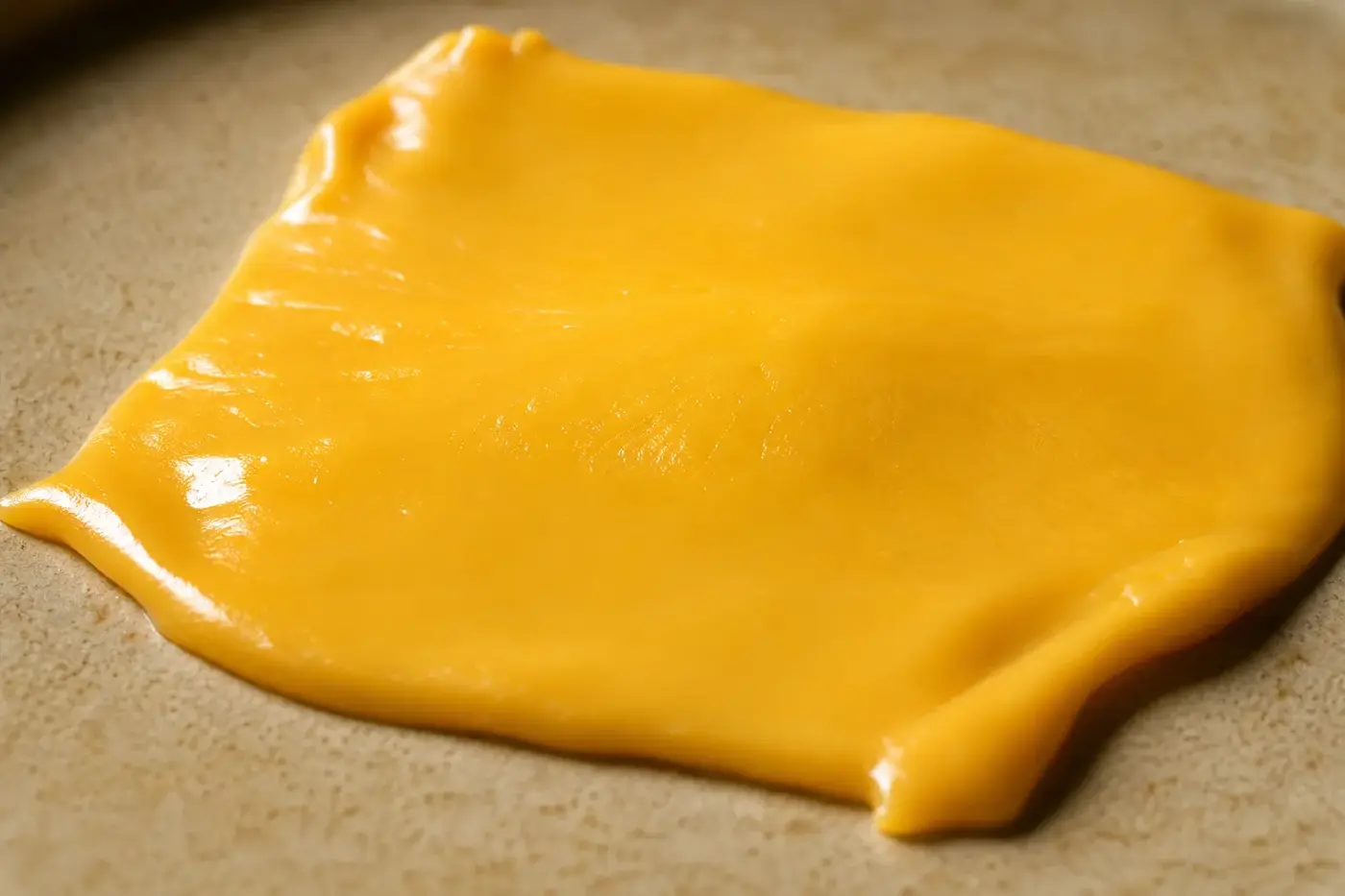
American Cheese: The Processed Slice Explained
Watch a slice of American cheese soften over your burger.