Pevensey Blue
Your knife slips into a soft paste threaded with dark blue veins.
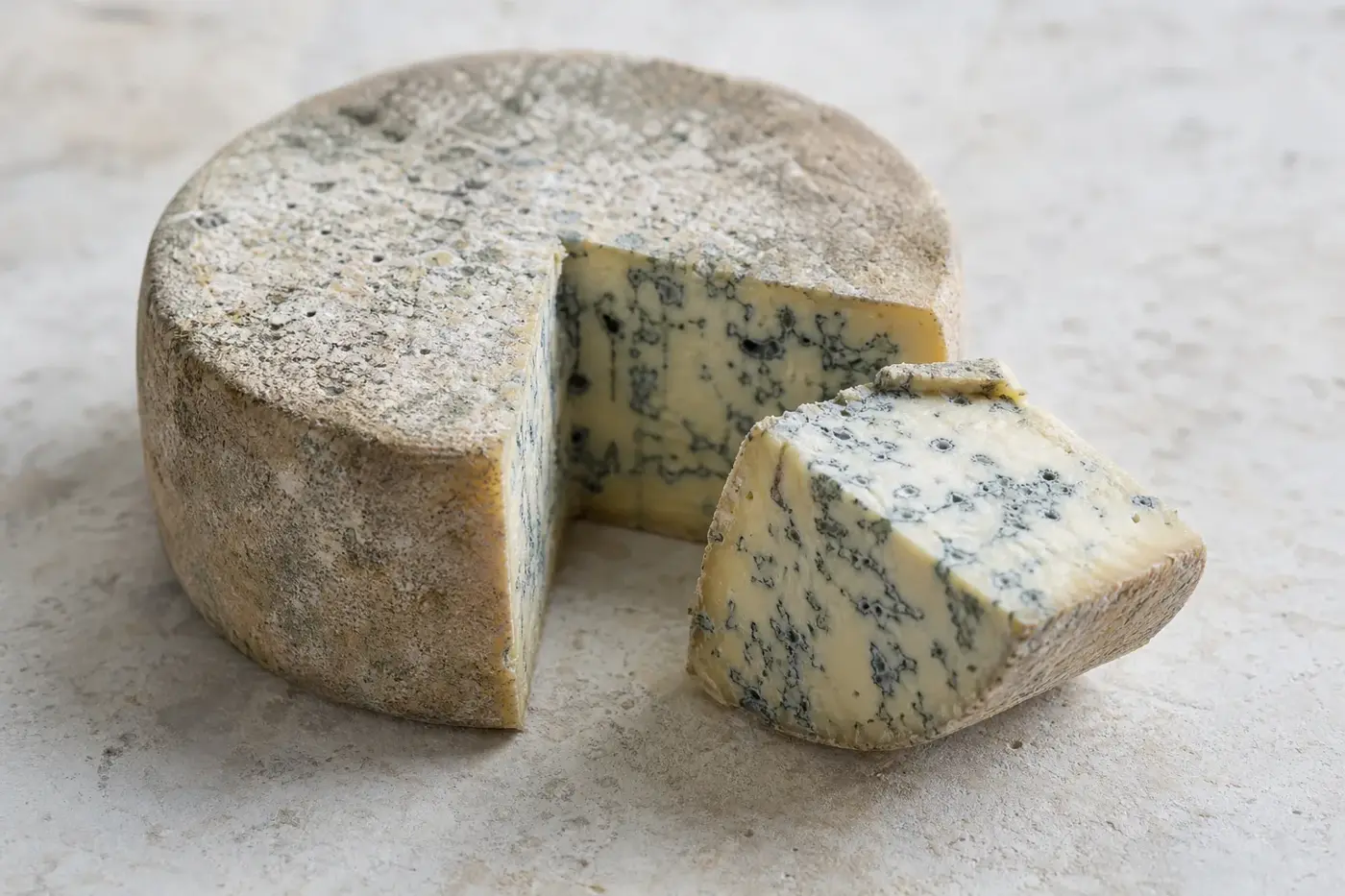
Your knife slips into a soft paste threaded with dark blue veins. The sweetness follows, syrupy in the maker’s words, with hazelnut waiting at the finish. Follow that mouthful back to the grazing land of the Pevensey Levels: Court Lodge Farm supplies the cow’s milk, and nearby, at Hockham Farm in Boreham Street, East Sussex, Pevensey Cheese Company Limited turns it into cheese. [1, 2, 6, 9]
Get acquainted with Pevensey Blue
| What you might like to know | The details |
|---|---|
| Name | Pevensey Blue [6] |
| Producer | Pevensey Cheese Company Limited [6] |
| Made at | Hockham Farm, Boreham Street, East Sussex, England [6] |
| Milk | Pasteurised cow’s milk from Court Lodge Farm, Wartling [6] |
| Coagulant | Animal rennet [6] |
| Blue mould | Penicillium roqueforti [7] |
| Maker’s maturation | 12 weeks [2] |
| When it is made | Year-round [2] |
| Allergen | Milk [6, 7] |
A Sussex blue makes itself at home in a fodder shed
A family farm’s fodder shed is not the obvious place to look for your next favourite blue. But part of one became the cheese rooms where Pevensey Blue took shape. The company dates production to 2020, through a partnership between a husband-and-wife cheesemaking team and the farmers supplying their milk. [1, 3]
Behind that beginning are years at a specialist cheese counter and family roots in East Sussex farming. One founder spent 15 years at Neal’s Yard Dairy, followed by a year making cheese with Trethowan Brothers. The other brought fresh produce experience and a connection to the family farm; converting the shed gave their cheese a working home among the area’s farms. [3]
The soft blue on your plate was not quite the original plan. In their published Indie Farmer interview, the founders describe first exploring a Stilton-style cheese, then choosing to bring a softer, continental-style blue to the British selection. Early experiments used small quantities of their chosen farm’s milk, letting the recipe grow around that supply and a particular texture rather than an old county tradition. [4]
Follow the morning milk to the Pevensey Levels
Court Lodge Farm sits at Wartling, on the edge of the Pevensey Levels. It describes an extensive, grass-based farming system, with land rented from Sussex Wildlife Trust and habitat management woven into daily work. The cheesemaker names this herd as its milk source, noting how the milk changes with the weather, the season and whatever the cows choose to graze. [2, 5]
Fresh morning milk is collected, then pasteurised when it reaches the make room. The producer’s product information also declares pasteurised cow’s milk. If you would like to understand the differences between treatments, raw milk, thermised and pasteurised cheese walks you through each approach. [2, 6]
Gentle stirring, patient draining and a little air
Three to four hours of gentle stirring help the curd reach the right acidity and texture. First, the milk is pasteurised and cooled, cultures start fermentation, and rennet, the milk-setting enzyme, forms the curd. The maker cuts this solid portion in three stages, then stirs until the cheesemakers judge it ready. [2]
The curd is then scooped into circular forms, turned frequently and left to drain overnight. Salting follows the next day, with another 24 hours of draining afterwards. Each cheese is pierced at the end of both its first and second weeks, before continuing to mature. [2]
Those holes are doing more than decorating the cheese. Neal’s Yard Dairy, which helped develop Pevensey Blue, identifies the blue culture as Penicillium roqueforti. Piercing lets air into blue cheeses and enables internal mould growth, as the official Stilton production specification explains; here, it helps build the blue pattern through the paste during managed ripening. [7, 8]
Take a closer look at those blue veins
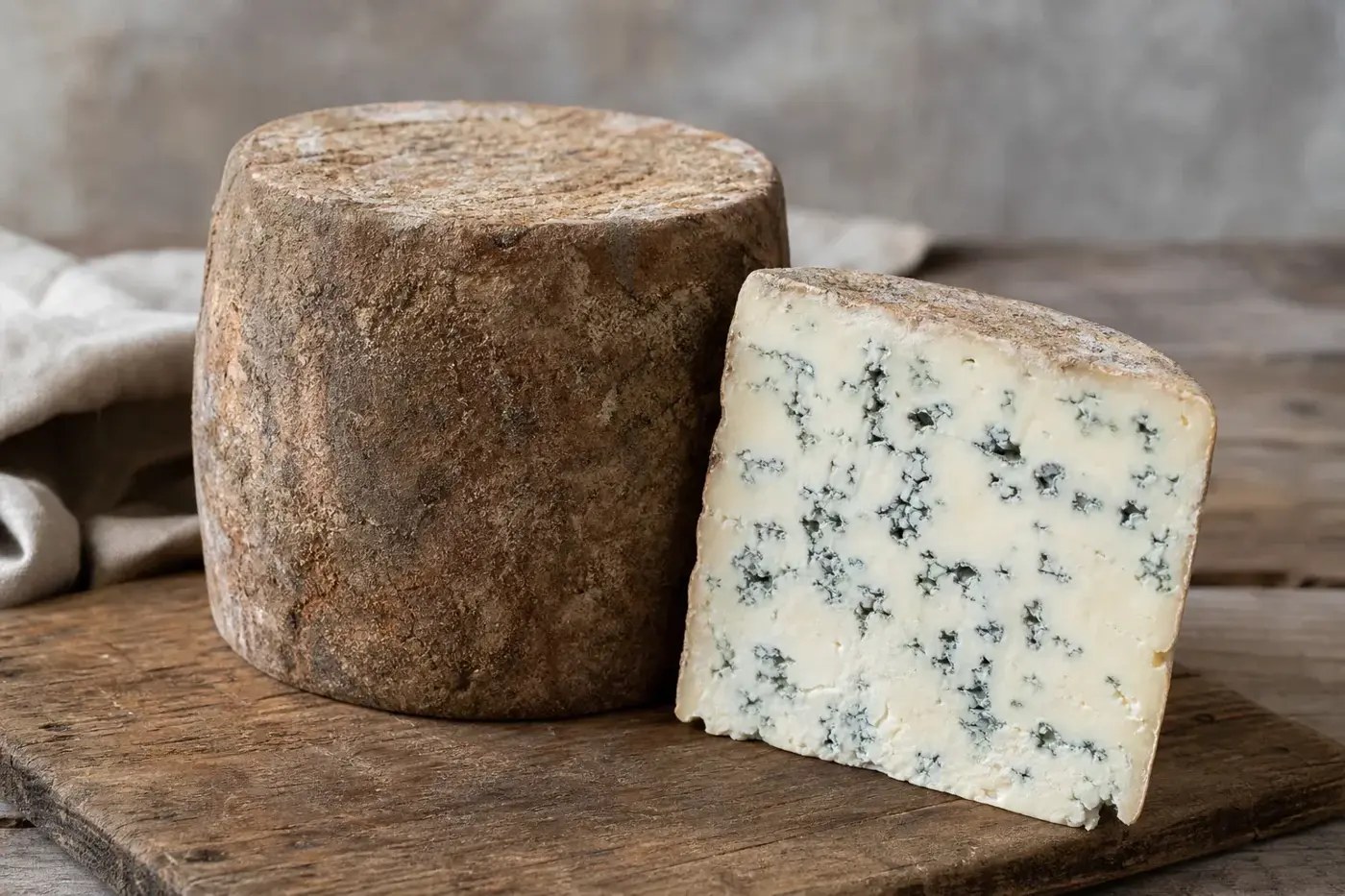
Look at your cut piece and you will see dark blue passages through a mottled paste, rather than an even wash of colour. That is the appearance Neal’s Yard Dairy describes. Circular forms give the cheese its round shape, while maturation develops a rind around the soft interior, known as the paste. [2, 9]
Now look just beside a vein. In its 2026 technical sheet, Neal’s Yard Dairy describes the paste breaking down around the blue growth as the cheese matures, creating the soft, spreadable character it selects Pevensey Blue for. That handsome pattern has more to tell you than you might expect: the texture around each vein offers a glimpse of its ripening. [7]
Give it twelve weeks for sweetness, tang and hazelnut
The maker allows 12 weeks of maturation for the rind and internal blue mould to develop. Keep that reference point in mind when you reach the cheese counter. Ask when the cheese was made, and whether the piece in front of you is firmer or more spreadable. [2, 9]
The producer’s tasting notes begin with syrupy sweetness and end with a hazelnut aftertaste. Neal’s Yard Dairy adds almost-fruity blue aromas, sweet cream set against sharper blue tang, and a lingering savoury finish. As you taste, notice the contrast: a yielding, sweet-tasting background, followed by the blue making its presence felt. [1, 7]
With age, the monger’s product page describes a deepening salty-sweet flavour and a fondant texture. Think soft and cohesive, rather than a shower of dry crumbs across your lap. If you have a particular serving in mind, ask the person cutting your portion whether its current consistency will suit it. [9]
Make room beside Stilton and Beenleigh Blue
Softness sets Pevensey Blue’s intended style apart from Blue Stilton, although both have cow’s milk and internal blue mould. The Stilton specification describes younger blue cheese as slightly crumbly, with slight sharpness against a milky background. Mature examples can become softer and creamier, so consider age when you compare them: Stilton does not have one fixed texture. [8]
Beenleigh Blue begins with ewe’s milk. Its producer, Ticklemore Cheese Dairy in Devon, describes a smooth body, earthy blue notes, gentle sharpness and a slightly sweet finish, sometimes with sherry-like tones. You will learn more by tasting these cheeses side by side than by simply ranking them from mild to strong: the milk species differs, and each maker describes its own balance of sweetness, blue flavour and texture. [10]
Let the first mouthful speak for itself
Start with plain bread and a ripe pear before reaching for sweeter accompaniments. That leaves you room to notice the cheese’s own syrupy character, before the honey claims all the credit. For something more substantial, Neal’s Yard Dairy suggests hot focaccia topped with the cheese and honey, allowing the bread’s warmth to soften the cheese. [7]
- Taste a small piece on its own. Smell it first, then notice whether the paste holds its shape or spreads under light pressure from your knife.
- Try a second piece with plain bread. Compare the sweetness with the blue tang, and notice which flavour stays with you after swallowing.
- Add pear or a little honey last. Try each as a comparison, rather than burying the cheese beneath several accompaniments at once.
Cut only what you intend to serve. For advice on how long chilled food can stay out of refrigeration in England, Wales and Northern Ireland, consult current Food Standards Agency guidance. Follow the instructions supplied with your portion, too. [11]
If you would like an alcohol-free drink, choose black tea or sparkling water to keep things restrained while you explore the cheese. For broader pairing principles, turn to cheese and wine pairing.
Give your cheese the right fridge conditions
Keep Pevensey Blue refrigerated, as its producer instructs, and follow the date and storage information supplied with your portion. FSA guidance for England, Wales and Northern Ireland recommends a fridge temperature between 0 and 5 °C (32 to 41 °F). Use a fridge thermometer to check it. [6, 11]
Keep the wrapper or label so the instructions stay with your cheese. UK official guidance distinguishes a use-by date, which concerns safety, from a best-before date, which concerns quality; follow the storage conditions attached to either. For help with wrapping and choosing a place in the fridge, see how to store cheese at home. [12]
This page summarises published guidance from the official sources it cites. It is not medical advice. Guidance differs between countries and changes over time, so check the current source for where you live, and ask your doctor, midwife, pharmacist or dietitian about your own circumstances.
Before you buy, check rennet and milk allergens
Pevensey Blue is unsuitable for vegetarians because its producer uses animal rennet. If you are choosing a replacement, read its current label or ask the producer which coagulant it uses. Rennet explained introduces the different sources of these milk-setting enzymes. [6]
Milk is an allergen in Pevensey Blue, declared by its producer and listed in Neal’s Yard Dairy’s technical sheet. If you are buying a cut-to-order portion, ask for current allergen information and keep it with your purchase. UK official guidance explains how this information is provided for different forms of sale. [6, 7, 13]
Follow your curiosity to the next cheese
- How to Tell Cheese Styles Apart: Milk, Rind, Texture and Method: give yourself a framework for comparing the next blue that catches your eye.
- How to Read a Cheese Label: find your portion’s milk treatment, ingredients and handling information.
Questions people ask
Where is Pevensey Blue made and what milk does it use?
It is made at Hockham Farm in Boreham Street, East Sussex. The pasteurised cow’s milk comes from Court Lodge Farm in Wartling.
Is Pevensey Blue suitable for vegetarians?
No, the producer uses animal rennet. Pevensey Blue also contains milk, which is an allergen.
What does Pevensey Blue taste like?
The producer describes a syrupy sweetness and a hazelnut aftertaste. Neal’s Yard Dairy notes sweet cream, a sharper blue tang and a lingering savoury finish.
What can I serve with Pevensey Blue?
Try it with plain bread and ripe pear. Neal’s Yard Dairy also suggests serving it on hot focaccia with honey.
How should I store Pevensey Blue?
The producer instructs customers to keep it refrigerated and follow the date and storage information supplied with their portion. For England, Wales and Northern Ireland, the Food Standards Agency recommends a fridge temperature between 0 and 5 °C, checked with a fridge thermometer.
Sources
- Pevensey Cheese Company Limited, homepage, undated current version. Production since 2020, company partnership and the maker’s summary tasting notes. Official website.
- Pevensey Cheese Company Limited, About Pevensey Blue cheese, undated current version. Milk supply, making, piercing, maturation and production season. Producer’s account.
- Pevensey Cheese Company Limited, Who we are, undated current version. Founders’ backgrounds, training and conversion of the farm building. Company history.
- Indie Farmer, interview with the Pevensey Cheese Company founders, undated retrieved page. The founders’ account of development, initial Stilton interest and selection of a softer style. Published interview.
- Court Lodge Organics, About us and The farm and our approach, undated current homepage. Farm location and the farm’s description of its grazing and habitat management. Farm website.
- Pevensey Cheese Company Limited, Pevensey Blue, undated current product information. Producer, location, milk source and treatment, animal rennet, milk declaration and refrigeration instructions. Producer’s product information.
- Neal’s Yard Dairy, Pevensey Blue crib sheet, 2026 edition. Ingredients, ripening observations, sensory descriptions and pairing suggestions. Neal’s Yard Dairy sells the cheese and participated in its development. Technical sheet.
- Department for Environment, Food and Rural Affairs, Product specification: Stilton Cheese, GOV.UK-hosted version, document revision date not stated. Sections 4.2 and 4.5, milk, texture and internal blue development through piercing. Product specification.
- Neal’s Yard Dairy, Pevensey Blue, undated current product page. Its selected cheese’s texture, maturation-related flavour development and descriptive image captions. Monger’s product account.
- Ticklemore Cheese Dairy, Beenleigh Blue, undated current version. Ewe’s milk and the producer’s flavour and texture descriptions. Producer’s account.
- Food Standards Agency, How to chill, freeze and defrost food safely, published 18 December 2017, current retrieved version. Applies to England, Northern Ireland and Wales. Official chilling guidance.
- GOV.UK, Understanding food labelling: Best before and use-by dates, undated current version. Date meanings and following storage instructions. Official date guidance.
- GOV.UK, Understanding food labelling: Allergen labelling, undated current version. Milk as an allergen and information for different forms of sale. Official allergen guidance.
Researched from the producer’s and supplying farm’s published accounts, a founders’ interview, a development partner’s technical information, an official specification and government consumer guidance.
Last checked: November 2026
Last checked November 2026.
The editors suggest you read next
West Country Farmhouse Cheddar Cheese
Large pieces of curd turn and stack under the cheesemaker’s hands.