Protected Cheese Names Outside Europe
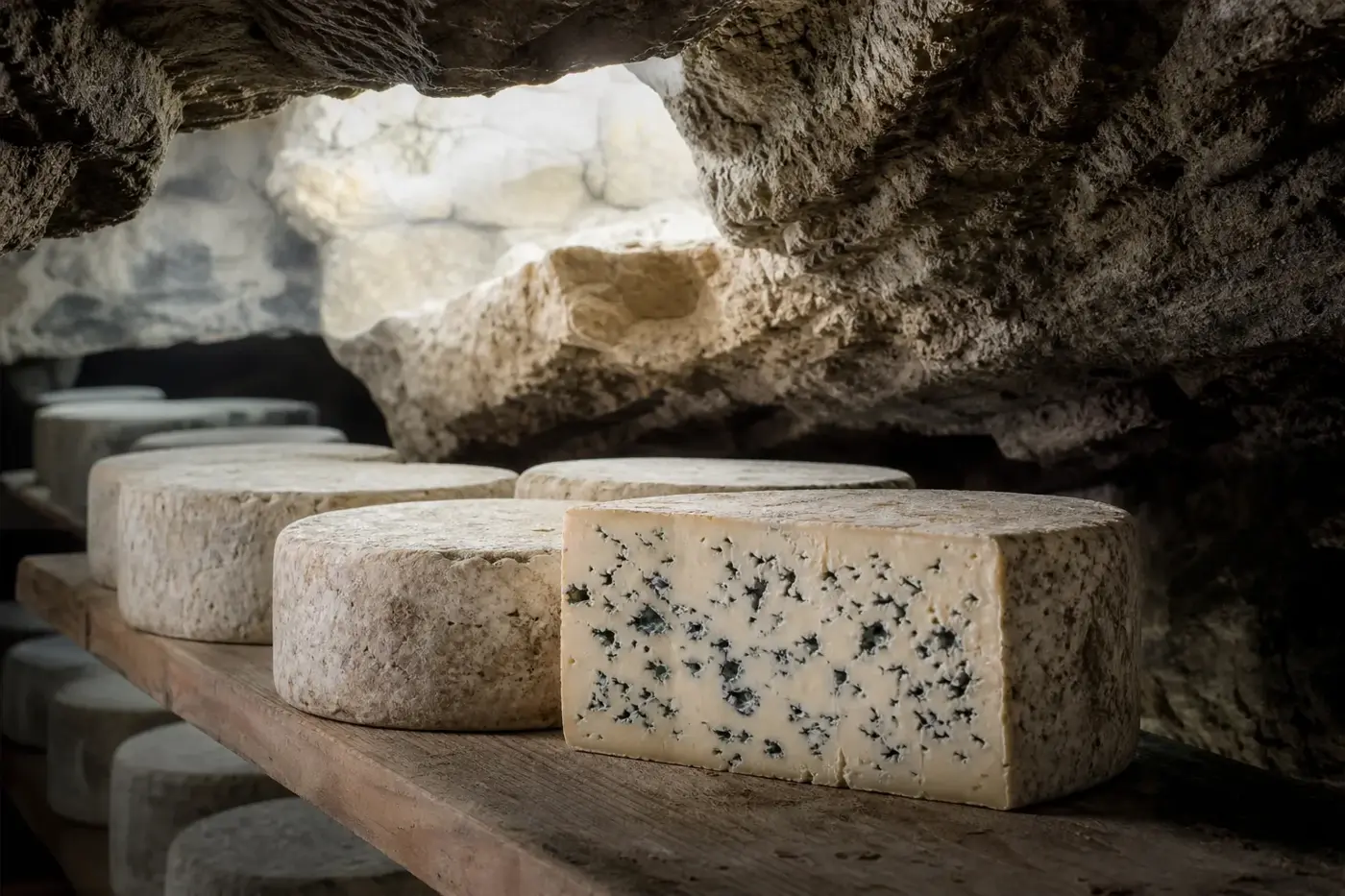
In the caves of Roquefort, France, sheep's milk cheese cures according to established methods.
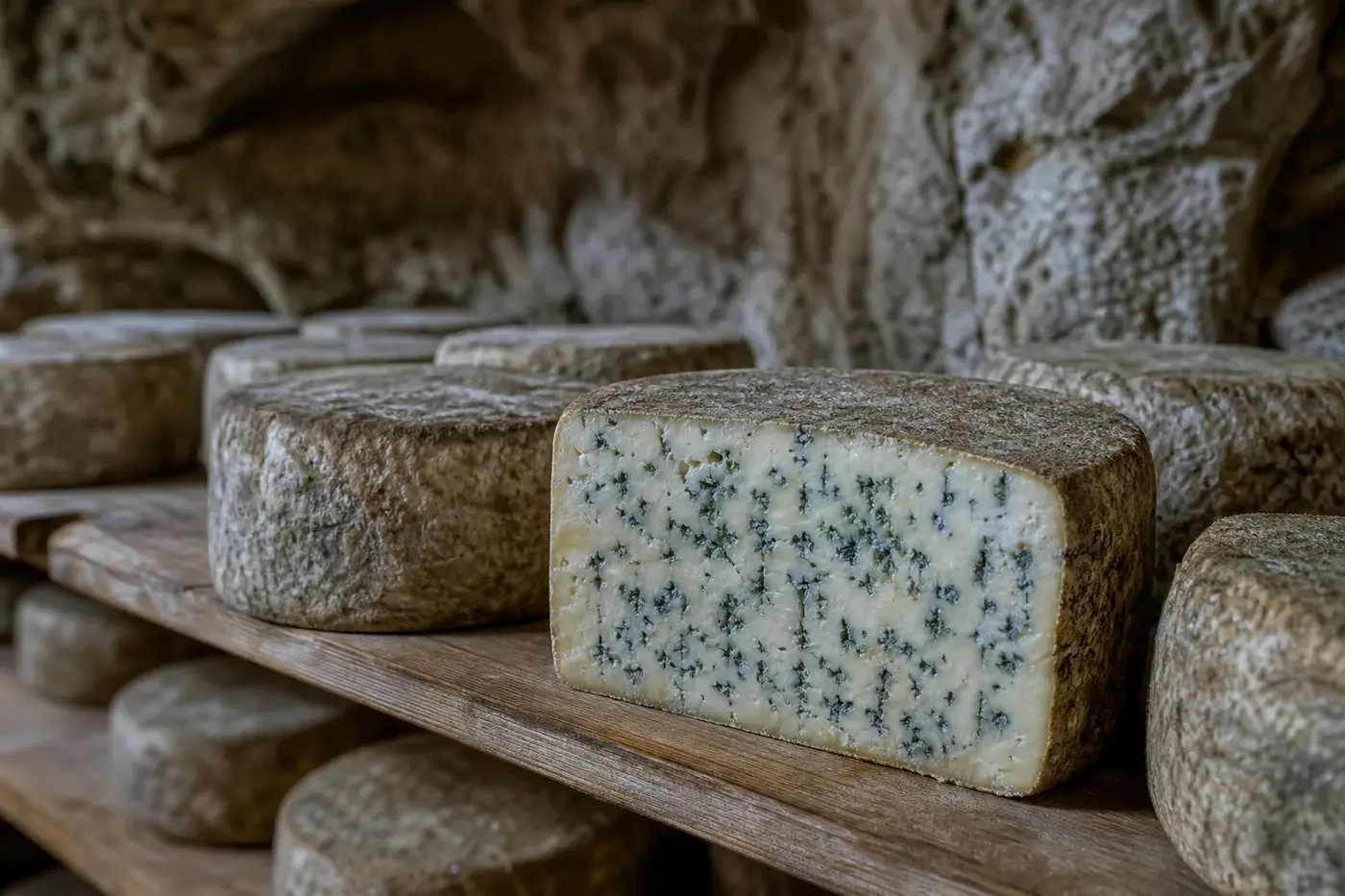
In the caves of Roquefort, France, sheep's milk cheese cures according to established methods. You might reasonably be thinking about your next slice. But follow its name across the Atlantic and you arrive somewhere less appetising: United States trademark guidance. The USPTO uses ROQUEFORT to show how a geographical certification mark can protect origin and methods. [5]
Same name, different legal machinery. If you follow cheese names around the world, that distinction matters: the United States uses trademarks to protect geographical origin, while Canada combines domestic legislation with negotiated commitments to the European Union. What protection you find depends on the destination country's law, the registration or agreement, and exceptions for established users. [1,5,6,7]
When a cheese name crosses a border
A place can give a cheese its identity through more than flavour or texture. Under Article 22.1 of the World Trade Organization's TRIPS Agreement, a geographical indication, usually shortened to GI, links a product to a place through a quality, reputation or other characteristic essentially attributable to that origin. Reputation counts: the connection need not rest on physical qualities alone. [1]
The enforceable right, though, comes from the legal system where you want protection. A Brazilian registration and a United States certification mark are different instruments, even when both connect food to origin. An international agreement can require protection abroad, but its wording and implementation determine how far that protection reaches. [1,3,5,7]
For the European categories behind familiar labels, start with protected names explained. Once you look abroad, make your question precise: which right protects this exact name in this particular market?
At the cheese counter, look beyond the brand
GI describes the geographical connection. Each country chooses the legal machinery that protects it. In the United States, the USPTO distinguishes three kinds of mark: [5]
- Ordinary trademark: tells you that goods come from one commercial source rather than another.
- Collective trademark: distinguishes goods supplied by an organisation's members. A collective membership mark identifies membership itself.
- Certification mark: certifies specified characteristics, including geographical origin or production methods. Authorised producers use it; the certifier controls compliance. [5]
Picture yourself at the cheese counter, looking at a name you recognise. The producer's brand identifies the business behind the cheese, while qualifying producers can share a geographical certification. To find out exactly what that certification promises, read the mark's conditions. [5]
Start with the WTO, but know its limits
TRIPS Article 22 requires WTO members to provide legal means against misleading geographical origin claims and unfair competition. It also addresses trademarks containing geographical indications when their use on goods from elsewhere would mislead the public. You can think of it as a baseline, not a single registration system for the whole world. [1]
You may have heard that adding “style” does not get around protection. Article 23 provides stronger protection, including against certain uses with words such as “style”, but concerns wines and spirits. Cheese falls under Article 22's general baseline unless another applicable rule gives it stronger protection. [1]
Article 24 then sets out qualifications. Paragraph 5 concerns earlier trademarks acquired or applied for in good faith, subject to its dates and conditions. Paragraph 6 allows an exception for terms customary as common names in the relevant WTO member's territory. Paragraph 4 concerns continued use of certain geographical indications identifying wines or spirits. [1]
“This name has been used for years” is therefore not enough on its own. You need the precise legal basis. Canada's cheese exceptions, for instance, come from its own legislation and negotiated agreement. [6,7]
Canastra: a name rooted in eight municipalities
In Brazil, Canastra brings local producers and their place name into the picture. Brazil's INPI records Canastra as registration IG201002, an Indicação de Procedência, or indication of provenance, for cheese. The certificate gives the indication's presentation as Queijo da Canastra. [3]
The registration dates from 13 March 2012. An amended certificate records an alteration dated 17 September 2024 and names eight municipalities in Minas Gerais: São Roque de Minas, Vargem Bonita, Medeiros, Bambuí, Delfinópolis, Piumhi, Tapiraí and São João Batista do Glória. [3]
If you have an older account of the region, start with that amended document. It places the original registration date beside the later alteration. Read it alongside the accompanying technical specification, which sets out production and control requirements. A map and a familiar name give you only part of the story. [3]
Queso Paipa: the visitors who helped name a cheese
Visitors helped give Queso Paipa its name. Colombia's agricultural authority, ICA, reported in 2021 that the cheese was originally produced in Sotaquirá but sold in Paipa. There, visitors came to associate it with the town's name. [10]
Indexed text from Colombia's Superintendence of Industry and Commerce, or SIC, identifies the denomination as Queso Paipa. It cites Resolution 70802 of 6 December 2011 and file 09148871. For the full protected area, current status and operative conditions, you need the SIC record and operative resolution. [4]
Paipa's municipal council set out the producer's responsibilities in its 2023 agreement. To use the denomination, producers must follow the relevant processes, be within the origin area and have authorisation to use the seals. [9]
Roquefort: shared certification, specific conditions
Those Roquefort caves also appear in the USPTO's explanation of geographical certification marks. Its example is ROQUEFORT, US registration number 571,798. The guidance describes certification of sheep's milk cheese cured in the caves of the community of Roquefort in France according to established methods. Both the place and the production method matter. [5]
This arrangement lets qualifying businesses share a certification under controlled conditions. Before a current transaction, open the actual registration record and read its status, owner and certification statement alongside the USPTO guidance. The guidance explains the mechanism; the record gives you the particulars. [5,12]
Canada: read the protection and the exceptions
Canada's arrangements show why the small print deserves your attention. CETA, the Comprehensive Economic and Trade Agreement between Canada and the European Union, identifies covered geographical indications in Annex 20-A. Its cheese entries include Roquefort, Comté, Queso Manchego and Parmigiano Reggiano. Article 20.19 sets protection for listed names, subject to Article 20.21's exceptions. [7,8]
Canada implements protection for agricultural products and foods through the Trademarks Act. For cheese, section 11.17 contains two particularly useful exceptions: [6]
- Earlier use: subsection (3) covers Asiago, Feta, Φέτα, Fontina, Gorgonzola and Munster, including translations, where the person or predecessor in title used the indication commercially for cheese before 18 October 2013.
- Qualified use: subsection (4) allows those indications with a qualifier such as “style” or “type”, provided the cheese's geographical origin is clearly conveyed as the subsection requires. [6]
Keep your eye on the names in that list. These exceptions apply to named cheeses, not automatically to others. The background to feta explains the product name; Canada's statute determines the Canadian exception. [6]
The agreement goes beyond asking whether a label misleads you. Article 20.19 covers listed names on products from outside the specified origin, and on products from that origin that fail the relevant production law. Subject to exceptions, it also covers translations and wording such as “style”, even when the true origin is stated. [7]
Old names and earlier rights: mind the dates
A name can mean a particular place while having a long trading history elsewhere. Negotiations balance those interests. CETA Article 20.21 addresses earlier good-faith trademarks and customary common terms alongside its named exceptions. Canada's implementation statement explains that the cheese exceptions apply to domestic and foreign users active in the Canadian market. [7,11]
Permission to continue and permission for a limited time are different things. CETA's Beaufort provisions distinguish established users from users allowed a limited period. Canada's Act likewise separates the ongoing exception in section 11.17(5) from the transitional provision in section 68.1(1). The applicable dates tell you which situation applies. [6,7]
Even a familiar word deserves a close look. CETA Annex 20-B expressly addresses Parmesan, while Annex 20-A lists Parmigiano Reggiano. Look at both the protected expression and any preserved term. Together, they tell you much more than a headline announcing protection for cheese names. [7,8]
Follow the name, step by step
Start with the country where you will use the name or sell the cheese. Work through these steps, keeping a dated record as you go:
- Search the exact expression. Include accents, translations and any separate logo or composite mark.
- Identify the right. Is it a GI, denomination of origin, certification mark, collective mark or ordinary trademark?
- Establish its stage. Separate applications from granted rights. Read later amendments, renewals and cancellations.
- Read the conditions. Find the geographical boundary, product category, specification and rules for authorised users.
- Look for exceptions. Read earlier-use cut-offs, qualifying words, origin statements and transitional provisions in the applicable legislation or agreement.
- Repeat for the destination market. The producing country's record answers only part of a cross-border question. [1,3,6,7]
These official sources give you a starting point in each jurisdiction. The notes distinguish general guidance from the individual documents you need for a particular name.
| Where to look | Protection or record | Where to start | Record position: November 2026 |
|---|---|---|---|
| Brazil | Canastra indication of provenance | INPI certificate and specification [3] | Certificate available |
| Colombia | Queso Paipa denomination of origin | SIC record and resolution [4] | Indexed text available; full record, protected area, current status and operative conditions unresolved |
| United States | Geographical certification mark | USPTO guidance and register [5,12] | Guidance available; individual registration status unresolved |
| Canada | Trademarks Act and CETA protection | Legislation, treaty and CIPO list [6,8,11] | Legislation and treaty available; current register entries unresolved |
Keep the whole name intact in your searches. Annex 20-A lists Brie de Meaux and Camembert de Normandie, for example. Those place names are part of the evidence, so resist shortening every result to Brie or Camembert. Record a separate logo registration separately from a word registration, with its own identifier and conditions. [8]
Save the document version as well as your search date. A register may point to an original grant and a later amendment; an agreement may have footnotes that change how particular names are treated. Canastra's altered certificate and CETA's starred entries show why those extra steps matter. [3,8]
If you have a label in your hand, use how to read a cheese label alongside your register search. Keep origin, maker and brand separate in your notes. For a proposed commercial label or disputed right, take the complete record to a qualified adviser in that jurisdiction.
What the name can tell you about the cheese
A protected name connects a product with a place, sometimes through detailed production rules. The particular registration and its conditions determine the scope of protection. As Canastra's technical document shows, the specification can tell you considerably more than the name alone. [1,3]
That is not the same as a safety promise, a distinction the USPTO makes when discussing certification. Protected origin alone guarantees neither safety nor nutritional quality. For safety, follow cheese food safety guidance. For composition, read the product's nutrition information. [5]
Whether you love the cheese is another judgement again. Your taste buds tend not to read the paperwork.
Questions people ask
How is Roquefort protected in the United States?
ROQUEFORT is a geographical certification mark, which can be shared by qualifying producers under controlled conditions. The USPTO's guidance explains the mechanism, but the actual registration record should be checked for its status, owner and certification statement.
Can cheese be called feta in Canada if it is not from Greece?
Canada's Trademarks Act contains exceptions for Feta and certain other named cheeses. These cover qualifying earlier commercial use before 18 October 2013, or use with a qualifier such as “style” or “type” when the cheese's geographical origin is clearly conveyed as the statute requires.
Do international rules stop cheese makers using a protected name with the word “style”?
Under TRIPS, the stronger protection covering certain uses with words such as “style” concerns wines and spirits. Cheese comes under the general baseline unless another applicable rule provides stronger protection.
Does Canada's agreement with the European Union protect Parmesan?
CETA lists Parmigiano Reggiano and separately addresses the term Parmesan. The page recommends checking both the protected expression and any preserved term.
How can I check whether a cheese name is protected in another country?
Start with the country where the name will be used or the cheese sold, and search for the exact expression, including accents and translations. Check the right, its status, its conditions and any exceptions, then repeat the search for each destination market.
Sources
- World Trade Organization. Agreement on Trade-Related Aspects of Intellectual Property Rights, as amended by the 2005 Protocol, official online text, amendment effective 2017. Articles 22 to 24. Official agreement text.
- Instituto Nacional da Propriedade Industrial, Brazil. Guia Básico, online guidance, undated, accessed November 2026. Links to granted registrations, certificates and technical specifications. Official guidance.
- Instituto Nacional da Propriedade Industrial, Brazil. Certificado de Registro de Indicação Geográfica IG201002 and accompanying Caderno de Especificações Técnicas, amended 2024. Amended certificate and specification.
- Superintendencia de Industria y Comercio, Colombia. Queso Paipa, official denomination record, citing Resolution 70802 of 6 December 2011. Search-index text retrieved November 2026; full-page access requires editorial verification. Official record.
- United States Patent and Trademark Office. Geographical Indications (GI) Protection, online guidance, undated, accessed November 2026. Sections on certification marks, collective marks and trademarks. Official explanation.
- Department of Justice Canada. Trademarks Act, R.S.C. 1985, c. T-13, consolidation current to 19 October 2026, last amended 1 April 2025. Sections 11.15, 11.17, 11.18 and 68.1. Consolidated legislation.
- Global Affairs Canada. Comprehensive Economic and Trade Agreement: Chapter twenty, Intellectual property, signed 2016, official online treaty text. Articles 20.16 to 20.23. Chapter twenty.
- Global Affairs Canada. Comprehensive Economic and Trade Agreement: Annex 20, official online treaty annexes, 2016 text. Annexes 20-A, 20-B and 20-C. Names, exceptions and product classes.
- Concejo Municipal de Paipa, Colombia. Acuerdo No. 002, 14 February 2023. Recital concerning the denomination and authorised use of its seals. Municipal agreement.
- Instituto Colombiano Agropecuario. Queso Paipa, delicia boyacense con más de 100 años de tradición, 27 April 2021. Attributed account of production in Sotaquirá and commercialisation in Paipa. Official account.
- Global Affairs Canada. Canadian Statement on Implementation, 2017. Chapter twenty, geographical indications. Implementation statement.
- United States Patent and Trademark Office. Trademark Status & Document Retrieval, live register interface, accessed November 2026. The interface loaded, but the individual ROQUEFORT record was not retrieved. Official status interface.
This desk-researched article compares official treaty texts, legislation, registration documents and government explanations, with outstanding register checks recorded for the editor below.
Last checked: November 2026
Last checked November 2026.
The editors suggest you read next
Cheese Law Around the World: The Complete Guide
GRUYERE reached an American legal border and lost its exclusivity.