Scamorza
In the hills around Montella, Bagnoli Irpino and Nusco, pairs of scamorza hang from raffia ties.
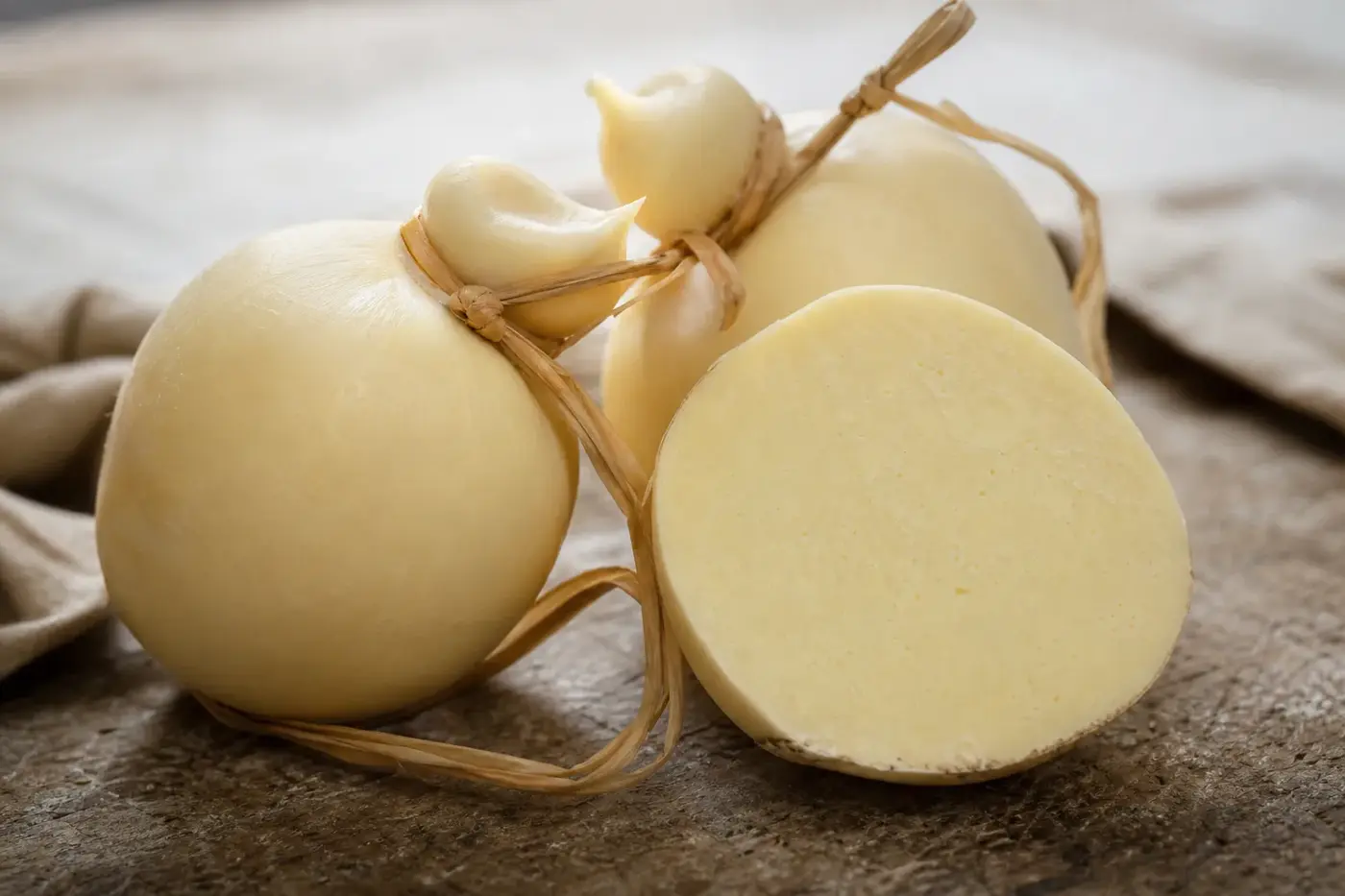
In the hills around Montella, Bagnoli Irpino and Nusco, pairs of scamorza hang from raffia ties. Each cylindrical cheese has a pronounced little head, its neck giving the cheesemaker somewhere to fasten the tie. Cut through the thin skin and you meet firm, supple Italian stretched-curd cheese that melts as neatly as it slices. Plain or smoked, briefly matured and ready for your plate or supper, it earns its place beyond looking handsome on a string. [1][3][4][5]
| Your quick guide to scamorza | What to know |
|---|---|
| Family | Pasta filata, meaning stretched curd. [1] |
| Traditional home | Southern Italy, including documented traditions in Campania and Puglia. [1][2] |
| Milk | Usually cow’s milk; buffalo-milk production is documented in Campania. [1] |
| Your main choices | Plain and smoked; look for scamorza affumicata for the smoked version. [1][2] |
| A maturation example | Puglia’s traditional-product record gives 1 to 6 days, extending to 20 days for more matured versions. [2] |
| Rennet | Traditional methods use animal rennet; check the particular cheese you are buying. [2][3] |
| Registered name, authority and register ID | Details are not provided here. |
| EU protection status, November 2026 | Status is not stated here. |
Follow the raffia ties into southern Italy
Scamorza belongs to southern Italy’s tradition of shaping warm, stretched curd into cheeses that can be tied and suspended. Its roots will not lead you neatly to a single town. Campania’s regional record describes production throughout the region, including buffalo-milk scamorza around Naples, Salerno and Caserta. [1]
The familiar pear-shaped outline is not the whole story, either. Around Montella, Bagnoli Irpino and Nusco in Avellino province, scamorza di Montella is cylindrical, with that pronounced head. Its customary size is about 600 g, and the regional account describes cheeses tied in pairs with raffia. [3]
At the cheese counter, those differences deserve your attention. A small, recently made scamorza can differ in texture and intensity from a larger, more matured one. Ask who made it and how long it has matured: a good silhouette is not a character reference. [2][3]
Ask about the milk, then the rennet
Cow’s milk is the usual starting point in these regional records, although Campania also documents buffalo-milk versions. Milk species and milk treatment are separate questions. If either matters to your choice, look for both on the label or ask the producer. [1][2]
If you are choosing vegetarian cheese, the rennet needs attention. The Montella method uses calf rennet, the enzyme preparation that coagulates milk; Puglia’s traditional account documents calf or kid rennet. Neither plain nor smoked scamorza is automatically vegetarian, so choose a product explicitly confirmed as suitable. [2][3]
The rennet guide takes you through the different coagulants and what they mean for your cheese choice. If the ingredient list says only “rennet”, ask the cheesemonger one straightforward question: what is its source?
Watch the cheesemaker stretch and shape
Before the stretching begins, the curd needs time to become ready. In Campania’s Montella account, the milk is coagulated, then the curd is broken, warmed and left under whey, the liquid separated during cheesemaking. As it matures, acidification brings it towards the condition needed for stretching. [3]
Now comes the work that gives scamorza its character. The cheesemaker drains and slices the curd, then works it with hot water into a smooth, cohesive mass. Portions are shaped, tied, cooled and salted in brine before being suspended under refrigeration, their useful necks providing the fastening points. [3]
Puglia’s record adds another detail: a naturally acidified whey starter. It also distinguishes the maturation of the curd before stretching from the short maturation of the finished cheese. You will encounter the same everyday word for two different stages of the making. [2]
For its finished scamorza, Caseificio Aversano’s technical sheet gives a maturation of several days. That timing belongs to its own cheese, not every scamorza you might bring home. When comparing products, ask about maturation alongside the maker, milk and method. [4]
Meet plain scamorza, milk first
Plain scamorza has a thin, smooth skin, not a bloomy mould rind. Campania’s regional description gives it an ivory-white exterior and straw-coloured paste. In the Montella record, that skin becomes more strongly straw-coloured as the cheese matures. [1][3]
For the Montella version, let milk and fresh butter lead your expectations. Those are its described aromas, while the regional record characterises its flavour as sweet. These notes belong to that documented regional cheese, offering you a useful introduction rather than a promise about every scamorza. [3]
Beneath the skin, you find paste that is compact but yielding. Caseificio Aversano describes its scamorza as compact and elastic, a combination that comes into its own in a neat slice. Expect a definite bite without rigidity. [4]
Let affumicata bring the smoke
With scamorza affumicata, the darker exterior gives you the first clue. Campania’s regional description gives this smoked variety a yellow to ochre surface, rather than plain scamorza’s ivory skin. That colour is part of its character. [1]
Puglia’s traditional record describes smoking with straw and beech shavings. It records a golden skin with a pronounced smoke character, followed by a gentler smoked note inside. Caseificio Aversano’s technical sheet separately specifies straw smoking for its product. [2][4]
If you want to distinguish smoking from added smoke flavouring, read the ingredients and ask the producer how the flavour is obtained. Choose plain scamorza when you want the milk character to lead. Choose affumicata when smoke has a deliberate place in your dish.
Find the right character for your dish
Four cheese names do not give you four interchangeable ingredients. Compare the particular cheeses and their maturities before deciding what belongs in your dish. In a recipe written for fresh mozzarella, scamorza offers an alternative when you want defined slices and, with affumicata, an added smoked flavour.
| Cheese or comparison | What it brings to your kitchen |
|---|---|
| Scamorza | Brief maturation, compact, elastic paste and documented suitability for melting. [2][4][5] |
| Fresh mozzarella | A comparison of texture and moisture with scamorza is not provided here. |
| Provolone | The Provolone Valpadana specification describes flavour changing with age and rennet, from delicate towards piquant. [7] |
| Caciocavallo | The Caciocavallo Silano specification describes compact paste and flavour becoming piquant with advanced maturation. [6] |
Provolone deserves more consideration than “another melting cheese”. The Provolone Valpadana specification permits several shapes and sizes, with maturation requirements varying by format. Flavour also depends partly on calf, kid or lamb rennet, so an aged, piquant example will take your dish somewhere different from young scamorza. [7]
Caciocavallo Silano has a minimum maturation of 30 days under its specification. The young cheese tends towards sweetness, with a more piquant flavour developing later. These named specifications help you understand distinctions within the wider provolone and caciocavallo families; scamorza has its own production accounts. [6]
Slice a little now, melt some for supper
Scamorza moves happily from a tidy slice to a melted ingredient. The Italian cheese-tasting association ONAF records its suitability for pan and oven dishes. Pasta, focaccia, pizza and layered vegetable preparations all feature on that list. [5]
Serving it cold? Cut slices that let you appreciate the compact paste. For grilling, choose a solid pan or griddle that can contain the cheese as it softens, rather than an open grate. Treat this as serving guidance, not a tested recipe.
Before you start cutting for a bake, decide where you want the cheese. Scatter small pieces through pasta, slip slices between vegetable layers, or arrange pieces across the top. Each approach changes the balance between cheese tucked inside the dish and cheese exposed to the oven.
On pizza, plain scamorza suits toppings that would be distracted by smoke. Affumicata makes sense where that smoky flavour has a purpose. Start with a restrained distribution: even for a cheese lover, the base and vegetables deserve a speaking part.
Put bread and vegetables on the table
You do not need an elaborate supporting cast for scamorza. ONAF records serving it with fresh vegetables and country-style bread, alongside its uses in cooked dishes. There is your straightforward starting point for a simple plate or a warm meal. [5]
Try plain scamorza with bread, tomatoes and a little olive oil. If you fancy something warm, consider roasted peppers, courgettes or aubergines. These suggestions build on its documented table and cooking uses, rather than claiming a particular town or local tradition.
Smoked scamorza can provide the main flavour accent in your vegetable sandwich or pasta bake. Keep the other ingredients relatively straightforward at first, taste your particular cheese, then adjust around it. Water or sparkling water keeps either kind of meal alcohol-free.
Shop with supper in mind
Start with the job you have in mind for your cheese. For sandwiches or a cold plate, ask about the paste and maturation. For pizza or a vegetable bake, decide first whether you want plain milk flavours or a clear smoked element.
Read the product information for milk species, milk treatment, ingredients and storage instructions. A named producer’s technical sheet can fill gaps left by the front of a packet. Aversano’s sheet, for example, identifies cow’s milk, calf rennet and straw smoking for the product it describes. [4]
Buying at a cheese counter? Ask the seller to keep the original product details with your purchase, especially if the cheese is cut or repacked. The cheese label guide explains which information is useful to keep for reference once you get home.
Give your scamorza a cold home
For England, Wales and Northern Ireland, the Food Standards Agency’s published guidance recommends a home fridge between 0 and 5 °C. It also recommends following the product’s storage instructions. Start with those instructions for the particular scamorza you have bought. [8]
Keep the label and opening date with your cheese. Retain suitable original wrapping, or use clean food-contact wrapping and a lidded container, following any producer instructions. Take out only what you need for preparation, then return the rest promptly. [8]
Pay attention to the date wording. Food Standards Scotland says a use by date concerns safety: do not eat food after it, even if it looks and smells normal. A best before date concerns quality and depends on correct storage. [11]
For England, Wales and Northern Ireland, the FSA says the sniff test cannot establish the safety of food carrying a use by date. [9] November 2026 is the reference date for both sources. Keep that distinction in mind before relying on smell.
Unexpected mould means discarding the cheese. For England, Wales and Northern Ireland, the FSA’s 2002 natural toxins factsheet advises against eating cheese that has become mouldy when it is not intended to be mouldy. Do not try to rescue affected scamorza by grilling or melting it. [10] See how to store cheese at home for the broader storage routine.
General information only, not medical advice: follow the official guidance where you live.
Questions people ask
What is scamorza cheese made from?
Scamorza is an Italian stretched curd cheese commonly made from cow’s milk. Campania also documents buffalo milk versions, including around Naples, Salerno and Caserta.
What is the difference between plain and smoked scamorza?
Smoked scamorza is called scamorza affumicata. Campania’s regional description gives it a yellow to ochre surface, compared with the ivory exterior of plain scamorza.
Is scamorza suitable for vegetarians?
Traditional methods use animal rennet. The Montella method uses calf rennet, while Puglia’s traditional account documents calf or kid rennet, so choose a product explicitly confirmed as vegetarian.
Does scamorza melt, and what can I cook with it?
Scamorza melts readily and can also be sliced neatly. The Italian cheese tasting association ONAF records its use in pan and oven dishes, including pasta, focaccia, pizza and layered vegetable preparations.
How should I store scamorza?
For England, Wales and Northern Ireland, the Food Standards Agency recommends a home fridge between 0 and 5 °C and following the product’s storage instructions. See the Food Standards Agency’s published guidance for further details.
Sources
- Regione Campania, Scamorza di vacca e di bufala, undated regional traditional-product description. Source.
- PAT Puglia, Scamorza, undated traditional-product atlas entry, recording national-list inclusion in 2001. Source.
- Regione Campania, Scamorza di Montella, undated regional traditional-product description. Source.
- Caseificio Aversano SRL, Scheda tecnica: Scamorza affumicata, undated producer technical sheet. Commercial producer source describing its own product. Source.
- Organizzazione Nazionale Assaggiatori di Formaggio, Scamorza, undated cheese assessment sheet. Source.
- Italian agriculture ministry, Disciplinare di produzione della Denominazione d’Origine Protetta “Caciocavallo Silano”, January 2024 file. Source.
- Italian agriculture ministry, Disciplinare di produzione della DOP “Provolone Valpadana”, annex to decree of 22 June 2023, copy hosted by the consortium. Source.
- Food Standards Agency, How to chill, freeze and defrost food safely, 2017, live guidance retrieved November 2026. Applies to England, Northern Ireland and Wales. Source.
- Food Standards Agency, Home food fact checker, updated 21 August 2026. Applies to England, Northern Ireland and Wales. Source.
- Food Standards Agency, Natural toxins factsheet, publication code FSA/0486/0302, 2002. Source.
- Food Standards Scotland, Use-by and best-before dates, undated live consumer guidance. Source.
This desk-researched article brings together regional production records, a producer’s technical account, published cheese assessments and official food-storage guidance.
Last checked: November 2026
Last checked November 2026.
The editors suggest you read next
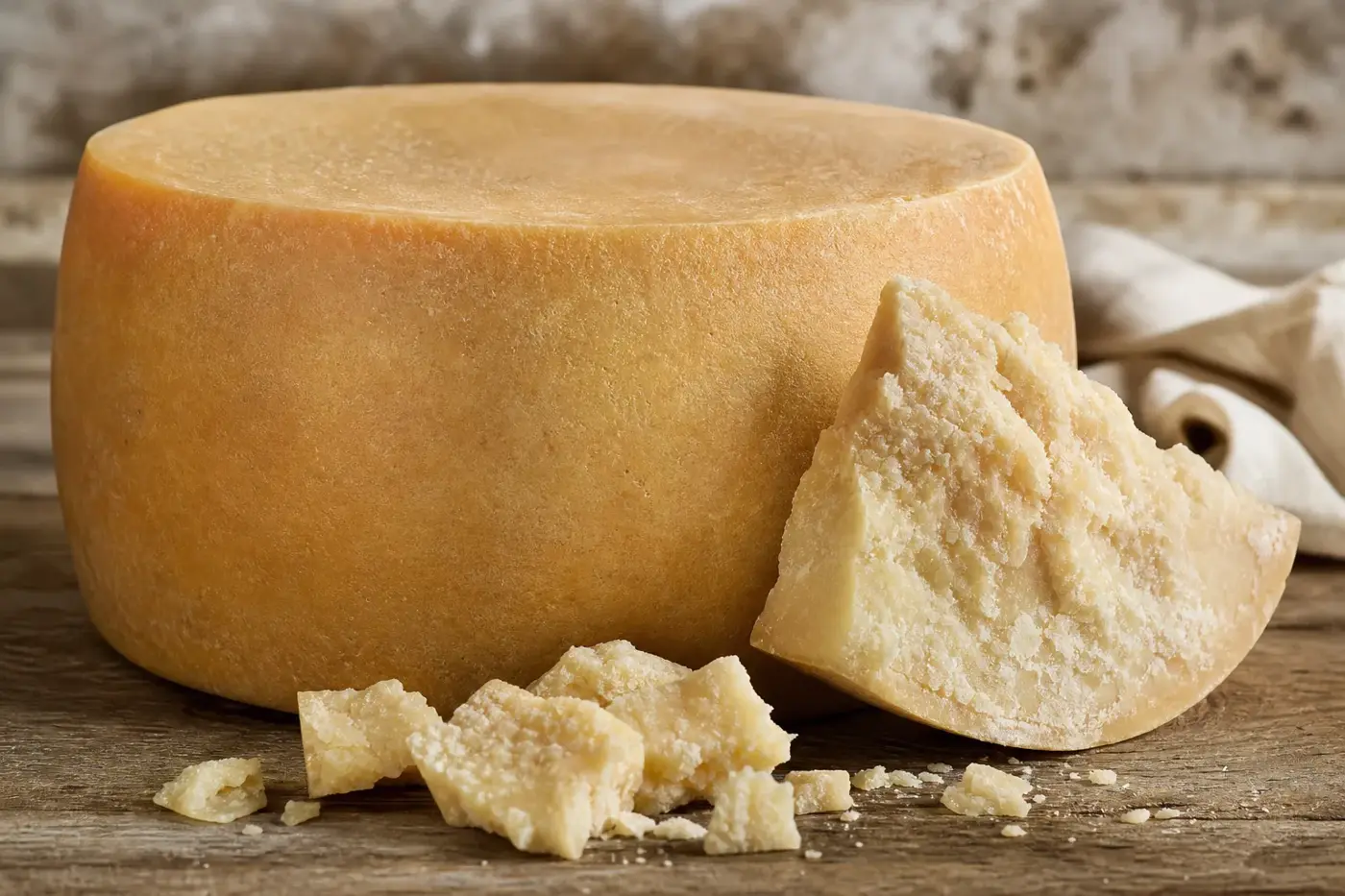
Parmigiano Reggiano
Break into a wheel of Parmigiano Reggiano and flakes fall away, revealing a finely granular cheese, pale straw to straw in colour.