South American Cheese
Set queijo coalho on the grill in Brazil.
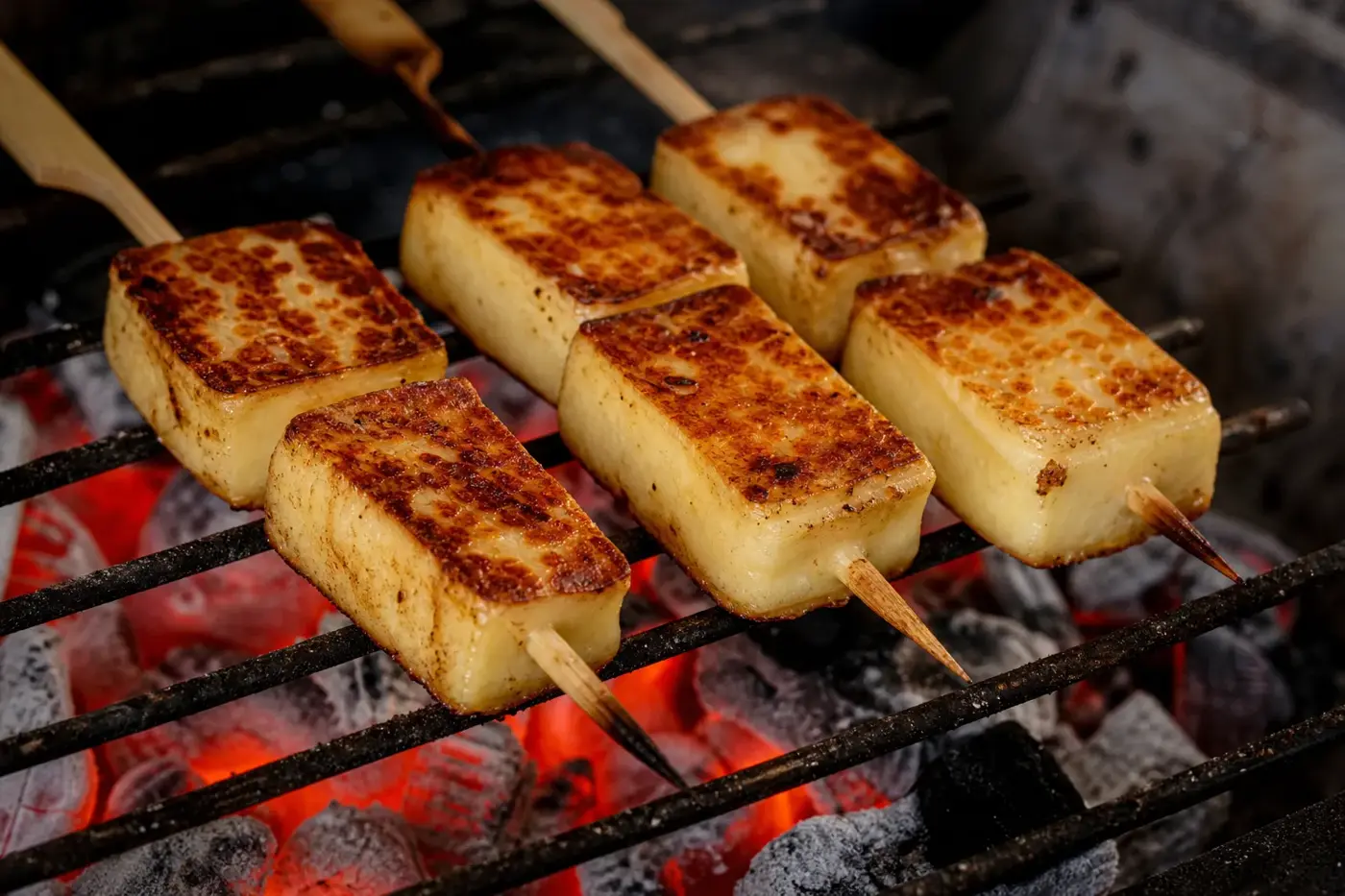
Set queijo coalho on the grill in Brazil. Then watch Argentina’s reggianito fall into grains beneath a grater. Across the Andes, fresh cheeses sit beside everyday staples, ready for the next mouthful. You can travel a long way through South American cheese without moving your chair. [1,2,3]
There are breakfast cheeses, ripened wheels and regional traditions such as Brazil’s queijo Minas artesanal. Follow their textures, methods and serving habits, and the continent’s variety begins to take shape. The country name gets you through the door. What happens at the table is where things become interesting. [1,2,3]
Follow the cheese through farms, towns and mountains
Picture the paths between a farm, a town and a mountain route. Cheese travelled them as South American traditions took shape. European settlement brought livestock and cheesemaking practices, but local conditions changed what followed. Research into Argentina’s Tafí del Valle and Chile’s Chanco traces production and trade through colonial records, revealing working food cultures, not European recipes held still in time. [4]
In mountainous Minas Gerais, moving fresh milk was difficult, a problem Brazil’s heritage institute IPHAN connects with cheesemaking. In Uruguay’s Colonia department, the national promotion agency Uruguay XXI points to European immigration as part of the area’s dairy identity. You have two different stories: preserving a farm’s milk in one place, establishing an immigrant dairy culture in another. [5,6]
Then look at the food around the cheese. Maize and other local staples give it a place folded into a corn pancake, baked into savoury bread or served beside potatoes. For your first tasting, ask what the cheese does: slice, crumble, stretch, grate or withstand grilling? That question takes you further than a country name alone. [1,3,7,13]
Brazil: a Minas wheel and a place by the grill
With queijo Minas artesanal, begin with its home: Minas Gerais. Raw cow’s milk and ripening sit at the heart of this regional tradition. The state agriculture department’s October 2026 account recognises ten QMA regions, including Canastra, Serro, Araxá, Cerrado and Campo das Vertentes. Those geographical names, together with the maker’s name, tell you more on a label than Minas alone. [5,8]
Another name to get to know is pingo. IPHAN identifies this starter, collected from the whey draining from cheese, as a shared feature of these traditions. Whey is the liquid separated from curd, the coagulated milk that becomes cheese. Pressing and ripening vary between regions, so ask how long your wheel has matured rather than expecting a single Minas texture. [5]
Queijo coalho takes you straight to the grill. Reporting from Brazil describes grilled coalho as part of everyday cheese eating in the north-east’s Sertão. Put it beside ripened Minas and you have two distinct pleasures: slices from a matured wheel and cheese with a browned surface. Follow your particular product’s cooking directions when preparing it. [1]
Argentina: taste the grain, then try hot provoleta
Before you reach for the grater, try a piece of reggianito. Argentina’s food code describes this hard cheese for grater and table as compact, brittle and granular, with a salty, slightly piquant taste. It places reggianito wheels in the 5 to 10 kg category and requires at least six months’ maturation for cheeses weighing 4 to 10 kg. That is the legal minimum under Argentina’s standard; a maker may sell it at an older age. [2]
Provoleta brings another pleasure to the barbecue, commonly arriving as a hot, softened disc. Keep the preparation separate from the cheese’s identity: Argentina’s code defines provolone and provolone hilado separately, with the latter’s curd stretched during production. Argentine government reporting also documents products sold as provoleta parrillera, intended for grilling. Read the menu and the label: each tells you part of the story. [2,9,10]
With reggianito, look for that granular break before grating it over your food. With provoleta, notice the browned outside and softened middle. One draws you towards a brittle structure; the other makes its point through cooking. Both meet heat, but they have rather different jobs at dinner. [2,10]
Uruguay: meet Colonia, the place behind the cheese
Head to south-western Uruguay for queso Colonia’s dairy roots. Uruguay XXI describes Colonia’s long dairy tradition as part of the department’s identity and singles out its characteristic cheese. When you seek it out, remember that Colonia names both a place and a cheese. It is not a catch-all term for Uruguayan cheese. [6]
A historical Uruguayan standard, published in 1968 and preserved by the national technology laboratory LATU, offers a useful first picture. It describes cow’s milk Colonia as semi-hard, with an elastic, straw-yellow interior. Picture that bending slice beside reggianito’s hard, granular break. Before tasting, ask the seller about your particular product’s age and milk treatment. [11]
Colombia and Venezuela: Paipa’s dry bite, queso de mano’s layers
Queso Paipa takes you to Colombia’s Boyacá department and into ripened cheese territory. Colombia’s intellectual property authority, the SIC, records Queso Paipa in its denomination-of-origin material, identifying Paipa and Sotaquirá as its production area. This Colombian designation has its own official record. If you are buying elsewhere, check separately how that market treats the name. [12]
The SIC’s description gives you something specific to look for as you taste. Expect a semi-hard, dry texture, pale yellow colour, moderate acidity and a mild bitter note. Notice how the paste breaks and how the acidity develops as you chew. Here, the interest lies somewhere quite different from the supple freshness of an unripened cheese. [12]
For that contrast, turn to Venezuela’s queso de mano. Commonly described as soft and white, with a layered structure, it is eaten with arepas, maize breads, or cachapas, corn pancakes. Try one of those familiar maize accompaniments and notice the cheese’s folded layers. Let it be its own pleasure, rather than looking for another Paipa. [13]
Ecuador and Peru: let the local names lead you
Queso amasado Carchi appears among the regional cheeses listed by Ecuador’s dairy industry federation FEPALE. Use that local name to begin a conversation with a producer or seller: how is this particular cheese made, and how do people eat it? A national label tells you little about a community’s preferred texture or saltiness. The maker and local serving habits fill in the picture. [14]
Peru shows you how much can disappear beneath the translation queso fresco. FAO’s survey records queso fresco, quesillo and cuajada separately, alongside traditions such as Paria and Andean cheese. Ask whether your cheese is pressed, salted throughout, sold fresh or matured, and what milk the producer uses. Those answers are more useful than assuming every name leads to one recipe. [3]
For an exploratory plate, put fresh cheese beside cooked potatoes or maize. Keep things plain enough to notice its moisture and salt, comparing products from named communities where possible. Pay attention to the meeting of cheese and staple foods. Each maker’s method and each cheese’s character make that simple comparison worth your time.
Chile and Paraguay: Chanco, quesillo and a maize bake
Chile’s queso Chanco takes its historical identity from Chanco in the Maule region. Research on Southern Cone cheesemaking places it within colonial cheese culture. FAO records farm Chanco separately from Chilean quesillo and farm goat’s cheese. You have distinct styles to explore here, not one broad category labelled local cheese. [3,4,15]
Chanco is generally described as a ripened, semi-hard cow’s milk cheese. Put it beside fresh quesillo and let the contrast guide your first taste. [15]
In Paraguay, queso Paraguay belongs in the kitchen as well as on your cheese plate. Also known through its Guaraní name, this traditional cow’s milk cheese is described as having a soft paste and slight acidity. Its role in sopa paraguaya tells you plenty. Despite the name, you are looking at a savoury maize bake, so you can put the soup spoon away. [7]
In that bake, cheese helps provide both structure and seasoning. Taste a piece alone before trying the finished dish, then consider what cooking does to its moisture, salt and texture. That small comparison tells you more about its local use than swapping in another white cheese and expecting the same result.
Bolivia: leave space for the everyday cheeses
Give Bolivia’s queso criollo a place in your continental tasting. FAO records it as a Bolivian farm cheese tradition, alongside separate accounts of neighbouring countries. These local names deserve your attention. Familiar exports tell only part of South America’s cheese story; everyday cheeses give it much of its depth. [3]
Compare regions within countries, not just one country with another. A Chilean goat’s cheese, a Peruvian fresh cheese and a ripened Brazilian wheel invite different questions about milk and technique. [3,5] The guide to cheese styles groups those differences by method and texture. It helps you spot what cheeses share without making national borders do the work of cheese categories.
Set the table for your first tasting
Start with three questions: what milk, what texture, what use? The historical Colonia standard specifies cow’s milk, while FAO records a Chilean farm cheese made from goat’s milk. Argentina’s standard gives reggianito a minimum maturation period and a hard, granular texture, quite unlike the elastic Colonia recorded in 1968. Your serving possibilities stretch from slicing to grating and grilling. [2,3,11]
Check the milk and age of each product you buy. Then use the suggested pairings below to explore the textures described in the sources. Keep the accompaniments simple, giving the cheese room to hold your attention. This is a tasting, not an audition for the busiest plate in the kitchen. [2,11,12,13]
| Cheese or serving style | Try it beside | What to notice | Where the description comes from |
|---|---|---|---|
| Fresh cheese | Plain maize bread | Moisture, salt and contrast with the bread | Queso de mano description [13] |
| Ripened, sliceable cheese | Plain bread and pear | Elasticity or a dry, clean break | Colonia and Paipa descriptions [11,12] |
| Hard grating cheese | A small portion of plain cooked pasta | Graininess before and after grating | Argentine reggianito standard [2] |
Choose water or an unsweetened alcohol-free drink to keep your attention on the food. Taste each cheese alone, then add its accompaniment, noting one thing about texture and one about flavour. For a grilling cheese, follow the maker’s cooking directions and serve it as part of the meal.
Find your next cheese in Britain
Search for the exact cheese name, rather than casting your net by country alone. Specialist Latin American grocers, Brazilian food shops and cheesemongers are useful places to ask about sourcing it. Before ordering something unfamiliar, request a photograph of the label. You will learn more from that than from a broad description such as Brazilian, Colombian or suitable for grilling.
Look for where the cheese was made, who made it, its milk species and treatment, and its storage and cooking instructions. A cheese made in Britain for a South American community has a story of its own. Record its actual origin rather than assuming the cheese name tells you the manufacturing country. The guide to cheese labels explains the distinctions to look for.
Cannot find the named cheese? Tell the seller what your dish needs: fresh and sliceable, elastic and melting, dry and grateable, or designed for grilling. Choose a substitute for that job and use its own name. At home, follow its label’s handling instructions and the home storage guide.
This page summarises published guidance from the official sources it cites. It is not medical advice. Guidance differs between countries and changes over time, so check the current source for where you live, and ask your doctor, midwife, pharmacist or dietitian about your own circumstances.
Choosing raw milk cheese: British safety advice
If you are choosing cheese during pregnancy, UK NHS guidance from November 2026 says hard cheeses can be eaten even when made from unpasteurised milk. It says unpasteurised soft and semi hard cheeses, mould ripened soft cheeses and soft blue cheeses should be thoroughly cooked until steaming hot. Consult the NHS guidance for the full list and current advice. [16]
UK NHS guidance from November 2026 identifies pregnant people, older people and people with weakened immune systems as groups at higher risk from listeriosis. Check the NHS listeriosis guidance and ask a healthcare professional about your circumstances. [17] To understand the production differences behind the label, read raw milk, thermised and pasteurised cheese.
Questions people ask
What is queijo coalho and how is it served?
Queijo coalho is a Brazilian cheese served grilled with a browned surface. Grilled coalho is part of everyday cheese eating in the north east’s Sertão. Follow the product’s cooking directions.
What makes queijo Minas artesanal distinctive?
This regional tradition from Minas Gerais uses raw cow’s milk and ripening. Pressing and ripening vary between regions, so the age of a particular wheel can help guide your choice.
Where is Queso Paipa made and what does it taste like?
Colombia’s intellectual property authority identifies Paipa and Sotaquirá in Boyacá as its production area. It describes the cheese as dry, pale yellow and moderately acidic, with a mild bitter note.
What is queso de mano eaten with?
Venezuela’s queso de mano is commonly described as soft and white, with a layered structure. It is eaten with arepas, which are maize breads, or cachapas, which are corn pancakes.
Can I eat raw milk cheese during pregnancy?
The NHS says hard cheeses can be eaten during pregnancy even when made from unpasteurised milk. It advises that unpasteurised soft and semi hard cheeses, mould ripened soft cheeses and soft blue cheeses should be thoroughly cooked until steaming hot. Check the current NHS guidance at https://www.nhs.uk/pregnancy/keeping-well/foods-to-avoid/ for the full list.
Sources
- Le Monde, Brazil rediscovers itself as a cheese country, 14 May 2025. Search extract retrieved; full article requires editorial inspection. Source.
- Argentine national food authorities, Código Alimentario Argentino, Capítulo VIII: Alimentos lácteos, October 2025 consolidated chapter, especially Articles 635, 638 and 639. Official text.
- Food and Agriculture Organization of the United Nations, The technology of traditional milk products in developing countries, FAO Animal Production and Health Paper 85, 1990, section 7.3 and its country subsections. Publication.
- Idesia, El queso de Tafí del Valle y el despertar de la cultura del queso en Argentina, volume 35, issue 1, 2017. Historical scholarship drawing on documentary records. Article.
- Instituto do Patrimônio Histórico e Artístico Nacional, Modos de fazer o queijo Minas artesanal, online cultural heritage record, version retrieved November 2026. Record.
- Uruguay XXI, Informe departamental | Colonia, online edition retrieved November 2026, dairy section, printed pages 5 and 6. Report.
- Wikipedia, Queso Paraguay, Spanish-language article, version retrieved November 2026. Secondary orientation source requiring replacement with Paraguayan primary evidence. Article.
- Minas Gerais state agriculture department, Queijos Artesanais, updated 9 October 2026. Official account.
- Argentina.gob.ar, Quesos tandilenses logran ingresar al mercado de los Estados Unidos, government export report, 2023. Search extract retrieved; full page requires editorial inspection. Report.
- Wikipedia, Provoleta, revision dated 15 July 2026. Secondary culinary orientation source. Article.
- Uruguay, Registro Nacional de Leyes, Decretos, etc., Decreto 705/968, November 1968, Tipificación provisoria para queso “Colonia”, preserved by LATU. Historical specification, not presented here as a verified current standard. Document.
- Superintendencia de Industria y Comercio, Colombia, Queso Paipa, denomination-of-origin entry, indexed version retrieved November 2026. Direct access returned an access restriction. Official entry.
- Wikipedia, Queso de mano, revision dated 27 August 2026. Secondary orientation source requiring replacement with Venezuelan primary evidence. Article.
- FEPALE, Sí a la Leche, Uruguay, Queso Colonia, online catalogue page containing the related entry Ecuador, Queso Amasado Carchi, version retrieved November 2026. Industry promotional source. Catalogue page.
- Wikipedia, Chanco cheese, version retrieved November 2026. Secondary orientation source for the contemporary style description. Article.
- NHS, Foods to avoid in pregnancy, live guidance checked November 2026, cheese and dairy section. Official guidance.
- NHS, Listeriosis, last reviewed 10 November 2023, live page checked November 2026. Official guidance.
This desk-research draft combines official agricultural and cultural records, an Argentine food standard, historical scholarship and British health guidance; the evidence log identifies the outstanding primary-source checks.
Last checked: November 2026
Last checked November 2026.
The editors suggest you read next
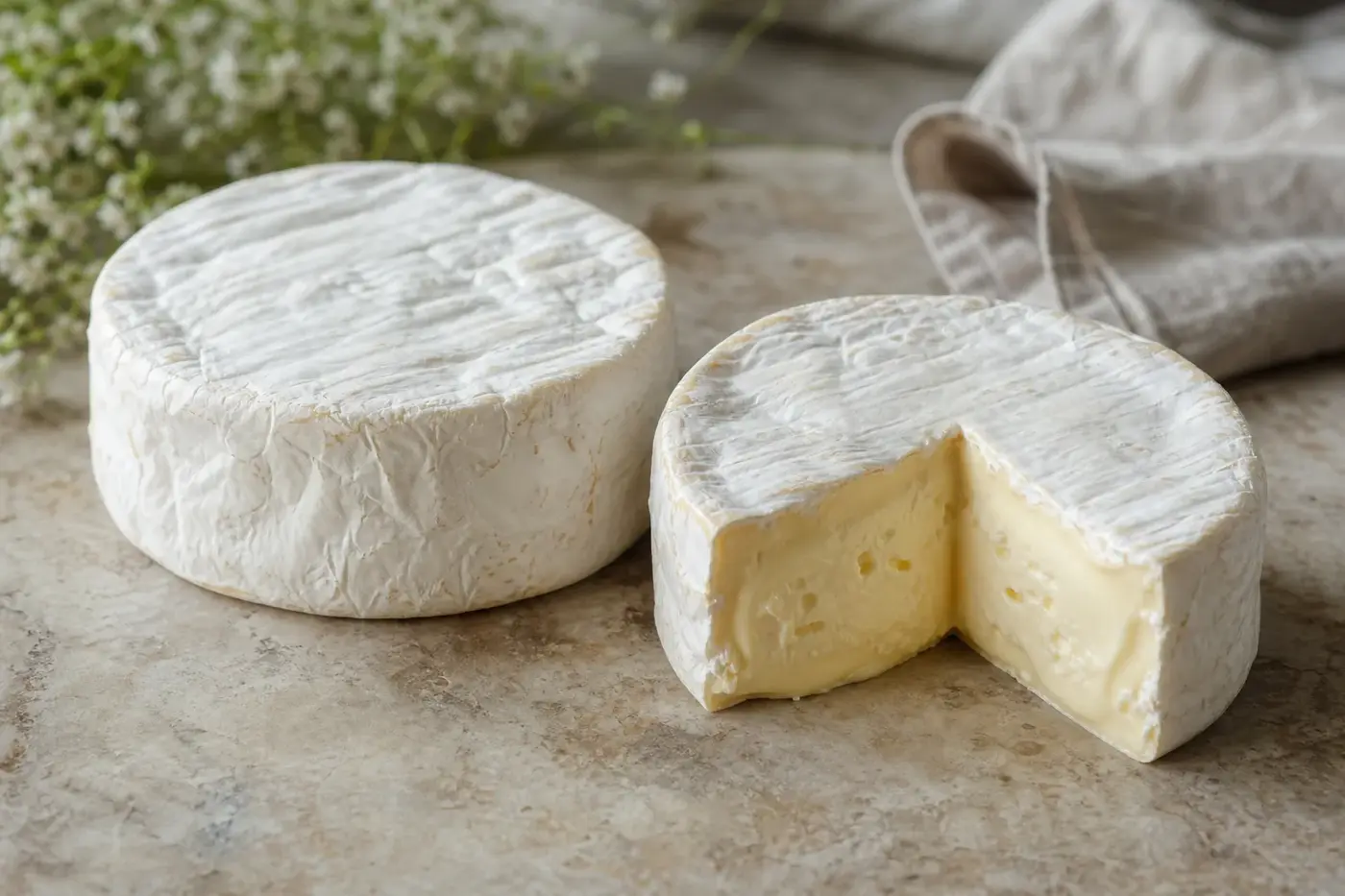
French Cheese: The Complete Guide
Picture Normandy’s pastures, then follow the milk towards the Loire’s goat dairies, the Jura’s shared cheesemaking traditions and the sheep country of the Pyrenees.