Stinking Bishop
Before you reach for the bread, the brown-pink rind has introduced itself.
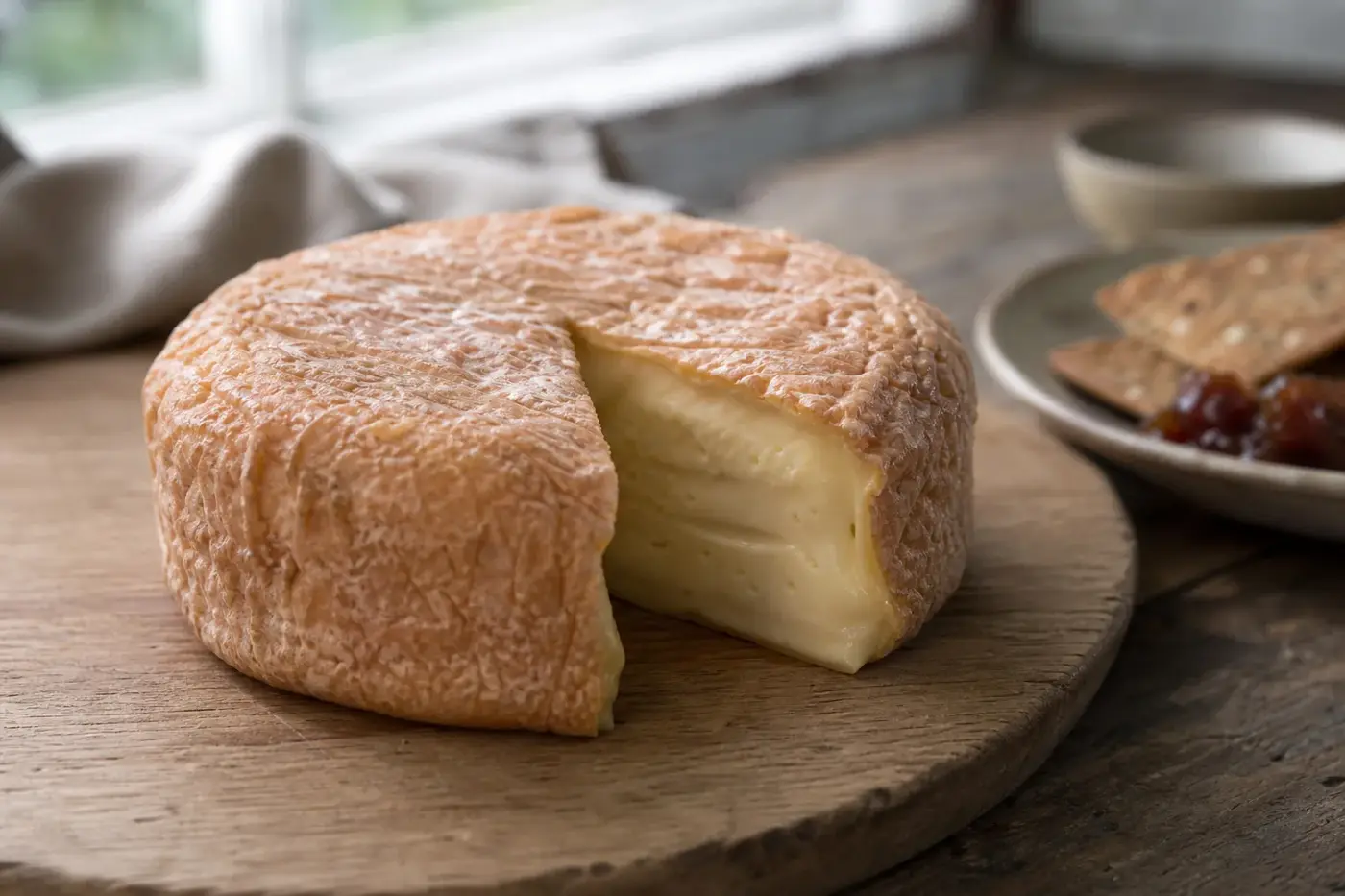
Before you reach for the bread, the brown-pink rind has introduced itself. Washed in perry, it gives Stinking Bishop its powerful smell, though the maker describes the cheese inside as softer and mellower than you might expect. Your nose is getting rather ahead of your palate. At Hunts Court Farm in Gloucestershire, this meeting of dairy and orchard even supplies the name, borrowed from a local pear used in the wash.[1]
| A quick introduction | What to know |
|---|---|
| The name to look for | Stinking Bishop.[2] |
| Who makes it, and where | Charles Martell & Son, Hunts Court Farm, Dymock, Gloucestershire, England.[1] |
| When it first appeared | 1994, according to the producer.[2] |
| Milk listed by the maker | Full-fat pasteurised cows’ milk.[2] |
| Rennet listed by the maker | Vegetarian rennet.[2] |
| Style and rind | Soft cheese with a natural rind washed in perry; brown-pink, according to the producer.[1][2] |
| Maker’s listed sizes | 200 g, 500 g and 1.8 kg.[2] |
| Current milk suppliers and breed proportions | Details not supplied here. |
| Usual maturation time | Details not supplied here. |
| Registered name, authority and register ID | Details not supplied here. |
| Protection status by jurisdiction | Great Britain: Details not supplied here. EU, including Northern Ireland: Details not supplied here. |
| Pregnancy guidance | UK NHS guidance, November 2026.[9] |
Follow your nose, then give the cheese a chance
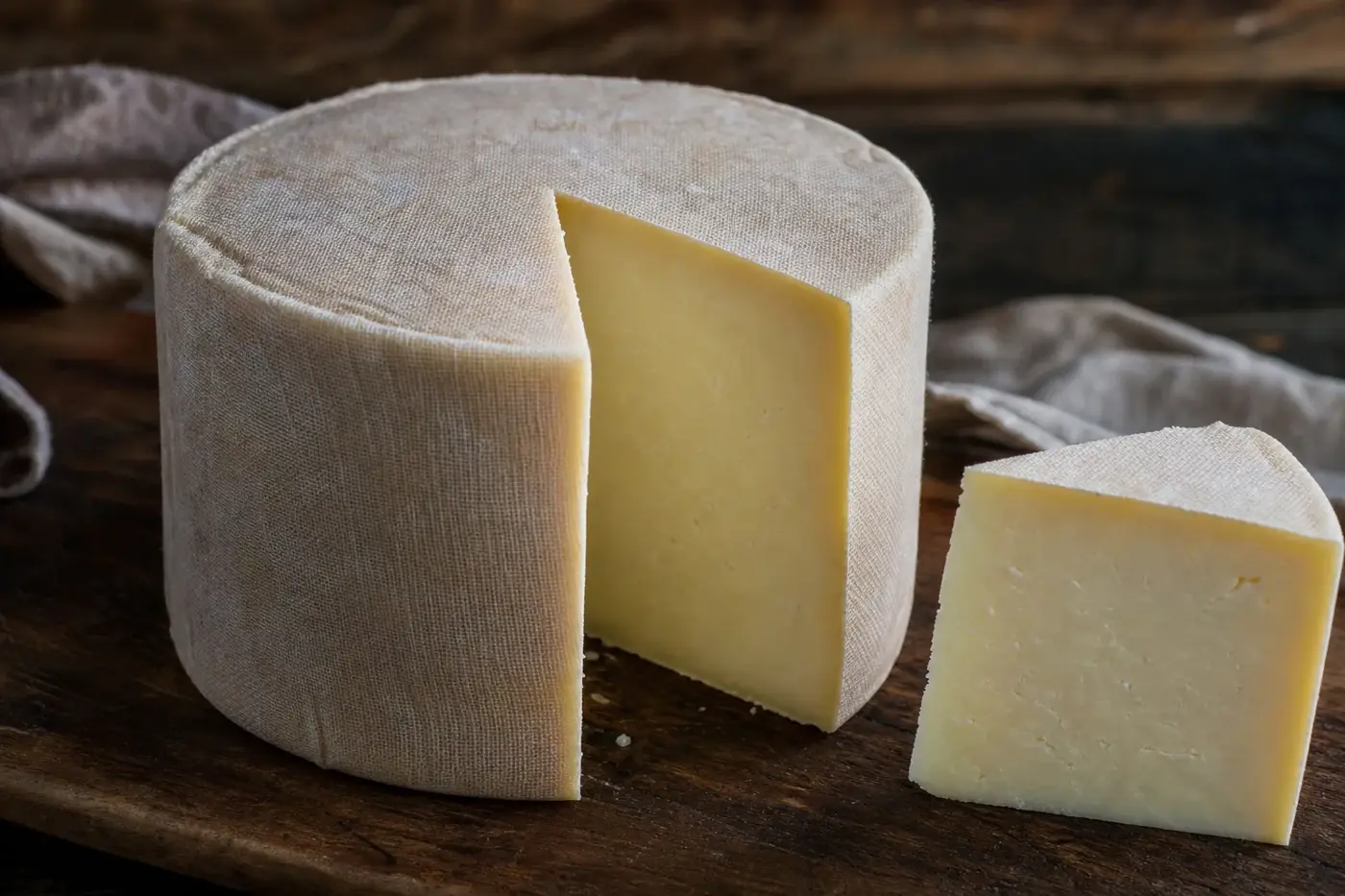
Stinking Bishop sits low and round, rather than rising into a tall cylinder. The producer gives its nominal 500 g cheese as 12 cm across and 4 cm high; the larger 1.8 kg version measures 22 cm across and 4.5 cm high.[2] In The Fine Cheese Co.’s photography, you can see the coloured surface framing a pale interior, known as the paste.[3]
That merchant describes its selected cheese as smooth and aromatic. Its flavour is fruitier than the pungency might lead you to expect.[3] Take a mouthful before settling your opinion: the aroma tells only part of this particular story.
The maker traces that powerful smell to the rind. Washing encourages surface bacteria associated with its brown-pink colour and characteristic aroma.[1] With the strongest aromatic impression coming from the outside, the centre and a piece containing rind offer you different introductions.
Start with a little paste on plain bread. Once the seller confirms the rind is suitable to eat, try a small piece with the surface included. That way, you can explore texture, flavour and aroma in turn, rather than letting the first smell decide everything.
Begin with three cows in Gloucestershire
Three cows, hand-milking and cheesemaking learnt without lessons: those were the beginnings Charles Martell recalled in the farm’s fiftieth-anniversary account, published in October 2022.[5] The farm history dates the Martells’ arrival at Hunts Court to 1972. There, he began breeding Gloucester cattle and making Double Gloucester with their milk.[4]
Before Stinking Bishop came the county’s Gloucester cheeses and the cattle behind them. The business grew through practical work with a threatened local breed. That close relationship between farming and cheesemaking gives you the starting point for everything that followed.
The producer dates Stinking Bishop’s development and launch to 1994.[6] This was a different style: a soft cheese that brought the orchard into the dairy’s story. Another local ingredient would help give it its character.
Fruit conservation became part of the farm’s work too. Its history describes Martell searching for old perry pear varieties, grafting them and planting replacements.[4] Seen against that background, Stinking Bishop is a modern cheese with local agricultural roots. The orchard supplies both its name and an essential part of its making.
Meet the pear behind the name
There is more than one pear in this wash. Perry is a fermented pear drink, and the producer says the version used for Stinking Bishop includes several local pears, among them the variety that named the cheese.[1] You are tasting an orchard connection broader than a single fruit.
The National Perry Pear Centre records Stinking Bishop as a synonym of Moorcroft. Other names include Malvern Hills and Choke Pear, and its entry places Moorcroft’s origin at Colwall in Herefordshire.[7] Follow those names and you arrive in the orchard country around Gloucestershire and its neighbouring counties.
Pear, perry, cheese: that is your simplest route through the story. The name carries an agricultural history as well as an obvious affinity with the rind’s aroma. It says more than you might first gather from the smell.
You can follow that orchard connection at the table. Bread and pear offer a clearer introduction than a crowded collection of strongly flavoured accompaniments. Taste the cheese first, add the fruit, then notice what changes in the mouthful.
Into the milk, then into the maturing rooms
The producer declares pasteurised cows’ milk and vegetarian rennet.[2] Rennet helps milk set into curd. If you would like to untangle the alternatives, the guide to rennet and its different sources explains the distinctions behind the term.
The defining treatment happens on the surface during maturation. The rind is washed in perry, which the maker associates with the characteristic aroma.[2] “Washed rind” describes how the cheese is made; it is not an instruction to wash it before serving.
The producer calls its maturing rooms “caves”. It attributes the surface character to bacteria encouraged there.[1] That account brings together the maturing environment, rind and smell, without assigning a particular organism to every wheel.
When you buy a piece, ask about its condition now and the best time to eat it. Maturation time tells you how long production has taken; readiness concerns the cheese in front of you. Both are useful, but they answer different questions. For more on milk treatment, see raw, thermised and pasteurised milk.
Give the Gloucester cattle their place
Gloucester cattle helped establish Martell’s cheesemaking. The producer describes founding its herd in 1972 and using the breed’s milk for Single and Double Gloucester.[8] These cattle have a substantial place in the farm’s history, quite apart from the cheese on your plate.
For Stinking Bishop, keep that history separate from the milk supply for a particular cheese today. If breed matters to your choice, ask for a current statement about the product itself. The farm’s association with Gloucester cattle cannot settle that question on its own.
The distinction takes nothing away from the wider story. Cattle conservation, cheesemaking and orchard conservation all belong to Hunts Court’s history, while an individual cheese’s milk recipe remains a separate matter. You can appreciate those documented beginnings without assuming Stinking Bishop has an exclusive breed composition.
Cut a wedge, find your balance
Cut from centre to edge, so each wedge gives you both the outer surface and inner paste. Put out a modest tasting portion rather than the whole purchase, and let everyone choose their balance. Eating the rind is not an entrance exam.
The maker describes a natural rind and supplies its boxed cheese wrapped in waxed paper.[2] As you unwrap it, distinguish the cheese’s own surface from its protective packaging. One belongs to the cheese; the other is there to protect it.
If you plan to eat the rind, ask the cheesemonger about its current treatment and eating advice. This is especially useful when you buy a cut portion. You may no longer have the original packaging to guide you.
Keep any warming brief. The Food Standards Agency’s consumer guidance for England, Northern Ireland and Wales says chilled food should spend the shortest possible time out of the fridge, with a maximum of four hours during preparation.[10] Its hot-weather guidance says to discard perishables left out for more than two hours during hotter than usual weather.[11] Those are limits, not targets for bringing cheese to the table.
Bring bread, pears and a glass of something
Crusty bread and recipes involving pears are the maker’s recommendations.[1] Start with enough plain bread to taste the cheese without another dominant flavour. Keep accompaniments alongside, so you can compare one mouthful with the next.
The suggestions below take their cue from that bread and pear starting point and the cheese’s perry wash. Treat them as serving ideas, rather than pairings assessed in a site tasting.[1][2] You can keep your board simple and still have plenty to explore.
| Try alongside | How to serve it | What it brings |
|---|---|---|
| Crusty bread | Keep it plain, with additions separately. | The maker’s recommendation and a simple first mouthful.[1] |
| Fresh pear | Slice and put alongside the cheese. | A straightforward way to follow the producer’s pear recommendation.[1] |
| Perry | Pour a small serving with bread and cheese. | Connects your glass with the rind wash.[2] |
| Alcohol-free pear drink | Choose according to the label and your preferences. | Keeps the pear connection without an alcoholic drink. |
| Water | Sip between combinations. | Gives you a neutral comparison as you choose your favourite accompaniment. |
If you are an adult of legal drinking age and choose alcohol, perry makes a thematic pairing. People who are pregnant, driving, taking medicines that interact with alcohol, or recovering from alcohol dependence should not drink. Alcohol-free pear drink and water are alternatives.
One or two accompaniments are enough. Give the cheese room on the board and find a balance you enjoy. You do not need equally assertive food to match that smell.
Take three questions to the cheese counter
How should you keep this piece? When should you eat it, and what should its rind look like? Ask the seller all three, and keep the label or written instructions with a cut portion, especially if you plan to serve it later.
The maker warns that its natural rind can carry mould spots of different colours.[2] Keep that information in mind when you look at the cheese. Its condition and handling history matter too.
A seller can explain whether a particular surface appearance is characteristic of the cheese as supplied. If an unfamiliar change develops at home, seek advice rather than trying to repair a soft cheese by trimming it. Expected appearance and food safety are separate questions.
For home refrigeration, FSA guidance for England, Northern Ireland and Wales recommends a fridge between 0 and 5 °C.[10] Follow the pack’s storage and opening instructions. UK government guidance distinguishes the use-by date, which concerns safety, from the best-before date, which concerns quality. It also warns that incorrect storage can make food unsafe before its use-by date.[12]
Protect the unused portion and return it promptly to the fridge. Keep its identifying information in case you need to consult a relevant recall notice. For practical help, see storing cheese at home and how to read a cheese label.
Gromit knew which cheese to reach for
In The Curse of the Were-Rabbit, Gromit uses Stinking Bishop’s smell to revive Wallace. An official Wallace and Gromit charity activity sheet, carrying Aardman’s copyright acknowledgement, identifies both the cheese and the scene.[13] Few cheeses get such a dramatic serving suggestion.
The name and powerful aroma give the joke its foundation. The revival, of course, belongs to the animation. At your table, the quieter surprise is the contrast between that aromatic rind and the gentler cheese described by the maker.
The film offers you an entertaining introduction, but the cut cheese has plenty more to show. Look at its low round shape, coloured surface and pale paste. Then discover for yourself the difference between smelling a piece and taking a mouthful.
Keep your dietary questions distinct
Stinking Bishop’s producer declares vegetarian rennet and pasteurised cows’ milk.[2] Those details answer different dietary questions: vegetarian suitability does not establish suitability for someone with milk allergy. The UK NHS identifies cows’ milk as a common food allergen and advises people with food allergy to read labels and ingredients carefully.[14]
For pregnancy, consult the current UK NHS cheese guidance; the guidance referenced here is from November 2026. It lists specified pasteurised soft cheeses among foods that can be eaten. White-rinded mould-ripened soft cheeses and soft blue-veined cheeses require thorough cooking, whether their milk is pasteurised or unpasteurised. Cheese cooked until steaming hot is also listed among the permitted choices.[9]
If you need advice about this washed-rind cheese, take its product description and packaging to your midwife or another appropriate clinician. That gives you something specific to discuss. The NHS’s separate listeriosis guidance identifies pregnancy and weakened immunity among the circumstances associated with greater risk of serious illness.[15]
Outside the UK, consult your own national guidance. For background on these distinct questions, read cheese allergy and lactose intolerance and Listeria and cheese safety.
General information only, not medical advice: follow the official guidance where you live.
Questions people ask
Why is it called Stinking Bishop?
The cheese is named after a local pear used in the perry that washes its rind. The perry contains several local pears, not just Stinking Bishop.
Why does Stinking Bishop smell so strong?
The maker says its powerful aroma comes from the rind. Washing encourages surface bacteria associated with its colour and characteristic smell.
Is Stinking Bishop vegetarian?
The producer declares that it is made with vegetarian rennet. It also declares pasteurised cows’ milk.
Can you eat the rind of Stinking Bishop?
Ask the cheesemonger to confirm its current treatment and eating advice before eating it. This is particularly useful for a cut portion without its original packaging.
Can you eat Stinking Bishop during pregnancy?
The UK NHS pregnancy guidance on foods to avoid lists specified pasteurised soft cheeses among foods that can be eaten. It advises that white rinded mould ripened soft cheeses and soft blue cheeses require thorough cooking, whether the milk is pasteurised or unpasteurised. For this cheese, consult the current NHS guidance and take its description and packaging to your midwife or another appropriate clinician.
Sources
- Charles Martell & Son, Charles’ Q&A on Stinking Bishop, undated web edition, retrieved November 2026. Producer FAQ.
- Charles Martell & Son, Stinking Bishop, undated product page, retrieved November 2026. Product description.
- The Fine Cheese Co., Export Brochure 2023/24, British washed rind cheeses, printed page 21 and accompanying product photography. Commercial merchant’s description of its selection. Brochure.
- Charles Martell & Son, History of Hunts Court, undated web edition, retrieved November 2026. Farm history.
- Charles Martell & Son, 50 Years of Cheesemaking at Hunts Court, 21 October 2022. Anniversary account.
- Charles Martell & Son, Charles Martell, undated homepage account, retrieved November 2026. Producer history.
- National Perry Pear Centre, Moorcroft, undated collection entry, retrieved November 2026. Pear record.
- Charles Martell & Son, Gloucester Cattle, undated web edition, retrieved November 2026. Farm’s cattle account.
- NHS, Foods to avoid in pregnancy, current web edition retrieved November 2026. UK pregnancy guidance.
- Food Standards Agency, How to chill, freeze and defrost food safely, published 18 December 2017, current web edition retrieved November 2026. Applies to England, Northern Ireland and Wales. Chilling guidance.
- Food Standards Agency, Food safety in a heatwave, advice for consumers, 27 June 2024, retrieved November 2026. Applies to England, Northern Ireland and Wales. Hot-weather guidance.
- GOV.UK, Understanding food labelling: Best before and use-by dates, current web edition retrieved November 2026. Date and storage guidance.
- The Grand Appeal, Wallace’s Cheesy Word Search: Advanced, copyright acknowledgement dated 2018, PDF retrieved November 2026. Bonus question and answer identify the scene. Official activity sheet.
- NHS, Food allergy, reviewed 20 August 2026, retrieved November 2026. UK allergy guidance.
- NHS, Listeriosis, current web edition retrieved November 2026. UK listeriosis guidance.
Researched through the producer’s published accounts, a specialist pear collection, a merchant’s attributed product description, official Wallace and Gromit material and UK public health guidance; serving suggestions are editorial synthesis, without a site tasting or visit.
Last checked: November 2026
Last checked November 2026.
The editors suggest you read next
West Country Farmhouse Cheddar Cheese
Large pieces of curd turn and stack under the cheesemaker’s hands.