Which Cheeses Melt Well for Different Dishes?
Lift a slice of pizza and watch the mozzarella stretch, apparently reluctant to let you have lunch.
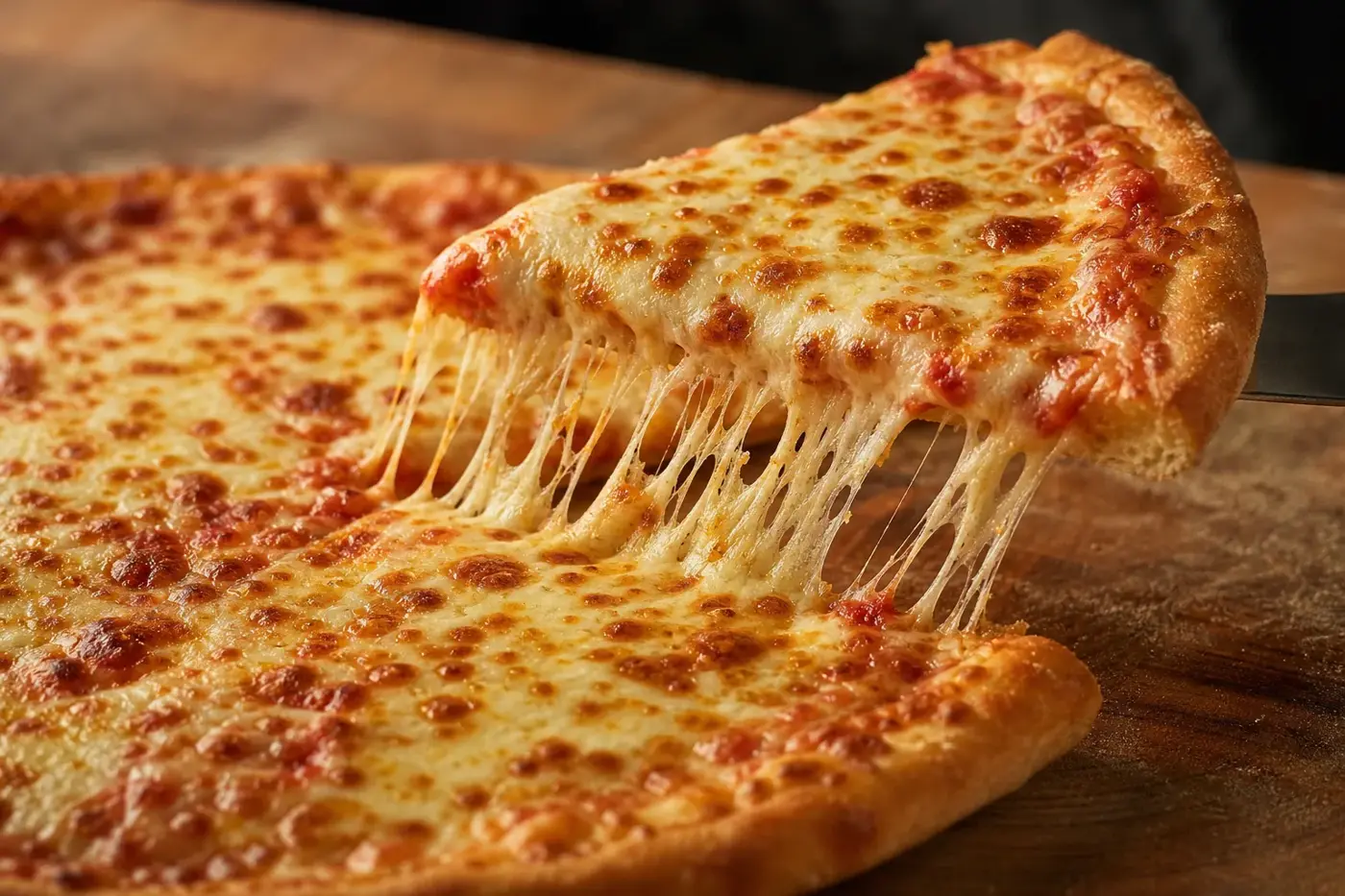
Lift a slice of pizza and watch the mozzarella stretch, apparently reluctant to let you have lunch. That familiar pull comes from its stretched-curd structure. Put the same cheese into a sauce, though, and you may get strings where you wanted silk.[1][2] A burger needs a slice that drapes, macaroni cheese needs a sauce that holds together, and a gratin needs a browned surface above a moist filling.[3][5][6]
Start with low-moisture mozzarella for pizza. For burgers and toasties, try young Cheddar, Gruyère or processed cheese slices; for macaroni cheese, blend a dependable melting cheese with a stronger mature one. Each has a different job, so choose the result before you choose the cheese.[1][2][3][4]
First, imagine your perfect mouthful
“Melting” sounds like one thing. In your kitchen, it covers four quite different results:
- Flow: your cheese softens and spreads instead of staying in a recognisable slice or mound.
- Stretch: hot cheese forms strands when you pull it apart.
- Smoothness: fat, water and protein stay sufficiently integrated to give you an even texture.
- Browning: the exposed surface takes on colour as it cooks.
A cheese can shine at one and disappoint at another. It might flow beautifully but release oil, or stretch enthusiastically but turn your sauce stringy. Browning is a separate surface reaction, shaped by the cheese’s composition and its cooking conditions.[3][5][6]
Rather than asking “Does it melt?”, picture what you want on your plate. Is it a stretchy topping, a slice draped over a burger, a sauce coating pasta or a coloured crust? The choices below turn research on cheese functionality into practical answers for those distinct kitchen jobs.[3][5]
Pizza: get the stretch, then watch the colour
Low-moisture mozzarella is your clearest starting point for even coverage and plenty of stretch. Its lower water content makes the topping easier to manage than wetter mozzarella. Its stretched-curd structure supplies those strands that follow your slice away from the pizza.[1][2]
“Low-moisture” also has a precise legal meaning in the United States. Under 21 CFR 133.156, the standard specifies more than 45% but no more than 52% moisture in the whole cheese. The separate US mozzarella standard, 21 CFR 133.155, specifies more than 52% but no more than 60%. These are US product standards, not a worldwide definition of every mozzarella sold fresh.[1][2]
Fresh mozzarella has a place on your pizza too, especially if you want separate patches rather than one continuous covering. Drain it, cut or tear it, then remove visible surface liquid before arranging it over your base. That preparation manages the extra water entering the topping; it does not turn fresh mozzarella into low-moisture mozzarella.
Treat colour as a separate choice from stretch. Experimental mozzarella research comparing starter cultures found that residual galactose, a sugar available for browning reactions, affected colour during pizza baking. Your topping can therefore stay pale even though the cheese has melted.[6]
There is more variety within this family than a single pizza topping suggests. You can explore it in the mozzarella guide.
Burgers and toasties: make room for a good melt
Young Cheddar, Gruyère and processed cheese slices all deserve consideration here. Choose the filling you fancy, then give it an even chance to heat through.
Young Cheddar is a sensible starting point when you want Cheddar flavour without relying entirely on a very mature, crumbly cheese. Ripening changes the protein framework, so maturity affects more than taste. It also changes flow and the way heated cheese holds on to fat.[7]
Gruyère is a good choice when you want a flowing filling. Its established place in fondue shows its usefulness in cooking. A slice inside bread behaves differently, though, from grated cheese dispersed in liquid.[4]
Processed cheese slices earn their place when you want an even, cohesive layer. That behaviour comes partly from their formulation: in the United States, 21 CFR 133.169 describes pasteurised process cheese made by blending cheese with an emulsifying agent into a homogeneous mass. The standard does not cover every processed cheese slice, and research shows that the starting cheese affects the finished product too.[3][8]
For burgers, use thin slices of reasonably even thickness. For toasties, spread grated cheese across the filling instead of building one thick mound in the centre. Both approaches help it heat evenly, rather than leaving you with a dense pocket in the middle.
Want to get to know Cheddar beyond the hot sandwich? The Cheddar guide introduces the wider family.
Macaroni cheese: share the work between flavour and texture
A blend lets you give each cheese a clear job. Choose one whose melting behaviour you already trust for the main sauce, then bring in a stronger mature cheese for the flavour you want.
Young Cheddar with mature Cheddar is a straightforward place to start. Gruyère can take the main melting role instead. You are balancing texture with flavour, not expecting one intensely matured cheese to run the entire saucepan.
Age changes performance as well as taste. Experiments using blends of differently aged Cheddar in processed cheese altered the amount of intact casein, the principal structural milk protein. That changed meltability, firmness and oil release.[9]
Those findings explain why maturity matters, but they do not give you a universal macaroni cheese ratio. Your sauce also contains liquid and, in many recipes, starch, so results from manufactured processed cheese cannot simply transfer to a saucepan. Start with the balance in a reliable recipe, then adjust your cheese selection next time.
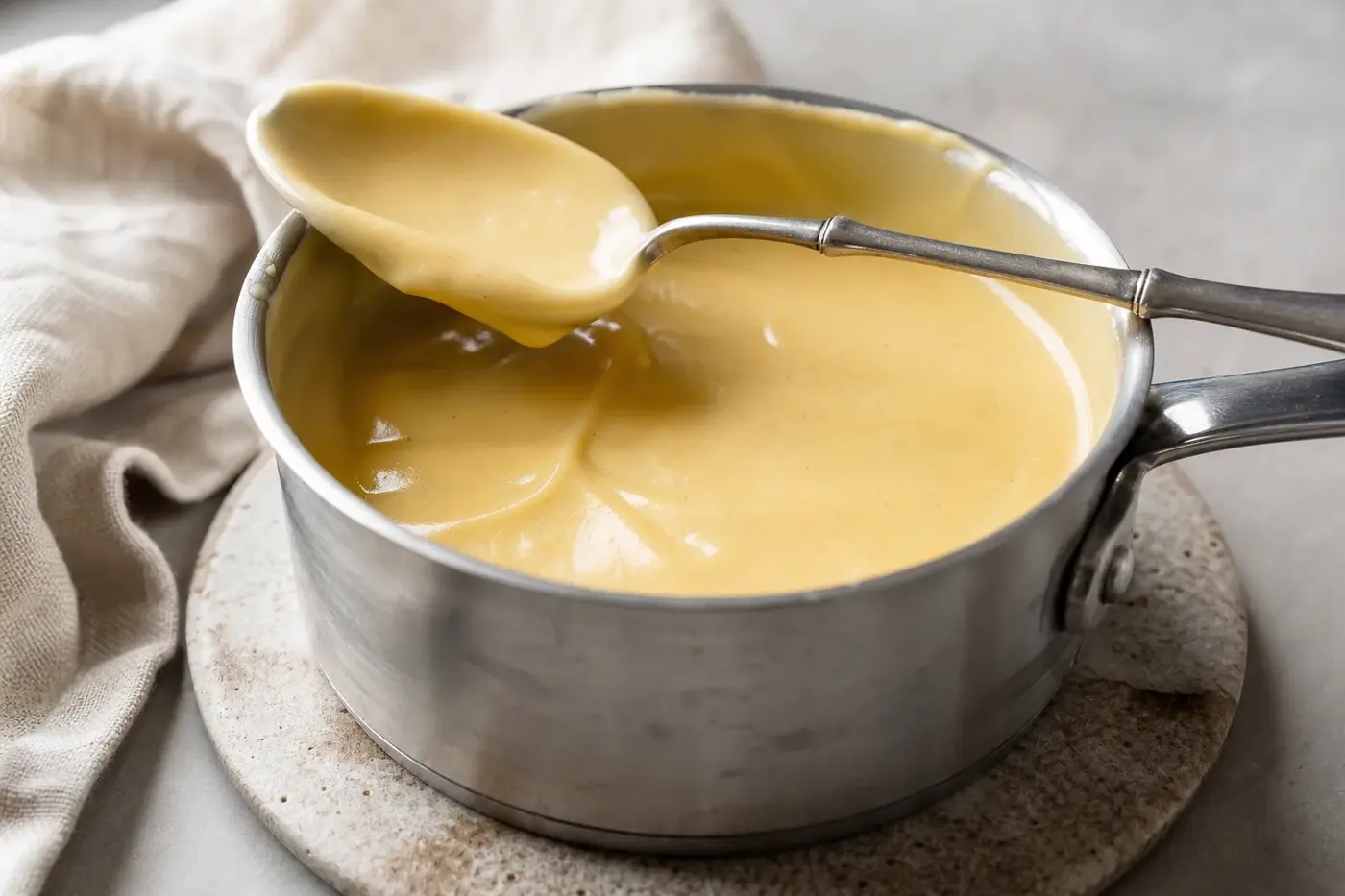
For a smooth coating, think about emulsification as well as melting. An emulsion keeps fat distributed through a watery phase. Making every shred disappear is only part of your task: the finished sauce also needs to hold together evenly.[3][8]
Fondue: bring Gruyère and Vacherin Fribourgeois to the table
Equal parts Gruyère and Vacherin Fribourgeois make the established Swiss moitié-moitié fondue. The Vacherin Fribourgeois interprofession publishes that combination. The Gruyère interprofession’s recipe likewise calls for equal quantities of the two cheeses.[4][10]
Picture the shared pot and the bread you want to coat. Your mixture needs to be fluid enough for that job, and both published recipes bring the cheeses together with liquid, stirring and controlled heat. The cheeses matter, but so does everything around them.[4][10]
The Gruyère interprofession’s French recipe is particularly clear about heat. Keep it controlled, and do not boil your completed fondue.[4]
Follow a complete fondue recipe rather than changing its cheeses, liquid or thickener independently. Each plays a part in how the mixture behaves. The Le Gruyère guide introduces one partner; at the stove, your concern is how the whole combination comes together.
Gratins: a soft middle and a golden finish
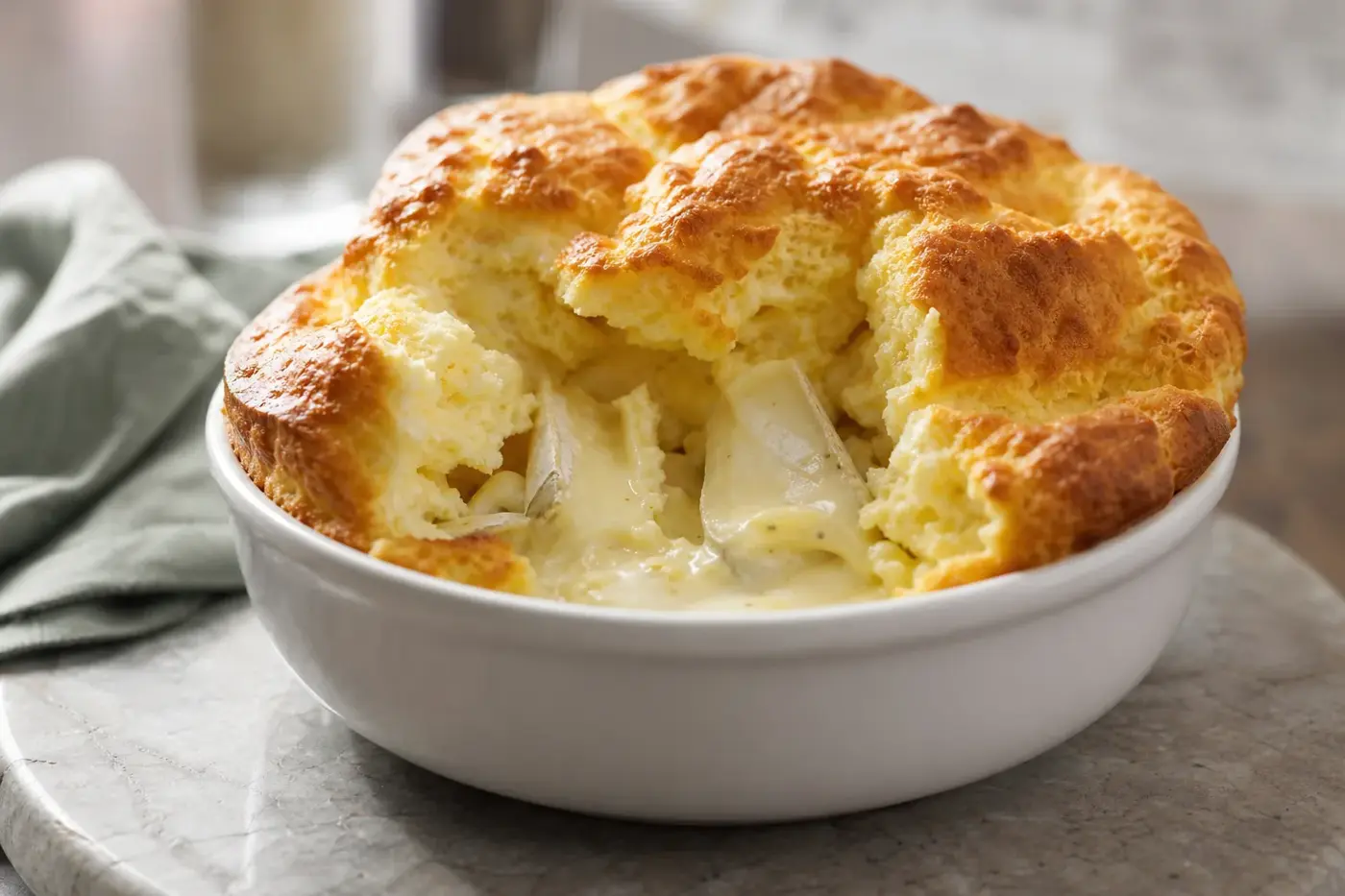
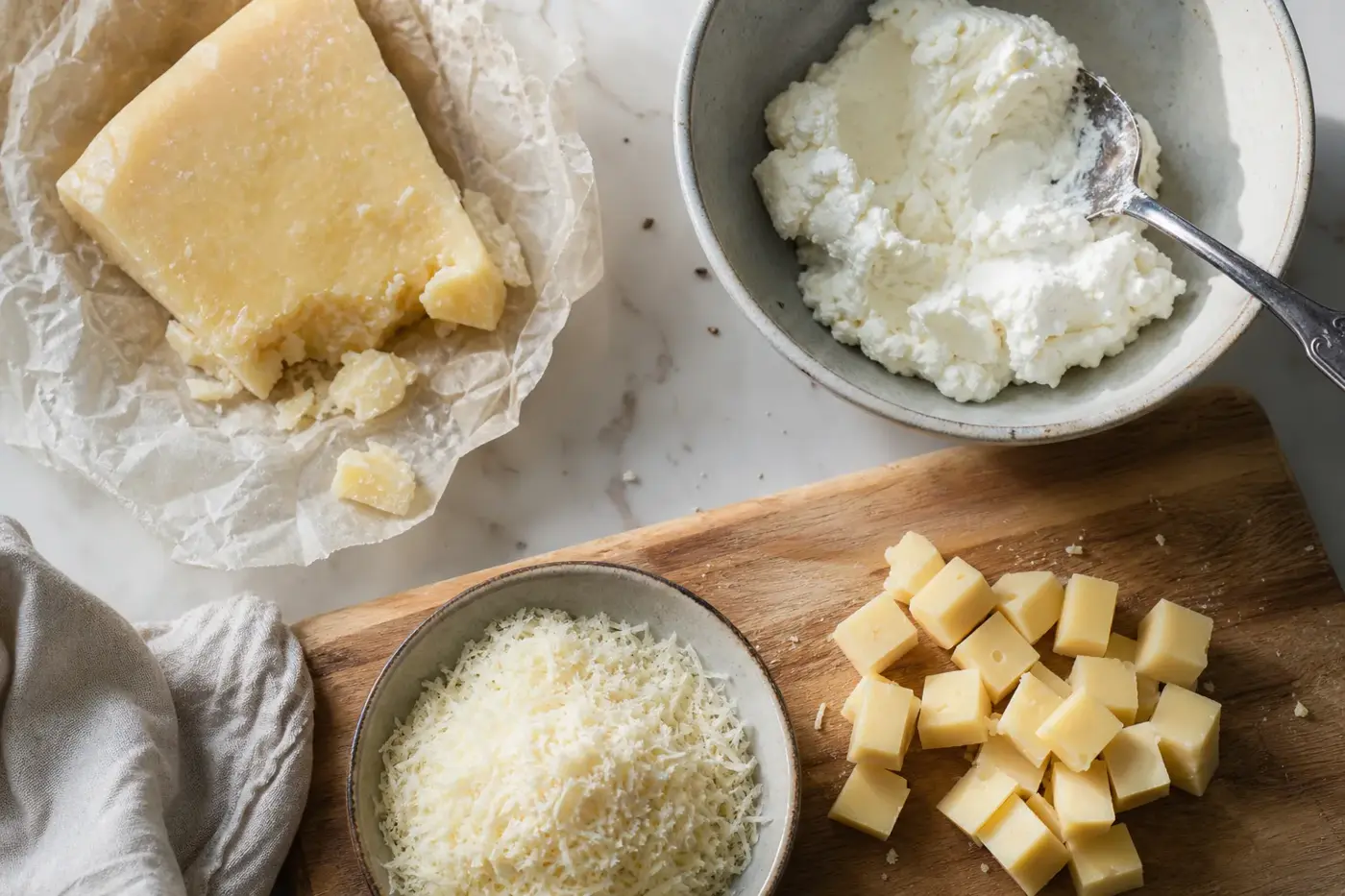
Think of your gratin topping in two layers. Use a melting cheese such as Gruyère or young Cheddar where you want it to merge with the filling. Add a little finely grated hard cheese for flavour and a surface that can brown, depending on the cheese and cooking conditions.
The main cheese supplies the melting layer, while the smaller addition brings its particular flavour. Your hard grating cheese need not carry the whole topping. Blending gives each cheese a clear role instead of expecting one ingredient to supply both body and finish.
Grate the finishing cheese finely so you can distribute it across the surface. Then watch the gratin, not just the cheese name: no name guarantees a particular shade of brown. Mozzarella experiments show that sugars remaining after cheesemaking can alter browning independently of whether the cheese flows.[6]
If you use Parmigiano Reggiano, choose it for its own character. It is a named ingredient, not another way of saying any hard grating cheese.
What happens inside your melting cheese?
Inside cheese, a protein framework holds water and fat. Heat changes both the fat and the interactions within that framework. Their balance differs from cheese to cheese, which explains why two apparently similar choices can behave differently in your pan.[5]
Moisture influences movement within the protein network, but “wetter melts better” is too simple a rule. In experiments on Cheddar made from ultrafiltered milk, calcium, salt and moisture all affected meltability. Calcium had the largest influence under the conditions studied.[11]
Fat softens and becomes liquid as you heat it. Whether it stays distributed through the cheese or gathers as free oil depends on the surrounding structure and formulation. Extra fat alone cannot promise you a smoother result.[8][9]
Acidity changes protein interactions and the distribution of calcium associated with the proteins. Increasing acidity does not steadily improve melting. Experimental rennet curds responded very differently to heat at different pH values, showing why structure and manufacturing history matter alongside acidity.[5]
Protein structure determines whether your hot cheese flows, stretches or holds together. Cheesemaking establishes that structure, then ripening changes it. You can follow the wider process in how cheese is made.
A controlled Cheddar study varied calcium and phosphorus, residual lactose and salt-to-moisture ratio, then measured melting during ripening. Significant interactions emerged between those variables. The useful kitchen lesson is that one number on a label cannot tell you the whole melting story.[12]
When mature cheese melts but leaves oil behind
A mature cheese can spread readily and still leave visible oil behind. Ageing breaks down parts of the protein framework, encouraging flow while changing the cheese’s ability to retain fat. Research on Cheddar of different ages examined that relationship between melting, structure and emulsion stability.[7]
“It melted” and “it stayed smooth” are two different achievements. Your cheese can manage the first while losing the even texture you need for a sauce.
Graininess calls for a different diagnosis. A rough sauce can involve protein aggregation or incomplete incorporation, rather than cheese that simply needs more heat. Experiments on processed cheese show that pH and the condition of the protein affect both structure and fat emulsification.[9]
Look again at your cheese blend, liquid system and heating method together. Aggressive heating is not a dependable rescue once a mixture has separated. The useful question is how to bring its components together, not how to make your pan hotter.
Paneer, halloumi and feta: enjoy the pieces, not the pull
Paneer appears in research on heated curds as a cheese that resists melting, although its mechanism remains uncertain.[5] For halloumi and feta, an explanation of their heat behaviour would require primary research.
Do not gather these three under the explanation “acid-set cheese”, because their manufacturing methods differ. For your cooking, the useful distinction is the form they bring to a dish. Think pieces or crumbles, rather than the flowing layer you expect from mozzarella or a fondue mixture.
Five habits for a happier melt
Prepare for the texture you want, then watch what happens as your cheese heats. These principles bring together the functional research and the published fondue method.[4][8][9]
- Grate to help it come together. Small, evenly distributed pieces are easier to incorporate progressively than one large block.
- Give your blend a purpose. Decide which cheese supplies the main texture and which brings the flavour.
- Keep heat gentle for an integrated mixture. As cheese enters your sauce, aim to combine it rather than keep the saucepan boiling vigorously.
- Add a little at a time. Stir in manageable additions and look at the texture before adding more.
- Stop when the texture is right. Making a sauce and browning a surface are separate stages with different aims.
When you substitute, match the job first. Try Gruyère instead of young Cheddar in a burger or toastie, allowing for the change in flavour. For macaroni cheese, young and mature Cheddar together offer another starting point.
Remember that mozzarella may turn a smooth sauce stringy. Feta changes a melting topping into softened pieces, so your substitution changes more than flavour.
Individual cheeses behave differently, so keep a specific kitchen record. Note the cheese, its stated maturity, the dish and what happened. A cheese diary may sound like a commitment, but it gives your next substitution a firmer starting point than the name alone.
Questions people ask
Which mozzarella is best for pizza?
Low moisture mozzarella is the clearest starting point for even coverage and plenty of stretch. Fresh mozzarella also works when you want separate patches, but drain it and remove visible surface liquid first.
Which cheeses make a smooth macaroni cheese?
Use a cheese whose melting behaviour you trust for the main sauce, then add a stronger mature cheese for flavour. Young Cheddar with mature Cheddar is one starting point, while Gruyère can take the main melting role.
Why does mature cheese sometimes turn oily when melted?
Ageing breaks down parts of the protein framework, which can encourage the cheese to flow while changing its ability to retain fat. A cheese can therefore melt readily but leave visible oil.
What cheeses go into Swiss moitié moitié fondue?
The established combination is equal quantities of Gruyère and Vacherin Fribourgeois. The Gruyère interprofession's recipe says to keep the heat controlled and not boil the completed fondue.
Does paneer melt into a flowing layer?
Research on heated curds discusses paneer as a cheese that resists melting. The authors' experiments did not establish the mechanism behind that behaviour.
Sources
- US Food and Drug Administration, 21 CFR 133.155: Mozzarella cheese and scamorza cheese, eCFR text displayed as current to 5 November 2026. Moisture limits and manufacturing description.
- US Food and Drug Administration, 21 CFR 133.156: Low-moisture mozzarella and scamorza cheese, eCFR text displayed as current to 4 November 2026. Moisture limits and stretched-curd manufacturing description.
- US Food and Drug Administration, 21 CFR 133.169: Pasteurized process cheese, current eCFR text retrieved November 2026. Definition and emulsifying-agent requirement.
- Interprofession du Gruyère, Fondue moitié-moitié, undated French recipe, retrieved November 2026. A commercially interested industry source for its own recipe.
- University of Yamanashi, Quantifying thermally induced flowability of rennet cheese curds, 2014 author manuscript, arXiv version 1. Experimental methods, results and discussion of paneer.
- Journal of Dairy Science, Browning of Mozzarella Cheese During High Temperature Pizza Baking, 1994. Retrieved abstract describing experimental comparison of starter cultures and galactose release.
- International Dairy Journal, The effect of age on Cheddar cheese melting, rheology and structure, and on the stability of feed for cheese powder manufacture, 2016. Retrieved abstract and experimental description.
- South Dakota State University research repository, Effect of natural cheese characteristics on process cheese properties, 2007, published in Journal of Dairy Science. Retrieved experimental abstract.
- ICAR-National Dairy Research Institute, An assessment of the intact casein content in natural cheddar cheese to determine its suitability in processed cheeses with desired properties, published online 2022, Journal of Food Science and Technology, volume 60, 2023.
- Interprofession du Vacherin Fribourgeois, Fondue moitié-moitié, undated guidance, retrieved November 2026. A commercially interested industry source for its own recommended combination.
- South Dakota State University research repository, Influence of processing condition on Cheddar cheese meltability, 2007, published in Milchwissenschaft. Retrieved experimental abstract.
- Journal of Food Science, Effect of calcium and phosphorus, residual lactose, and salt-to-moisture ratio on the melting characteristics and hardness of cheddar cheese during ripening, volume 72, issue 4, 2007. Retrieved experimental abstract.
This desk-researched draft brings together experimental cheese-functionality research, US product standards and Swiss industry recipes, with cooking recommendations identified as editorial synthesis.
Last checked: November 2026
Last checked November 2026.
The editors suggest you read next
Cooking with Cheese: The Complete Guide
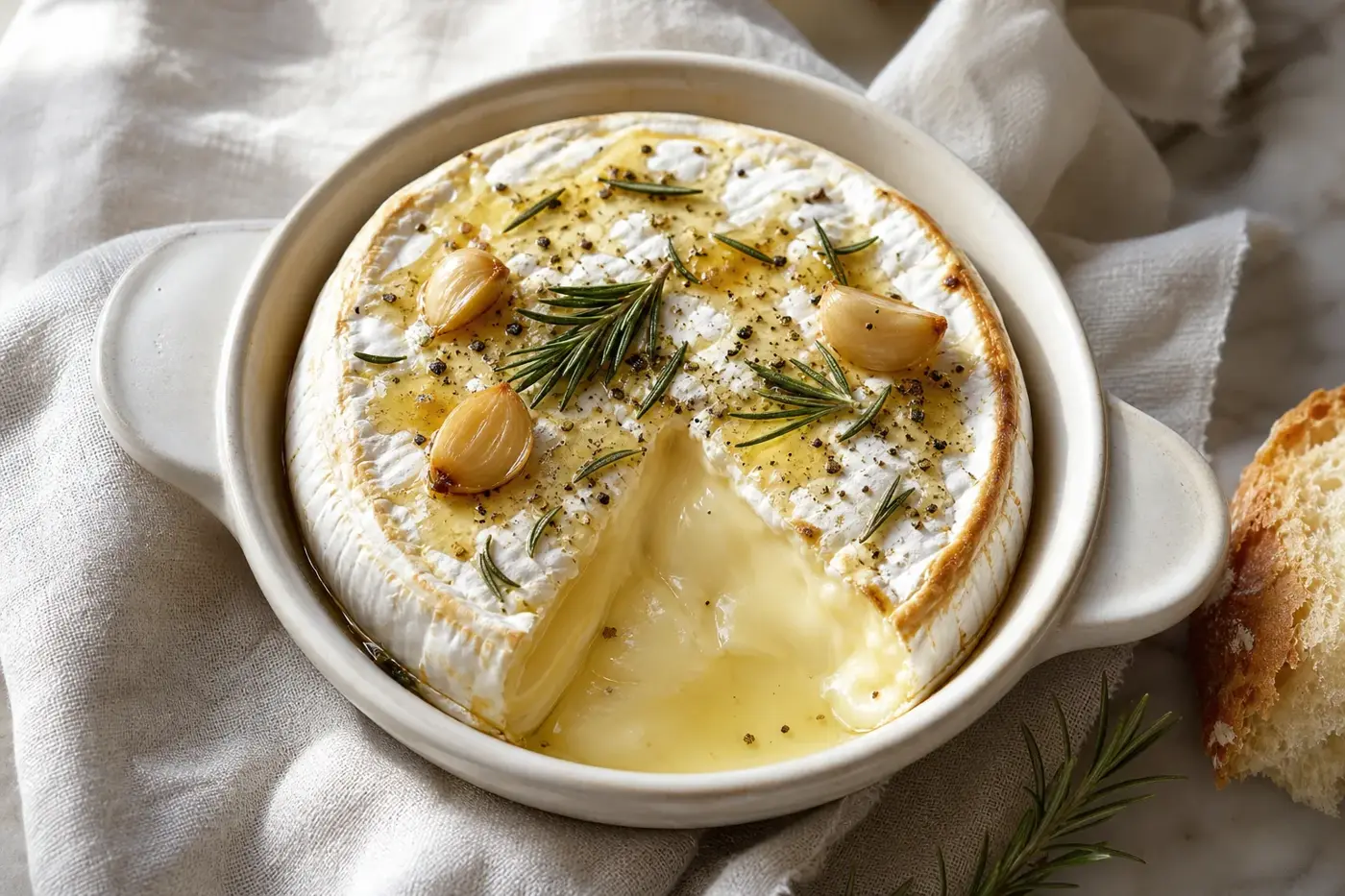
Cut into warm Brie and watch the interior melt while the rind holds its ground.