Cheese in Baking
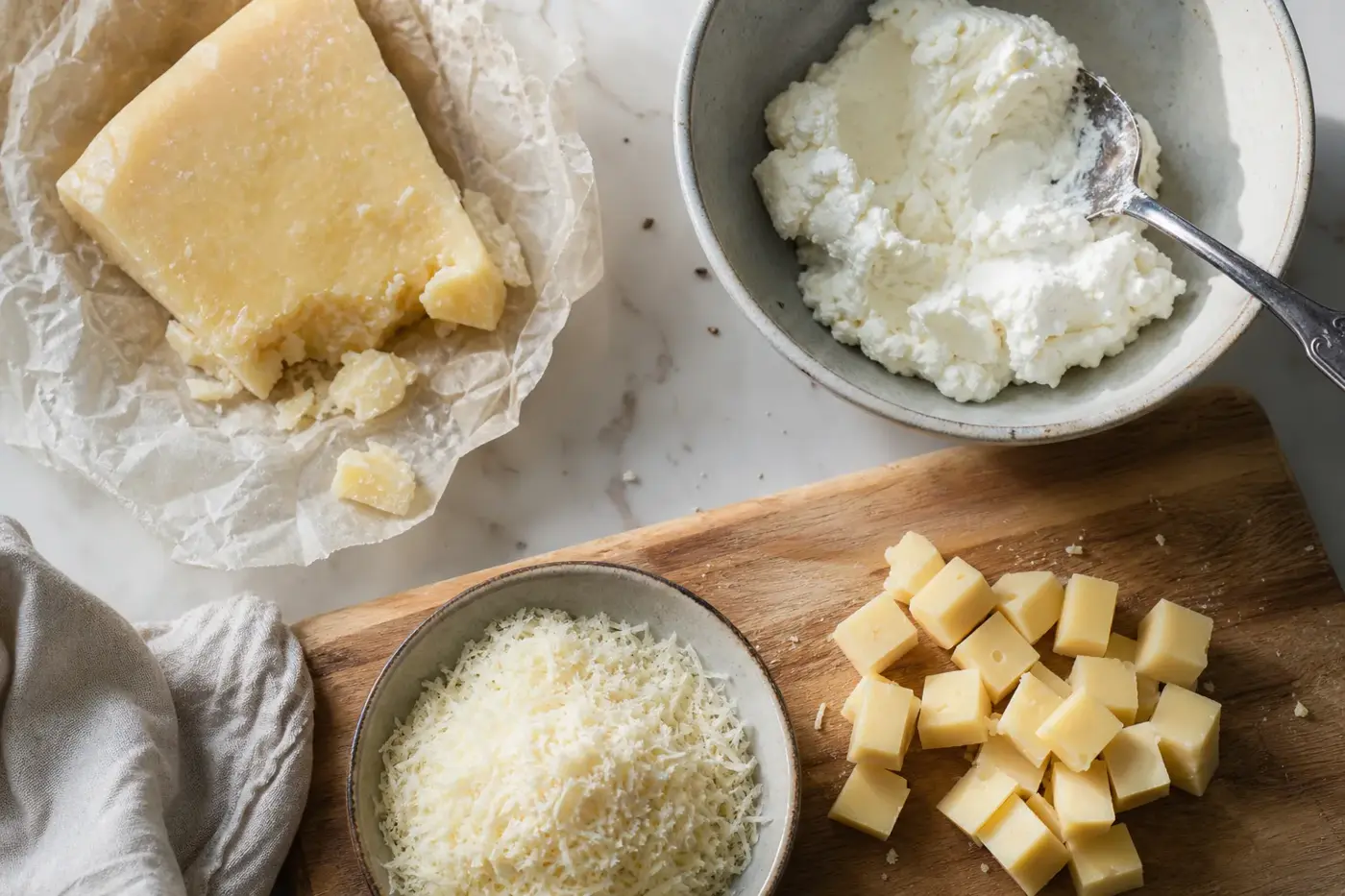
Cut into Good Food’s Classic Cheese Souffle and you meet chunks of ripe Brie alongside grated mature cheeses.
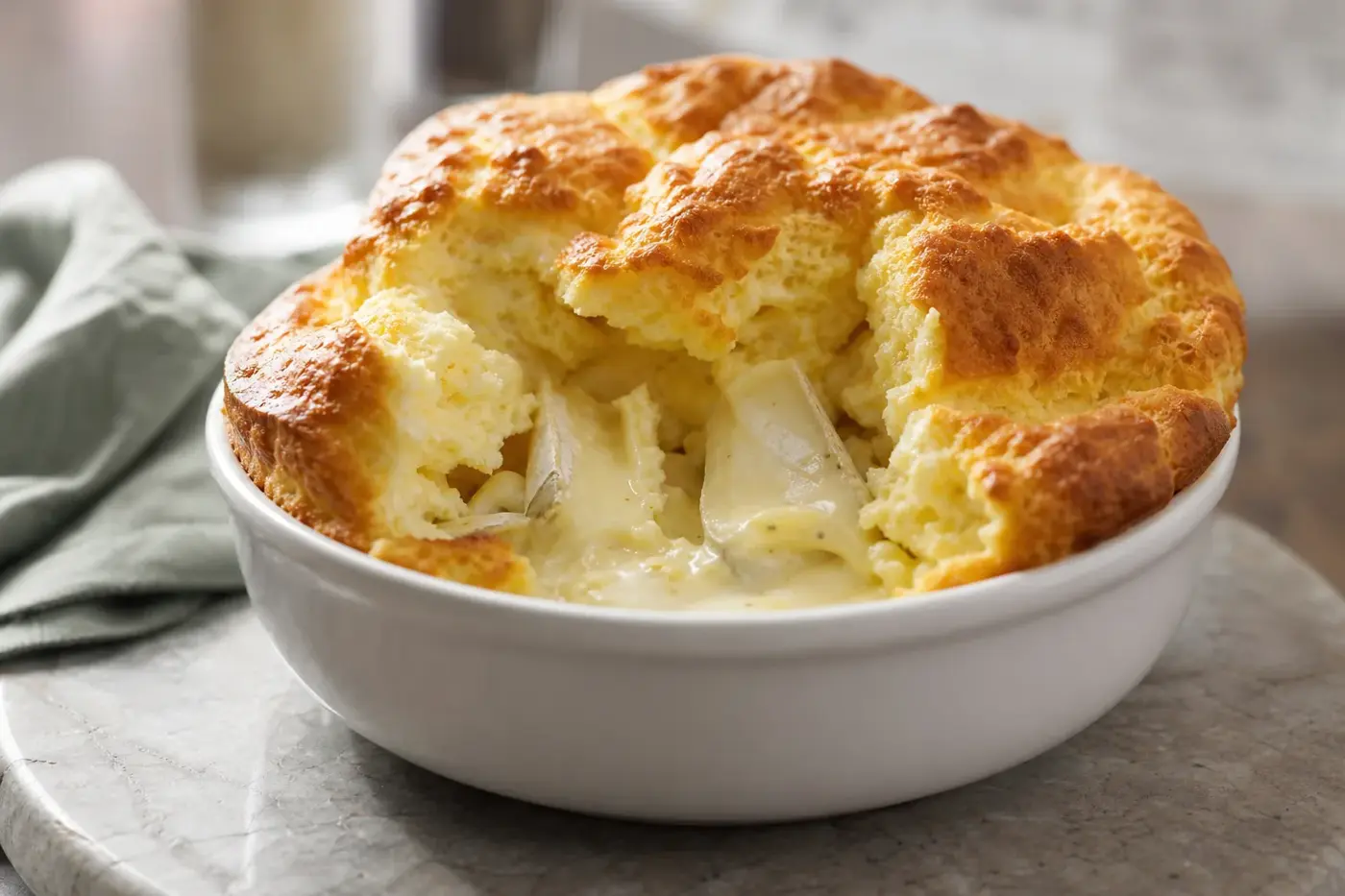
Cut into Good Food’s Classic Cheese Souffle and you meet chunks of ripe Brie alongside grated mature cheeses. Same bake, quite different contributions. Before you choose by flavour alone, consider form: cheese brings moisture, fat, salt and browning, from grated Cheddar in a savoury scone to fresh cheese giving a cheesecake its body. Start with the job, then match moisture and texture to your dough, filling or topping. [3, 4, 6, 7]
There’s more than flavour in that handful
You taste the cheese first, but water, fat, protein and seasoning arrive with it. A cheese-rich biscuit needs a dough built around that addition. A custard tart still needs enough egg to set: cheese contributes flavour and texture, not a replacement for the egg’s structural work. [4, 5]
Moisture behaves differently inside a bake and on top. In a filling, your recipe must accommodate the water; on an exposed topping, evaporation helps determine when browning begins. Research comparing cheeses during baking found that temperature, cheese mass and baking time all affected moisture loss. Cheese type mattered too, so dryness alone cannot predict the finished colour. [9]
Fat brings richness, but the surrounding protein structure governs how it behaves. Research comparing seven cheeses on pizza found that elasticity, free oil and transition temperature influenced colour uniformity. Picture the whole result: a cheese you choose for stretch may behave differently from one you want to leave scattered browned patches. [1]
First, give your cheese a job
Choose the role, then find your cheese. These broad categories offer a starting point, but age and the particular product matter, especially with young and long-aged versions of the same style. For a closer look, explore how to tell cheese styles apart. [9]
| Cheese category | Cheeses to try | Where they feel at home | Get them ready |
|---|---|---|---|
| Hard | Long-aged Gouda; hard grating cheese | Fine distribution in biscuits or a surface layer | Grate rather than leave large pieces. [4, 9] |
| Semi-hard | Younger Gouda; Cheddar | Scones, savoury biscuits and egg fillings | Grate or dice as your recipe specifies. [3, 5, 9] |
| Soft-ripened | Brie | Distinct soft pieces in a savoury bake | Cut into chunks rather than grate. [6] |
| Fresh | Cream cheese; ricotta | Cheesecakes, sweet fillings and spooned savoury additions | Match the specified product and consistency. [7, 8] |
| Blue | A crumbly blue cheese | An alternative in savoury biscuits | Crumble through the dough. [4] |
The category is a starting point, not a free pass for everything in your cheese drawer. King Arthur Baking explicitly offers crumbled blue cheese as an alternative in its Cheese Pennies. That invitation belongs to that biscuit formula; your cheesecake needs a fresh cheese suited to its own filling. [4]
Better scones begin in the mixing bowl
For cheese scones, distribute the cheese before the final mixing. King Arthur Baking’s Bacon Cheddar Chive Scones uses coarsely grated or diced Cheddar, with butter worked into the flour until the mixture stays unevenly crumbly. Follow that preparation: grated cheese and separate cubes spread differently through your finished scone. [3]
Add the recipe’s liquid with restraint, then bring the dough together without prolonged kneading. You want cohesion, not the smooth elasticity you would seek in bread. King Arthur’s scone guidance warns that very soft or liquid additions can make the result dense. A wet fresh cheese is therefore a poor last-minute replacement for grated mature cheese. [3, 11]
Crisp savoury biscuits need a formula that makes room for their cheese. In Cheese Pennies, grated sharp Cheddar and butter form the dough’s basis, with flour holding it together. Mixing stops as soon as the dough starts to cohere, and chilling comes before slicing. For cheese-rich savoury pastry, follow the same useful approach: establish the fat balance, mix briefly and chill softened dough before shaping. [4]
The Cheddar guide can help you choose the cheese itself. For your bake, start with the recipe’s stated butter and liquid quantities. Extra cheese changes the dough’s balance, so it may need another adjustment rather than simply delivering more flavour. Even a generous hand needs a little supervision.
Give soufflés and tarts their supporting cast
In a soufflé, cheese supplies flavour to a structure built by other ingredients. Good Food’s Classic Cheese Souffle combines grated mature cheeses with a thickened milk sauce and eggs, plus chunks of ripe Brie. The grated cheese joins the base; the pieces give you a different distribution through the dish. Each preparation has its purpose. [6]
Keep the mixing order intact. In that published method, the milk sauce thickens before the yolks and grated cheese go in. Adding cheese to an established base is not the same as putting loose grated cheese and milk into a dish and hoping for the same structure. You can change the flavours, but preserve the sauce, egg and cheese balance. [6]
A good tart asks you to consider the pastry as carefully as the filling. King Arthur’s Quiche Lorraine partially bakes the crust before the egg mixture goes in, and offers grated Swiss cheese, Gruyère or Cheddar. The onion is cooked before assembly too. Prepare shell and filling components separately, then bring them together: a useful rhythm for your next savoury tart. [5]
Fresh cheese offers another route into baked eggs: separate spoonfuls, rather than a thorough mixing into custard. Good Food’s ricotta collection includes baked eggs and a ricotta, tomato and spinach frittata. Choose a recipe designed for those ingredients, especially when vegetables and fresh cheese both bring moisture along. [8]
Bread, pizza and pasta: choose inside or on top
Tuck cheese inside dough and its job changes from that of cheese exposed on top. A filling stays within the bake; a topping meets direct drying and browning. Add cheese to bread dough or filling at the recipe’s specified stage, and leave a surface topping at its intended addition point rather than moving everything outside. Baking research shows that the amount of exposed cheese, temperature and duration affect moisture loss. [9]
For flatbreads and pizza, picture your preferred finish: an even covering or separate patches. Grating makes coverage easier to control; pieces give you a more interrupted topping. Follow the recipe’s timing for either. During a long bake, reserving a finishing layer until later can limit exposure, provided the method still lets the dough underneath bake properly. [1, 9]
Baked pasta asks you to make the same distinction between cheese within the dish and cheese on its surface. Add cheese to the filling or sauce during assembly when directed, then put on the topping at the specified stage. Good Food’s cheese collection includes a cheeseboard macaroni bake with cracker breadcrumbs. Your surface can get its texture from something besides a thick layer of cheese. [12]
Get to know your sweet filling
Cream cheese gives many cheesecakes their main body, while eggs help the baked filling set. Use the specified product rather than casually reaching for another fresh cheese. King Arthur’s cheesecake trials found that recipes with additional dairy liquid behaved differently from formulas based only on cream cheese, eggs and sugar. The whole filling formula matters, not just the ingredient getting top billing. [7]
Ricotta has its own family of sweet bakes, cheesecakes included, as Good Food’s collection shows. Its place in sweet and savoury recipes shows how fresh cheese can work as a filling ingredient rather than a melting topping. Whether you choose ricotta, quark or mascarpone, find a formula developed for that ingredient. Those names are not interchangeable. [8]
For a smooth cream-cheese filling, bring ingredients to the temperature your recipe requires, then mix slowly and stop once combined. King Arthur’s documented trials identify overmixing, overbaking and abrupt cooling as causes of cracking; a water bath was the most effective method compared. Follow the recipe’s baking method, but in England, Northern Ireland and Wales use the FSA cooling guidance below instead of any longer cooling time the recipe suggests. [2, 7]
Grate, crumble, drain: make the preparation count
Preparation changes how cheese behaves, not just how your bake looks. Give its form the same attention you give its quantity:
- Grate cheese to distribute it through dough or an egg filling. Keep to the stated fineness rather than substituting large chunks. [3, 5]
- Crumble a suitable blue cheese into biscuit dough when your recipe permits that substitution. [4]
- Slice cheese evenly for a layered filling when slices are specified. Stick to the stated thickness.
- Cut soft cheese into pieces when you want distinct additions, as in the published Brie soufflé example. [6]
- Drain fresh cheese when instructed, following the recipe’s weighing convention. Drained cheese and the original container contents give you different starting points.
With fresh cheese, look closely at whether the quantity is measured before or after draining. If your substitution releases noticeably more liquid, find a formula designed for that consistency. An improvised handful of flour is not a reliable rescue for an unbalanced filling.
Make a cheese swap that suits the bake
Start with the alternatives your recipe actually offers. The quiche and cheese-biscuit examples above give you useful choices within their own formulas. Match the replacement’s physical role before considering flavour. Swapping one grated cheese for another is a smaller change than replacing it with a spoonable fresh cheese of a different consistency. [4, 5]
If your cheese is saltier, reduce discretionary added salt at first, then assess a cooked sample where the recipe allows. For a richer cheese, keep the original butter or cream quantity until you have a tested adaptation. For a wetter cheese, address preparation rather than automatically adding liquid. These are cautious starting points: precise corrections depend on the whole recipe.
A disappointing bake? Find the right fix
A quality problem and a food safety problem need different attention. Use this table to improve your next bake, and check cooking separately before serving this one.
| What went wrong? | What might be happening? | What to try next time |
|---|---|---|
| Greasy savoury pastry | Quality defect; the cheese and fat balance has changed, or the dough softened during handling | Return to the original formula; chill before shaping. [4] |
| Watery tart filling | Quality defect if fully cooked; ingredient preparation or a changed filling balance may contribute | Use the specified cheese and prepare components before assembly. Check cooking separately. [5, 10] |
| Tough or dense scones | Quality defect; soft or liquid additions can cause density; the cause of toughness remains uncertain | Follow the original recipe and mixing instructions. [3, 11] |
| Scorched topping | Quality defect; too much surface exposure | Follow the topping’s addition point; watch its colour during baking. [9] |
| Cracked cheesecake | Usually a quality defect; overbaking, vigorous mixing or abrupt cooling | Mix gently and follow the tested baking method. A crack alone does not establish doneness. [7, 10] |
This page summarises published guidance from the official sources it cites. It is not medical advice. Guidance differs between countries and changes over time, so check the current source for where you live, and ask your doctor, midwife, pharmacist or dietitian about your own circumstances.
Out of the oven: keep your cheese bakes safe
In England, Northern Ireland and Wales, the Food Standards Agency advises keeping your fridge between 0 and 5 °C. Leave chilled ingredients out for the shortest practical preparation time and follow their storage instructions. For a large dish such as lasagne, its cooking guidance advises checking the middle. A bubbling surface cannot tell you enough about the whole bake. [2, 10]
Cool cooked food and refrigerate it within one to two hours, the FSA advises, dividing it into smaller portions to help it cool. Eat refrigerated leftovers within 48 hours or freeze them. Plan your cheesecake cooling around that limit, rather than leaving it indefinitely in a switched-off oven. [2]
Reheat leftovers only once and make them steaming hot throughout, as the FSA advises. For broader guidance, turn to cheese food safety and how to store cheese at home. Continue through Cooking with Cheese for the separate melting, sauce and leftovers guides. [10]
Questions people ask
Can I replace grated Cheddar with fresh cheese in scones?
A wet fresh cheese is a poor unplanned replacement for grated mature cheese. King Arthur’s scone guidance warns that very soft or liquid additions can make scones dense.
Should I bake a quiche crust before adding the filling?
King Arthur’s Quiche Lorraine partially bakes the crust before adding the egg mixture. The onion is also cooked before assembly.
What causes a cheesecake to crack?
King Arthur’s trials identify overmixing, overbaking and abrupt cooling as causes of cracking. A water bath was the most effective method compared in those trials.
Why does cheese brown differently on a topping?
Research found that cheese type, temperature, cheese mass and baking time affected moisture loss. Dryness alone cannot reliably predict the finished colour.
How should I store and reheat leftover cheese bakes?
In England, Northern Ireland and Wales, the Food Standards Agency advises cooling cooked food and refrigerating it within one to two hours, then eating leftovers within 48 hours or freezing them. It advises reheating leftovers only once until steaming hot throughout. See the Food Standards Agency’s food safety and cooking guidance.
Sources
- Journal of Food Science. “Quantification of pizza baking properties of different cheeses, and their correlation with cheese functionality”, volume 79, issue 8, 2014. Published abstract describing machine-vision comparisons of seven cheeses. Retrieved abstract.
- Food Standards Agency. How to chill, freeze and defrost food safely, published 18 December 2017, current retrieved edition. Applies to England, Northern Ireland and Wales. Official guidance.
- King Arthur Baking. Bacon Cheddar Chive Scones, current recipe retrieved November 2026; publication date not stated in the retrieved material. Published recipe.
- King Arthur Baking. Cheese Pennies, updated 14 August 2026. Published recipe.
- King Arthur Baking. Quiche Lorraine, current recipe retrieved November 2026; publication date not stated in the retrieved material. Published recipe.
- Good Food. Classic cheese souffle, current recipe retrieved November 2026; publication date not stated in the retrieved material. Published recipe.
- King Arthur Baking. Baking trials: What’s the best way to keep cheesecake from cracking?, 5 August 2024. Documented baking trials.
- Good Food. Ricotta recipes, current collection retrieved November 2026; publication date not stated in the retrieved material. Recipe collection.
- Foods. “Moisture Loss from Cheese During Baking: Influence of Cheese Type, Cheese Mass, and Temperature”, volume 14, issue 2, article 165, 2025. Indexed primary-paper extracts retrieved November 2026. Paper.
- Food Standards Agency. Cooking your food, published 18 December 2017, current retrieved edition. Applies to England, Northern Ireland and Wales. Official guidance.
- King Arthur Baking. How to Bake Scones, current instructional page retrieved November 2026; publication date not stated in the retrieved material. Baking guidance.
- Good Food. Cheese recipes, current collection retrieved November 2026; publication date not stated in the retrieved material. Recipe collection.
Researched through published baking methods, documented cheesecake trials, primary dairy-research abstracts and extracts, and current FSA consumer guidance; practical adaptations are editorial synthesis, not site-tested recipes.
Last checked: November 2026
Last checked November 2026.
The editors suggest you read next
Cooking with Cheese: The Complete Guide
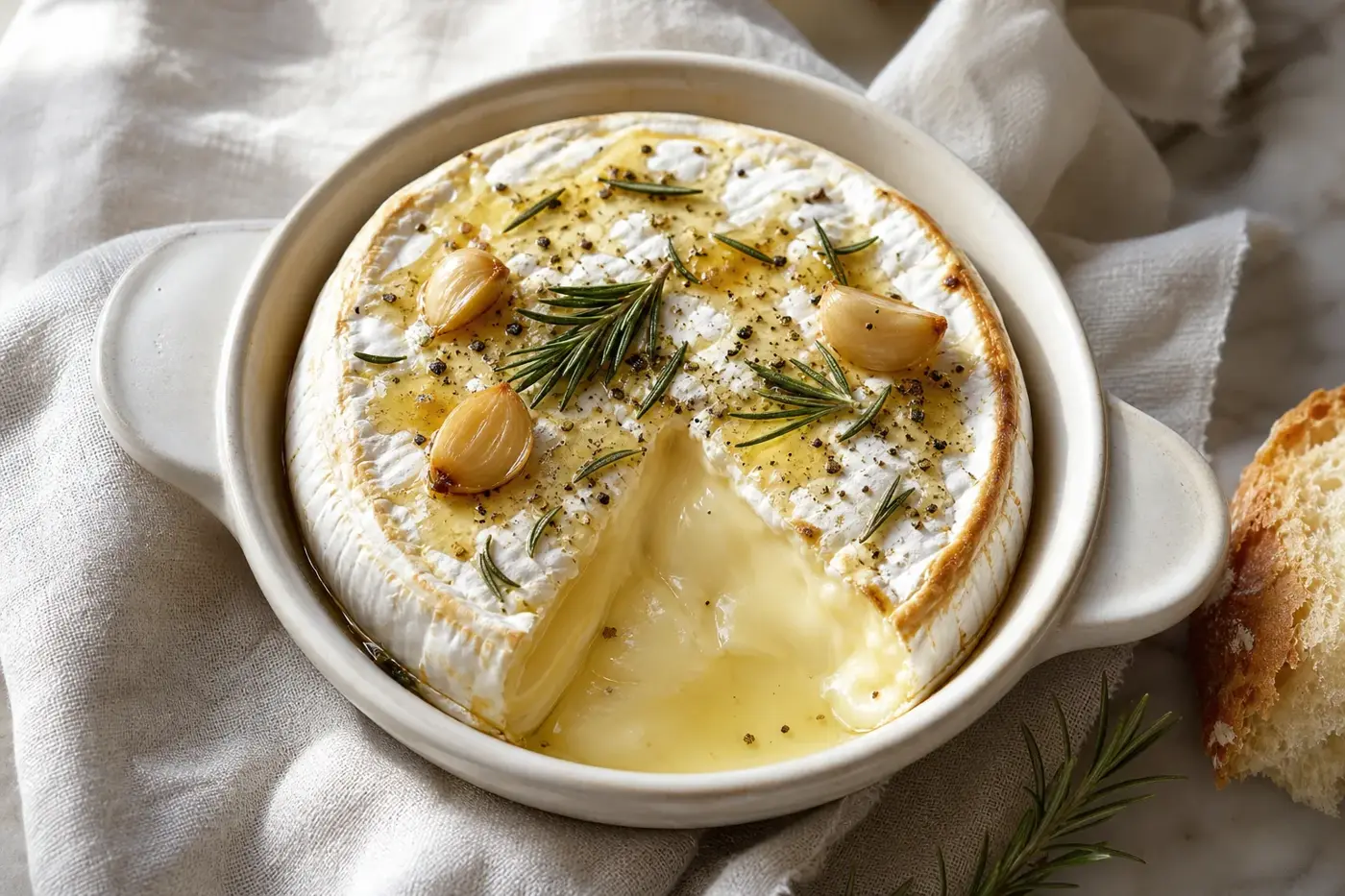
Cut into warm Brie and watch the interior melt while the rind holds its ground.