Cooking with Cheese: The Complete Guide
Cut into warm Brie and watch the interior melt while the rind holds its ground.
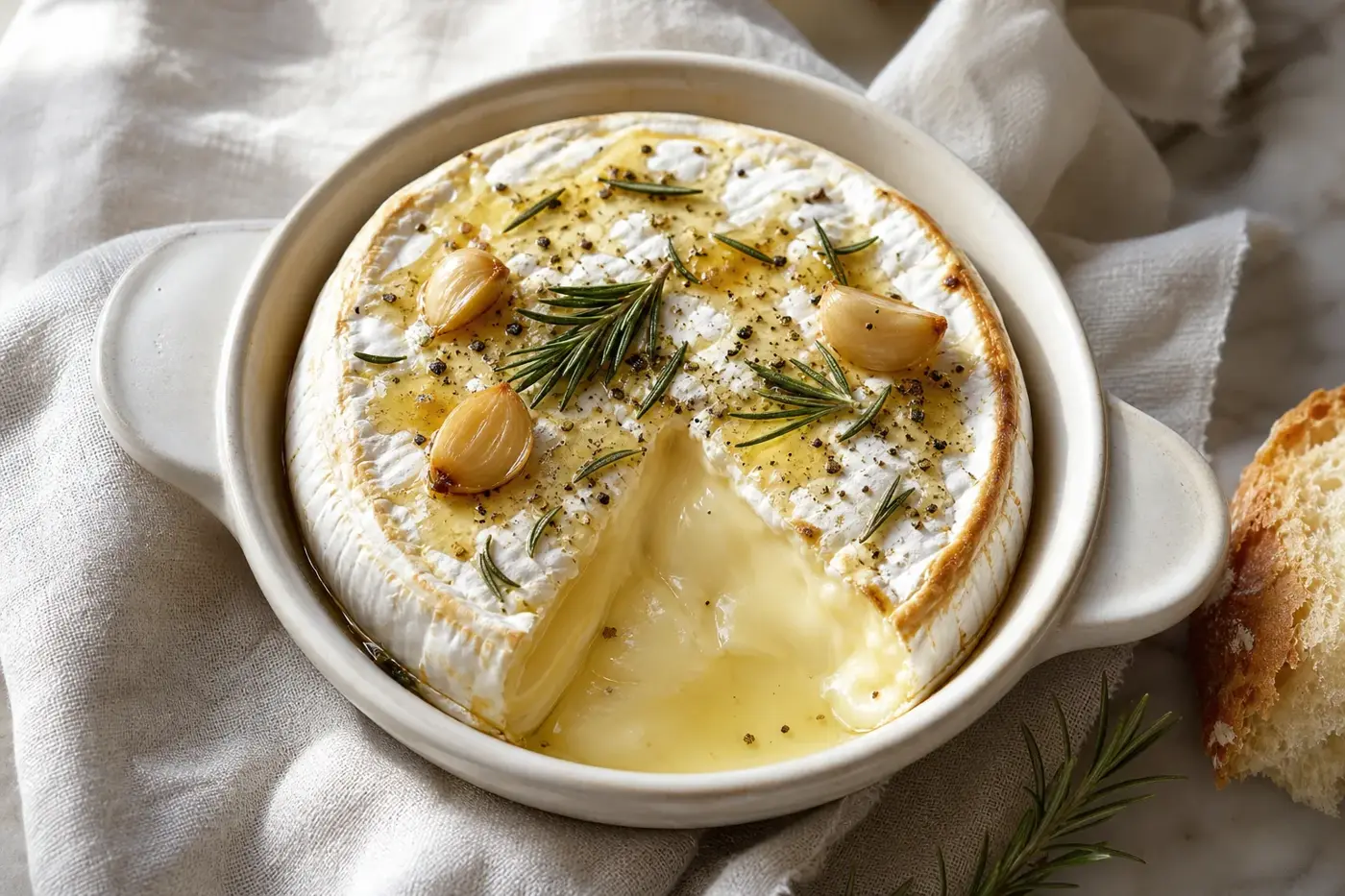
Cut into warm Brie and watch the interior melt while the rind holds its ground. Lovely in a filling. Less useful if you were hoping for the long, stretchy pull of pizza. Other cheeses soften without flowing, or melt without stretching at all. [1,2]
That is the delicious puzzle of cooking with cheese. Your pastry filling needs to stay put; your soup needs cheese that blends without leaving an oily slick. Choose the behaviour first, then give your dish the preparation, heat and timing it needs. [1,2]
Get to know your cheese before turning up the heat
Inside cheese, a network of milk proteins holds water and fat. Heat softens that structure, but melting, stretching and browning are separate talents. Moisture, fat, acidity and manufacturing method decide what happens in your pan. Understanding those differences makes choosing much easier. [1,2]
Moisture: among otherwise similar cheeses, more water generally means a softer structure that moves more freely. But water held inside cheese is not the same as liquid escaping into your dish. Fresh mozzarella can release enough moisture to make a topping wet, so drain it when you need a dry base. [1,3]
Fat: lower-fat cheeses generally melt less readily than comparable full-fat versions, unless their manufacture compensates. Fat helps determine softness, but extra heat will not coax a reluctant cheese into melting nicely. You may simply get pooled oil. Treat a reduced-fat swap as a change in cooking behaviour, not just ingredients. [1]
Age and acidity: ripening breaks down proteins and builds flavour, sometimes increasing flow while changing stretch. Acidity changes how proteins and calcium interact. Some acid-set cheeses keep their structure as they soften, despite containing plenty of moisture. Age alone cannot promise you a smooth sauce. [2,4]
Give your cheese a clear job
Before choosing a flavour, ask what you need your cheese to do. For melting, start with a cheese documented to flow, such as cheddar, Gouda or low-moisture mozzarella. For browning, spread an even topping rather than thick, overlapping slabs. In a filling, decide whether you want a cohesive mixture or distinct soft pockets. [2,3]
A finishing cheese needs flavour you can notice in small amounts. In an uncooked dish, give texture equal attention: crumbled blue cheese, spoonable ricotta and grated hard cheese make very different mouthfuls. The American Cheese Society recommends crumbled cheeses and grated hard cheese for salads. [2,5]
Find the cheese style that suits your supper
Soft, hard, fresh, blue and cooked are useful kitchen groupings, though their boundaries overlap. This table brings together dairy-industry descriptions and practical guidance from a university cooking programme. Use it to narrow your search, then get to know the particular cheese. [2,3,6]
| Style | Examples | What to expect | Where it earns its place |
|---|---|---|---|
| Soft-ripened | Brie, Camembert | The interior melts; the rind stays distinct. [2] | Sandwiches or soft pockets in fillings. |
| Hard or semi-hard | Cheddar, Gouda | Melting and browning vary with variety and maturity. [3] | Sauces, toast and baked toppings. |
| Fresh | Ricotta, cottage cheese | Softness does not necessarily mean a flowing melt. [2] | Spoonable fillings and uncooked mixtures. |
| Blue | Crumbly blue cheese | Melts into sauces; keeps its crumbles when added afterwards. [2] | A concentrated hit of flavour. |
| Heat-processed | Processed cheese slices | Blended cheeses heated during manufacture for easy melting. [6] | Sandwiches and other melting jobs. |
“Cooked” needs a little unpacking. Ricotta is formed using heat and acid; processed cheese is blended using heat. Neither description tells you everything about its behaviour in your kitchen. Halloumi, chosen to hold its shape on a grill, has a different job from cheese destined to dissolve into sauce. [1,3,6]
Cooked-curd cheeses belong to another category. Their curd is heated during manufacture, so the name describes a production step, not instructions for your dinner. [4]
Want to untangle the classifications? See how to tell cheese styles apart.
Grate for smoothness, crumble for little surprises
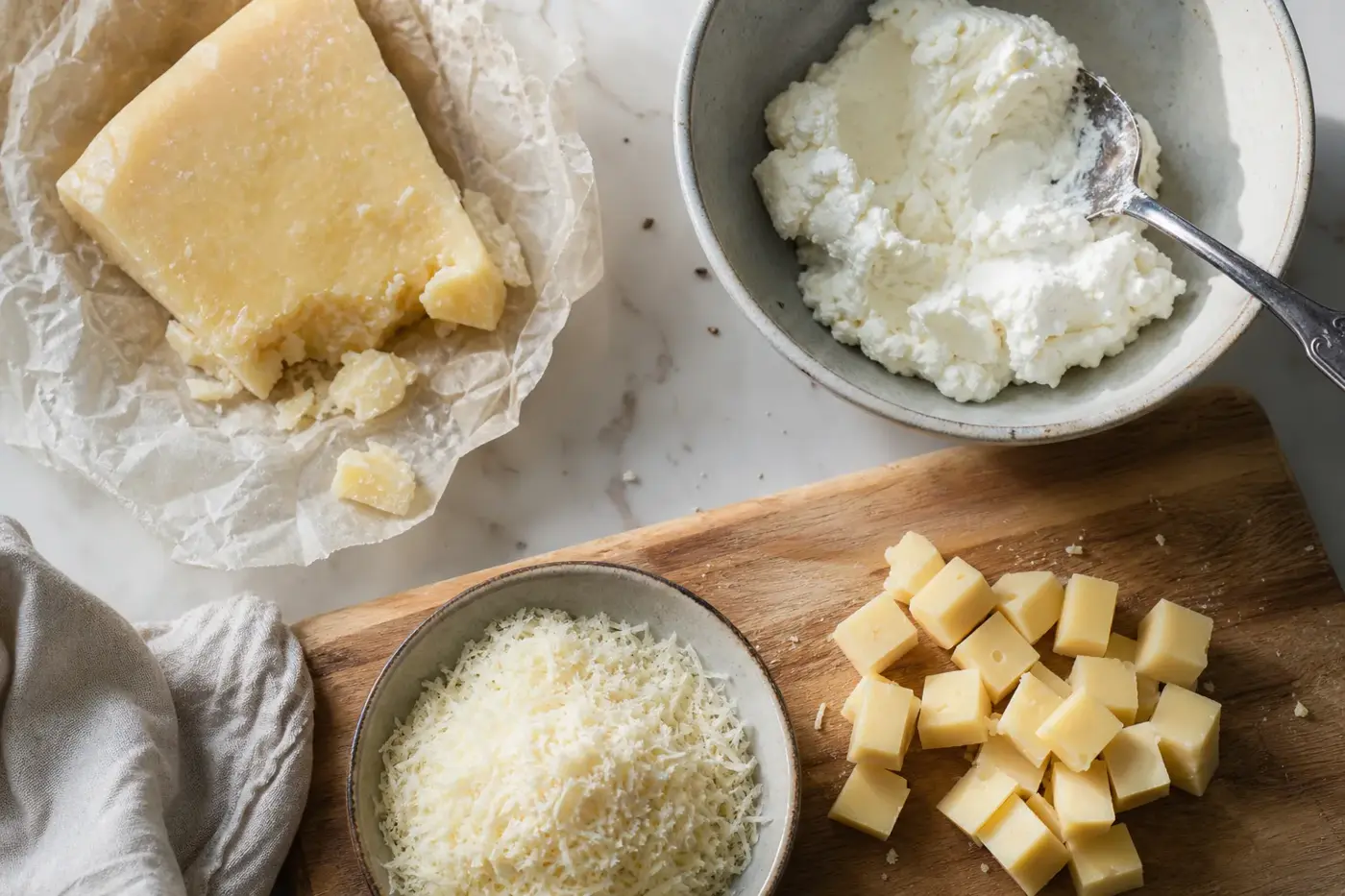
Grate firm cheese when you want even distribution through a sauce or over a topping. Smaller pieces melt faster, and cold cheese is easier to grate. Prepare it before the final cooking stage, so your pan is not heating away while you negotiate with the grater. [5,6]
Crumble blue or crumbly white cheese for scattered pockets of flavour. For sandwiches and overlapping toppings, cut reasonably even slices. Choose cubes when distinct pieces are the point, remembering that a large cube takes longer to soften than a small shred. [3,6,8]
Timing matters as much as shape. Add cheese towards the end of soups and sauces; if your recipe allows, save the topping until the dish is nearly cooked. Watch a thin scattering exposed to oven heat closely. Cheese tucked inside a filling cooks in a different environment. [3,5]
Let your sauce cook before the cheese goes in
Make your sauce base before adding the cheese. With a flour-and-milk base, let the starch thicken the liquid first. University of Illinois Extension specifically advises adding shredded cheese after the white sauce is cooked. Your cheese finishes the sauce; it need not endure the whole cooking time. [6]
Lower the heat before stirring in your prepared cheese, then stop heating as soon as it melts. Cooking guidance hosted by the University of Washington recommends low heat, continuous stirring and removal from the heat once melting is complete. Move your pan off the burner when necessary. [7]
Milk, stock and cream bring different flavours and consistencies, so follow a reliable recipe’s choice of liquid. Hold a little back for adjustment. If your sauce needs loosening, add it gradually: a large splash can leave you needing to boil it down with the cheese already present. [5,8]
In the oven, cooking the food and colouring its surface are separate jobs. Follow your recipe for the main bake, then finish the topping as directed. Arla’s cooking guide warns that excessive heat and prolonged cooking can make cheese oily or tough. A hotter oven cannot turn an unsuitable cheese into the right one, however hopefully you watch it. [3]
Taste your cheese before reaching for the salt
Season after adding cheese wherever your recipe permits. As the American Cheese Society notes, aged cheese can bring enough flavour to need little further seasoning. Count your other salty ingredients, too. A filling with olives needs a different final adjustment from plain potatoes. [5]
Choose one leading flavour and build around it. Try chives with mild cheese and eggs, parsley in a vegetable filling, or a restrained amount of mustard with cheddar. Add assertive ingredients in stages, then taste your finished cooked mixture before deciding whether it needs more.
Lemon juice and vinegar are deliberate flavour choices, not universal fixes for melting trouble. Acidity affects protein behaviour, and the result depends on your cheese. If you want brightness without changing a sauce’s acidity, add a little lemon zest or freshly chopped herbs at the table. [1]
Put your cheese to work in everyday dishes
Pasta and soup: find your kind of comfort
With pasta, decide whether you want a coating sauce or a stretchy baked finish. Cheddar sauce and a mozzarella topping do different jobs. Arla recommends mozzarella for stretch and cheddar for flavour and browning in pasta bakes. Before swapping fresh and lower-moisture forms, read the guide to mozzarella. [3]
Finish simmering your soup before adding cheese, then stir it through near the end over gentle heat. Or let your cheese stay outside the liquid altogether. The American Cheese Society suggests cheese-topped toasted bread alongside soup: you get a melted surface beside the bowl without blending cheese into the whole pot. [5,8]
Bakes and pastries: make the filling fit
In a vegetable bake, your cheese can bind everything together, form a crust or sit in soft pockets. Sauce beneath a topping gives a different result from cubes scattered through vegetables. Arla recommends cheddar and Gouda for melting, and shape-holding white cheeses for pockets in traybakes. [3]
For pastry, your first priority is a filling that stays where you put it. Choose ricotta for a soft mixture, or grated firm cheese for even distribution. Follow a published pastry recipe for drainage, binding and baking instructions. Changing the cheese can change how much moisture your pastry must accommodate. [2,6]
Eggs and salads: go gently, or leave the heat off
Eggs and cheese both appreciate gentle heat. Dairy Farmers of Canada’s teaching guidance explains that excessive cooking toughens both ingredients. For your omelette, use a modest, even layer of grated cheese. A heavy pile needs prolonged cooking while its centre warms. [8]
Without cooking, contrast takes over from melting. Crumble cheese over dressed leaves, spoon ricotta alongside vegetables, or shave hard cheese over your finished plate. Size the pieces to suit each bite. A small amount spread evenly can do more for your dish than one large mound. [5,6]
Swap your cheese without losing the plot
Match the function first, then adjust the seasoning. One mild melting cheese is a more plausible replacement for another than for a crumbly filling cheese. Arla suggests Monterey Jack for cheddar’s melting roles. You will change the flavour, so judge your final seasoning after the swap. [3]
If your replacement is wetter, drain it where appropriate and reconsider the filling’s other liquid. If it is saltier or more assertive, start with less and taste before adding more. Check age and fat level when melting matters. The guide to cheddar helps explain variation within this familiar style. [1,3]
Cooking vegetarian? Look beyond the style
Animal rennet comes from animals’ stomachs and is unsuitable for vegetarians, as the Vegetarian Society explains. Microbial and plant coagulants offer vegetarian alternatives. Rennet is the preparation used to set milk into curd. Its source matters even though your finished food is dairy. [9]
Check your specific pack for vegetarian suitability or recognised certification. If the label is unclear, ask the manufacturer rather than assuming every cheese of that style uses the same coagulant. Check every cheese in a blend, including your finishing garnish. See rennet explained for the different sources. [9]
Plan for your leftovers and handle them with care
For current advice on storing, cooling and reheating in England, Wales and Northern Ireland, turn to the Food Standards Agency’s guidance on chilling and cooking food. November 2026 is the reference date for this guidance. [10,11]
Before opening another cheese, decide where the pieces you already have could go. Grated pieces might become a topping, crumbles can finish a dish, and a measured amount can go into sauce. Keep your plans within the pack’s instructions and official storage guidance. [10]
Ready to tackle a particular technique? In the Cooking with Cheese hub, the detailed guides on melting, smooth sauces and baking offer instructions to take you further.
Choose your next useful cheese read
- How to Store Cheese at Home: wrapping, refrigeration and planning how to use your leftover cheese.
- Cheese Food Safety: The Complete Guide: wider food safety guidance and its country-specific sources.
General information only, not medical advice: follow the official guidance where you live.
Questions people ask
How do I make a smooth cheese sauce?
Cook the sauce base first, then lower the heat and stir in the prepared cheese. The University of Washington recommends continuous stirring and removing the sauce from the heat once the cheese has melted.
Why does fresh mozzarella make my pizza wet?
Fresh mozzarella can release enough moisture to leave a topping wet. Drain it before using it where a dry base matters.
Which cheese is best for a stretchy pasta bake?
Arla recommends mozzarella for stretch in pasta bakes. It recommends cheddar for flavour and browning.
How can I tell whether cheese is vegetarian?
Check the specific pack for vegetarian suitability or recognised certification, and ask the manufacturer if the label is unclear. Check every cheese in a blend, including any finishing garnish.
Where can I find advice on storing and reheating cheese dishes?
The Food Standards Agency provides guidance on chilling and cooking food for England, Wales and Northern Ireland. Check its current guidance and follow the pack’s instructions.
Sources
- INRA and EDP Sciences, “Some perspectives on the use of cheese as a food ingredient”, Dairy Science and Technology, volume 88, pages 573 to 594, 2008. Sections 2.1.1 to 2.1.4 explain composition, acidity, temperature and milk heat treatment. Full paper.
- U.S. Dairy Export Council, Reference Manual for U.S. Cheeses, undated online edition. Sections 5.1, 5.2, the blue cheese profile and section 8.4 provide ingredient-performance descriptions. This is an industry publication. Manual.
- Arla UK, “A guide to cooking with cheese”, undated online edition, retrieved November 2026. Producer guidance covering cheese behaviour, oven applications and substitutions; Arla has a commercial interest in dairy products. Cooking guide.
- Royal Society of Chemistry, “Introduction to Cheese Chemistry”, Handbook of Cheese Chemistry, 2023. Sections 1.5 and 1.6 cover ripening, flavour, protein breakdown and functionality. Chapter.
- American Cheese Society, “Tips for Cheese Lovers”, undated online edition, retrieved November 2026. “Cooking with Cheese” covers preparation, timing, heat and seasoning. Cooking advice.
- University of Illinois Extension, 4-H Cooking 301, undated online PDF edition. Pages 101 to 103 cover cheese categories, preparation and white-sauce technique. Teaching resource.
- University of Washington, “Lesson 5: Dairy”, undated teaching PDF, retrieved November 2026. “Cooking Dairy” gives low-heat melting guidance. Teaching resource.
- Dairy Farmers of Canada, Power Up! Cooking with Milk Products & Eggs, online teaching resource, retrieved November 2026. “Principles of cheese cookery” and “Principles of egg cookery” explain heat control and preparation. This is an industry teaching publication. Teaching resource.
- Vegetarian Society, “Which cheeses are suitable for vegetarians and which aren’t?”, online edition, retrieved November 2026. Vegetarian guidance.
- Food Standards Agency, “How to chill, freeze and defrost food safely”, GOV.UK edition, published 18 December 2017, checked November 2026. Applies to England, Northern Ireland and Wales. Official guidance.
- Food Standards Agency, “Cooking your food”, GOV.UK edition, checked November 2026. Section 7 covers leftovers and reheating. Official guidance.
- Food Standards Agency, Alerts, live notices index, checked November 2026 for editorial recall screening. Official alerts.
Researched through dairy-science literature, published ingredient-performance guidance, vegetarian guidance and official food safety advice, with practical suggestions identified as editorial recommendations.
Last checked: November 2026
Last checked November 2026.
The editors suggest you read next

Which Cheeses Melt Well for Different Dishes?
Lift a slice of pizza and watch the mozzarella stretch, apparently reluctant to let you have lunch.