Cheeses of the Loire and Central France
Cut through a Sainte-Maure de Touraine and follow the straw to its white to ivory heart.
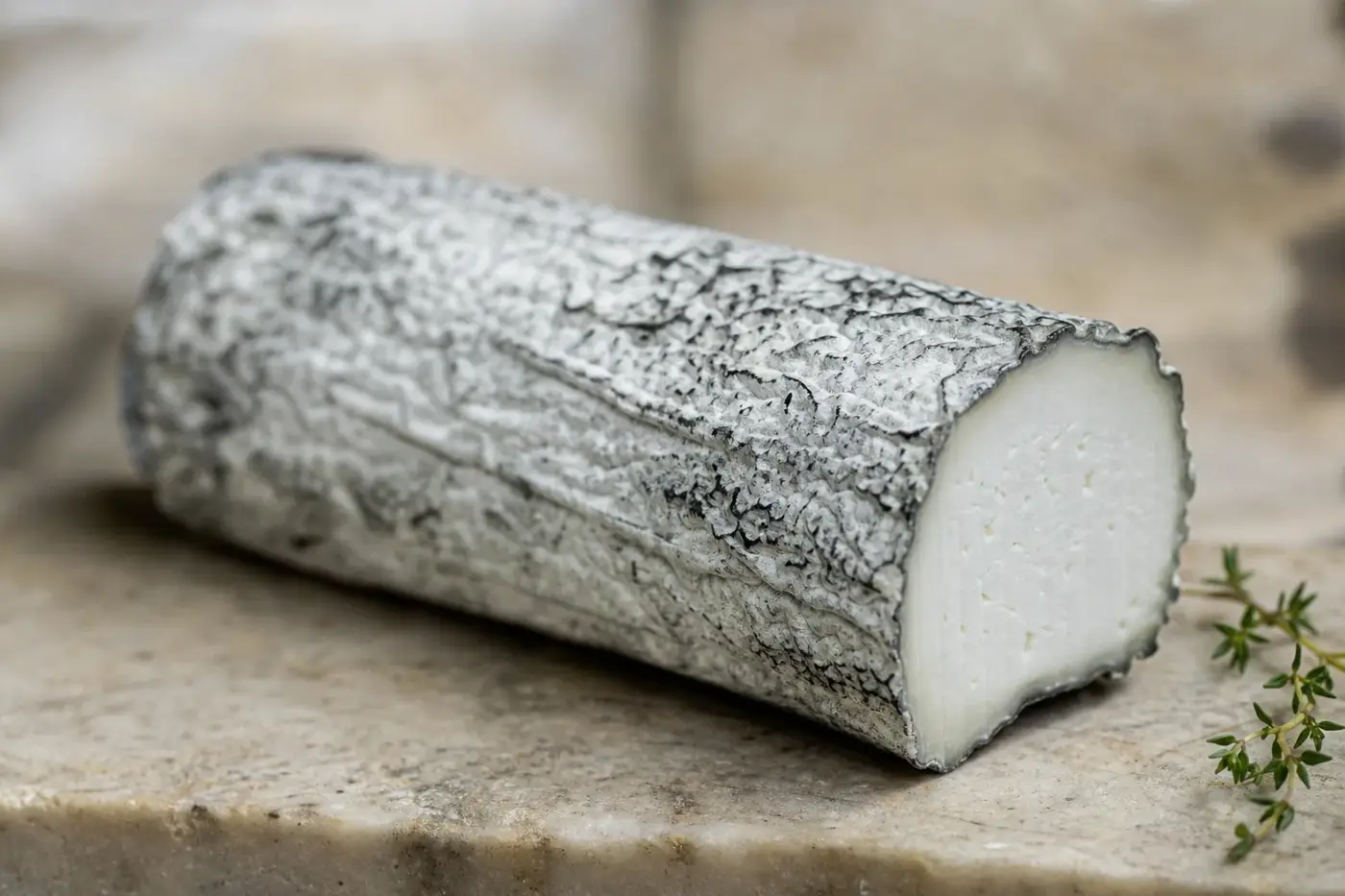
Cut through a Sainte-Maure de Touraine and follow the straw to its white to ivory heart. Beneath the ash-coated rind and visible surface flora, the cheese may be supple or, with age, drier and crumbly. An INAO specification proposal describes these changes: your first glimpse of a region where shape and maturity have plenty to say.[4]
Along the Loire and its tributaries, goat’s milk links the small cylinder of Chavignol, the long log of Sainte-Maure de Touraine and the pyramids of Valençay and Pouligny-Saint-Pierre. Olivet cendré and Curé Nantais bring cow’s milk traditions to the table. You have several ways into this landscape, and none requires you to choose a favourite immediately.[1][2][3][4]
Find your way along the Loire
Begin in Touraine and Berry, then follow the adjoining countryside west towards Nantes and the Atlantic coast. You are tracing related cheese traditions, not a single legally defined production area. Each of the five goat’s milk appellations featured here has geographical boundaries of its own.[1][2][3]
Those boundaries make the landscape more personal. Chavignol belongs to the Sancerrois, in Berry; Pouligny-Saint-Pierre sits in western Indre, where Berry meets Touraine. Sainte-Maure de Touraine belongs with Touraine, while the regional agriculture authority’s map shows how the five appellation areas sit alongside and overlap one another.[1][2][3]
“Central France” might also send you towards Auvergne. For its mountain cheeses, turn to the separate Auvergne regional guide. Here, follow the Loire corridor and the smaller goat’s cheeses that give Touraine and Berry their distinctive identity.
Take three questions to the counter: where was it made, what shape did the maker give it, and how far has it matured? Together, they tell you much more than chèvre, which simply means goat. They help you choose one cheese with confidence, or put together a comparison worth taking your time over.
Meet the farm behind the cheese
Picture goats, vineyards and cereals sharing a working landscape. INAO describes the traditional Chavignol farm as a mixed enterprise combining all three. Cheese belonged among the holding’s other products, part of the farm’s daily business rather than a world of its own.[2]
For Sainte-Maure de Touraine, an INAO specification proposal describes an originally domestic cheese made on a plateau with soils of limited agricultural potential. It links the elongated shape to a former woven mould. Farming and equipment help explain what you see on the counter; the proposal provides historical context, not an account of current production requirements.[4]
This everyday agricultural story explains more than a dramatic founding legend. One army, migration or historical encounter introducing goats cannot, alone, account for centuries of breeding, feeding, milk handling and cheesemaking. Mixed farming has firmer support in this article’s evidence than any single founding episode.
Keep the map beside that farming story. Neighbouring cheese areas do not necessarily share identical conditions, and each name takes you somewhere particular. Their closeness makes comparison rewarding, but does not make them interchangeable examples of “Loire goat’s cheese”.[1]
Five protected names to take to the counter
Sainte-Maure de Touraine, Crottin de Chavignol or Chavignol, Selles-sur-Cher, Valençay and Pouligny-Saint-Pierre make up the familiar group. The Centre-Val de Loire agriculture authority maps these five goat’s milk AOP areas together. Once you know their names, the cheese counter begins to feel less like an examination.[1]
AOP stands for appellation d’origine protégée, the French expression for protected designation of origin. In the EU, a PDO ties a product’s characteristics to a defined geographical area and requires its production steps to happen there under its specification.[10] A similar cheese made outside that specification is not the same protected product; INAO’s individual records connect these named cheeses with their territories and specifications.[2][3][5]
Look for the full name first, then the maker’s details and milk declaration. A pyramid, grey rind or small cylindrical mould offers clues, but the label tells you which product you are buying. For the wider distinction between a geographical indication and a cheese style, visit the guide to protected names.
Keep this table beside the INAO descriptions, rather than treating it as a substitute for individual specifications. Where a detail remains open here, turn to the full production requirements.
| Cheese to look for | Shape described by INAO | Milk in the description | Minimum maturation established here |
|---|---|---|---|
| Sainte-Maure de Touraine | Tapered log, ash-coated rind | Whole raw goat’s milk | |
| Crottin de Chavignol or Chavignol | Small, slightly rounded cylinder | Whole raw goat’s milk | 10 days |
| Pouligny-Saint-Pierre | Truncated pyramid | 10 days |
Sources: INAO product records and the Sainte-Maure de Touraine specification proposal, retrieved November 2026.[2][3][4] Read the Sainte-Maure document as a proposal, rather than as authority for current production requirements.
Sainte-Maure de Touraine: look beneath the rind
You are unlikely to mistake that long silhouette. INAO’s published specification proposal describes a tapered log with an identifying straw running through it, visible surface flora and an ash-coated rind. Inside, the white to ivory paste has a fine, even texture.[4]
The document describes a lactic flavour, dried-fruit aromas and vegetal notes such as hay. It traces a change from an initially supple, sometimes slightly moist texture to a drier, occasionally crumbly interior. Maturity changes the whole experience, not merely the volume of the flavour.[4]
Ask something more useful than “Is it strong?” Find out whether this particular log is still yielding or has become firm and friable. If it is being cut, ask to see the cut face: the interior can tell you what the rind cannot.
On your board, Sainte-Maure de Touraine’s elongated shape lends itself to slices. Keep its label until serving, especially when several similar-looking goat’s cheeses share the table. The silhouette helps you recognise it; the name beside it keeps your comparison clear.
Chavignol and Selles-sur-Cher: make room for both
Chavignol is the little cylinder with slightly rounded sides. INAO describes a fine rind carrying white or bluish surface growth. Its home is the Sancerrois, around Sancerre and the village of Chavignol.[2]
That small shape holds plenty of scope for change. INAO lists demi-sec, bleuté, bleu, sec and repassé among the forms in which Chavignol is sold. The last involves maturation in a confined atmosphere, producing stronger aromas according to INAO.[2]
Ask which stage you are buying and what texture you should expect inside. Two Chavignols at different maturities can teach you more than several unrelated cheeses. You begin with a shared name, then discover how differently each mouthful behaves.
Selles-sur-Cher is an ash-coated disc, rather than Chavignol’s small cylinder. The regional agriculture authority records it as a separate appellation with its own mapped area.[1] If you buy both, keep their labels and ask for the maker’s description of each cheese’s condition: name, form and present maturity all deserve attention.
Two pyramids with different stories
Set the shapes side by side: Pouligny-Saint-Pierre rises taller and narrower, while Valençay forms a shorter, broader truncated pyramid. It is a lovely place to begin a comparison. You will still want to ask about rind treatment and maturity, because an outline only tells part of the story.
Pouligny-Saint-Pierre’s INAO record explicitly identifies its mould as a truncated pyramid. It records hand-ladling and a minimum maturation of 10 days. The appellation lies in western Indre, at the boundary of Touraine and Berry.[3]
Then there is the story of the village church tower inspiring the shape. The same INAO record presents this as a tradition, using conditional wording. Enjoy the architectural suggestion, while keeping the distinction clear: the pyramid is documented; its inspiration remains a reported story.[3]
Compare labelled Valençay and Pouligny-Saint-Pierre, asking about the rind treatments and stages of maturity in front of you. Their outlines make an inviting introduction. The next questions bring you closer to what you will actually taste.
Include both on a tasting board when comparison is your purpose. Otherwise, leave room for a different milk or maturation style. Your cheese board is not obliged to complete a pyramid collection.
Tell your cheesemonger how you like it
Age can transform these small cheeses. A younger example can taste fresh and delicate; further maturation can bring firmness and more concentrated flavour, depending on the cheese and its care. Sainte-Maure’s description records drying and increasing friability, while Chavignol’s record sets out distinct maturation stages and stronger aromas in its repassé form.[2][4]
Give your cheesemonger a texture to aim for. “Yielding enough to spread”, “firm enough to slice” and “dry enough to crumble” are practical requests. Each says more about what you want than simply asking for the oldest cheese available.
For your first comparison, choose one relatively young cheese and one more developed example with the same name. Taste them before adding bread or fruit. Pay attention to resistance, moisture and finish, allowing each difference to register before you take another mouthful.
This is maturation made tangible, with your own palate doing the work. For a broader starting point, the guide to cheese styles helps separate the effects of milk, rind and method. Return to age afterwards, with a clearer sense of what else shapes the cheese.
Follow cow’s milk westwards
Goat’s milk does not tell the whole regional story. Olivet cendré and Curé Nantais bring two cow’s milk traditions into view. One is associated with Olivet, the other with the Nantes area, giving you more countryside and more cheeses to explore.
Fromagerie Jacquin currently lists a product named Petit Olivet Cendré. Its product page offers little descriptive information, so turn to the maker’s current label and technical information for the details. Let the name begin your enquiry, rather than answer every question.[6]
Curé Nantais takes you west to Pornic, where the producer gives its address. The producer’s manufacturing account describes calf rennet, copper vats, cutting the curd and repeated turning before unmoulding. These details bring the work of making the cheese into focus.[7][8]
Choose a cow’s milk cheese for contrast, rather than another name to tick off. Ask for one whose texture and rind differ from the goat’s cheeses you have already selected. Keep the conversation centred on the actual product available: a regional name cannot tell you everything.
Bring it home in good condition
Start with the day you intend to eat your cheese. Ask about the maker, milk treatment and present texture, then keep the label or the cheesemonger’s written identification. This is particularly useful when several small cheeses have pale or grey rinds.
Judge appearance against the description of that particular cheese. INAO records white or bluish growth on Chavignol and an ash-coated surface on Sainte-Maure de Touraine.[2][4] If an unfamiliar change appears, consult the seller or relevant official guidance rather than inventing a trimming rule; mould on cheese addresses that separate question.
If you follow Food Standards Agency guidance applicable to England, Northern Ireland and Wales, keep your fridge between 0 and 5 °C. Follow the packaging’s storage instructions and dates, and keep chilled food out for the shortest possible time. The cited guidance gives a maximum of four hours outside refrigeration during preparation.[9]
Serve the portion you intend to eat, rather than putting out the whole purchase. Follow that same time limit when letting cheese lose its refrigerator chill. For wrapping and refrigerator organisation, turn to storing cheese at home.
Set a board worth taking your time over
Begin with three contrasts: a relatively young goat’s cheese, a more developed Chavignol and a cow’s milk cheese chosen with its product details in hand. Add Sainte-Maure de Touraine when its slicing format brings something useful. A good evening does not depend on representing every appellation.
Keep the accompaniments simple: plain bread, slices of pear or apple, and water. Taste each cheese alone first, then introduce one accompaniment at a time. Give yourself room to notice the differences and decide what you enjoy.
For adults who choose wine, a Loire white makes a sensible regional starting point to discuss with a wine merchant. Ask for a dry Sauvignon-based wine for the younger goat’s cheese, or a Chenin-based white to compare with the more developed selection. Treat these as suggested pairings, not results of a site pairing trial; wine and cheese appellation boundaries do not necessarily coincide.
Offer alcohol-free choices too: sparkling water, unsweetened tea or diluted apple juice, with small servings for wine. People who are pregnant, driving, taking medicines that interact with alcohol or recovering from alcohol dependence should not drink. Check NHS guidance for the UK or equivalent official guidance where you live.[11] To make your next comparison more deliberate, continue with cheese and wine pairing.
General information only, not medical advice: follow the official guidance where you live.
Questions people ask
What does AOP mean on a cheese label?
AOP stands for appellation d’origine protégée, the French expression for protected designation of origin. In the EU, a PDO links a product’s characteristics to a defined geographical area and requires its production steps to take place there under its specification.
Where does Chavignol come from?
Chavignol comes from the Sancerrois in Berry, around Sancerre and the village of Chavignol. It is a small, slightly rounded cylinder with a fine rind that can carry white or bluish surface growth.
How does Chavignol change as it matures?
INAO lists several stages in which Chavignol is sold, including demi-sec, bleuté, bleu, sec and repassé. Repassé is matured in a confined atmosphere and has stronger aromas, according to INAO.
What shape is Valençay?
Valençay is a short, broad truncated pyramid. Another goat’s cheese from western Indre has a taller, narrower pyramid shape.
How should I store cheese in the fridge?
For England, Northern Ireland and Wales, the Food Standards Agency advises keeping the fridge between 0 and 5 °C and following the packaging’s storage instructions and dates. Its guidance says chilled food should be kept out for the shortest possible time, with a maximum of four hours outside refrigeration during preparation; consult the current Food Standards Agency guidance.
Sources
- DRAAF Centre-Val de Loire, Mémento 2023, “Les productions animales” and the map “Les aires des AOP fromages de chèvre”, 2023. Establishes the mapped regional group of five appellations.
- INAO, Chavignol, undated product record, retrieved November 2026. Covers milk, shape, rind, Sancerrois association, mixed farming, maturation stages and the stated 10-day minimum.
- INAO, Pouligny-Saint-Pierre, undated product record, retrieved November 2026. Covers western Indre, hand-ladling, the truncated-pyramid mould, the stated 10-day minimum and the conditional church-tower tradition.
- INAO, Document unique, Sainte-Maure-de-Touraine, specification proposal, retrieved November 2026. Used for its published product description, not as verification of the current binding specification. Related proposed specification, version 5 October 2011, supplies the agricultural account.
- INAO, official website, “Tout savoir sur les signes officiels d’identification de la qualité et de l’origine”, retrieved November 2026. Gives the expanded French term AOP.
- Fromagerie Jacquin, Petit Olivet Cendré, undated product page, retrieved November 2026. Confirms the named product listing.
- Le Curé Nantais, La fabrication du Curé Nantais, undated producer account, retrieved November 2026. Describes the manufacturing steps attributed above.
- Le Curé Nantais, Plan d’accès à la fromagerie, undated producer page, retrieved November 2026. Gives the Pornic address.
- Food Standards Agency, How to chill, freeze and defrost food safely, published 18 December 2017, retrieved November 2026. Applies to England, Northern Ireland and Wales; gives refrigerator temperatures, label-following advice and the maximum preparation period outside refrigeration.
Research used official regional agricultural material, retrieved INAO descriptions, producer publications and attributed Food Standards Agency guidance; no visit, tasting or pairing trial was undertaken.
Last checked: November 2026
Last checked November 2026.
The editors suggest you read next

French Cheese: The Complete Guide
Picture Normandy’s pastures, then follow the milk towards the Loire’s goat dairies, the Jura’s shared cheesemaking traditions and the sheep country of the Pyrenees.


