Your spoon slips through the soft cream layer of a tiramisù. That generous, yielding richness is mascarpone doing its quiet work, giving the dessert body without the pronounced flavour of an aged cheese. It begins with fresh cream, heat and acid, followed by separation from its whey: a simple route to a mild, exceptionally rich Italian cheese that is just as comfortable in a smooth savoury sauce.[1][2][3]
| Mascarpone at a glance | What to know |
|---|---|
| Familiar name | Mascarpone.[1] |
| Traditional home | Lombardy and the Po plain, particularly the province of Lodi: its customary association.[1][2] |
| Milk and main ingredient | Cow’s milk cream; some products contain milk too.[3][4] |
| How it thickens | Heat and acid, commonly citric acid in the documented examples.[1][3] |
| Colour and feel | White to ivory or pale yellow; smooth, soft and spreadable, without a developed rind.[1][5] |
| Age | Fresh, uncured cheese.[6] |
| One product’s fat content | Galbani Santa Lucia: 39 g fat per 100 g. This is a product figure, not a universal specification.[4] |
Richness without the grand entrance
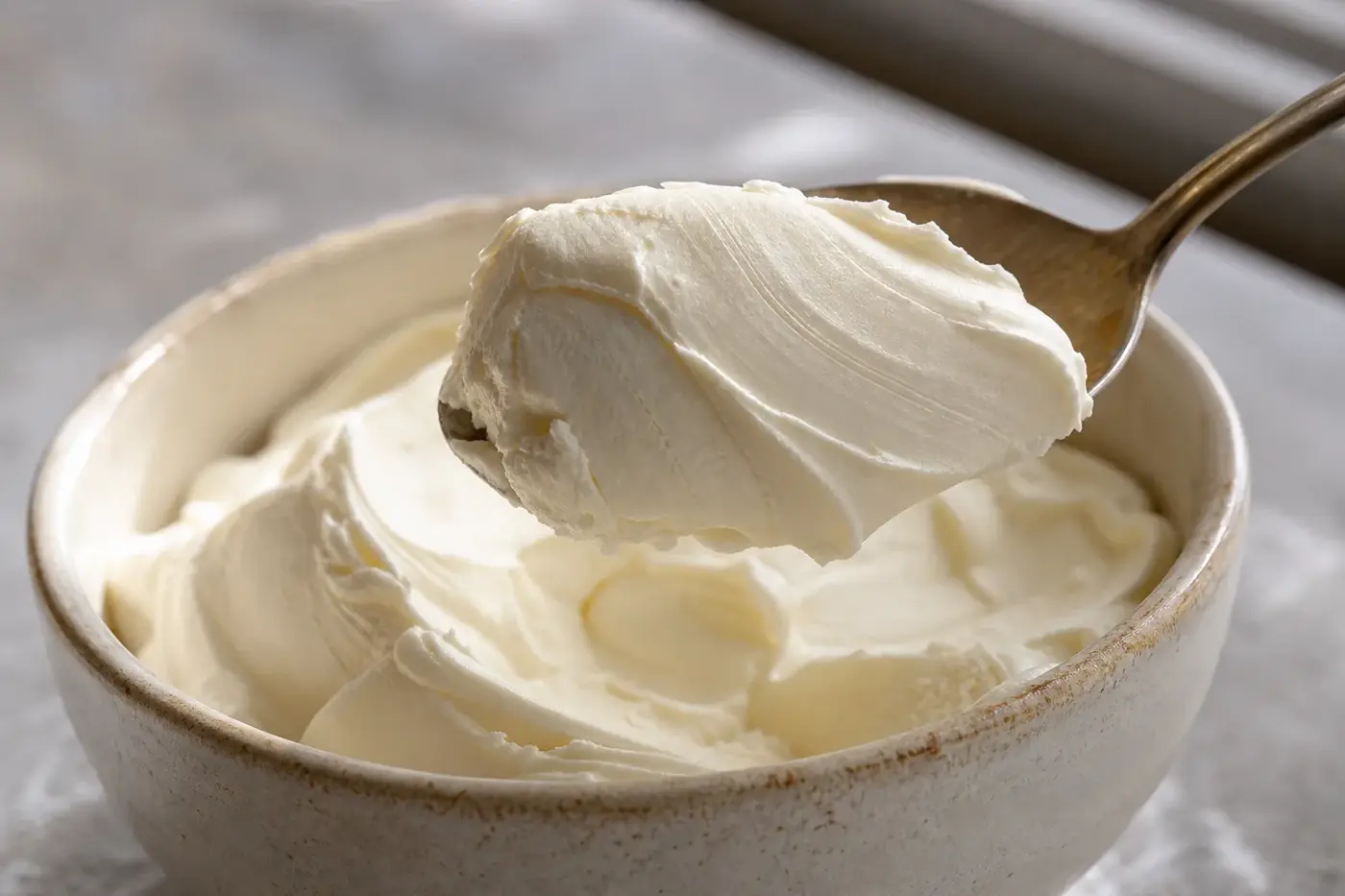
Spoon mascarpone into a chilled dessert and it holds its shape. Warm it gradually in a sauce and it blends in. Somewhere between thick cream and soft cheese, it gives you substance without insisting that everything taste emphatically of cheese.
Lactalis describes its professional product as smooth and homogeneous, with enough body for whipped preparations. Its British foodservice literature recommends gradual heating to maintain stability. Those qualities give you plenty of room to move between sweet and savoury cooking.[5][7]
In desserts, mascarpone provides substance beneath whipped cream or other aerated ingredients. In cooking, it brings thickness and rounded dairy flavour, not mozzarella’s stretch. Think texture as much as taste: this is richness that does not need a solo.[5][7]
For the wider distinctions between fresh, stretched and ripened cheeses, see how to tell cheese styles apart.
Follow the cream to the fields south of Milan
Mascarpone belongs traditionally to the cattle-farming country south of Milan. Regione Lombardia’s account of crema lodigiana identifies Lodi, placing the cheese in an agricultural area long devoted to cattle raising. Its traditional-products record locates mascarpone artigianale in the Po plain, particularly the province of Lodi.[1][2]
The story begins with cream separated from milk. The regional account describes heating and acidifying it, then, historically, draining it slowly on mats and packing it in gauze. You can follow the cheese’s rich character straight back to that starting ingredient.[2]
Here, mascarpone sits within a local dairy economy alongside products made from other fractions of milk. The regional record gives you something more grounded than an elaborate invention story: an inheritance of handling cream and turning it into fresh, delicate cheese. Ingredient, process and place are closely bound together.[1][2]
How cream becomes something spoonable
Heat and acid do the essential work. Together, they bring milk proteins into a thicker mass, a process called coagulation. For mascarpone, you start with cream rather than simply a vat of whole milk; whey is the liquid separated during cheesemaking.[1][3]
The traditional Lombard description uses cream and citric acid, with heating followed by whey separation and cooling. Regione Lombardia also describes centrifugation to remove whey in industrial production. A Granarolo technical sheet records pasteurised cream, pasteurised milk and citric acid, followed by homogenisation and packing.[1][2][3]
Cream connects these accounts, even where the formulations and equipment differ. The underlying approach remains recognisable without every tub having to be identical. If you want to make mascarpone at home, you still need a practical method with appropriate controls, rather than this outline alone.
Many other cheeses use rennet, an enzyme preparation that coagulates milk, rather than the documented mascarpone process. Read how cheese is made for the broader sequence.
A pale cheese with plenty to notice
Expect a pale cheese, rather than a bright yellow one. Lombardy’s traditional-products description records white tending towards yellow; Lactalis describes ivory to white, with a smooth, uniform consistency. You are looking at a fresh mass of cheese, without the developed rind of a matured wheel.[1][5][6]
Its flavour is gentle, but the producer descriptions offer useful clues for your first spoonful. Granarolo describes fresh cream. Totem Food records fresh-milk aromas with cream and butter notes, while Lactalis describes a lightly caramelised, cooked-milk character in its professional mascarpone, attributed to double heating.[3][5][8]
Notice those small contrasts: fresh cream or cooked milk, firmness or softness, smoothness and a little acidity. Lombardy’s traditional description specifically includes a slightly acidulous quality. Mild does not mean featureless; you may find a delicate tang among all that richness.[1]
Similar tubs, different kitchen talents
Mascarpone, ricotta, cream cheese and crème fraîche can look like neighbours on the shelf. Once you start cooking, their starting materials and processing matter rather more than their shared pale appearance. Before you swap, get to know what each ingredient brings to your dish.
| Ingredient | How it is made | What that means for you |
|---|---|---|
| Mascarpone | Cream thickened by heat and acid, with whey separation.[1][2] | Choose it when you want a smooth, substantial cream-based component. |
| Ricotta | Traditionally made by reheating whey and collecting the coagulated proteins.[9] | Expect a different structure from cream-based mascarpone. |
| Cream cheese | Formulations vary. British Philadelphia Original contains soft cheese, salt, guar gum and citric acid.[10] | Check the salt, fat and ingredients before making a swap. |
| Cultured crème fraîche | Cream thickened and flavoured by lactic cultures, as documented by Isigny Sainte-Mère.[11] | Allow for cultured acidity and a different flavour balance. |
Desserts make these differences especially noticeable. The cited mascarpone contains 39 g fat per 100 g; the cited British cream cheese contains 21 g per 100 g and added salt. Those figures describe two named products, not their entire categories, but they show why a straight swap can alter both richness and seasoning.[4][10]
If your filling needs a particular firmness, choose a recipe written for the ingredient you have. A matching colour cannot promise a matching texture. You will get further by understanding what is in the tub than by hoping it will impersonate its neighbour.
Tiramisù is only the beginning
In tiramisù, mascarpone does more than taste rich. Galbani describes its mascarpone as firm enough to support the dessert while keeping a soft consistency. That familiar cream layer gets its substance without losing the yielding texture you want beneath your spoon.[12]
Beyond tiramisù, there is a whole sweet kitchen to explore. Galbani’s published preparations pair mascarpone with whipped cream and berries, use it as a cake filling, combine it with chocolate, or flavour it with citrus zest or vanilla. Its product guidance also suggests serving it instead of cream alongside a dessert.[13][14]
For a simple serving, put a small spoonful beside fruit and let the contrast with that dense dairy texture do the work. If you want a lighter preparation, follow a complete mascarpone-and-whipped-cream recipe. Mascarpone supplies body; it is not whipping cream wearing a different label.[13]
Lombardy’s regional account also records mascarpone cream served alongside panettone. Its place in the local dessert tradition therefore stretches beyond tiramisù. The same rich ingredient has another familiar sweet companion, and another reason to come to the table.[2]
A softer finish for pasta and risotto
Mascarpone can enrich savoury food without bringing the strong flavour of aged cheese. Galbani recommends it instead of cream for finishing first courses. Its foodservice literature describes a relatively neutral flavour and the ability to thicken a mixture.[4][7]
For pasta, make mascarpone part of the sauce rather than its whole identity. Add a little, combine thoroughly, then judge the texture before adding more. You should still recognise the vegetable, herb or other principal ingredient, with richness and body surrounding it.
Take the same restrained approach to risotto. You want to enrich the rice while preserving the character of the stock and other ingredients. Galbani recommends mascarpone for mantecatura, the final working-in of fat that creates a cohesive texture.[4]
You can also serve it alongside savoury dishes or use it to enrich a sauce. Follow Lactalis’s professional handling advice and warm it gradually, rather than exposing it to fierce heat. Give it time to blend so you get the smooth finish you are after.[7]
Put down the whisk before you overdo it
For cold preparations, a gentle hand matters. Galbani’s mascarpone-and-cream guidance recommends very cold whipping cream and delicate upward folding movements. It identifies excessive working and overly warm mascarpone as possible reasons for a mixture becoming loose.[13]
When your recipe directs, whip the cream separately, then bring the components together with a spatula. Stop as soon as they are evenly combined. More beating is not a dependable route to a firmer filling; this is a job for careful folding.[13]
Warm dishes call for a gradual approach too. Heat gently and stir enough to distribute the mascarpone throughout the mixture. This follows Lactalis’s guidance for maintaining stability during heating, rather than relying on a sudden blast of high heat.[7]
Keep preparation purposeful, rather than leaving the tub on the worktop. FSA guidance for England, Wales and Northern Ireland says chilled food should spend the shortest possible time outside refrigeration during preparation. The maximum is four hours.[15]
Read the tub, then make room in the fridge
Start with the label, not the name alone. Some mascarpone contains milk as well as cream, and the ingredient list, stated milk treatment and storage instructions help you distinguish one product from another. How to read a cheese label explains what to look for.[3][4]
FSA guidance for England, Wales and Northern Ireland recommends a fridge temperature between 0 and 5 °C. If your product gives a stricter instruction, follow it. The Italian Santa Lucia product page, for example, specifies a maximum of 4 °C.[4][15]
After opening the tub, follow the pack’s instructions and record when you opened it. The FSA advises following packaging instructions, including those for opened food. Keeping track of that opening date belongs alongside keeping the cheese cold.[16]
A use-by date concerns safety; a best-before date concerns quality. Poor storage can make food unsafe even before its use-by date, so read the date and storage instructions together. For the wider routine, see how to store cheese at home.[16]
When it is time to discard the tub
If your mascarpone develops mould, discard it. The FSA’s published natural-toxins guidance says cheese that is not intended to be mouldy should not be eaten once mould grows on it. With this fresh cheese, cutting away the visible patch is not the answer.[17]
The same guidance advises discarding food that no longer smells fresh or has become discoloured. Follow any recall instructions affecting your product, too. In the UK, GOV.UK advises against eating, cooking or freezing food after its use by date.[16][17]
A reassuring appearance does not override that date or the storage instructions.[16][17] For the distinction between unwanted mould and intentionally mould-ripened cheeses, read when to cut mould away and when to bin cheese.
General information only, not medical advice: follow the official guidance where you live.
Questions people ask
What is mascarpone made from?
Mascarpone starts with cow’s milk cream, which is thickened using heat and acid before the whey is separated. Some products also contain milk.
Is mascarpone the same as ricotta?
No. Mascarpone is made from cream, while ricotta is traditionally made by reheating whey and collecting the coagulated proteins.
Why is mascarpone used in tiramisù?
Mascarpone gives the cream layer richness and substance. Galbani describes its mascarpone as firm enough to support the dessert while retaining a soft consistency.
How should mascarpone be stored?
The FSA recommends keeping the fridge between 0 and 5 °C in England, Wales and Northern Ireland. Follow any stricter storage instruction on the pack, and see the FSA’s food storage guidance.
Can I cut mould off mascarpone and eat the rest?
The FSA advises that cheese not intended to be mouldy should not be eaten once mould grows on it. See the FSA’s natural toxins guidance.
Sources
- Regione Lombardia, Bollettino Ufficiale, Serie Ordinaria n. 49, 2 December 2024, traditional-products entry “Mascarpone artigianale”, p. 154. The document’s displayed edition is used here, despite the older date embedded in its URL.
- Regione Lombardia, Buona Lombardia, Crema Lodigiana, undated regional culinary record, sections on geographical association, traditional service and mascarpone production.
- Granarolo, Technical product sheet: Mascarpone “Granarolo” 500g Export, code 208 R14, issued 6 February 2017, hosted by Alivini. Historical technical example, not evidence of every current Granarolo product.
- Galbani, Mascarpone Santa Lucia, current Italian product page, undated, retrieved November 2026.
- Lactalis Foodservice, Mascarpone, pot 500gr, current professional product description, undated, retrieved November 2026.
- Food Standards Agency, Food Standards Agency Codes: Mascarpone, A02QH, current classification record, retrieved November 2026.
- Lactalis Professional, Galbani cheese trade folder, file hosted in August 2022, mascarpone section.
- Totem Food, Mascarpone surgelato, undated technical sheet, organoleptic characteristics. Only its attributed sensory description is used.
- Galbani UK, Ricotta, undated producer explanation of whey-based manufacture, retrieved November 2026.
- Philadelphia, Philadelphia Original, British product page, ingredients and nutrition per 100 g, retrieved November 2026.
- Isigny Sainte-Mère, Our creams, undated producer account, “The production secrets” section on cream separation, pasteurisation and lactic-culture inoculation.
- Galbani Switzerland, Mascarpone 500g Galbani, undated product description of texture and use in tiramisù.
- Galbani, Crema panna e mascarpone, undated producer recipe and handling guidance, retrieved November 2026. This is a commercially interested producer source.
- Galbani UK, Mascarpone, undated product and culinary-use description, retrieved November 2026.
- Food Standards Agency, How to chill, freeze and defrost food safely, published 18 December 2017, current GOV.UK version applying to England, Northern Ireland and Wales, retrieved November 2026.
- GOV.UK, Understanding food labelling: Best before and use-by dates, current guidance, retrieved November 2026.
- Food Standards Agency, Natural toxins, factsheet FSA/0486/0302, 2002, sections “Mouldy foods” and “Avoiding natural toxins”. This older guidance requires current specialist confirmation before publication.
This desk-researched article brings together Lombardy’s regional records, documented producer processes and handling guidance, product ingredient information and official food-storage advice.
Last checked: November 2026
Last checked November 2026.
The editors suggest you read next
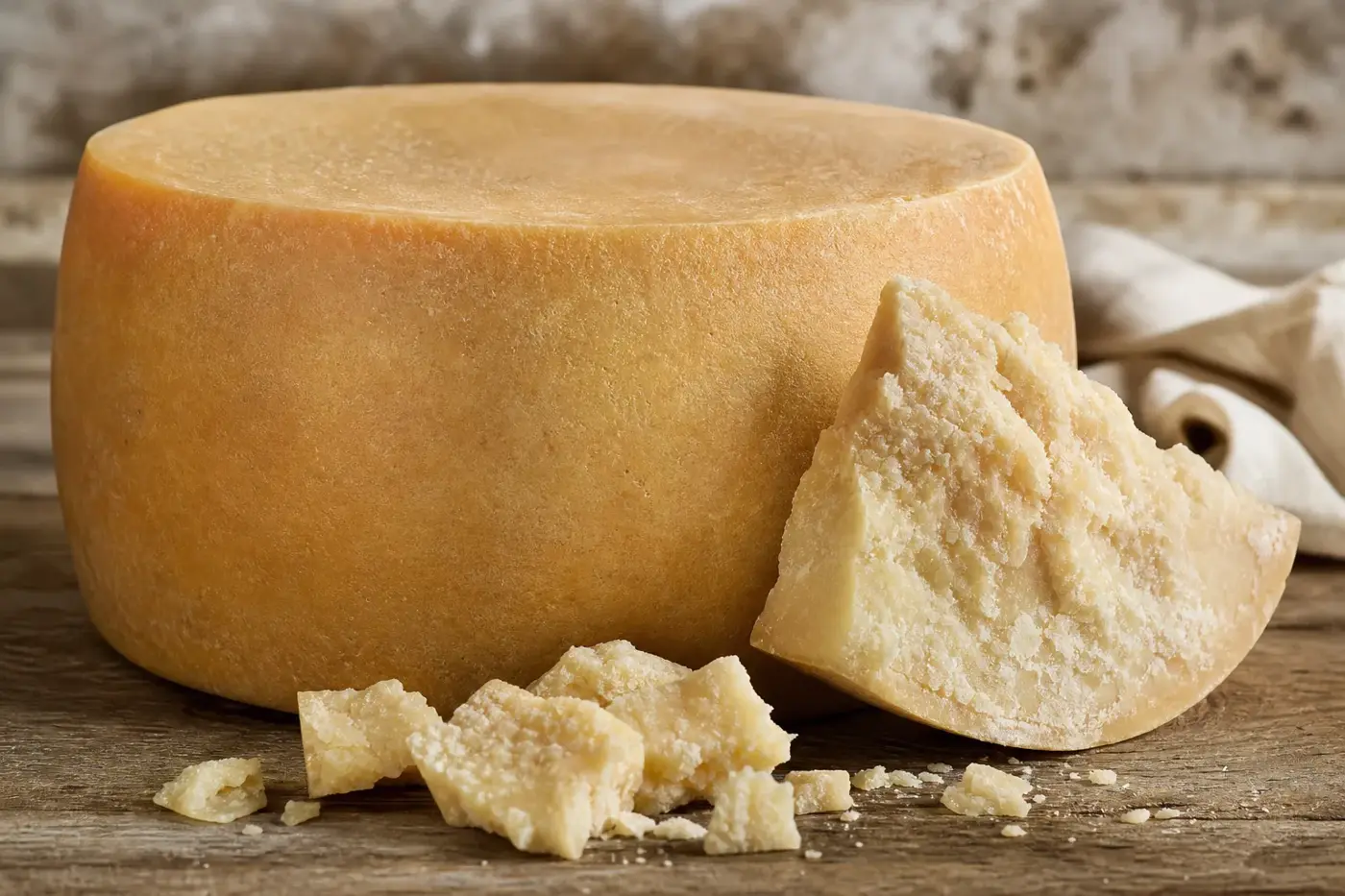
Parmigiano Reggiano
Break into a wheel of Parmigiano Reggiano and flakes fall away, revealing a finely granular cheese, pale straw to straw in colour.