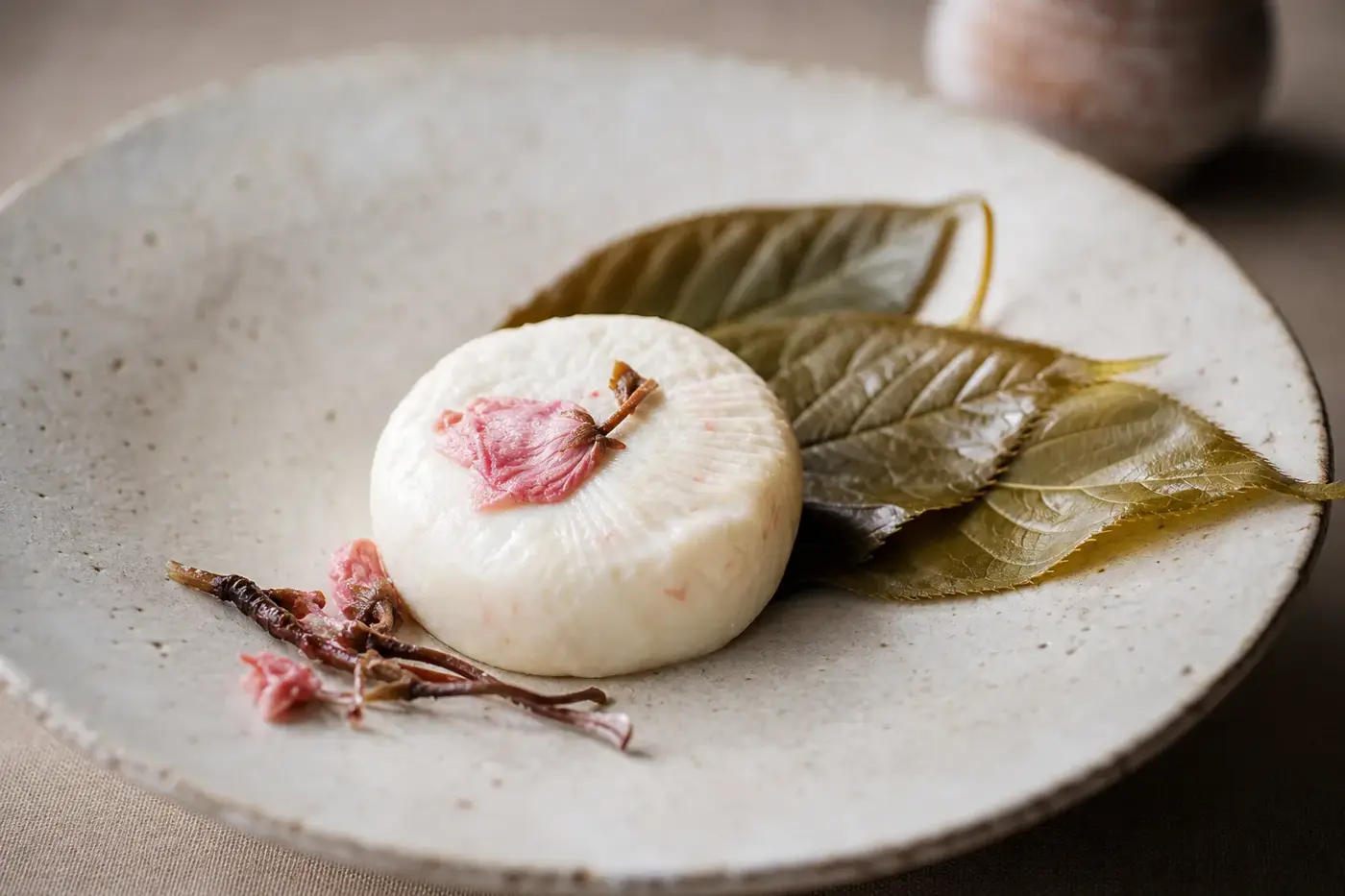
First comes the scent of cherry leaves. At Kyodogakusha Shintoku Farm in Hokkaido, they perfume Sakura, a small cheese accompanied by salted cherry blossom. The same farm makes raclette from its own milk; further south, Nagano’s Atelier de Fromage makes fresh, white-rind and blue cheeses. Your tasting list is already getting longer. [1][2][3][12]
Follow these makers and you find regional dairying meeting imported techniques and local ingredients. Each takes a different route, with cheeses increasingly at home in everyday cooking. There is far more to discover here than one national style. [1][2][3][12]
| Japan at a glance | Your starting points |
|---|---|
| Where to explore | Japan, including the production areas of Hokkaido and Nagano. [1][3] |
| What the legal categories mean | Natural cheese and processed cheese are separately defined under Article 2 of the national dairy standards order. [4] |
| Hokkaido’s share of the milk | 4,315,009 tonnes of Japan’s 7,418,222 tonnes in calendar year 2025, approximately 58.2%. [5] |
| A taste of dairy history | So, 蘇, documented in court-related records and generally interpreted as concentrated milk. [6][7] |
Follow the milk to Hokkaido
To understand Hokkaido’s cheese, start with its milk. The island produced approximately 58.2% of Japan’s raw milk in calendar year 2025, according to the agriculture ministry’s final statistics, published in July 2026. That figure covers milk for all uses, not cheese alone, but it gives you a sense of the dairy foundations beneath the island’s cheesemakers. [5]
Now head to Shintoku, in Tokachi. Kyodogakusha Shintoku Farm makes cheese from its own Brown Swiss cattle’s milk. Its published account takes you from a gravity-fed milk supply to maturing rooms built with Sapporo soft stone. These choices about herd, handling and maturation belong to this farm, rather than serving as a recipe for the whole region. [1]
The range runs from fresh fromage blanc to white-rind cheeses and raclette. Milking, cheese making and maturation come together in one operation, but the results take several forms. For further discoveries, follow the locations and workshops in Milkland Hokkaido’s producer directory. “Hokkaido cheese” is an invitation to explore, not the name of a single product. [1][8]
For your first tasting, choose contrasting methods. A fresh cheese, a white-rind cheese and a firmer cheese intended for melting tell you more than three versions of the same style, however different they look. The guide to cheese styles helps you put words to what you find.
So: a milk trail to the court
Long before Japan’s modern cheese industry, dairy foods travelled from different places to the court. The agriculture ministry’s traditional-food account identifies so in the Engishiki, a court administrative compilation, and the Seiji yōryaku, a collection concerning government practice. Together, these records help you trace the story of that supply system. [6]
You will often see so called “ancient Japanese cheese”. A more cautious description is a concentrated milk food, whose precise historical form remains open to interpretation. A 1988 scholarly examination of Japanese and Chinese texts discusses an instruction to heat ten measures of milk to obtain one measure of so. [7]
That sounds straightforward until you picture the equipment, temperature and other conditions needed. The texts leave those details incomplete, so exact reconstruction is difficult. Prolonged heating to reduce milk also begins quite differently from coagulating milk and draining whey, the liquid separated from the curd. [4][7]
A modern reconstruction can offer you a plausible result, not a final answer to those missing production details. Yet so has a modern chapter: the agriculture ministry records its commercial revival by Nishii Farm in Nara in 1987. Historical interpretation meets contemporary dairy production here, while its courtly origins remain distinct from cheese’s much later arrival in everyday Japanese life. [6][7]
From early experiments to everyday favourites
The modern story takes you to Hokkaido’s Nanae development farm in 1875, during the Meiji period. According to Megmilk Snow Brand’s historical account, Western-style cheese production there included instruction in Cheddar manufacture. Agricultural experiments, followed by industrial change, helped put Japanese cheese making on its modern course. [9]
The company’s history records experimental brick cheese production by its predecessor organisation in 1928. Full-scale Gouda production followed at Toasa in 1933, then a processed cheese product launched in 1934. Across those dates, you can trace three distinct steps: learning methods, establishing production and creating a form suited to wider distribution. [9]
After the war, changing eating habits made more room for dairy. The agriculture ministry describes butter, cheese and yoghurt becoming established in daily life during rapid economic growth. Snow Brand’s account also connects cheese’s spread with pizza, cheesecake and growing interest in natural cheeses. [9][10]
You can still see these histories overlapping on the cheese counter. Large dairy businesses helped establish familiar packaged products; smaller workshops subsequently developed ranges around particular methods and milk supplies. Atelier de Fromage’s recorded growth in Nagano during the 1980s offers a clear example of that workshop-led expansion. [3]
Meet the makers beyond Hokkaido
Atelier de Fromage began in 1982 with a small workshop in what is now Tōmi, Nagano, following study in France. Its chronology records fresh fromage frais and Camembert that first year. Blue cheese arrived in 1989, followed by mozzarella and ricotta in 1996. [3]
Here is a repertoire built over time, rather than a single regional style. Fresh, white-rind, blue and Italian-style cheeses call for different decisions about manufacture and maturation. Read the maker’s story alongside the product name and you learn more than the prefecture alone can tell you. [3][11]
Nara’s revived so gives you a different kind of local dairy story. Here, the task is interpreting a historical food rather than adopting a familiar modern cheese method. Follow individual workshops, their documented products and milk sources, and a regional picture begins to emerge from the details, rather than the other way round. [3][6]
Let familiar cheese names open the door
Camembert, mozzarella and raclette give you a useful first clue. Japanese makers work within these recognisable families while choosing their own milk, formats, ripening methods and intended uses. Atelier de Fromage’s chronology and Kyodogakusha’s published range document all these styles in Japanese production. [1][3]
What happens to the milk tells you more about the cheese on your plate than nationality alone. A white-rind cheese develops through organisms growing on its surface. A fresh cheese takes another route and may be sold without extended maturation. The agriculture ministry’s cheese guide explains these differences alongside blue, washed-rind and firmer cheeses. [11]
Treat “Japanese cheese” as your starting point, then let style bring the picture into focus. With Camembert-style products, ask about ripeness and the character the maker intends. With mozzarella, find out whether it is primarily for eating fresh or for cooking.
For raclette, taste a piece before melting another portion. This simple comparison lets you get to know the individual cheese beyond its familiar name. It is also a respectable reason to have a second piece. For the broader stories behind these styles, see Camembert and mozzarella.
Sakura: pause for the cherry leaves
Return to Sakura and those local ingredients. The agriculture ministry describes this Kyodogakusha Shintoku Farm cheese from Hokkaido as a fresh cheese accompanied by salted cherry blossom and leaves. Hokuren’s account explains that contact with the leaves transfers their fragrance during a short maturation. [2][12]
Hokuren also describes an association with Japanese confectionery as part of Sakura’s appeal. Give yourself a moment with the first piece on its own, before fruit, bread or a drink joins in. How does that cherry-leaf aroma sit alongside the character of the milk? [12]
Local character can enter cheese making at several points. It may begin with the herd and milk supply, come from an ingredient against the surface, or develop through a liquid used during maturation. The agriculture ministry’s guide notes that washing a rind with a local alcoholic drink can express regional character. [1][11]
When you choose a cheese, ask how the ingredient is used. A leaf touching the surface, something mixed into the cheese and a rind washed during maturation produce different results. The ingredient name catches your eye; the method helps explain what you taste.
Read “natural” and “processed” with confidence
On a Japanese label, these words have precise legal meanings. Under Article 2, paragraphs 17 to 19, of the national order on milk and dairy-product standards, cheese comprises natural cheese and processed cheese. The definitions below are those of November 2026. [4]
Natural cheese includes products made by coagulating milk-derived materials and removing some whey, with or without maturation. Its definition also covers specified equivalent manufacturing technologies. Processed cheese is natural cheese that has been crushed, heated until melted and emulsified. [4]
This distinction describes manufacture, rather than passing judgement on your cheese. Natural cheese can be the principal starting material for processed cheese, and the natural category includes both fresh and matured products. Here, “natural” answers a technical question. It does not tell you everything about flavour or craftsmanship. [4]
Japan’s Agriculture & Livestock Industries Corporation highlights processed cheese’s consistency and keeping qualities. Its March 2026 overview reports that natural cheese consumption exceeded processed cheese consumption in fiscal year 2024, with imports contributing substantially. Both domestic production and cheeses brought into the country have a place in Japan’s cheese culture. [13]
Make room for snacks, gratin and pizza
You do not need a tasting board to make room for cheese. Japan’s official dairy overview describes it as a snack, a cooking ingredient and an accompaniment to drinks. Snow Brand’s history identifies pizza and cheesecake among the foods that helped make it part of daily life. [9][13]
To explore its everyday uses, separate three things: cheese eaten directly, cheese incorporated into a prepared food and cheese chosen for cooking. Packaged portions call for a different choice from a cut piece selected at a particular ripeness. With a convenience food containing cheese, read the whole product description, not just the cheese name.
At home, gratin or pizza gives you a useful way to compare cooking cheeses. Try one at a time and notice how it spreads, browns and contributes salt. These are ways to learn how a product behaves, rather than recipes with tested quantities or timings.
For a snack, keep the first bite simple. Taste a plain piece before adding a cracker or another accompaniment. That gives you a clearer starting point when you come to compare.
Set the table with sake, tea and curiosity
Give Japanese tea as much attention as an alcoholic pairing. Start with a small cheese selection and simple accompaniments, so you can keep the differences clear. The comparisons here are tasting suggestions rather than reported results.
Try a fresh cheese with sencha, then plain water. With a firmer cheese, compare hojicha and an unflavoured cracker. Taste Sakura alone first, then ask whether your drink preserves or obscures the cherry-leaf aroma described by its sources. [2][12]
For adults of legal drinking age, sake offers another line of comparison. Serve a small amount of one sake with two cheeses, rather than changing both cheese and drink each time. Notice whether each combination brings salt, acidity, sweetness or aroma forward, and offer tea and water alongside.
Make your notes concrete. Is the texture supple or crumbly, and does the rind have a distinct aroma? Does acidity arrive first, or salt linger afterwards? Record the maker and any stated age or date information: these details help you choose again more usefully than “mild” or “strong”.
This page summarises published guidance from the official sources it cites. It is not medical advice. Guidance differs between countries and changes over time, so check the current source for where you live, and ask your doctor, midwife, pharmacist or dietitian about your own circumstances.
Choose thoughtfully, then store with care
Start with the maker and the place of production. Kyodogakusha explicitly connects its cheeses with milk from cattle kept on the farm, giving you a more informative origin statement than a national description alone. For other products, ask separately where the cheese was made and where its milk originated. [1]
Look at the Japanese product category, ingredients and storage instructions. For cut cheese, ask about intended ripeness and handling after cutting; for cooking cheese, tell the seller your planned dish. The cheese label guide helps you organise those questions.
At home, follow the packaging’s storage instructions. The UK Food Standards Agency’s November 2026 guidance for England, Northern Ireland and Wales advises keeping a home fridge at 5 °C (41 °F) or below. It also recommends keeping chilled food outside refrigeration for the shortest possible time during preparation. [14]
After opening, follow that particular product’s instructions and take out only what you intend to serve. Different styles have different needs. For fuller guidance on wrapping and refrigeration, see storing cheese at home.
Questions people ask
What is so, the ancient Japanese dairy food?
So is generally understood as a concentrated milk food documented in court records. Its precise historical form remains open to interpretation because the surviving instructions leave production details unclear.
What is Sakura cheese?
Sakura is a fresh cheese made by Kyodogakusha Shintoku Farm in Hokkaido. It is accompanied by salted cherry blossom and leaves, which lend it their fragrance during a short maturation.
What is the difference between natural and processed cheese in Japan?
Japanese law defines natural cheese as including products made by coagulating milk materials and removing some whey, with or without maturation. Processed cheese is natural cheese that has been crushed, heated until melted and emulsified.
When did cheese making begin in Japan?
Western style cheese production at Hokkaido’s Nanae development farm dates to 1875, during the Meiji period. Instruction in Cheddar manufacture was part of that early work.
How should I store Japanese cheese at home?
Follow the storage instructions on the packaging. For England, Northern Ireland and Wales, the UK Food Standards Agency advises keeping a home fridge at 5 °C or below and keeping chilled food outside refrigeration for the shortest possible time during preparation. See the agency’s current guidance for details.
Sources
- Kyodogakusha Shintoku Farm, Online shop and farm introduction, undated, retrieved November 2026. Producer account of its own milk supply, Brown Swiss cattle, cheese range and facilities.
- Ministry of Agriculture, Forestry and Fisheries, aff, June 2022, feature on Japanese regional cheeses, including Sakura at Kyodogakusha Shintoku Farm.
- Atelier de Fromage, Company information and chronology, undated, retrieved November 2026. The company’s account of its workshop and manufacturing milestones.
- Ministry of Health, Labour and Welfare, Order concerning compositional standards, etc. for milk and dairy products, Ministry of Health and Welfare Order No. 52 of 27 December 1951, consolidated text retrieved November 2026, Article 2, paragraphs 17 to 19.
- Ministry of Agriculture, Forestry and Fisheries, 2025 Milk and Milk Products Statistics: Summary of results, final annual statistics, published 28 July 2026, section 1 and table 1.
- Ministry of Agriculture, Forestry and Fisheries, Nippon traditional food illustrated guide: So, undated, retrieved November 2026.
- Journal of Home Economics of Japan, “A documentary study of the ancient Japanese dairy product so”, volume 39, issue 4, 1988, pages 349 to 356.
- Milkland Hokkaido, Natural cheese workshops: Search by area and workshop, undated, retrieved November 2026. Industry directory.
- Megmilk Snow Brand, History of cheese in Japan, undated, retrieved November 2026. Company historical account.
- Ministry of Agriculture, Forestry and Fisheries, Nippon traditional food illustrated guide: Processed livestock foods, undated, retrieved November 2026.
- Ministry of Agriculture, Forestry and Fisheries, Learn about Japanese cheese with a cheese professional, aff, June 2022.
- Hokuren, GREEN WEB, volume 10: Kyodogakusha Shintoku Farm, Sakura cheese, 2020. Industry account of the cheese and its cherry-leaf treatment.
- Agriculture & Livestock Industries Corporation, Cheese in Japan, web magazine, March 2026, updated 5 March 2026.
- Food Standards Agency, How to chill, freeze and defrost food safely, 18 December 2017, current published guidance retrieved November 2026, applicable to England, Northern Ireland and Wales.
Researched through Japanese government publications, official statistics, documentary scholarship, producer records and attributed industry accounts.
Last checked: November 2026
Last checked November 2026.
The cheeses of Japan
The editors suggest you read next

French Cheese: The Complete Guide
Picture Normandy’s pastures, then follow the milk towards the Loire’s goat dairies, the Jura’s shared cheesemaking traditions and the sheep country of the Pyrenees.


