Cheeses of Burgundy and Champagne
An orange rind glistens after washing.
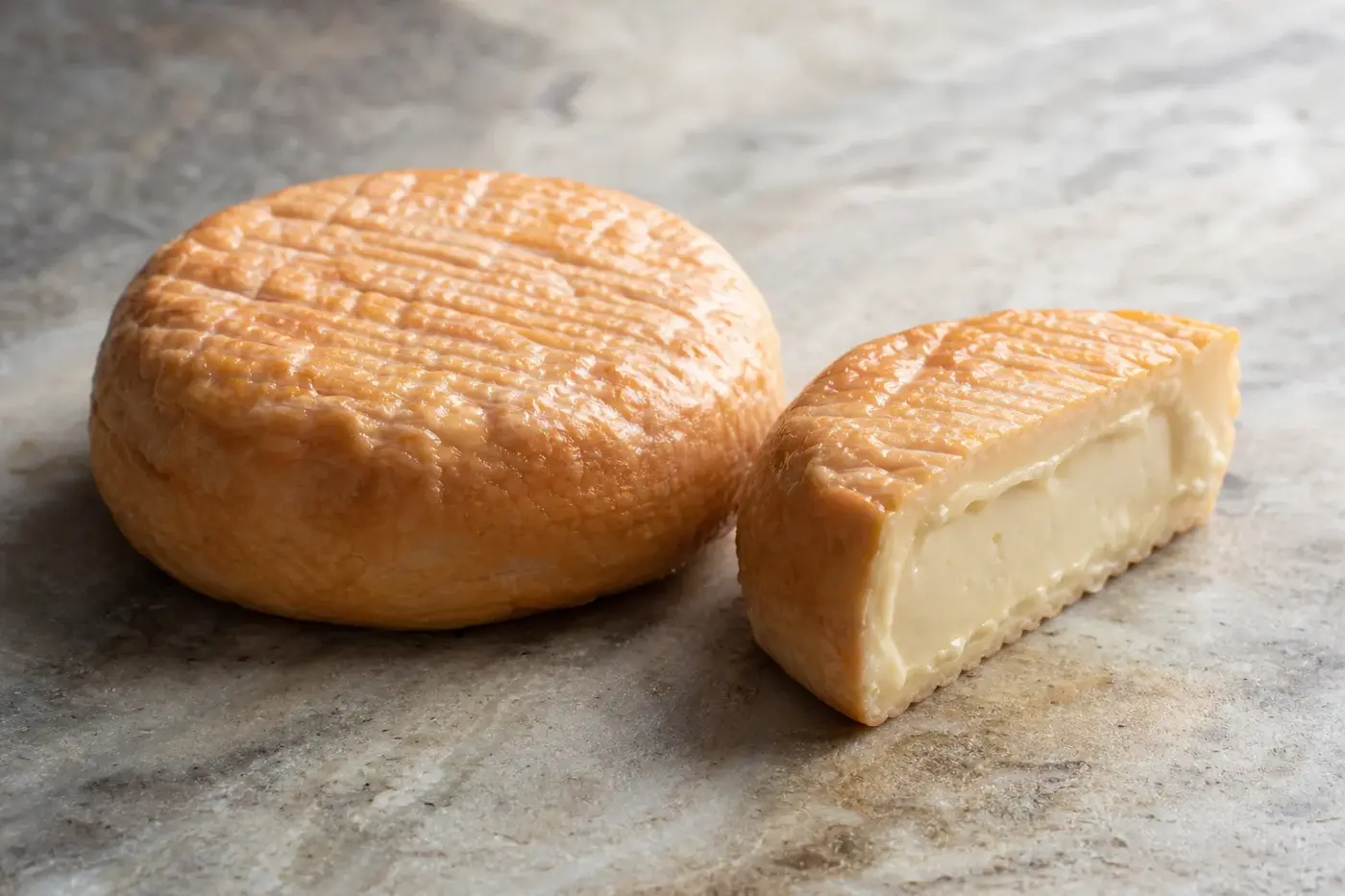
An orange rind glistens after washing. The liquid grows richer in Marc de Bourgogne as Époisses matures, and the aromas gather with it. Nearby, Chaource ripens beneath white mould, while tall goat’s milk Charolais dries into a different character. Champagne brings hollow-topped Langres and shares Chaource with Burgundy: follow these cheeses through maturation, and you begin to taste the distinctions.[3][4][5][7][8]
Let Burgundy and Champagne redraw your cheese map
Try drawing a tidy border around these cheeses. They are not especially cooperative. Burgundy and Champagne are historic regions, not equivalent units on today’s administrative map: Burgundy lies within Bourgogne-Franche-Comté, while the departments associated with Champagne, including Aube, Marne and Haute-Marne, belong to Grand Est. Those modern regions help you locate places, but each protected cheese follows the production area in its own specification.[1][2]
Chaource makes that distinction easy to grasp. Its area covers specified communes in Aube and Yonne, crossing between Grand Est and Bourgogne-Franche-Comté. Époisses reaches beyond Burgundy into Haute-Marne, while Langres belongs to the neighbouring plateau country. On official regional cheese maps, you can see these territories meeting and overlapping.[3][4][5][15]
When choosing, start with three broad groups: Burgundy’s washed-rind cow’s milk cheeses, the soft cheeses around Chaource and Langres, and southern Burgundy’s goat cheeses. Then leave a little room for Brillat-Savarin. Its defined manufacturing area stretches from Brie towards Burgundy, bringing another connection to your board.[9]
Beyond the vines, into pasture and ripening rooms
Look past the vineyard slopes and another landscape comes into view. Hedged pasture, mixed farming and small settlements belong here too. The Époisses producers’ syndicate describes an area taking in the clay-limestone bocage of the Auxois and lighter limestone country towards the Châtillonnais and Langres plateau. Around Charolles, permanent grassland and hedges shape the landscape of Charolais.[3][7]
Milk starts the story, but maturation gives each cheese much of its familiar character. Affinage is the work of caring for cheese as it ripens, through washing, turning and managing its surroundings. Washing develops Époisses’ characteristic surface flora, while drying and maturation establish Charolais’ rind and flavour. At Cîteaux, the abbey describes cheesemaking with its own herd’s milk as a central part of its working life.[3][7][11]
Put a regional selection in front of you and that work becomes visible. A white rind, a damp orange surface and a dry goat cheese show three distinct ways of turning local milk into something recognisable. The making matters. So does all the patient attention that follows.[3][5][7]
Époisses: get to know that orange rind
Look closely at Époisses and its rind might be anything from ivory-orange to brick red. The colour develops naturally during maturation; it is not a decorative coating. Beneath it, the producers’ syndicate describes a pale beige interior that becomes supple and soft. How soft depends on when you catch it.[3]
This soft cow’s milk cheese begins slowly. Its predominantly lactic coagulation puts acid development at the centre of setting the milk. Draining and dry salting follow, then repeated washes. According to the producers’ syndicate, the washing liquid becomes progressively richer in Marc de Bourgogne, the regional grape pomace spirit.[3]
Those treatments encourage the yeasts and rind bacteria that the syndicate credits with developing colour, aromas and flavours. The regional producers’ association describes a soft paste with a fruity, distinctive flavour. At the counter, give the interior as much attention as the rind. Ask how ripe it is beneath the surface, as well as how strong the aroma has become.[3][6]
Langres: look beneath the hollow top
The hollow on top of Langres is likely to catch your eye first. Often called its fontaine, it sits above an upright, slightly tapering body. The cheese comes from the plateau around its namesake town in Haute-Marne, within the Champagne area. Its appellation area also reaches into neighbouring territory in Côte-d’Or and Vosges.[4]
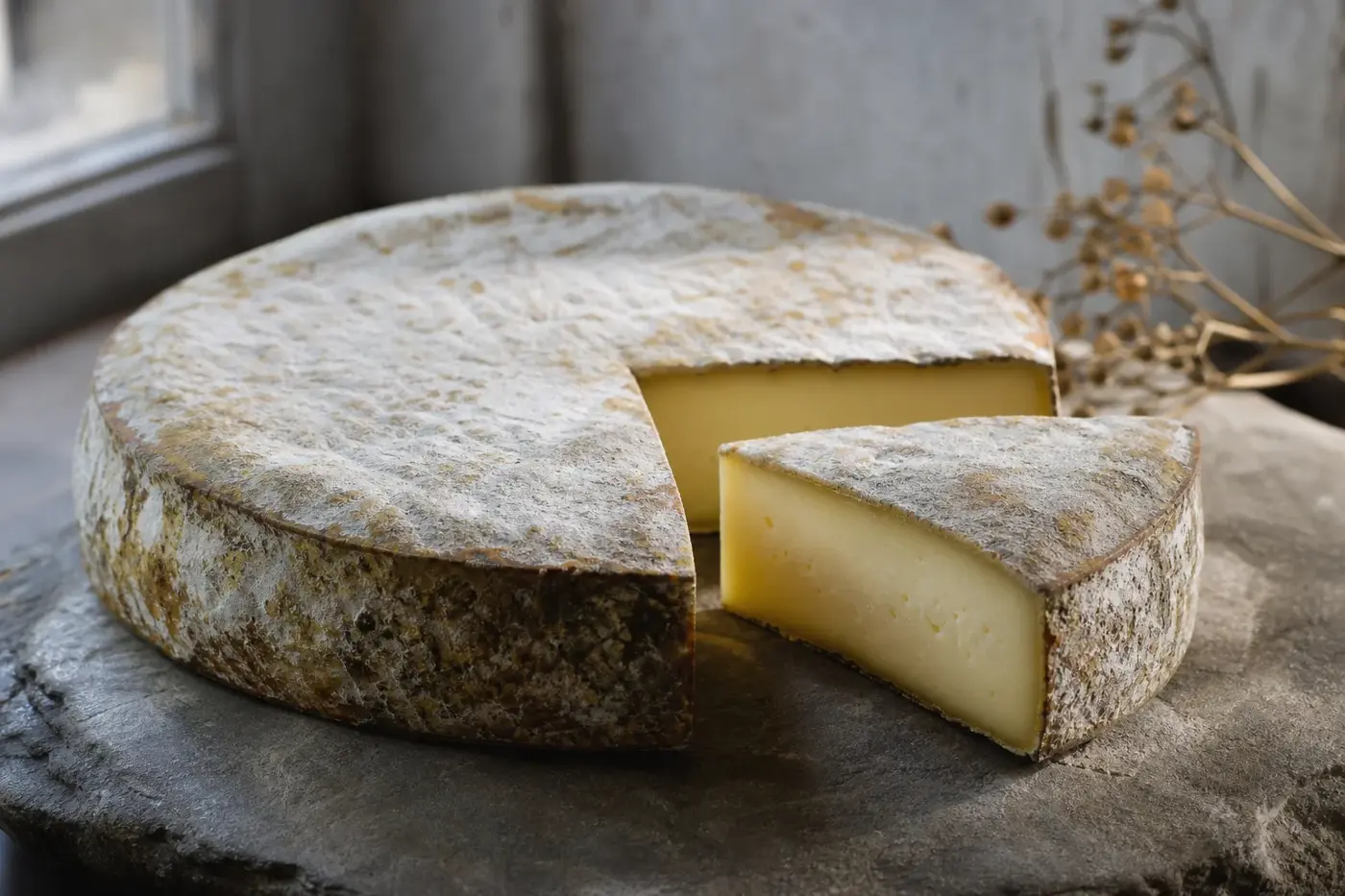
Beneath that distinctive shape is a soft cow’s milk cheese with a washed rind. The specification describes a surface ranging from pale yellow towards reddish brown, with a soft interior. Making combines acidification and rennet coagulation. Draining, salting and maturation follow.[4]
Choose Langres for its substantial shape and soft paste, rather than treating it as a smaller stand-in for Époisses. The two have separate specifications, with different making and maturation requirements. Ask whether the Langres in front of you is still relatively firm or has softened inside. Match that answer to when you intend to serve it.[3][4]
Chaource: follow the scent of cream and mushrooms
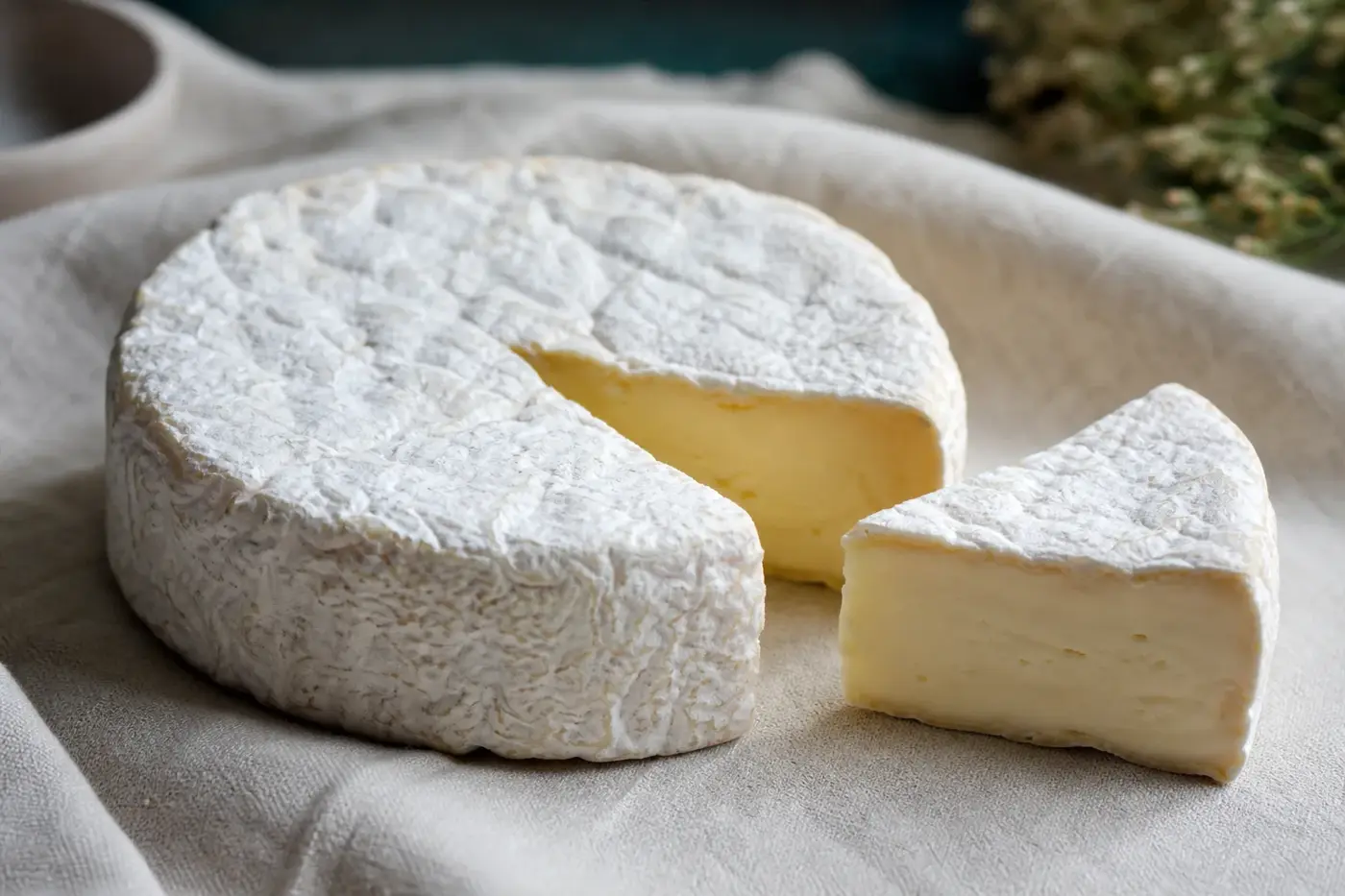
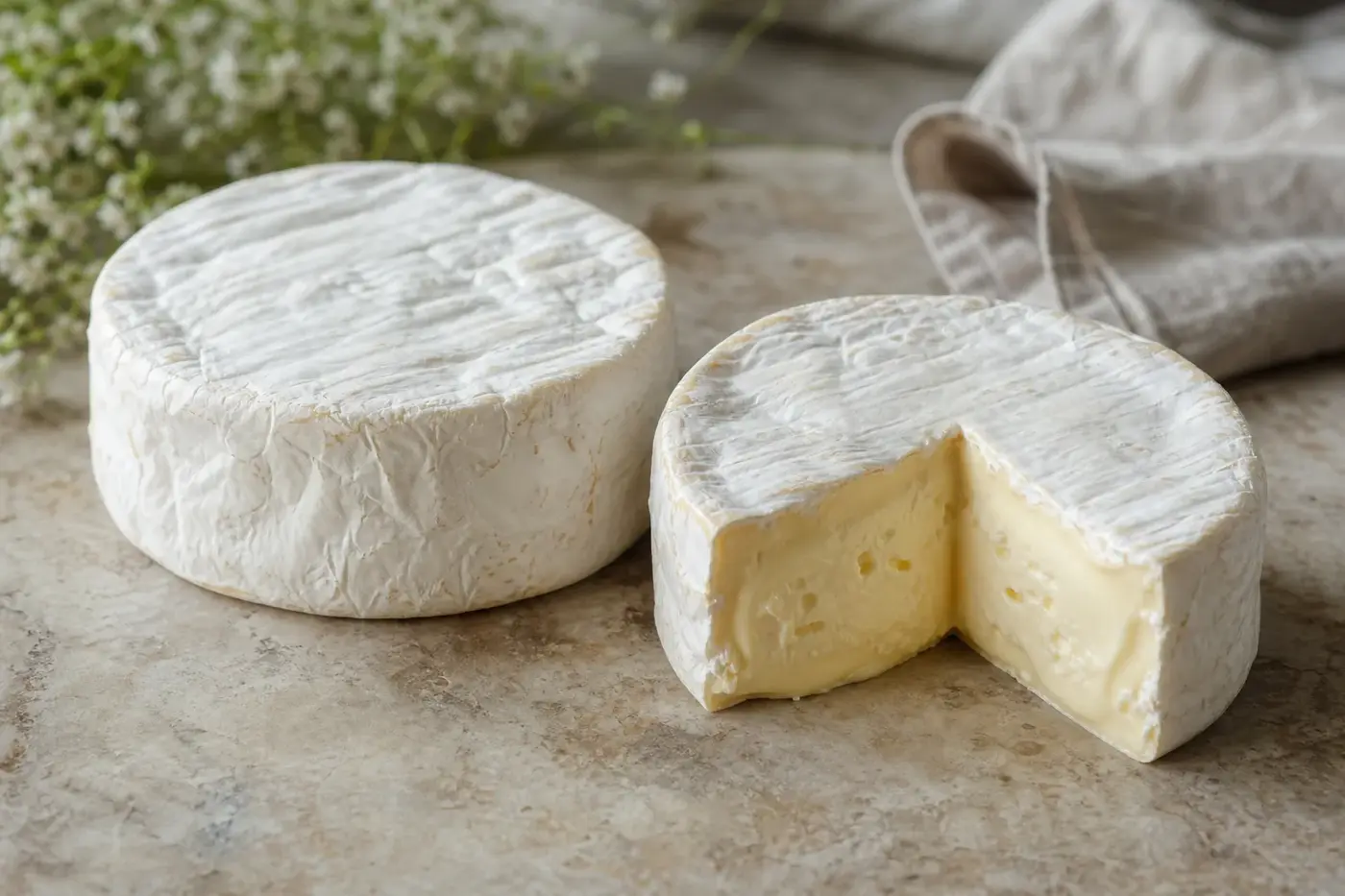
Set Chaource beside a washed-rind cheese and you have an immediate contrast. Its white bloomy rind develops as this soft, whole cow’s milk cheese ripens. The specification describes predominantly lactic making. Slow coagulation and natural drainage help establish its character.[5]
You need not choose between calling Chaource a Champagne cheese or a Burgundy cheese. It belongs comfortably to both. Its production area spans specified parts of Aube and Yonne, so the cheese’s own geography tells you more than an exclusive regional label.[5]
The regional producers’ association describes aromas of cream and fresh mushrooms, sometimes hazelnut, with an unctuous interior. Maturity matters when you choose your cheese. Ask the seller how the softer outer paste compares with the centre of the particular Chaource on offer.[6]
For a first exploration, put Chaource beside Époisses and take your time with both. Let their contrasting surfaces and interiors guide you. This is a chance to taste rind and texture, rather than simply award points for strength.
Soumaintrain and Cîteaux: discover two Burgundian paths
Soumaintrain wears a slightly damp rind, its colour ranging from ivory-yellow to ochre. INAO describes this soft, whole cow’s milk cheese as pale inside, with a soft, smooth and slightly granular texture. Regular washing with salted water forms part of its maturation. Its regional name is protected under the EU’s IGP scheme.[16]
Try it beside Époisses, looking as carefully as you taste. Both belong to the region’s washed-rind repertoire, but Soumaintrain has its own specification and identity. That paler surface gives you a useful reminder: washed rinds do not have to be orange.[3][16]
Cîteaux brings you to a particular abbey and its cheese operation. The abbey says it makes cheese from its own herd’s milk. Cheesemonger La Fromagerie describes the cheese it sells as brine-washed, with an ivory paste and a smooth texture. Its tasting notes include earthy and fresh-hazelnut flavours.[11][12]
At the counter, ask for Cîteaux by its abbey association and maker. Ask for Soumaintrain by its protected regional name. One connects you with an individual abbey’s working life. The other connects you with a defined regional cheese tradition.[11][16]
Charolais and Mâconnais: give Burgundy’s goats a turn
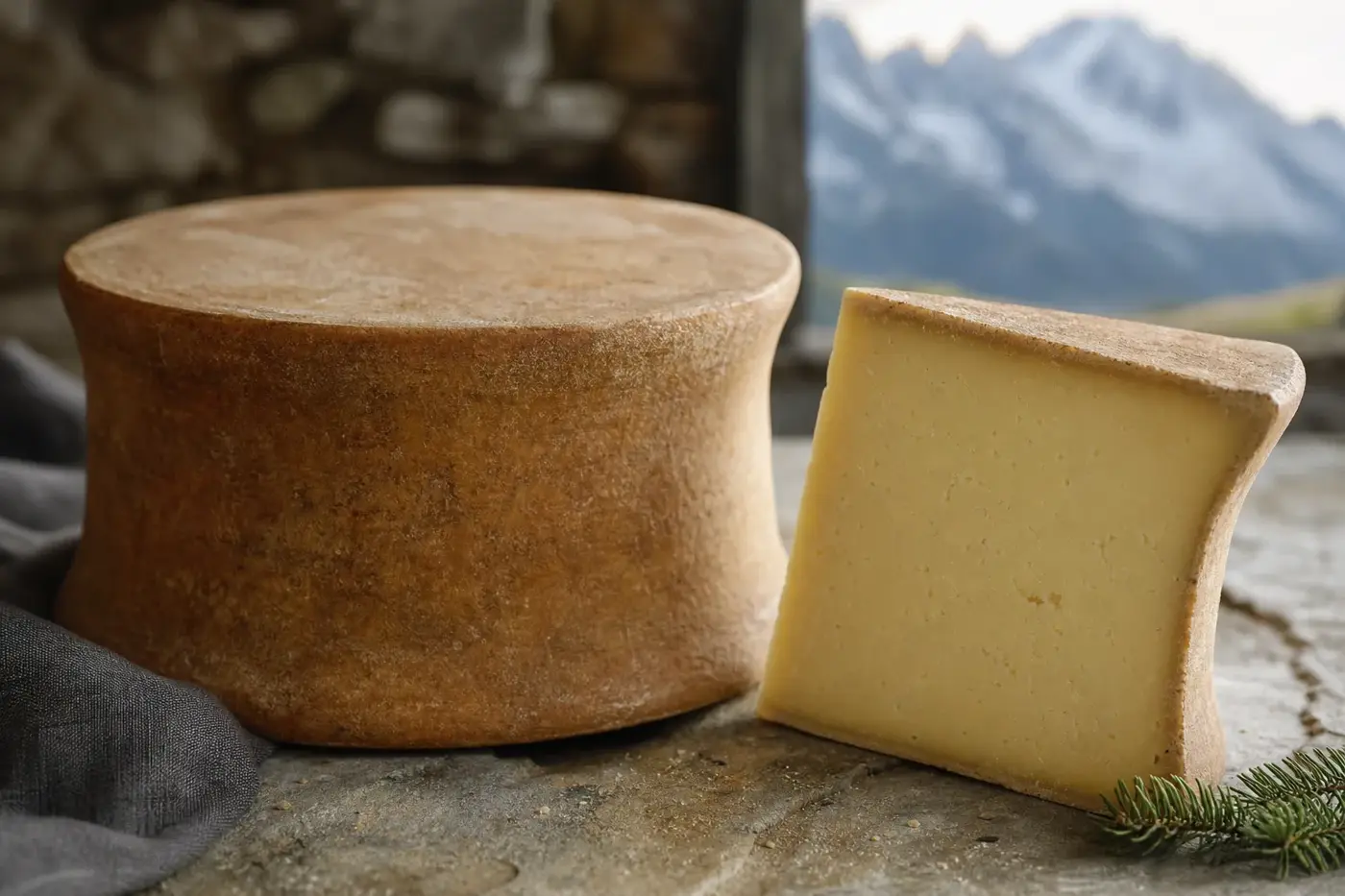
Charolais brings height and substance to your goat cheese board. Its barrel-like shape makes a striking contrast with small Mâconnais. The French agriculture ministry identifies Charolais as a raw, whole goat’s milk cheese from the Charolles area. Its defined zone extends into Saône-et-Loire, Allier, Loire and Rhône.[7]
The ministry describes hand turning during drainage, followed by drying and maturation in an airy ripening room. Under the appellation requirements described there, the cheese must reach at least 16 days of age. The regional association describes a smooth, firm paste. Initially gentle, lactic aromas grow more pronounced as maturation progresses.[6][7]
Mâconnais gives you a different shape: a small, truncated cone made from raw goat’s milk. Its specification connects that distinctive form with the way the cheese is made and drained. Charolais offers a substantial section cut from a taller cheese. With Mâconnais, you get a high proportion of rind in each bite.[8]
Try younger and more developed examples to find the texture you enjoy. Shape tells you how a cheese will portion; age and the condition of the paste tell you more about whether it will feel yielding, firm or dry. Neither the darkest rind nor the longest maturation has to win your vote. Ask for the texture and degree of development that appeal to you.[6][7][8]
Brillat-Savarin: leave a little room for cream
With Brillat-Savarin, cream is very much the point. INAO describes this triple-cream soft cheese as made by adding cow’s milk cream to cow’s milk before cheesemaking. Its place here follows its defined manufacturing geography. That territory runs from southern Seine-et-Marne towards northern Saône-et-Loire.[9]
The current specification sets a minimum of 72% fat in dry matter. This means fat measured after water is excluded from the calculation, not that 72% of the whole cheese is fat. The same specification describes a fine, homogeneous paste. Expect flavours of cream or fresh butter, slight acidity and a melting texture.[10]
You may find Brillat-Savarin sold young or carrying the qualifier affiné. According to the specification, the matured version develops a white to ivory surface bloom. Its characteristics include mushroom, woodland, fruit and hazelnut. That gives you something more to consider alongside the cream.[10]
The IGP covers defined production operations within the geographical area, including maturation when the cheese is sold as affiné. The geographical requirement begins with preparing the milk-and-cream mixture. Keep that starting point in mind when reading the label. An IGP does not necessarily require locally produced milk.[10]
AOP and IGP: let the label tell its story
A protected name tells you one thing; milk treatment tells you another. AOP is the French abbreviation for the EU’s protected designation of origin, or PDO. It links a product’s characteristics closely to its geographical environment and requires production stages to take place within the defined area. AOC is the related French national designation.[14]
IGP, corresponding to PGI, requires a geographical link through quality, reputation or another characteristic. At least one production stage must take place in the area. That distinction helps you understand exactly what a protected name promises.[14]
Official regional maps identify Époisses, Langres, Chaource, Charolais and Mâconnais as AOP cheeses. Soumaintrain and Brillat-Savarin are IGP names. These designations apply within the EU. Rights elsewhere need separate consideration.[9][15][16]
For milk treatment, turn to the label. Charolais and Mâconnais specifications require raw goat’s milk; for the other cheeses, consult their specifications and the particular producer’s declaration. AOP is not shorthand for raw milk. You can explore the differences in the guides to milk treatments and protected names.[4][5][7][8]
Find your ripeness, then care for your cheese
Tell your cheesemonger when you plan to eat the cheese and which textures you enjoy. “Soft throughout” is more useful than “very ripe”. For Époisses, ask about the paste beneath the washed rind; for Chaource, ask about the centre. With goat cheeses, say whether you want a yielding or dry interior.[3][5][7][8]
Keep pungent washed rinds in their original packaging, including any supporting box, and follow the maker’s storage instructions. If the aroma takes over your fridge, keep the package separately contained. Strong aromas feature in descriptions of these cheeses. Storage decisions, however, belong to the label and official guidance, not your nose.[3][12][13]
For England, Wales and Northern Ireland, the Food Standards Agency advises a fridge temperature between 0 and 5 °C (32 to 41 °F). It also advises following the storage instructions on the packaging. Consult its current advice when planning service. Guidance date: November 2026.[13]
Put out a modest selection and replenish it as needed. You can find more handling advice in how to store cheese at home.
Pour a little, taste slowly and find your match
Start with a small taste of cheese, then try the drink. Notice whether you still enjoy each one. These suggestions draw on the published cheese descriptions: they are starting points, not fixed regional rules. Alcoholic pairings are for adults of legal drinking age, and alcohol-free choices deserve equal attention.
| Cheese | A regional wine to try | An alcohol-free option | What to look for |
|---|---|---|---|
| Époisses or Soumaintrain | White Burgundy | Unsweetened apple juice diluted with sparkling water | Does the freshness balance the soft paste and washed-rind character?[3][16] |
| Langres | Champagne | Sparkling water alongside a slice of apple | Does a restrained accompaniment give the cheese room to show its character?[4] |
| Chaource | Champagne or Chablis | Lightly brewed, cooled black tea | Can you still enjoy the cream and mushroom notes described by the producers?[6] |
| Charolais or Mâconnais | Mâconnais white wine | Sparkling water or mild apple juice | How does your drink work with younger and more developed goat cheese?[6][8] |
| Brillat-Savarin | Champagne | Sparkling water with plain bread | Do you enjoy contrast or simplicity with the cream-enriched paste?[9][10] |
Your preference matters more than finding the nearest vineyard to every cheese. The board is not a geography exam. Begin with one drink and two contrasting cheeses, then change one element at a time. For a broader framework, turn to the cheese and wine pairing guide.
General information only, not medical advice: follow the official guidance where you live.
Questions people ask
Is Chaource from Burgundy or Champagne?
Chaource belongs to both. Its production area includes specified communes in Aube and Yonne, crossing the boundary between Grand Est and Bourgogne-Franche-Comté.
How do Charolais and Mâconnais differ?
Both are made from raw goat’s milk, but Charolais is tall and barrel shaped, while Mâconnais is small and shaped like a truncated cone. Charolais must reach at least 16 days of age to meet its appellation requirements.
Does an AOP label mean a cheese is made with raw milk?
No. AOP links a product’s characteristics closely to its geographical environment and requires production stages to take place within the defined area. Check the label for the milk treatment.
How should I store these cheeses?
Keep pungent washed rind cheeses in their original packaging, retaining any supporting box, and follow the maker’s storage instructions. For England, Wales and Northern Ireland, the Food Standards Agency advises a fridge temperature between 0 and 5 °C; check its current advice.
What can I drink with Chaource?
The page suggests Champagne or Chablis, or lightly brewed, cooled black tea as an alcohol free alternative. Compare whether the drink preserves Chaource’s cream and mushroom notes.
Sources
- INSEE, Région Bourgogne-Franche-Comté, Code officiel géographique, 2026. Administrative record.
- INSEE, Région Grand Est, Code officiel géographique, 2026. Administrative record.
- Syndicat de défense de l’Époisses, L’Époisses: fabrication, terroir et engagements, undated website, accessed November 2026. Producer-group account. This is an industry source, not a regulator.
- French Republic, Décret n° 2009-48 du 13 janvier 2009 relatif à l’appellation d’origine contrôlée « Langres », including the appended specification, 2009. Official text.
- French Republic, Décret n° 2011-642 du 8 juin 2011 relatif à l’appellation d’origine contrôlée « Chaource », including the appended specification, 2011. Official text.
- Indications Géographiques Bourguignonnes et Champenoises, Présentation des appellations, undated website, accessed November 2026. Regional producer association. Sensory descriptions are attributed to this industry association.
- French Ministry of Agriculture, Le Charolais AOP, un fromage de chèvre généreux, 24 January 2023. Official account.
- French Republic, Décret n° 2010-724 du 28 juin 2010 relatif à l’appellation d’origine contrôlée « Mâconnais », including the appended specification, 2010. Official text.
- INAO, Brillat-Savarin, product record and regulatory links, accessed November 2026. Official product record.
- French Ministry of Agriculture, Cahier des charges de l’indication géographique protégée « Brillat-Savarin », approved by the order of 7 July 2025. Official specification.
- Abbaye Notre-Dame de Cîteaux, The work, undated website, accessed November 2026. Abbey account.
- La Fromagerie, Abbaye De Citeaux, undated product technical sheet, accessed November 2026. Merchant’s technical sheet. Commercial source; tasting descriptions are the merchant’s.
- Food Standards Agency, How to chill, freeze and defrost food safely, published 18 December 2017, accessed November 2026. Applies to England, Northern Ireland and Wales. Official guidance.
- French Ministry of Agriculture, L’AOC et l’AOP, une production et un terroir qui s’expriment par le savoir-faire, 2021, accessed November 2026. Official explanation.
- DRAAF Bourgogne-Franche-Comté and DRAAF Grand Est, Mémento 2025, cheese appellation maps based on INAO data, 2025. Bourgogne-Franche-Comté map; Grand Est maps.
- INAO, Mémento SIQO Bourgogne-Franche-Comté, entries on recognition of Soumaintrain and Brillat-Savarin, reporting the 2016 and 2017 registrations. Official publication.
Researched from official geographical records, published appellation material, food agency guidance and attributed accounts from producers and a cheesemonger.
Last checked: November 2026
Last checked November 2026.
The editors suggest you read next
French Cheese: The Complete Guide
Picture Normandy’s pastures, then follow the milk towards the Loire’s goat dairies, the Jura’s shared cheesemaking traditions and the sheep country of the Pyrenees.