Cheeses of Southern Italy and the Islands
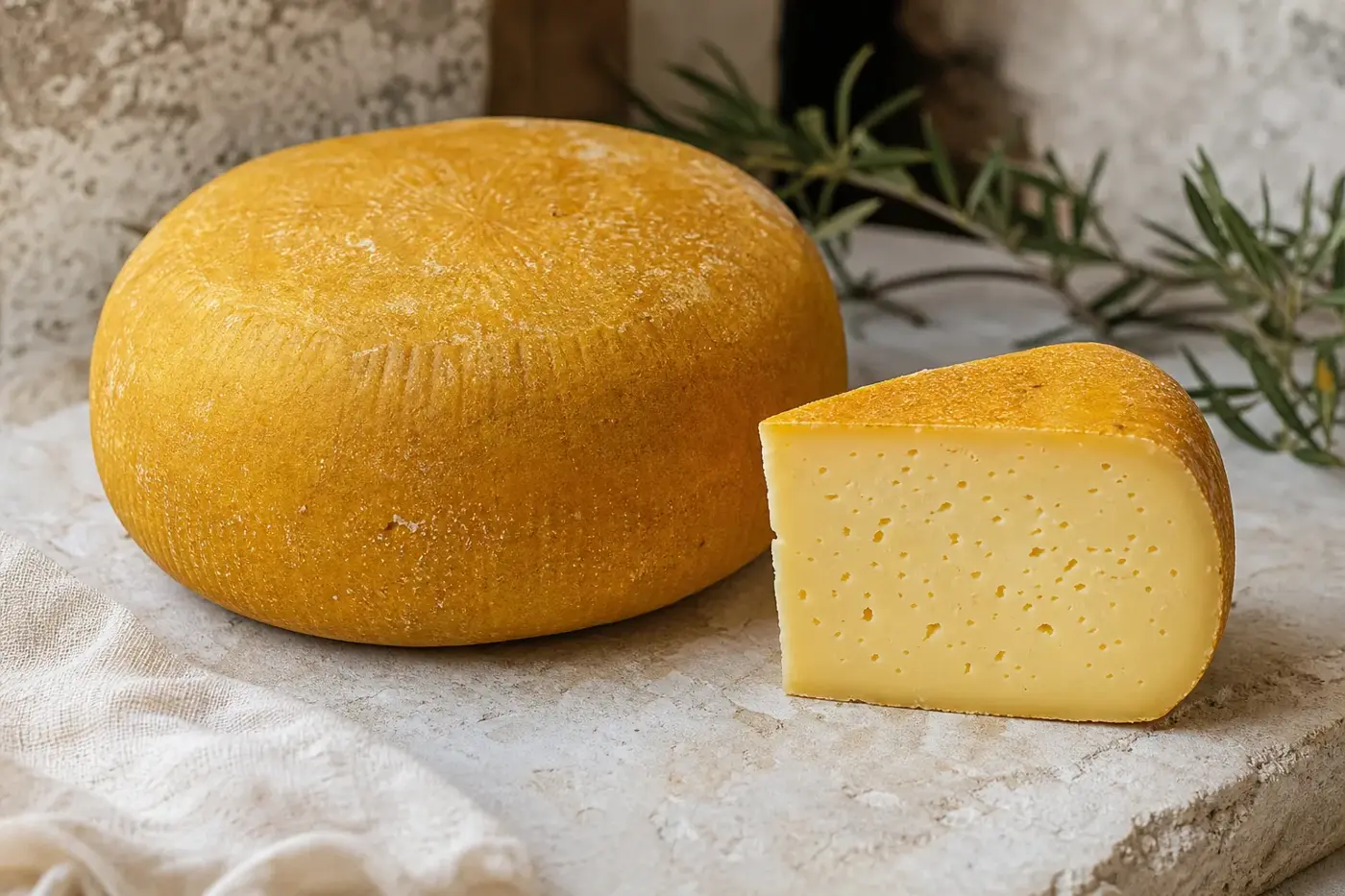
Your knife goes into Piacentinu Ennese and finds yellow all the way through, from rind to centre.
Your knife goes into Piacentinu Ennese and finds yellow all the way through, from rind to centre. Saffron has been here before you. In Farindola, the surprise is in the making: pig rennet sets sheep’s milk into curd, a tradition passed between generations of women. Southern Italy tells a good story if you give the cheese your attention. [1][6][7][10][13]
On the mainland, you will find fresh stretched curds; across Sicily and Sardinia, sheep’s milk wheels bearing the marks of their baskets. Burrata offers its soft centre, while Sardinian cheeses mature for the table or grater. Those are two broad threads to follow. The details are likely to delay your departure from the cheese counter. [1][6][7][10][13]
Let the cheese lead you south
Your route takes in Abruzzo, Molise, Campania, Puglia, Basilicata and Calabria, then Sicily and Sardinia. Regional boundaries vary between cheese guides. Here, you follow the cheeses, without asking every tradition to fit neatly inside a border.
Caciocavallo Silano’s specified production territory stretches across five mainland regions. Sicily’s Ragusano brings cow’s milk into an island story often led by sheep. Keep place, milk and method together as you go: neither a regional heading nor the word pecorino tells you everything. [4][11]
Abruzzo and Molise: mountain traditions worth meeting
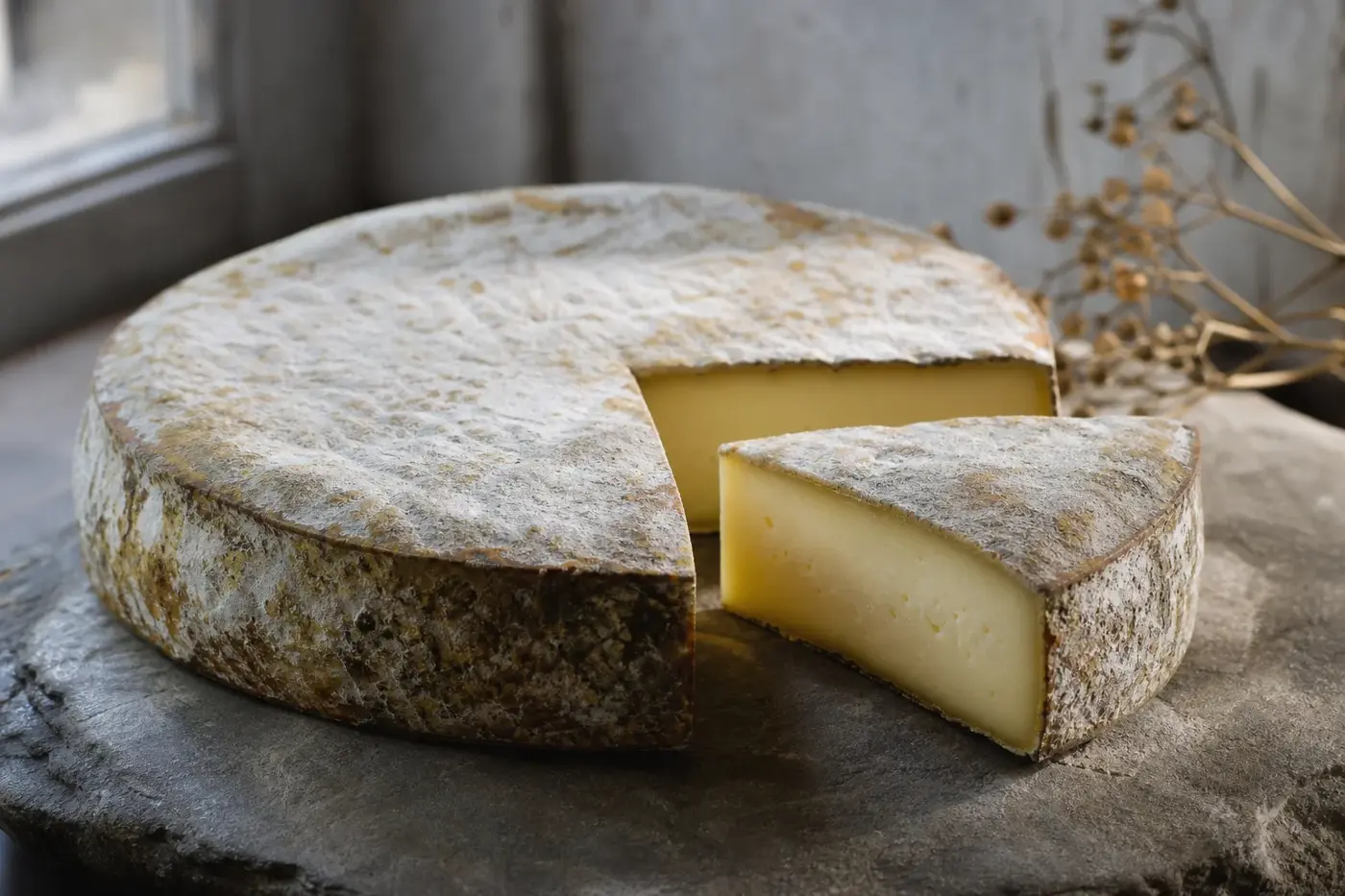
Around Farindola, generations of women have passed on a remarkable way of making cheese: setting raw sheep’s milk with pig rennet. Rennet supplies the enzymes that turn milk into curd. In Pecorino di Farindola, that choice belongs at the heart of the story. [2][3]
The regional product description reproduced by ONAF places the cheese on the eastern side of the Gran Sasso. It describes a compact, friable interior and a basket-marked rind that firms with maturation. Before you taste a piece, its surface already offers clues to its making. [2]
CREA, Italy’s agricultural research organisation, documents the pig-rennet tradition and its connection with those generations of women around Farindola. Its account describes aromas of grass and hay. Give a well-matured example your attention and woodland and mushroom notes become more apparent. [3]
Across in Molise, caciocavallo takes you into cow’s milk and stretched curd. The Caciocavallo Silano specification includes the whole province of Isernia and listed municipalities in Campobasso. Ask which caciocavallo you are buying, who made it and how long it has matured. A broad family name tells you something different from a complete protected name. [4]
Campania: start fresh, then reach for a slice
With Mozzarella di Bufala Campana, begin with the milk. The Italian agriculture ministry lists it among its DOP cheeses, and the name offers you a useful buying lesson: establish the milk species as well as the complete product name. Buffalo milk mozzarella and cow’s milk mozzarella are distinct choices. Explore the wider mozzarella family before choosing between them. [1]
Provolone del Monaco introduces you to another side of stretched curd. Its specification requires raw cow’s milk and at least 180 days of maturation. Picture a slightly elongated melon, or a pear without a small head. Shallow grooves mark the places where the supporting ties sit. [5]
Inside, the specification describes a compact, elastic cheese, cream-coloured with yellowish tones and characteristic small openings. Cut yourself deliberate slices and try them with bread. Stretched curd does not always need to go straight to the heat. This one deserves your attention just as it is. [5]
Puglia: basket marks and burrata’s soft centre
Look closely at Canestrato Pugliese and you can see where the baskets have left their mark. Its rough, basket-marked rind surrounds a compact, somewhat friable interior with little elasticity. Made exclusively from whole sheep’s milk, this hard cheese has a specification describing both the production baskets and the impressions they leave. [6]
Its defined territory covers Foggia province and listed municipalities recorded under Bari in the specification. Maturation runs from two to ten months; cheese intended for grating must mature for at least six months. Ask whether the piece in front of you is recommended for the table or the grater. That is a useful place to begin. [6]
Then put your knife into Burrata di Andria. As its specification describes, a cow’s milk stretched-curd envelope holds cream mixed with shredded stretched curd. You release a filling rather than uncover a solid mozzarella-like centre. The way it is put together is central to its pleasure. [7]
Give it bread, ripe tomatoes and a restrained amount of olive oil. Add your burrata as a finishing element. You want to enjoy the envelope and loose filling separately, not lose both in a complicated dish.
Basilicata: walk Filiano’s path from pasture to basket
Pecorino di Filiano begins among volcanic soils and natural pastures rich in aromatic plants. Its specification places its home in north-western Basilicata, in Potenza province. The defined Apennine territory stretches from Monte Vulture towards Monte Li Foy and the mountains around Muro Lucano. [8]
Follow the milk into the dairy and that landscape still matters. The sheep’s diet is based principally on grazing, fresh forage and hay from the defined area. Lamb or kid rennet paste sets the raw sheep’s milk. The curd then goes into basket-patterned moulds for pressing. [8]
Taste Filiano beside Farindola and you begin to see why pecorino needs a second name. Both start with sheep’s milk, but their places, coagulants and production rules differ. Milk gives you a starting point, not the full portrait. For the distinction between coagulants, turn to rennet explained. [2][8]
Calabria: follow Caciocavallo Silano beyond the Sila
Calabria sits at the heart of Caciocavallo Silano’s story, but its name should not draw your map too tightly. The protected production area also includes specified parts of Campania, Molise, Puglia and Basilicata. A wheel bearing the name was not necessarily made within the Sila alone. [4]
The specification calls for cow’s milk, either raw or thermised within its stated limits. Thermisation is a heat treatment distinct from pasteurisation. After at least 30 days of maturation, you find the compact interior described in the specification. Relatively delicate and sweet when young, its flavour grows more pungent with age. [4]
You may come across oval or truncated-cone forms, with or without a small head. Those variations reflect local practices recognised in the specification. There is more to explore beyond caciocavallo: the ministry separately lists Pecorino Crotonese and Pecorino del Monte Poro. Alongside Calabria’s stretched curds, they give you a sheep’s milk route through the region. [1][4]
Sicily: leave room for three different stories
Pecorino Siciliano: choose your moment in its life
Pecorino Siciliano changes as it ages. The ministry-hosted specification distinguishes Fresco, Semistagionato and Stagionato, giving you useful names to take to the counter. Fresco matures for 20 to 30 days and has a compact interior with limited small openings. Begin with the category rather than expecting one fixed character. [9]
For Fresco, the specification describes a white to straw-coloured exterior with basket impressions and no developed rind. Black peppercorns may be present. Look at the cut surface and read the description before you buy. Sicilian pecorino is not always equally hard, nor equally peppery. [9]
Piacentinu Ennese: pause for the saffron
Piacentinu Ennese catches your eye before you taste it. Its specification requires whole raw sheep’s milk and attributes the yellow of both rind and interior to saffron. Inside, it describes a smooth, non-granular cheese with a delicate aroma carrying a slight saffron note. [10]
The ministry-hosted specification defines its production, cheesemaking and maturation territory as the entire administrative province of Enna. Keep that wording in mind when you encounter older accounts of its boundaries. Try a piece alone, then with plain bread. Give the saffron your attention before adding strongly flavoured accompaniments. [10]
Ragusano: meet the cows of the Iblean plateau
With Ragusano, your Sicilian journey turns towards cattle and the Iblean plateau. Its specification requires whole raw cow’s milk. It connects the cows’ feed principally with the plateau’s spontaneous vegetation and cultivated forage, including hay. You meet a different relationship between milk and landscape from that of the island’s sheep’s milk cheeses. [11]
The defined milk-production and cheesemaking area includes the listed municipalities of Ragusa province, plus Noto, Palazzolo Acreide and Rosolini in Siracusa province. Ask to see the whole cheese as well as the piece you are buying. Its format and making tradition help you recognise it, beyond the portion waiting on the counter. [11]
Sardinia: discover two sides of sheep’s milk
Pecorino Sardo and Fiore Sardo offer you two distinct expressions of Sardinia’s sheep-farming heritage. Pecorino Sardo uses whole sheep’s milk exclusively, which may be thermised or pasteurised. Its specification distinguishes Dolce, matured for 20 to 60 days, from Maturo, matured for at least two months. [12]
Choose for the texture you fancy and the occasion you have in mind. Dolce has a white, soft, elastic interior, while more mature Maturo becomes harder and may develop some graininess. Older means different, not automatically better. Your cheeseboard need not become a competition in patience. [12]
Fiore Sardo follows another path. The ministry’s production guide specifies fresh, whole raw milk from Sarda sheep and an uncooked curd. Look for its distinctive shape: two flattened truncated cones joined at their broader bases. [13]
Smoking is permitted during the initial drying stage, so ask how the maker has treated your cheese. Do not expect the same smokiness in every example. The guide describes a deep yellow to dark brown rind and a white to straw-coloured interior. Pungency changes during maturation, giving you another good reason to ask its age. [13]
Stretched curd: follow the technique, enjoy the differences
Follow the making of Caciocavallo Silano and you encounter a technique shared by very different cheeses. The curd first develops the condition needed for stretching, then is worked with hot water and shaped. Its specification records that sequence as part of production. The name for it, pasta filata, means stretched curd. [4]
What happens next changes what reaches your plate. Burrata di Andria uses stretched curd for its envelope and, shredded, in its cream filling. Provolone del Monaco is shaped and matured for at least six months. You can trace the family resemblance through the technique, even when texture, composition and everyday use differ considerably. [5][7]
If you would like to follow the wider journey from milk to cheese, read how cheese is made. It takes you through the sequence from coagulation and draining to maturation.
Protected names: give the whole label a moment
Start with the complete cheese name, not only the word you recognise. In the European Union, DOP is the Italian abbreviation for PDO, protected designation of origin; IGP corresponds to PGI, protected geographical indication. The Italian ministry lists names under these classifications, which concern particular products and their production requirements. Protection in other jurisdictions must be checked separately. [1]
“Southern Italian”, “pecorino” and “caciocavallo” each leave useful questions unanswered. Ask for the maker, milk species and maturity. A legal minimum age and the actual age of your piece are separate facts. If you are finding your way through the terminology, start with protected names explained.
This page summarises published guidance from the official sources it cites. It is not medical advice. Guidance differs between countries and changes over time, so check the current source for where you live, and ask your doctor, midwife, pharmacist or dietitian about your own circumstances.
Store carefully, then serve a little contrast
Follow the storage instructions on the packaging, including directions for use after opening. You will find more practical help in how to store cheese at home.
When you serve, try a small comparison built around texture. You do not need to represent every region on one board. These pairings give you room to notice the cheeses themselves:
| Your cheese | Serve it with | Take a moment to notice |
|---|---|---|
| Fresh burrata | Bread and tomatoes | The envelope and loose filling |
| Younger caciocavallo | Plain bread and pear | The cut texture before stronger flavours |
| Mature sheep’s milk cheese | Bread and a little fruit preserve | Savoury cheese against sweetness |
| Piacentinu Ennese | Plain bread first | Saffron before other accompaniments |
These are pairing suggestions; water is a useful common accompaniment to keep your comparison centred on the cheeses. Serve manageable portions and leave the remaining cheese stored according to its instructions. For the fuller practical guide, see how to store cheese at home.
Questions people ask
What is inside Burrata di Andria?
A cow’s milk stretched curd envelope encloses cream mixed with shredded stretched curd. Cutting it releases the loose filling.
What does pasta filata mean?
Pasta filata means stretched curd. The curd develops the condition needed for stretching, then is worked with hot water and shaped.
Is Caciocavallo Silano only made in Calabria?
No. Its specified production territory also includes areas of Campania, Molise, Puglia and Basilicata.
What is the difference between Pecorino Sardo Dolce and Maturo?
Dolce matures for 20 to 60 days and has a white, soft, elastic interior. Maturo matures for at least two months and becomes harder, sometimes developing graininess.
What do DOP and IGP mean on Italian cheese?
In the European Union, DOP is the Italian abbreviation for protected designation of origin, or PDO. IGP corresponds to protected geographical indication, or PGI.
Sources
- Ministero dell’agricoltura, della sovranità alimentare e delle foreste (MASAF), Disciplinari DOP e IGP prodotti agricoli, 1.3 Formaggi, live catalogue, accessed November 2026.
- Regione Abruzzo, Il Pecorino di Farindola, regional product description reproduced by ONAF, undated document, accessed November 2026.
- CREA, Formaggio/5: La tipicità inizia dal caglio, 28 January 2026.
- MASAF, Disciplinare di produzione della Denominazione d’Origine Protetta “Caciocavallo Silano”, ministry-hosted file identified as April 2024, accessed November 2026.
- MASAF, Disciplinare di produzione della denominazione di origine protetta “Provolone del Monaco”, undated ministry-hosted edition, accessed November 2026.
- Presidente della Repubblica Italiana, Riconoscimento della denominazione di origine del formaggio “Canestrato pugliese”, decree of 10 September 1985, published in Gazzetta Ufficiale, 16 May 1986; scanned specification hosted by MASAF.
- MASAF, Disciplinare di produzione della Indicazione Geografica Protetta “Burrata di Andria”, ministry-hosted file identified as September 2023, accessed November 2026.
- MASAF, Disciplinare di produzione della Denominazione di Origine Protetta “Pecorino di Filiano”, undated ministry-hosted edition, accessed November 2026.
- MASAF, Modifica del Disciplinare di Produzione della Denominazione d’Origine Protetta “Pecorino Siciliano”, undated ministry-hosted edition, accessed November 2026.
- MASAF, Disciplinare di produzione della denominazione d’origine protetta “Piacentinu Ennese”, undated ministry-hosted edition, accessed November 2026.
- MASAF, Disciplinare di produzione del Formaggio Ragusano, undated ministry-hosted edition, accessed November 2026.
- MASAF, Disciplinare di produzione della denominazione di origine protetta “Pecorino Sardo”, undated ministry-hosted edition, accessed November 2026.
- MASAF, Scheda guida per la produzione della DOP “Fiore Sardo”, undated scanned production guide, pages 1 and 2, accessed November 2026.
- Food Standards Agency, How to chill, freeze and defrost food safely, published 2017, live guidance accessed November 2026; applies to England, Northern Ireland and Wales.
Researched through ministry-hosted specifications, regional documentation, CREA’s published account and official food-storage guidance; serving combinations are identified as editorial suggestions.
Last checked: November 2026
Last checked November 2026.
The editors suggest you read next
French Cheese: The Complete Guide
Picture Normandy’s pastures, then follow the milk towards the Loire’s goat dairies, the Jura’s shared cheesemaking traditions and the sheep country of the Pyrenees.