New Zealand Cheese
Windsor Blue has a way of staying with you.
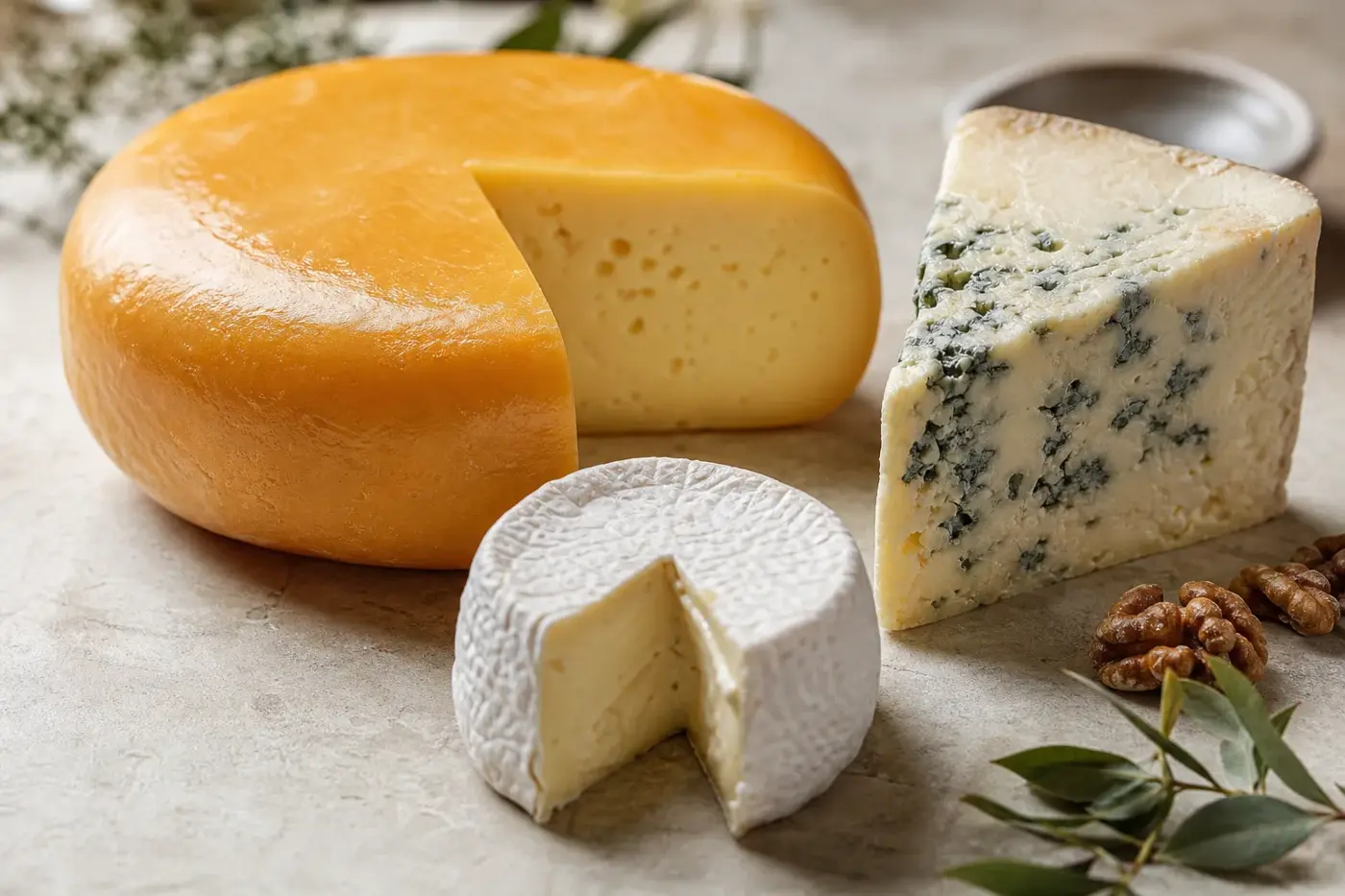
Windsor Blue has a way of staying with you. Its savoury bite lingers while you eye the farm-made Gouda from Waikato and the soft white mould cheeses from specialist dairies. This is a cheese counter that stretches well beyond New Zealand’s export dairy tradition, with pasture-based farming underneath it all and individual makers giving it character.[2][3][10]
Start with Meyer Gouda and Whitestone’s Windsor Blue. Then follow the milk, the method and the time spent maturing. You came for a slice; there is every chance you will leave with questions.[3][4]
Get your bearings at the cheese counter
| Your starting point | What to know |
|---|---|
| Country | New Zealand |
| Styles to explore | Cheddar, Gouda, blue, soft white mould and fresh cheeses.[3][10] |
| Milk types to look for | Cow, goat and sheep.[10][11][12][13] |
| Food authority | Ministry for Primary Industries, including New Zealand Food Safety.[15][16] |
| Cheese standard | Australia New Zealand Food Standards Code, Standard 2.5.4.[22] |
| Raw milk cheese | Additional New Zealand manufacturing controls apply.[16] |
| Protected cheese names and count | Not listed here |
| Reference date | November 2026 |
Before the factories, meet the households
Before the factories and export ships, cheesemaking belonged to the household. Shorthorn dairy cows arrived in the Bay of Islands in 1814, and Te Ara records established herds by the early 1840s. European settlement brought dairy cattle and cheesemaking into domestic life, with milk, butter and cheese feeding families and nearby settlements.[1]
Much of that work fell to women and children. They handled the domestic milking and processing, putting them at the heart of the country’s early dairy story.[1]
Then refrigerated shipping widened the horizon. Small quantities of butter and cheese had already reached Australia, but refrigeration in the early 1880s opened a much larger market. Britain became the principal destination, with factories, cool storage and ships connecting New Zealand farms to distant customers.[2][6]
Cheesemaking was outgrowing the household and the individual farm. Te Ara records twenty dairy factories by 1884; early businesses often made both butter and cheese before gradually adopting larger, steam-driven equipment. Southland’s Edendale belongs to this formative chapter.[5][6]
You can follow Cheddar through that export history and straight to today’s counter. But the style name is only the beginning: Whitestone’s Totara Tasty Cheddar shares its range with blues, soft cheeses and fresh styles. For the method behind the name, turn to the Cheddar guide.[2][10]
Follow spring milk into the maturing room
The rhythm begins in the pasture. New Zealand’s temperate climate supports grass feeding across the year, and the Treasury places pasture at the centre of its dairy story. Milk supply still varies seasonally, helping explain both the scale of dairying and the need for factories that can handle a pronounced production peak.[2]
That peak follows the Southern Hemisphere spring. Te Ara describes cows calving as pasture growth rises, with milk flows increasing in spring and declining towards autumn. Seasonal herds spend winter in a dry period.[8]
Cheese follows another clock, too. Maturation means milk from one part of that seasonal cycle may reach your cheese counter much later.[8]
What happens on that journey matters just as much as the pasture. Whitestone’s process includes pasteurisation, starter cultures, curd cutting, draining, salting and maturation, with techniques varying between cheeses. Compare its cream-enriched Mt Domett Double Cream Brie with its pressed sheep’s milk Monte Cristo: recipe and ripening take one dairy’s cheeses in distinctly different directions.[11][12][14]
Pick a place and let the cheese lead
Give yourself somewhere to begin, rather than tackling a whole country at once. Waikato, Canterbury, Otago and Southland offer useful routes into the story. Between them, you can explore farm-based specialist production and the country’s early factory industry.[3][5][9][10]
| Area | Where you are | Start here | What awaits |
|---|---|---|---|
| Waikato | North Island | Meyer Gouda | Farm-made Gouda listed by Waikato Farmers’ Market.[3] |
| Canterbury | South Island | Barrys Bay Cheese | Banks Peninsula factory; territorial and European-style cheeses.[9] |
| Otago | South Island | Whitestone, Ōamaru | Windsor Blue, plus soft, fresh and pressed cheeses.[4][10] |
| Southland | South Island | Edendale | Early factory dairying.[5] |
On Banks Peninsula, Barrys Bay gives those broad style names a particular home. Its factory stands on the Christchurch to Akaroa road, and it dates its cheesemaking story to 1895. Older traditions meet present-day variety in its English territorial, flavoured Cheddar, Havarti and European wheel collections.[9]
That gives you more to work with than “New Zealand cheese” alone. You have a place, a maker and a collection of styles worth getting to know.[9]
From the family farm to the export dairy
New Zealand cheese rewards your attention at both ends of the production scale. The export industry built the capacity to turn seasonal milk into products that could travel. Farm and specialist dairies bring individual recipes and maturation choices into sharper view; together, they show how the country’s milk becomes cheese.[2][14]
Fonterra’s formation in 2001 marks a major moment in the industrial story. Te Ara’s account of agricultural processing records the merger of the two largest dairy companies and the abolition of the Dairy Board. That helps explain how milk processing is organised, but your tasting needs the detail of an individual cheese.[24]
For a farm-based starting point, try Meyer. Waikato Farmers’ Market identifies it as a family-farm Gouda maker. Ask which version and maturity you are being offered: “Meyer Gouda” opens the conversation rather than settling the question of flavour.[3]
You can explore the wider style in the Gouda guide. Then bring that background back to the particular cheese in front of you.
Whitestone gives you another route: exploring differences within one producer’s range. Its catalogue spans blue cheese, Brie and Camembert styles, Cheddar and fresh cheeses. You can compare milk species, added cream and ripening style without changing producer at every step.[10][11][12][13]
Give blue, Brie and fresh cheese their moment
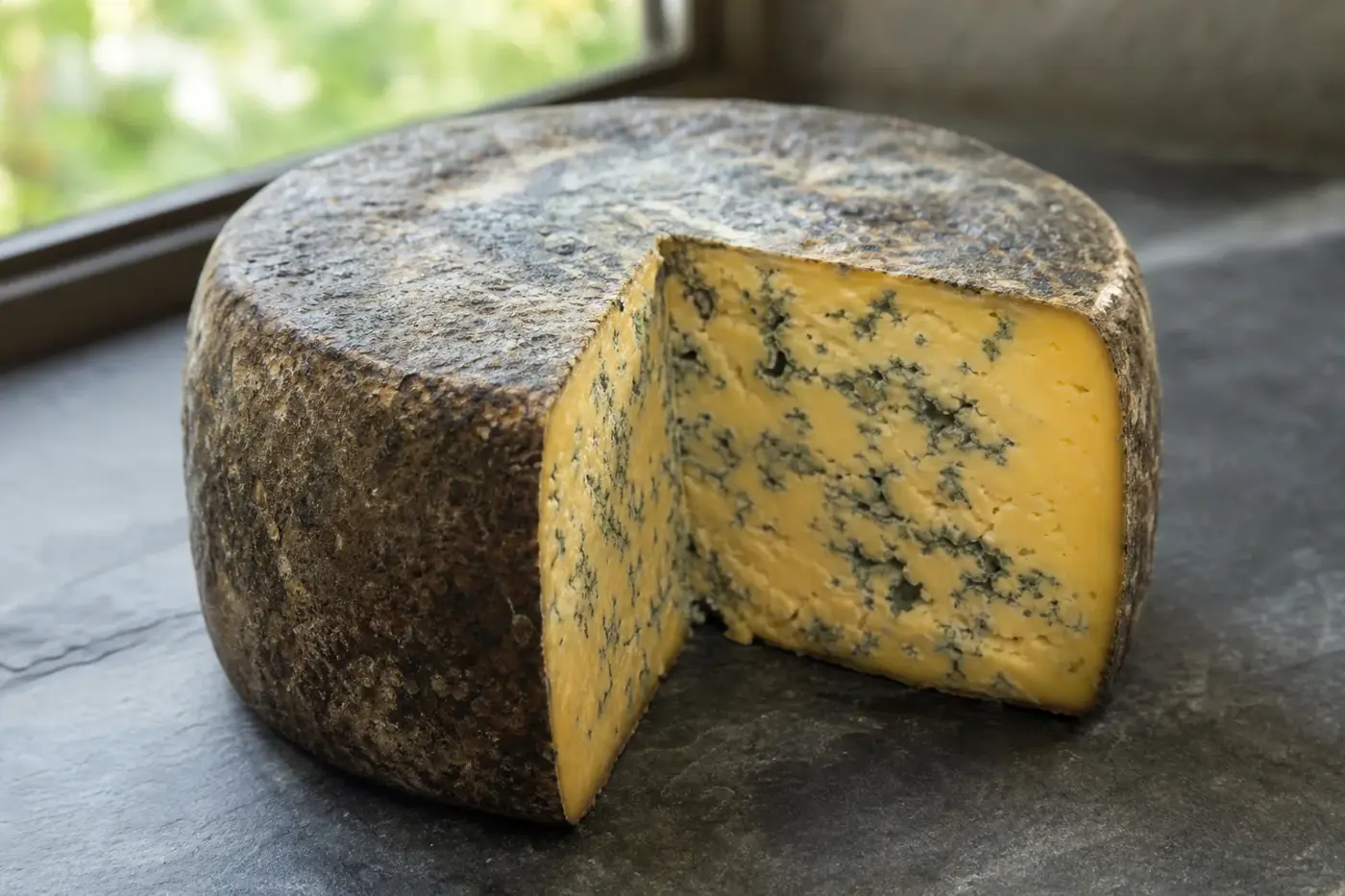
Start with Windsor Blue’s finish. Whitestone describes this cheese as full-bodied and savoury, with a sharp flavour that lingers. Its name comes from the township inland from Ōamaru.[4]
Put that description to a simple test. After swallowing, notice how long the flavour stays before you reach for an accompaniment. The next cracker can wait.[4]
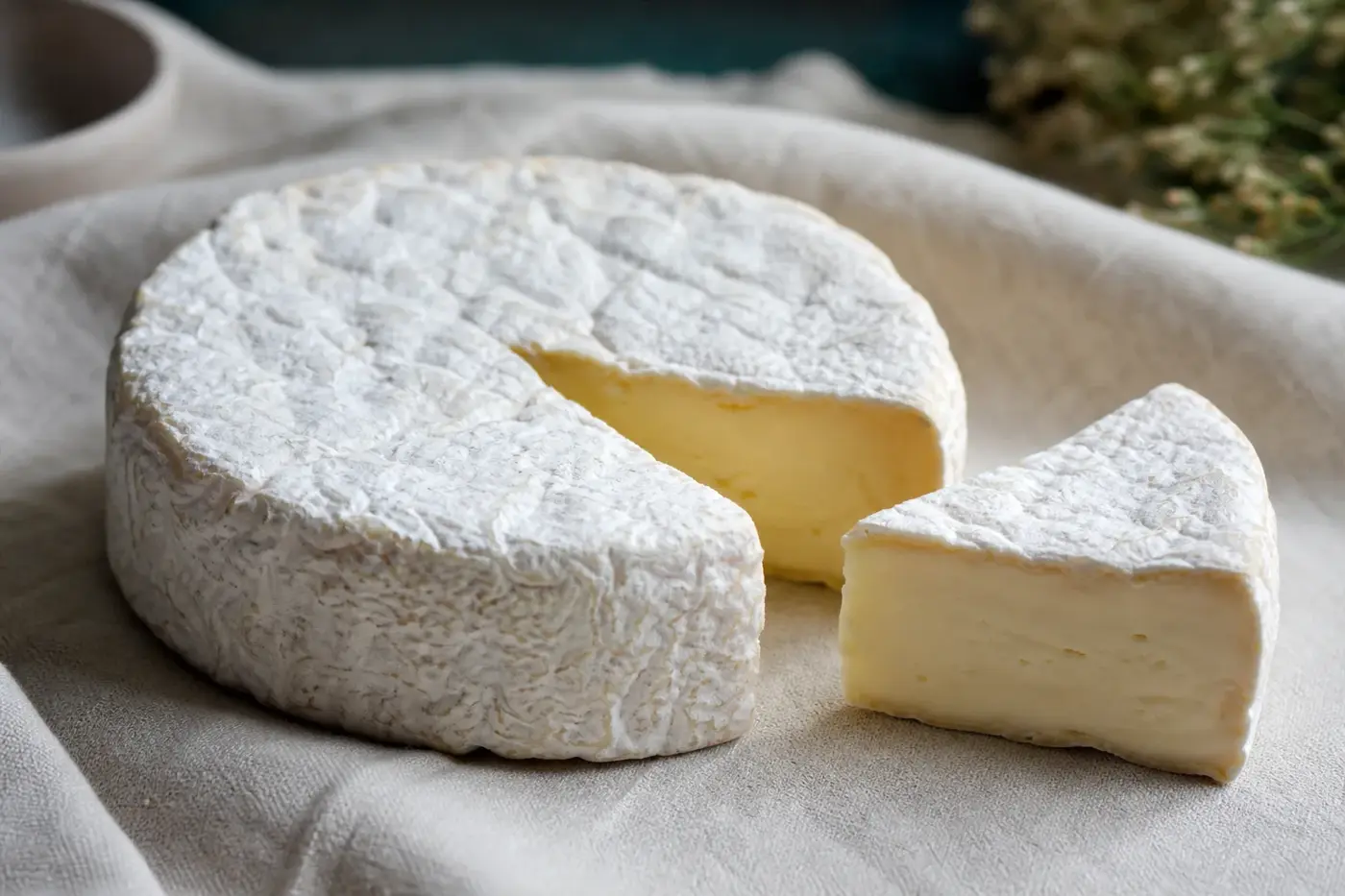
Mt Domett Double Cream Brie offers a softer contrast. Whitestone makes it with cow’s milk and extra cream, describes an earthy character, and says its naturally ripening paste becomes runny at full maturity. Compare the centre with the paste just beneath the rind, giving texture as much attention as flavour.[11]
Save some curiosity for fresh cheeses, too. Whitestone lists them separately from its blue, soft and pressed cheeses.[10] Think about what you want yours to do: stand alone in a tasting, crumble into a dish or become part of something cooked.
That practical question can narrow your choice more usefully than a country name. Start with the job, then choose the cheese.
Take cow, goat and sheep milk in turn
Cow’s milk sits behind many familiar examples, including Mt Domett Double Cream Brie. Goat and sheep milk offer other avenues to explore. Whitestone’s Duntroon, for instance, is a semi-hard goat’s milk cheese whose maker describes a compact ivory paste and a delicate, sweet goat’s milk finish.[11][13]
For sheep’s milk, turn to Monte Cristo. Whitestone calls it a sheep’s milk Cheddar, pressed and matured for approximately fourteen months, with fruity and nutty notes. Taste it alongside Duntroon, remembering that the recipes differ as well as the milks: milk species alone cannot explain the finished flavours.[12][13]
Nelson-based Thorvald offers another specialist direction, stating that its cheeses use entirely New Zealand sheep’s milk. Begin with documented examples like these, then explore further as you encounter other cheeses. For buffalo and other less familiar milks, ask your cheesemonger about the specific product, maker, milk and style.[23]
Read the milk treatment and the wider picture
Check the individual cheese rather than assuming how its milk was treated. Whitestone’s production outline includes pasteurisation before cultures and rennet are added. Pasteurisation is a heat treatment used to reduce harmful microorganisms; rennet is the coagulant that helps milk set into curd.[1][14][17]
If you want to untangle the terms, the guide to raw, thermised and pasteurised cheese explains the fuller distinctions. Your useful question at the counter is simple: what treatment did this cheese’s milk receive?
Behind the scenes, New Zealand’s manufacturing requirements depend on the business and its activities. MPI says dairy manufacturing for export generally requires a risk management programme. Production solely for the New Zealand and Australian market requires either that programme or a food control plan; both are documented systems for managing food safety.[15]
Raw milk cheese has additional requirements under the Animal Products Notice: Raw Milk Products. Issued on 23 June 2022 and effective from 1 July 2022, the notice covers farm supply, animal health, transport, milk acceptance, manufacturing controls and microbiological criteria. Its process measures include acidification, maturation, water activity and salt concentration, assessed within the documented control system.[16]
Milk treatment is not the whole food safety story. MPI explains that equipment, people and cross-contamination after treatment can introduce contamination into both pasteurised and raw milk cheeses. Read the label for milk treatment, and consult the agency’s current consumer advice for your circumstances.[17]
Build a tasting worth comparing
Choose contrast over repetition for your first selection. A soft white mould cheese, a pressed Gouda or Cheddar, and Windsor Blue will reveal more than several versions of one style. Whitestone’s tasting guidance suggests moving from milder cheeses towards stronger ones, with bread, crackers and accompaniments alongside.[19]
For pairings, Whitestone suggests red grapes with Mt Domett Double Cream Brie, quince paste with Totara Tasty Cheddar, and fresh pear with Windsor Blue. Try each cheese alone first, then taste it with its suggested companion. Notice what changes.[19]
Keep anything sweet or strongly flavoured aside until that first taste. Notice the firmness, how the paste breaks or spreads, the opening flavour and the finish. A little attention gives you more to remember than “that was good”, however heartfelt the verdict.
Record the maker, milk type and maturity, too. Those details make it easier to recognise a cheese again. Your memory should not have to reconstruct an entire board unaided.
Find your cheese in the United Kingdom and keep it well
In the United Kingdom, search for the particular cheese you want, not just its country of origin. Ask a specialist cheesemonger or importer for the exact maker and product, and confirm current stock before planning your board. A producer’s New Zealand catalogue helps you identify cheeses; the British seller can tell you which it handles and has available.[10]
Read the origin statement alongside the style name. Confirm that the cheese was made in New Zealand, then check milk treatment, date marking and storage instructions. Ask for the same details when buying a cut piece; the cheese label guide gives you the wider questions to take to the counter.
Once you are home in the UK, follow the product’s refrigeration and after-opening instructions. Consult the Food Standards Agency’s current chilling guidance, and keep the identifying label with the cheese so its instructions stay close to hand. Buy an amount you can use within them: soft, blue and firm pressed cheeses do not share one assumed keeping time.[18]
Give online orders the same attention. Check delivery arrangements, what to do when the parcel arrives and the storage information for each cheese. Keep how to store cheese at home handy for the broader household routine.
Plan around cheeses the seller can identify clearly and supply in suitable condition. Keep an alternative style in mind, too. One unavailable cheese need not undo your whole tasting.
If a firm pressed example is unavailable, choose another firm pressed New Zealand cheese and ask how its milk and maturation differ. Replace a missing soft cheese with another soft style, rather than a second blue. You will still have a tasting built around differences you can observe.
General information only, not medical advice: follow the official guidance where you live.
Questions people ask
What kinds of cheese are made in New Zealand?
New Zealand makes Cheddar, Gouda, blue, soft white mould and fresh cheeses. Documented milk types include cow, goat and sheep.
Where can I find specialist New Zealand cheesemakers?
Meyer makes Gouda on a family farm in Waikato, while Whitestone is based in Ōamaru, Otago. On Banks Peninsula, Barrys Bay Cheese dates its cheesemaking story to 1895.
What rules apply to raw milk cheese in New Zealand?
New Zealand Food Safety says additional requirements apply under the Animal Products Notice: Raw Milk Products. The notice covers matters including farm supply, animal health, manufacturing controls and microbiological criteria.
What goes well with New Zealand cheese?
Whitestone suggests red grapes with Mt Domett Double Cream Brie and quince paste with Totara Tasty Cheddar. It suggests fresh pear with Windsor Blue.
How can I find New Zealand cheese in the UK?
Ask a specialist cheesemonger or importer for the exact maker and product, and confirm current stock. Check the origin statement to confirm that the cheese was made in New Zealand.
Sources
- Ministry for Culture and Heritage, Te Ara, Dairying and dairy products: Beginnings of New Zealand’s dairy industry, published 2009, online edition retrieved November 2026.
- New Zealand Treasury, The Contribution of the Primary Sector to New Zealand’s Economic Growth, Policy Perspectives Paper 05/04, 2005, dairy farming section.
- Waikato Farmers’ Market, Dairy, undated current stallholder listing, retrieved November 2026. A primary source for the market’s identification of its stallholders.
- Whitestone Cheese, Windsor Blue, undated product page, retrieved November 2026. Product identity and tasting descriptions are the maker’s statements.
- Ministry for Culture and Heritage, Te Ara, Farming in the economy: Refrigeration and the growth of the dairy industry, published 2009.
- Ministry for Culture and Heritage, Te Ara, Dairying and dairy products: Expansion of dairying, published 2009.
- Statistics New Zealand, New Zealand Official Yearbook 1995, historical account of dairy development. Used for the editorial chronology check, not for current statistics.
- Ministry for Culture and Heritage, Te Ara, Dairying and dairy products: Pattern of milk production, published 2009. Historical account used for the seasonal farming pattern, not its dated production totals.
- Barrys Bay Cheese, official website, undated homepage, product collections and factory address, retrieved November 2026. Its founding date is attributed to the producer.
- Whitestone Cheese, All cheeses, undated current product catalogue, retrieved November 2026.
- Whitestone Cheese, Mt Domett Double Cream Brie, undated product page, retrieved November 2026.
- Whitestone Cheese, Monte Cristo sheep milk cheese, undated product page, retrieved November 2026.
- Whitestone Cheese, Duntroon: Goat Milk Cheese, undated product page, retrieved November 2026.
- Whitestone Cheese, How We Create Cheese, undated production outline, retrieved November 2026.
- Ministry for Primary Industries, Getting started in dairy, page marked last reviewed 21 July 2022, retrieved November 2026.
- Ministry for Primary Industries, Animal Products Notice: Raw Milk Products, issued 23 June 2022, commencement 1 July 2022.
- Ministry for Primary Industries, Is it safe to drink raw milk and eat raw milk products?, undated consumer guidance, retrieved November 2026.
- Food Standards Agency, How to chill, freeze and defrost food safely, current GOV.UK publication landing page, retrieved November 2026.
- Whitestone Cheese, Food Match, undated serving and pairing suggestions, retrieved November 2026. Commercial producer source, identified as such in the article.
- Whitestone Cheese, Wine Match, undated pairing suggestions, retrieved November 2026. Commercial producer source.
- Food Standards Agency, Alerts, current official alert index, retrieved November 2026. Editorial checking source only.
- Federal Register of Legislation, Australia New Zealand Food Standards Code: Standard 2.5.4: Cheese, instrument F2015L00414, version dated 31 March 2015, register status shown as in force when retrieved.
- Thorvald, official website, undated homepage, Nelson location and sheep’s milk statement, retrieved November 2026.
- Ministry for Culture and Heritage, Te Ara, Agricultural processing industries, online historical account, retrieved November 2026.
This desk-researched article brings together government historical accounts, official regulatory material and attributed producer descriptions; no site tasting or visit was undertaken.
Last checked: November 2026
Last checked November 2026.
The cheeses of New Zealand
The editors suggest you read next
French Cheese: The Complete Guide
Picture Normandy’s pastures, then follow the milk towards the Loire’s goat dairies, the Jura’s shared cheesemaking traditions and the sheep country of the Pyrenees.