Sharpham Cremet
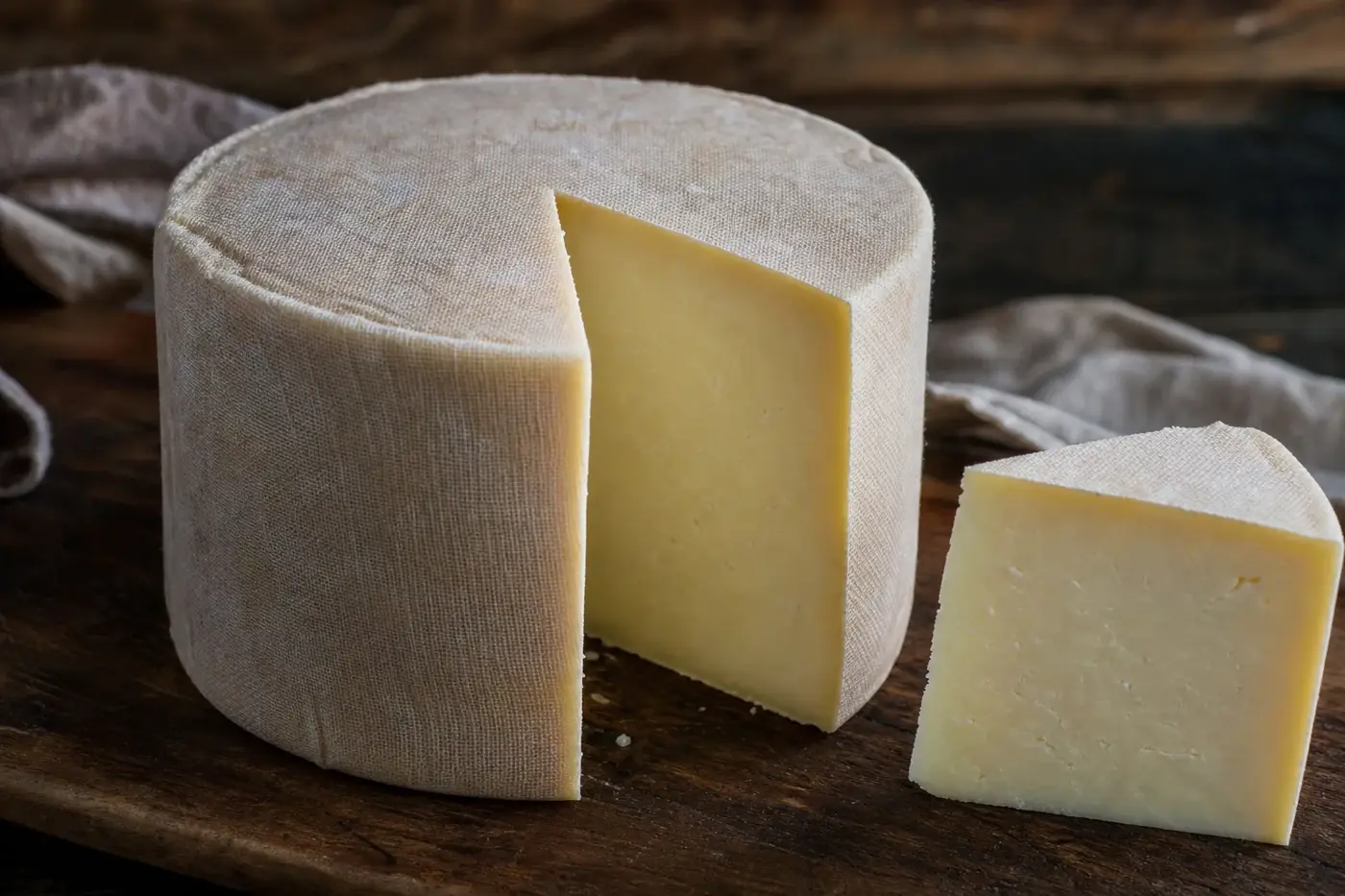
Your knife slips through the pale rind of young Sharpham Cremet to find a mousse-like centre, delicate despite all that cream.
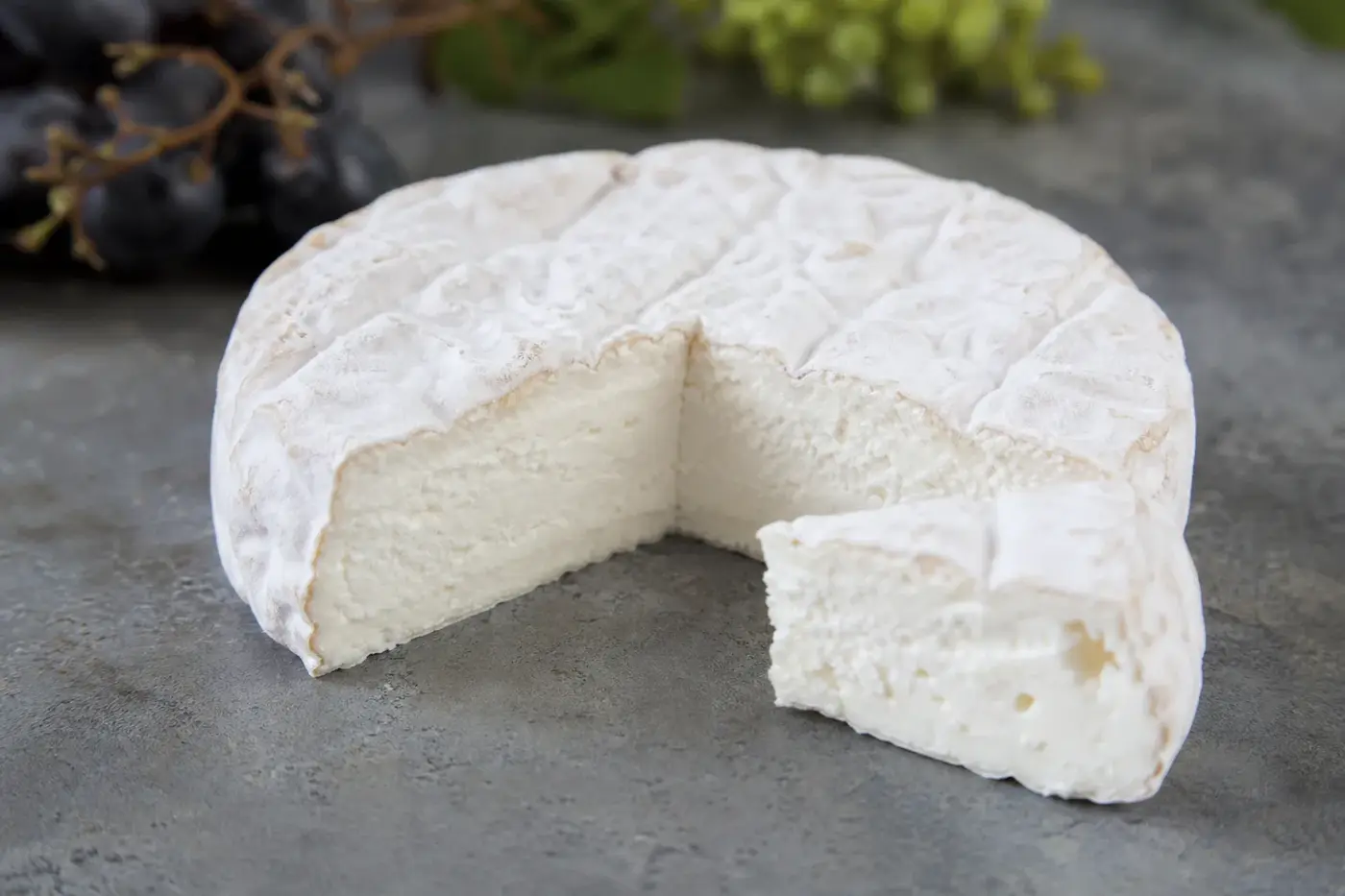
Your knife slips through the pale rind of young Sharpham Cremet to find a mousse-like centre, delicate despite all that cream. Give it time and the flavour grows fuller, with earthy undertones. This soft, mould-ripened cheese from Devon, England, pairs goat's milk with cow's double cream. The cream is very much a leading character, not an extra.[1]
Your quick introduction to Cremet
| What you want to know | The detail |
|---|---|
| Name | Sharpham Cremet.[1] |
| Who makes it | Sharpham Dairy.[1] |
| Where it calls home | Devon, England; current dairy at the South Devon Food Hub near Totnes.[3] |
| Style | Soft, cream-enriched, mould-ripened.[1] |
| What's in the dairy mix | Goat's milk and cow's double cream.[1] |
| Milk treatment | Pasteurised.[2] |
| Rennet | Vegetarian; specific type not established.[2] |
| Time to mature | Five weeks at the dairy.[2] |
| Rind | Natural, edible, with a pale bloom.[2] |
| Sizes | Approximately 500 g rounds and 140 g mini cheeses.[2] |
Take a look beneath that pale rind
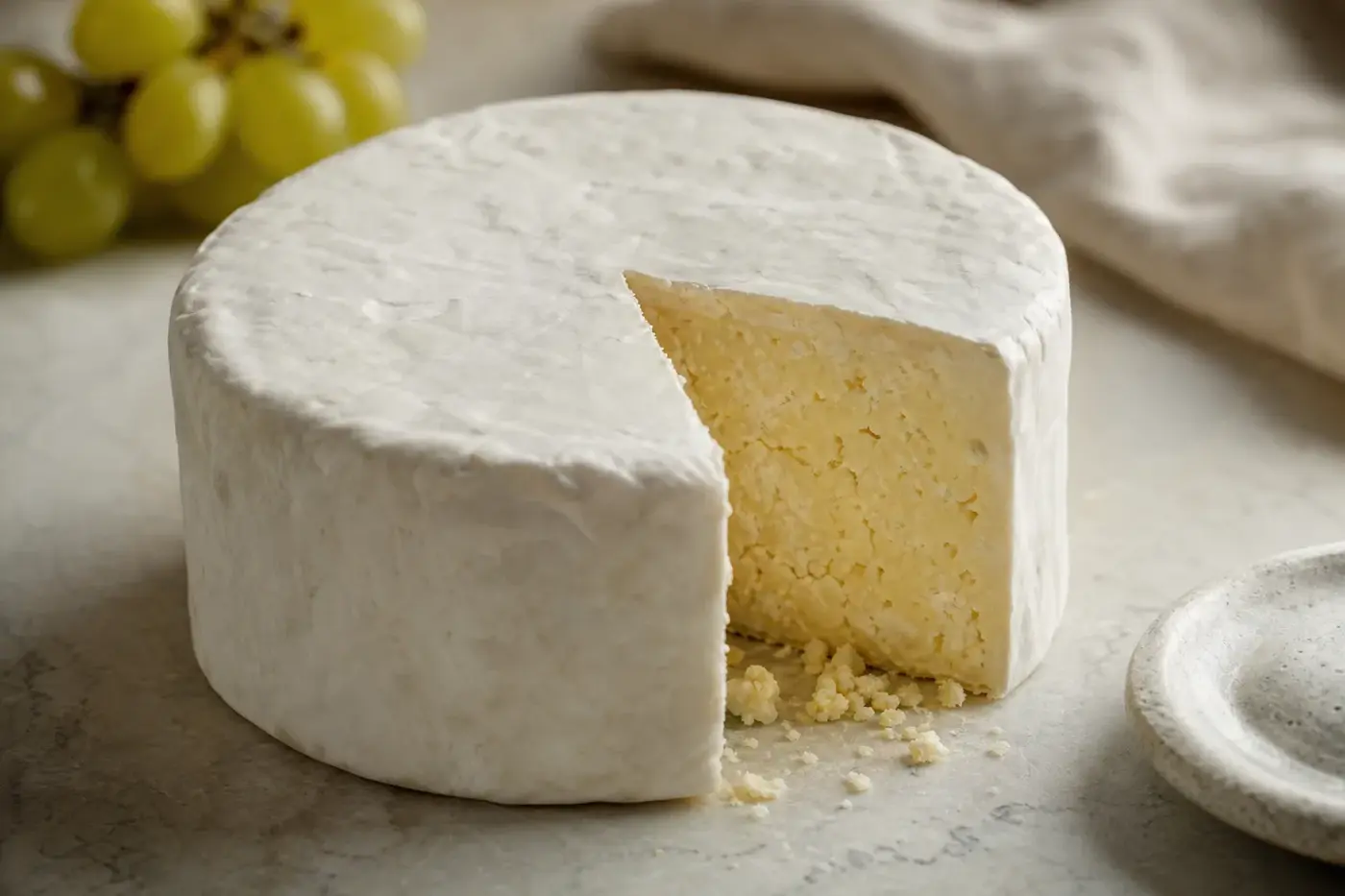
Under Cremet's soft, pale rind, you find a pure white centre. Its maker draws a contrast with the yellow paste of several Sharpham Jersey cow's milk cheeses. Cream enriches Cremet's milk mixture, while a natural bloom spreads across the surface during maturation.[5][6]
Those cheese-counter terms earn their place here. “Soft” describes the body, “cream-enriched” tells you about the ingredients, and “mould-ripened” explains the surface's role in ageing. Together, they help explain how a cheese with such substance on your board can feel airy on your palate, as Sharpham describes Cremet.
For a closer look at that vocabulary, try the guide to cheese styles. With Cremet in front of you, the distinctions become rather more inviting than a lesson in terminology.
Follow Cremet through two Devon chapters
Today, Cremet comes from the South Devon Food Hub, just outside Totnes. Sharpham's current FAQ places production there and describes cheeses handmade with milk from local herds. That Devon name on your cheese belongs to a particular working dairy, not just a picturesque backdrop.[3]
The earlier chapter begins with the Sharpham Estate, bought in 1962, and the development of cheesemaking there. Sharpham's current Brie page dates that cheese's recipe to 1981. Cremet belongs to the wider range that grew around this Devon business, though the estate and today's production address occupy different chapters of its history.[4][5]
Meet the goat's milk and its generous helping of cream
Goat's milk lays the foundation; cow's double cream brings the enrichment. Sharpham says you can taste both, and credits the cream with Cremet's mousse-like texture. Call it simply a goat's cheese and you leave a defining ingredient out of the conversation.[1]
In an August 2023 account, Sharpham describes milk coming from goats on local farms. Its product information names British Saanen, British Alpine and British Toggenburg goats, alongside Jersey cows. The character you taste comes from that combination of dairy ingredients, rather than milk from one species alone.[2][6]
The current product information lists pasteurised milk and vegetarian rennet. Rennet helps milk set into curd, the solid material that becomes cheese. If you want to know more, the rennet guide explains why “vegetarian rennet” describes a category, not one particular substance.[2][3]
A careful ladle, then five weeks of patience
Cremet begins with fragile curd that calls for a gentle hand. Sharpham describes ladling it into moulds by hand, turning it repeatedly during the first four hours, then leaving it in the moulds overnight. Each turn lets liquid whey drain away as the cheese takes shape.[7]
Next comes the soft-cheese ripening room. Cremet is turned daily for the first week, then every other day. After about two weeks, Sharpham says its soft cheeses have an even coat of white mould.[7]
The cheeses are then wrapped in breathable paper and continue maturing in refrigerated storage. The shaping, the surface growth and the time inside that wrapper all play a part in the cheese you eventually cut.[7]
Cremet's information sheet gives five weeks as its maturation time at the dairy. That is the production timetable, not your home-storage timetable. For storage, follow the instructions and date on your particular pack.[2]
If you would like to follow the curd and whey a little further, turn to how cheese is made. It puts these quiet, careful stages into the wider picture.
Choose the ripeness that suits your appetite
Cremet's natural, edible rind carries a pale bloom around its pure white paste, the cheesemaker's word for the interior. Young, it has the freshness and mousse-like body Sharpham describes. As it ripens, you move towards fuller flavour and earthy undertones.[1][2]
Before buying, think about which experience you would enjoy. Ask the seller for a fresher cheese, or a more developed example within its labelled life if you want greater depth. Judge the cheese in front of you, since different rounds need not have reached the same stage.
At the table, smell a freshly cut piece before tasting it. Try the centre first, then a little rind on its own, and notice where the character sits. Put the aroma, texture and finish into your own words. The maker's description is a starting point, not an exam you need to pass.
Leave the awards cabinet for another day
There is no award listed here with a category and year. For now, give the cheese itself your attention.
Keep it cool and serve a little at a time
Keep Cremet refrigerated in its original breathable wrapping, following the pack's instructions and date. Sharpham recommends waxed or breathable paper rather than cling film, which it says traps moisture. Its Cremet sheet also asks stockists to leave space around the cheeses rather than stacking them tightly.[2][3]
For households in England, Wales and Northern Ireland, the Food Standards Agency recommends a fridge temperature of 0 to 5 °C. Follow the pack's storage instructions, too. Its chilling guidance says chilled food should be out for the shortest possible time, with a maximum of four hours.[8]
Sharpham recommends serving its cheeses at room temperature, taking out only the portion you intend to eat. Let that portion lose its refrigerator chill shortly before the meal, keeping the rest refrigerated. You can enjoy a good piece without bringing the whole cheese to the table.[3]
In the United States, the FDA limits time out for foods requiring refrigeration to two hours, or one hour above 32 °C (90 °F). It recommends keeping your refrigerator at 4 °C (40 °F) or below.[9]
Count preparation time as well as time on the table towards these agency limits. For a longer meal, bring out small portions in succession. The home cheese storage guide has more on wrapping and arranging your fridge.
Bring bread, summer fruit and a light touch
Fresh bread and summer fruits are Sharpham's suggested company for Cremet.[1][2] Start with bread alone so you can give the cheese your full attention. Then try a little fruit beside it, rather than burying it underneath.
If you enjoy chutney, put a small amount at the edge of the plate. Its sweetness and spice can then be a choice with each mouthful, rather than a commitment for the whole cheese.
For an alcohol free drink, still water keeps things simple. Let the cheese and fruit supply the flavour.
Get to know Cremet's neighbours on the board
Elmhirst is Cremet's closest companion in the Sharpham range. Both combine milk with double cream, and both are mould-ripened, but Elmhirst uses Jersey cow's milk rather than goat's milk. Sharpham describes it as mousse-like when young, becoming softer and more developed as it matures.[10]
Taste them together and you can explore the difference in milk within a broadly similar cream-enriched style. The cream gives you common ground, so there is a clear thread to follow from one cheese to the other.
If goat's milk is what interests you, reach for Ticklemore instead. Sharpham describes this 100% goat's milk cheese as firmer, with a flinty or crumbly body and notes of lemon and herbs. Beside soft, cream-enriched Cremet, it shows you how the same milk species can lead to two markedly different eating experiences.[11]
Sharpham Brie offers a contrast before you even take a bite. Made with Jersey cow's milk, it has what its maker calls a buttercup-yellow paste, which softens with age and develops mushroom notes and a chicory finish. Set against Cremet's white centre, that colour and published flavour profile make the distinction clear. A pale rind tells you only part of either cheese's story.[5]
Rustic takes you into semi-hard territory. It uses Jersey cow's milk, but Sharpham cuts its curd more finely than for Brie, removing more whey. The maker describes the result as crumbly and lightly citrus in flavour. Here is another way to taste how differently one dairy can shape a cheese's body.[12]
For a tasting of two cheeses, choose Cremet and Ticklemore to explore texture, or Cremet and Elmhirst to compare dairy ingredients. Give each its own space on the plate and use the same plain bread for both. You have two cheeses, one clear question, and plenty of room to notice the answer.
General information only, not medical advice: follow the official guidance where you live.
Questions people ask
What is Sharpham Cremet made from?
Cremet combines goat’s milk with cow’s double cream. Sharpham credits the cream with its mousse-like texture.
What does Sharpham Cremet taste like, and can you eat the rind?
Sharpham describes young Cremet as fresh, with a mousse-like body. As it ripens, it develops a fuller flavour and earthy undertones, and its pale natural rind is edible.
Is Sharpham Cremet pasteurised and vegetarian?
The product information lists pasteurised milk and vegetarian rennet. The specific type of rennet has not been verified.
How should I store Sharpham Cremet?
Keep it refrigerated in its original breathable wrapping and follow the instructions and date on the pack. For households in England, Wales and Northern Ireland, the Food Standards Agency recommends a fridge temperature of 0 to 5 °C; see its chilling guidance for further details.
How should I serve Sharpham Cremet?
Sharpham recommends serving its cheeses at room temperature and taking out only the portion you intend to eat. It suggests fresh bread and summer fruits with Cremet.
Sources
[1] Sharpham Dairy. Sharpham Cremet. Undated product page, current version retrieved November 2026. Maker's product description.
[2] Sharpham Dairy. Sharpham Cremet: Product Information Sheet. Undated document in the maker's August 2025 upload directory; retrieved November 2026. Product information sheet.
[3] Sharpham Dairy. FAQs. Undated, current version retrieved November 2026. Location, rennet, storage and serving guidance.
[4] Sharpham Dairy. Our Story. Undated; indexed primary-source text retrieved November 2026. Maker's history.
[5] Sharpham Dairy. Sharpham Brie. Undated, current version retrieved November 2026. Maker's Brie description.
[6] Sharpham Dairy. Cremet awarded three Great Taste stars. 10 August 2023. Used for the maker's ingredient, sourcing and appearance descriptions, not as independent confirmation of an award. Dated maker's account.
[7] Sharpham Dairy. Cheesemaking at Sharpham. Undated; indexed primary-source text retrieved November 2026. Maker's production account.
[8] Food Standards Agency. How to chill, freeze and defrost food safely. Published 18 December 2017; current text retrieved November 2026. Applies to England, Northern Ireland and Wales. Official chilling guidance.
[9] US Food and Drug Administration. Are You Storing Food Safely? Current web edition retrieved November 2026. Official US refrigeration and time-limit guidance.
[10] Sharpham Dairy. Sharpham Elmhirst. Undated, current version retrieved November 2026. Maker's Elmhirst description.
[11] Sharpham Dairy. Sharpham Ticklemore. Undated, current version retrieved November 2026. Maker's Ticklemore description.
[12] Sharpham Dairy. Sharpham Rustic. Undated, current version retrieved November 2026. Maker's Rustic description.
Researched from Sharpham Dairy's published product and production information, with household handling guidance checked separately against the FSA and FDA.
Last checked: November 2026
Last checked November 2026.
The editors suggest you read next
West Country Farmhouse Cheddar Cheese
Large pieces of curd turn and stack under the cheesemaker’s hands.