British Cheese: The Complete Guide
In Lancashire, today's curd meets yesterday's, perhaps even curd from the previous two days.
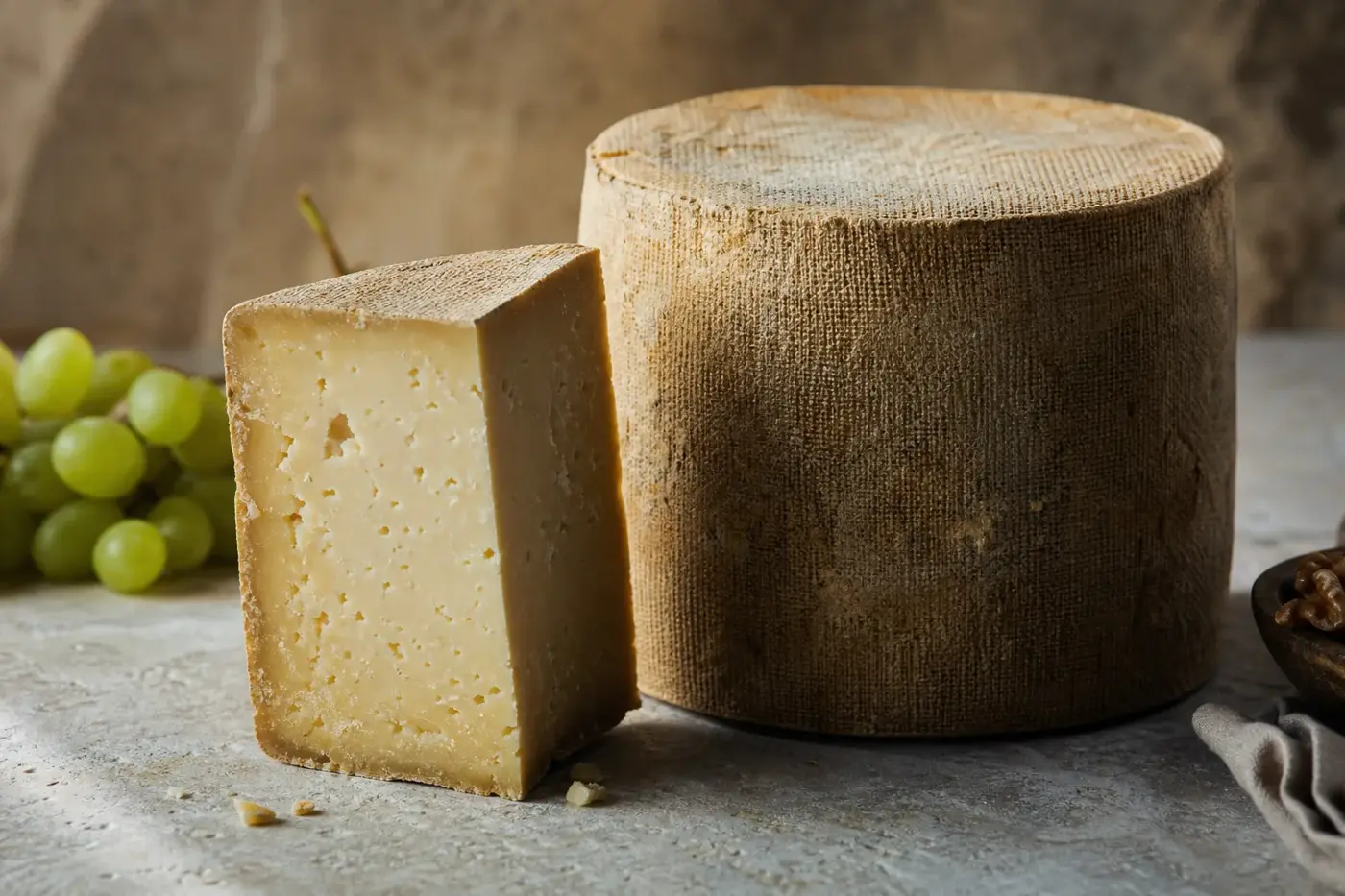
In Lancashire, today's curd meets yesterday's, perhaps even curd from the previous two days. In the West Country, Cheddar takes its time maturing. At an Ayrshire dairy, fresh Crowdie sits in a range alongside hard Dunlop. Follow your appetite between them and Britain becomes a patchwork of methods, regional traditions and dairies that refuse to be known for just one thing. [5,6,12]
Get your bearings, then follow your appetite
Before you set off, unfold the map. Britain here means Great Britain: England, Scotland and Wales. The United Kingdom also includes Northern Ireland; the Republic of Ireland is a separate country. Those distinctions matter for regional traditions, and especially for the rules protecting cheese names. [1,13]
You will not find one national flavour waiting at the counter. Look instead at whether a cheese is fresh or matured, how its curd was handled and what happened to its surface. Nor does one dairy mean one style: Dunlop Dairy's published range includes hard, soft and fresh cheeses. A familiar name can open a surprisingly varied door. [12]
Farmhouses, factories and a family return
Picture Swindon in the 1870s, with a cheese factory among its buildings. Its footprint appears on an 1876 plan recorded by Historic England. Factories belong in this story alongside farmhouse dairies, both documented in the Museum of English Rural Life's film collection. Later came renewed momentum for family production, including Caws Cenarth's return to cheesemaking in 1987. [2,3,4]
The museum's dairy industry films take you inside both farmhouse and creamery production. Its catalogue for the 1970s film Magnificent Nine follows cheeses through Cheshire, Lancashire, the Yorkshire Dales and other regions. These were promotional films, but regional names clearly had a starring role in cheese's public identity. [3]
At Caws Cenarth, the return has both a place and a cause. The dairy dates its establishment to 1987, when, according to its account, milk quotas prompted a return to family cheesemaking at its Cych valley farm. Today's range reaches beyond Caerffili into soft and blue cheeses. Here, revival means renewed farm production with room to experiment, rather than simply bringing back one historical recipe. [4]
England: follow the curd through the counties
With West Country Farmhouse Cheddar Cheese, geography is part of the recipe. Its registered specification defines the production area as the historical counties of Dorset, Somerset, Devon and Cornwall, allowing milk from neighbouring Gloucestershire and Wiltshire during shortages. Maturation must last at least nine months. Look for the specification's firm body, slightly open texture and rounded, nutty flavour with some sharpness. [5]
Lancashire takes you along a different curd path. The current Great Britain specification for Beacon Fell Traditional Lancashire Cheese requires Lancashire milk and production within ceremonial Lancashire. New curd joins curd from the previous day, or the previous two days. The cheese has a specified loose, open texture, with a mellow young flavour that becomes sharper and tangier as it matures. [6]
Give Cheshire and Wensleydale your full attention, rather than treating them as Cheddar's supporting acts. The museum's film catalogue records production in Cheshire and the Yorkshire Dales; Yorkshire Wensleydale also has its own registered geographical name in Great Britain. Ask how each cheese was made. Then notice how the paste breaks, how moist it feels and how its acidity develops as you chew. [3,7]
Start with familiar Cheddar, then choose a deliberately different texture. That contrast will teach you more than a parade of county names delivering much the same mouthful.
Wales: read the name, then roam a little
Give this name a moment: Traditional Welsh Caerphilly / Traditional Welsh Caerffili. It is registered as a protected geographical indication in Great Britain, identifying the protected product rather than every cheese called simply Caerphilly. Make it your starting point, but read the whole label rather than stopping at the familiar word. [8]
Welsh dairies today give you plenty of other directions to follow. Caws Cenarth lists Perl Wen among its soft cheeses and Carreg Las as a blue sheep's milk cheese. One changes the ripening style; the other changes both milk and style. Ask what the dairy makes now, as well as what its region made historically, and your tasting can travel well beyond that first familiar name. [9]
Scotland: from hard Dunlop to fresh Crowdie
At Clerkland Farm in Ayrshire, Dunlop Dairy says it keeps Ayrshire cows and goats and makes its milk into cheese by hand. Its published range stretches from close-textured hard Dunlop to soft bloomy-rind cheeses and fresh Crowdie. You can follow farming right through to the cheese counter here, with very different textures at the end of the journey. [12]
Traditional Ayrshire Dunlop is a registered protected geographical indication in Great Britain. Use that exact name for the protected cheese, rather than Dunlop-style cheese more generally. For your Scottish tasting, set hard Dunlop beside fresh Crowdie. Their contrast tells you more than expecting one texture or strength to speak for Scotland. [10,12]
Hard, crumbly, blue or fresh? Let your palate explore
A blue cheese can be soft; a crumbly cheese can be quite firm. The categories answer different questions: hard and soft chiefly describe texture, blue describes internal mould ripening, and fresh distinguishes cheese eaten without extended maturation. Use them as tasting prompts, rather than separate boxes into which every cheese must squeeze. [4,5,12,14]
Begin with hard Cheddar or Dunlop, then ask about Cheshire or Wensleydale for a crumbly example. Move on to soft Perl Wen and fresh Crowdie. For blue, Stilton Blue Cheese is a registered protected designation of origin in Great Britain; Carreg Las offers you a sheep's milk alternative to explore. [5,9,11,12]
The broader guide to cheese styles untangles the overlaps between milk, rind and method. At your board, pay attention to what changes: resistance to the knife, moisture, crumbling and the difference between rind and centre. Those small observations make the categories useful, rather than just more words to remember.
Follow the milk and watch what time does
Cow's milk Lancashire and sheep's milk Carreg Las offer you one clear contrast before the making begins. What happens next matters just as much. Caws Cenarth's process account describes adding cultures, allowing acidification, adding a coagulant, cutting curds and draining whey, the liquid separated from the curd. Each stage leaves you a clue to what eventually reaches your plate. [4,6,9]
Starter cultures acidify milk and influence the developing curd. Cutting and draining affect the whey and moisture left behind; salt contributes flavour and affects moisture too. Lancashire's blending of differently aged curds forms part of its specified flavour and texture. Its specification permits bandaging, waxing, buttering or food grade packaging, with the covering affecting the surface during maturation. [4,6]
Time is a choice, not simply a wait. Lancashire's specification distinguishes mellow young cheese from sharper mature cheese, while West Country Cheddar's requires a much longer minimum maturation. Compare ages within one style before putting differences between styles down to age alone. Ask for the cheese's actual age, not just the maturity word on its label. [5,6]
Protected names: get to know the small print
A protected designation of origin, or PDO, identifies a product whose qualities or characteristics are essentially due to its geographical environment, with production stages taking place in the defined area. A protected geographical indication, or PGI, identifies a product with a quality, reputation or other characteristic attributable to its origin, with at least one production stage in the defined area. In Great Britain, both have registered names and specifications. West Country Farmhouse Cheddar Cheese and Yorkshire Wensleydale are registered names; Cheddar and Wensleydale also describe broader styles. [5,7,13]
Where you buy matters too. Defra says the UK schemes protect registered names when products are sold in Great Britain, while EU schemes apply in Northern Ireland and the EU. Unlike a trade mark, a geographical indication can be used by qualifying producers who follow its specification and meet its verification requirements. [13]
Read the full product name before drawing conclusions from a regional association. A dairy's address and a cheese style tell you different things, so ask where that particular cheese was made. The guide to PDO, PGI and TSG explains the schemes in more detail. November 2026 is the reference point for the registrations mentioned here. [5,7,8,10,11]
Take four good questions to the cheese counter
Which animal supplied the milk, and how was that milk treated? What set the curd, and how mature is the cheese? Start with those four questions; if vegetarian suitability matters, ask for the maker's current declaration rather than trusting a regional name. Keep the cheese label guide handy for a fuller checklist.
A specification tells you what a protected product must satisfy. The maker's label or product information describes the particular cheese in front of you. Keep that distinction in mind when asking about animal rennet, the milk-setting coagulant, or a vegetarian alternative. If the answer determines your choice, ask to see the information rather than settle for a guess.
Strength words do not put different styles on the same scale. Ask what mature means for this cheese, and whether the piece is ready for your planned occasion. If you are buying for a gathering, explain your guests' preferences and dietary requirements before choosing the selection.
A tasting route from fresh Crowdie to blue
Begin with this route, but let the cheeses in front of you decide the final order. Their names alone cannot tell you everything you need.
- Begin with fresh Crowdie. Notice its moisture and whether it spreads or breaks. How quickly does its flavour fade?
- Move to a young regional cheese. Ask for mild Lancashire or another young example. Compare its texture with the fresh cheese.
- Bring in a crumbly contrast. Try Cheshire or Wensleydale. Pay attention to acidity and the way the cheese fragments.
- Continue with mature Cheddar. Compare its firmness and finish with the younger cheese. Then return to that earlier piece.
- Finish with blue. Choose one that suits your group. Where available, compare blue-veined paste with an unblued section.
Use plain bread and water between samples. Write in ordinary words: sour, sweet, salty, firm, yielding, lingering. You are learning to recognise differences when you meet them again, not auditioning to write a tasting dictionary.
Give every cheese a reason to be on the board
Choose contrast before quantity. For your first board, try one firm cheese, one crumbly or fresh cheese, and one soft or blue cheese. For a larger board, a different milk or rind treatment adds more interest than another cheese doing much the same job.
Put out oatcakes, plain bread, apples and pears, keeping a little chutney separate. For a regional experiment, sit fruit cake beside Wensleydale and compare the cheese alone with a mouthful of the sweet accompaniment. Leave enough plain bread for anyone who would rather the chutney did not chair the meeting.
Apple juice, water and tea make useful alcohol free choices; adults of legal drinking age who choose alcohol might try a small serving of British cider or ale. People who are pregnant, driving, taking medicines that interact with alcohol, or recovering from alcohol dependence should not drink. Consult current NHS guidance for your circumstances. For a historical starting point to the regional pairing, the museum's Magnificent Nine catalogue records Cheddar alongside cider making. [3]
Keep your cheese cool and serve with care
Set your fridge at 5 °C or below and follow storage instructions. NHS England's listeriosis guidance for home handling says to use opened ready to eat food within two days unless the packaging says otherwise, and to eat ready-to-eat food within four hours of taking it out of the fridge. Follow the product's use-by date and keep it separate from raw food. [15]
Bring out small tasting portions rather than your whole supply. Let those portions lose their refrigerator chill within that limit, leaving the rest refrigerated. The home cheese storage guide takes you through handling in more detail.
For pregnancy in England, the NHS says you can eat hard cheeses such as Cheddar whether pasteurised or unpasteurised. Mould-ripened soft cheeses with a white coating and soft blue-veined cheeses must be thoroughly cooked, whether pasteurised or unpasteurised; its guidance includes cheese cooked until steaming hot. Consult the full list for other cheese categories and exceptions. [14]
Older people, newborn babies and people with weakened immunity are among the groups the NHS identifies as being at greater risk of serious listeriosis. If that affects your table, consult official guidance for where each guest lives and seek individual professional advice. November 2026 is the reference point for the NHS sources cited here. [15]
Let curiosity choose your next board
If a place caught your imagination, follow it further. The separate guides to English cheese, Welsh cheese and Scottish cheese develop the regional picture. The Northern Irish cheese guide covers the fourth part of the United Kingdom; the guide to cheese of the Republic of Ireland covers a separate country. [1]
Let your next tasting answer whatever question this board raised. Follow a region, compare makers of a style you loved, or return to the same cheese at a different maturity. A clear comparison gives your next selection a purpose. Happily, it does not have to make the board any bigger.
General information only, not medical advice: follow the official guidance where you live.
Questions people ask
Where is West Country Farmhouse Cheddar Cheese made?
Its registered production area covers the historical counties of Dorset, Somerset, Devon and Cornwall. The specification allows milk from neighbouring Gloucestershire and Wiltshire during shortages and requires at least nine months of maturation.
What is the difference between a PDO and a PGI?
A PDO identifies a product whose qualities or characteristics are essentially due to its geographical environment, with production stages taking place in the defined area. A PGI identifies a product with a quality, reputation or other characteristic attributable to its origin, with at least one production stage in the defined area.
What is the difference between Dunlop and Crowdie?
Dunlop Dairy in Ayrshire makes close textured hard Dunlop and fresh Crowdie. Traditional Ayrshire Dunlop is a registered PGI in Great Britain, distinct from Dunlop style cheese more generally.
How should cheese be stored at home?
NHS England's listeriosis guidance advises keeping the fridge at 5 °C or below and using opened ready to eat food within two days unless the packaging says otherwise. It also advises eating ready to eat food within four hours of taking it out of the fridge. Consult the NHS England guidance for the full advice.
Which cheeses can be eaten during pregnancy?
The NHS says hard cheeses such as Cheddar can be eaten during pregnancy whether pasteurised or unpasteurised. It says mould ripened soft cheeses with a white coating and soft blue cheeses must be thoroughly cooked, whether pasteurised or unpasteurised. Consult the NHS guidance for its full list of cheese categories and exceptions.
Sources
-
Office for National Statistics. People and places: Countries and regions. Online content style guide, current version retrieved November 2026. Official guidance.
-
Historic England. The former Swindon Steam Laundry, South Swindon, National Heritage List entry 1355881. Current online record, retrieved November 2026. List entry.
-
Museum of English Rural Life, University of Reading. National Dairy Council Film Collection, collection reference TR NDC. Undated catalogue, including Champion Cheese, TR NDC PH6/23, and Magnificent Nine, TR NDC PH6/24. Archive catalogue.
-
Caws Cenarth. Our story. Undated company account and production description, retrieved November 2026. Commercial producer source, used for its own history and stated methods. Producer account.
-
Department for Environment, Food & Rural Affairs. West Country Farmhouse Cheddar Cheese. GB register entry, published 2021, and linked product specification. Register entry; product specification.
-
Department for Environment, Food & Rural Affairs. Beacon Fell Traditional Lancashire Cheese. GB register entry and revised product specification, published November 2023. Register entry; revised specification.
-
Department for Environment, Food & Rural Affairs. Yorkshire Wensleydale. GB register entry, published 2021, current record retrieved November 2026. Register entry.
-
Department for Environment, Food & Rural Affairs. Traditional Welsh Caerphilly / Traditional Welsh Caerffili. GB register entry, published 2021, current record retrieved November 2026. Register entry.
-
Caws Cenarth. Soft cheeses. Undated product collection, retrieved November 2026. Commercial producer source, used for its listed products and cheese categories. Product collection.
-
Department for Environment, Food & Rural Affairs. Traditional Ayrshire Dunlop. GB register entry, published 2021, current record retrieved November 2026. Register entry.
-
Department for Environment, Food & Rural Affairs. Stilton Blue Cheese. GB register entry, published 2021, current record retrieved November 2026. Register entry.
-
Dunlop Dairy. Home. Undated producer account, retrieved November 2026. Commercial producer source, used for its declared farming and cheese range. Producer website.
-
Department for Environment, Food & Rural Affairs. Protected geographical food and drink names: UK GI schemes. Updated 8 March 2024. Official guidance.
-
NHS. Foods to avoid in pregnancy. Reviewed 15 June 2026. England guidance, retrieved November 2026. Official pregnancy guidance.
-
NHS. Listeriosis. Reviewed 10 November 2023. England guidance, current page retrieved November 2026. Official listeriosis guidance.
This piece was researched through official geographical records, GB protected-name entries and specifications, heritage and archive records, attributed producer accounts and NHS guidance.
Last checked: November 2026
Last checked November 2026.
The editors suggest you read next
French Cheese: The Complete Guide
Picture Normandy’s pastures, then follow the milk towards the Loire’s goat dairies, the Jura’s shared cheesemaking traditions and the sheep country of the Pyrenees.