Swiss and Austrian Cheeses
Explore Swiss and Austrian cheeses through guides to individual names, with questions about identity, making, flavour and use leading the way. Begin with Le Gruyère, then follow the reading order below or choose a name you want to understand more closely.
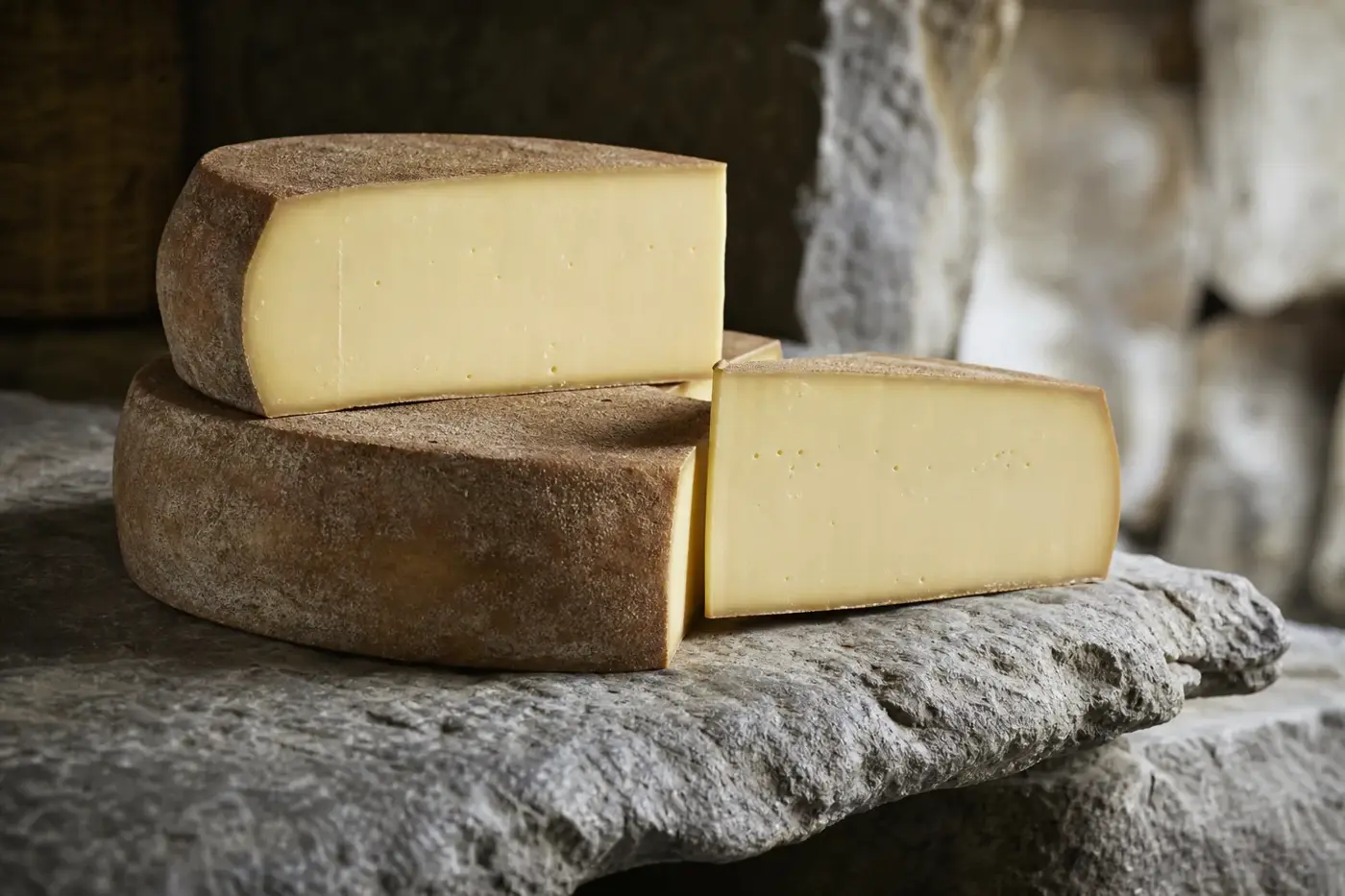
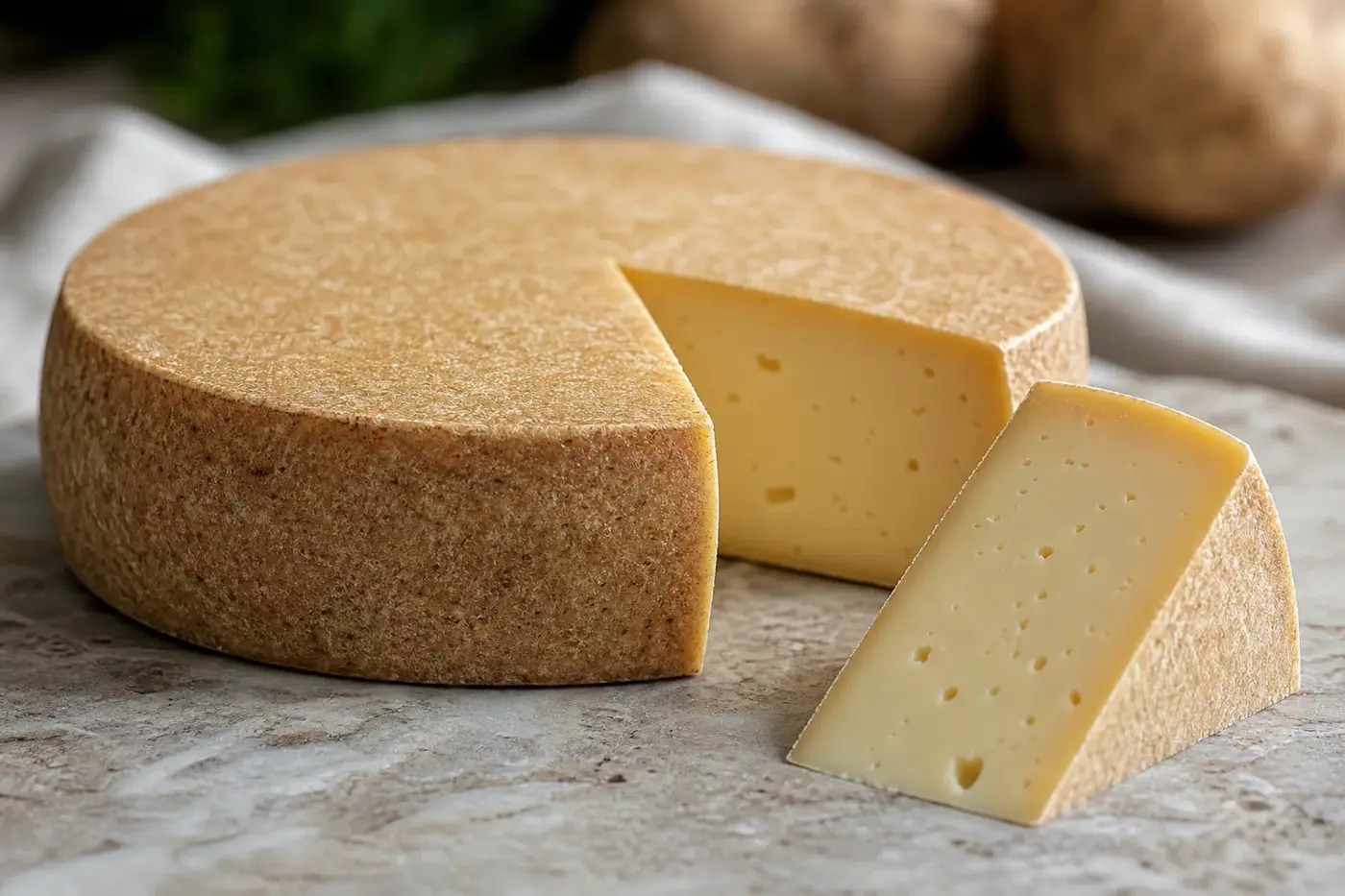
Emmentaler
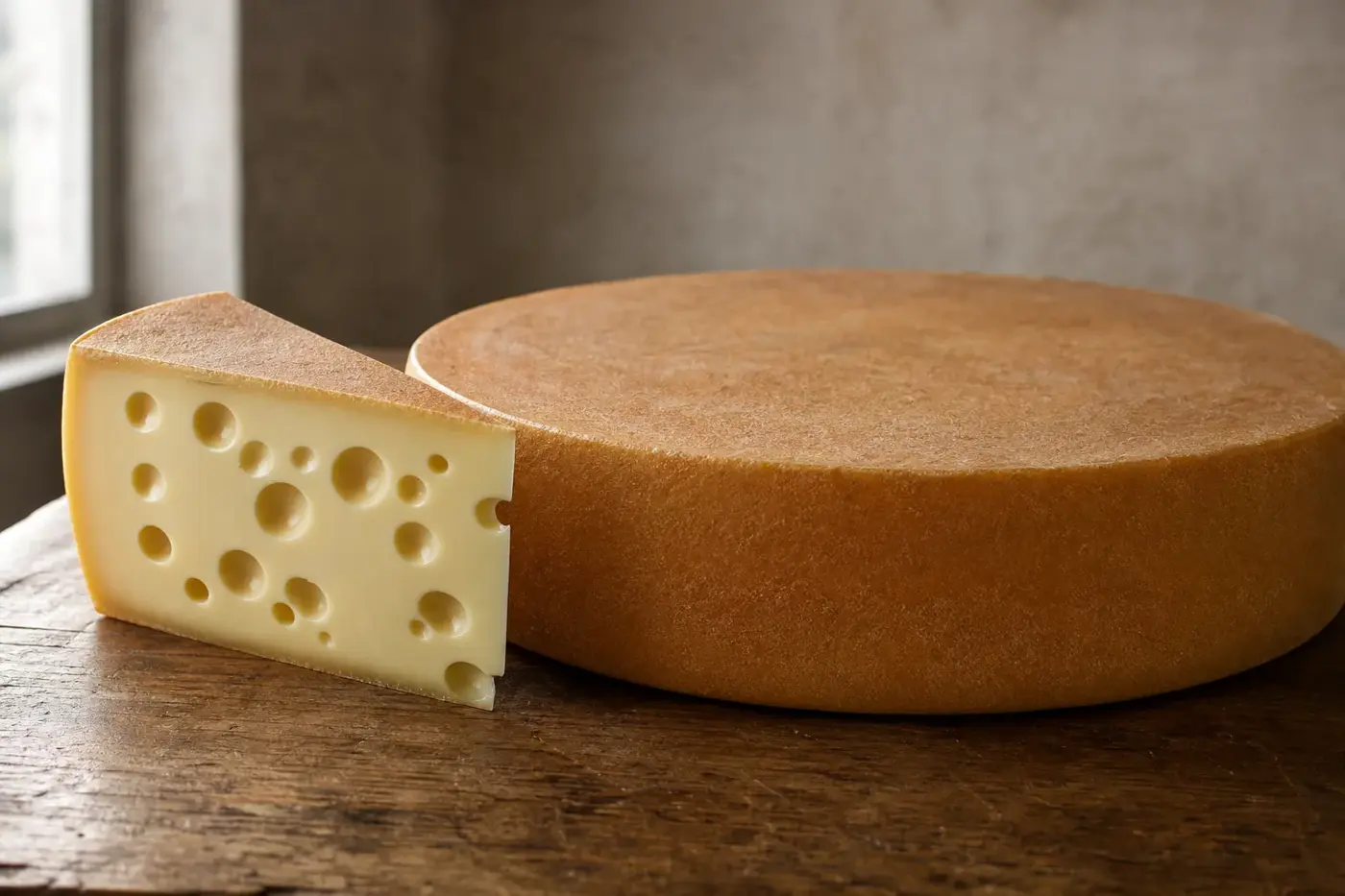
Picture a whole Emmentaler on your counter: up to 120 kg of cheese, its round eyes mostly 2 to 4 cm across.
Appenzeller
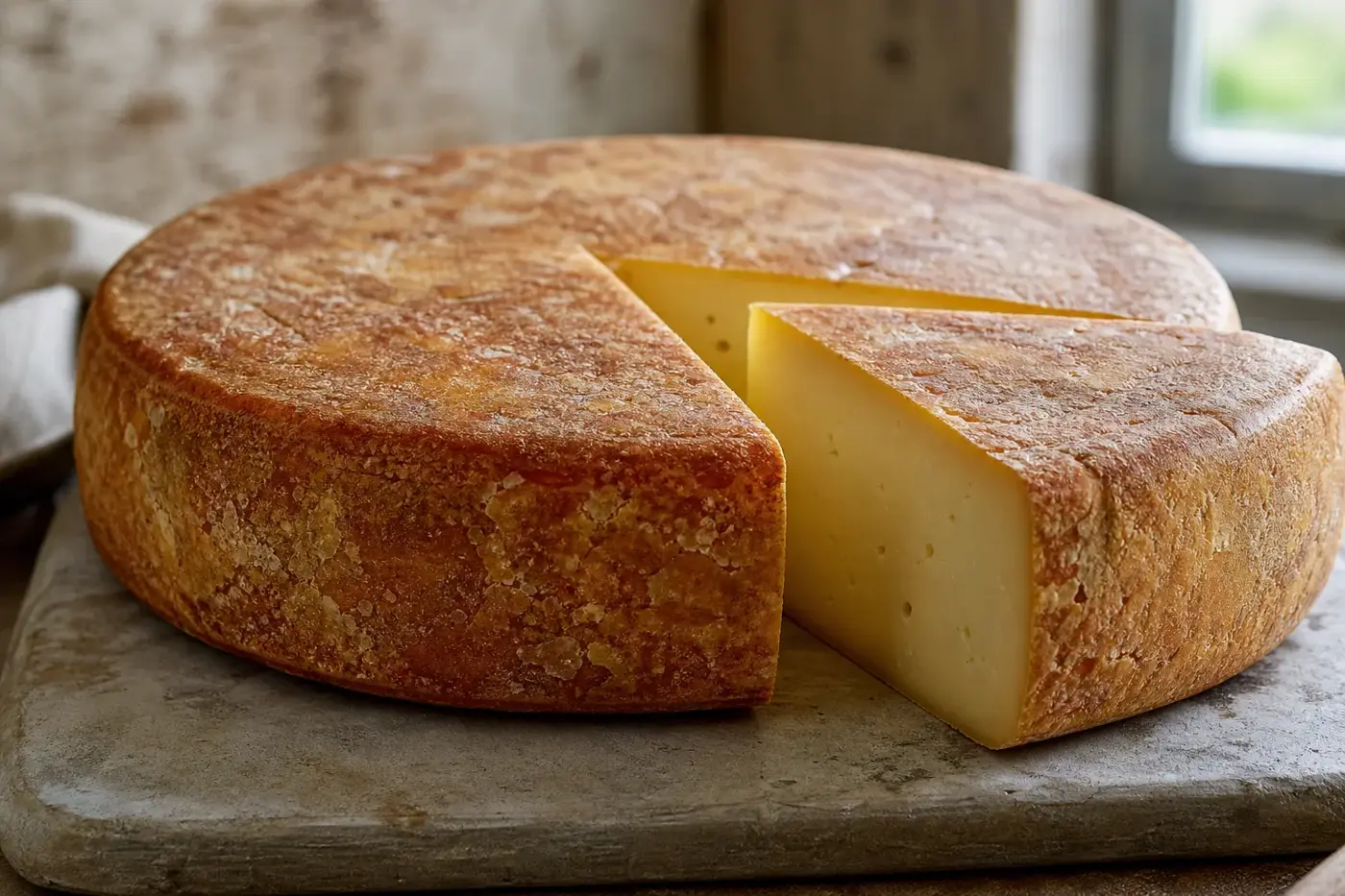
Run your eye over Appenzeller’s pitted rind.
Raclette du Valais
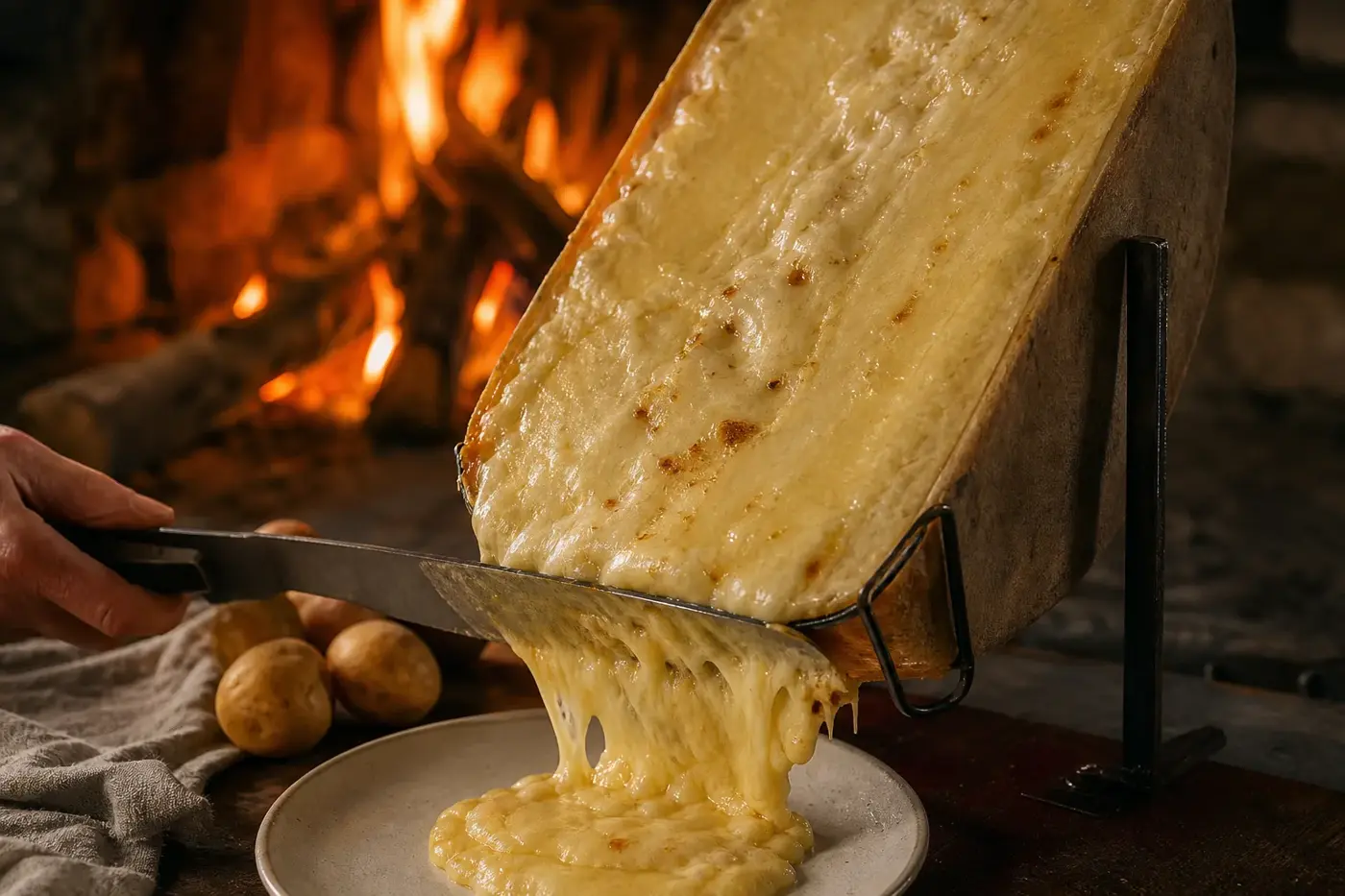
A cut wheel faces the fire in Valais.
Vacherin Fribourgeois
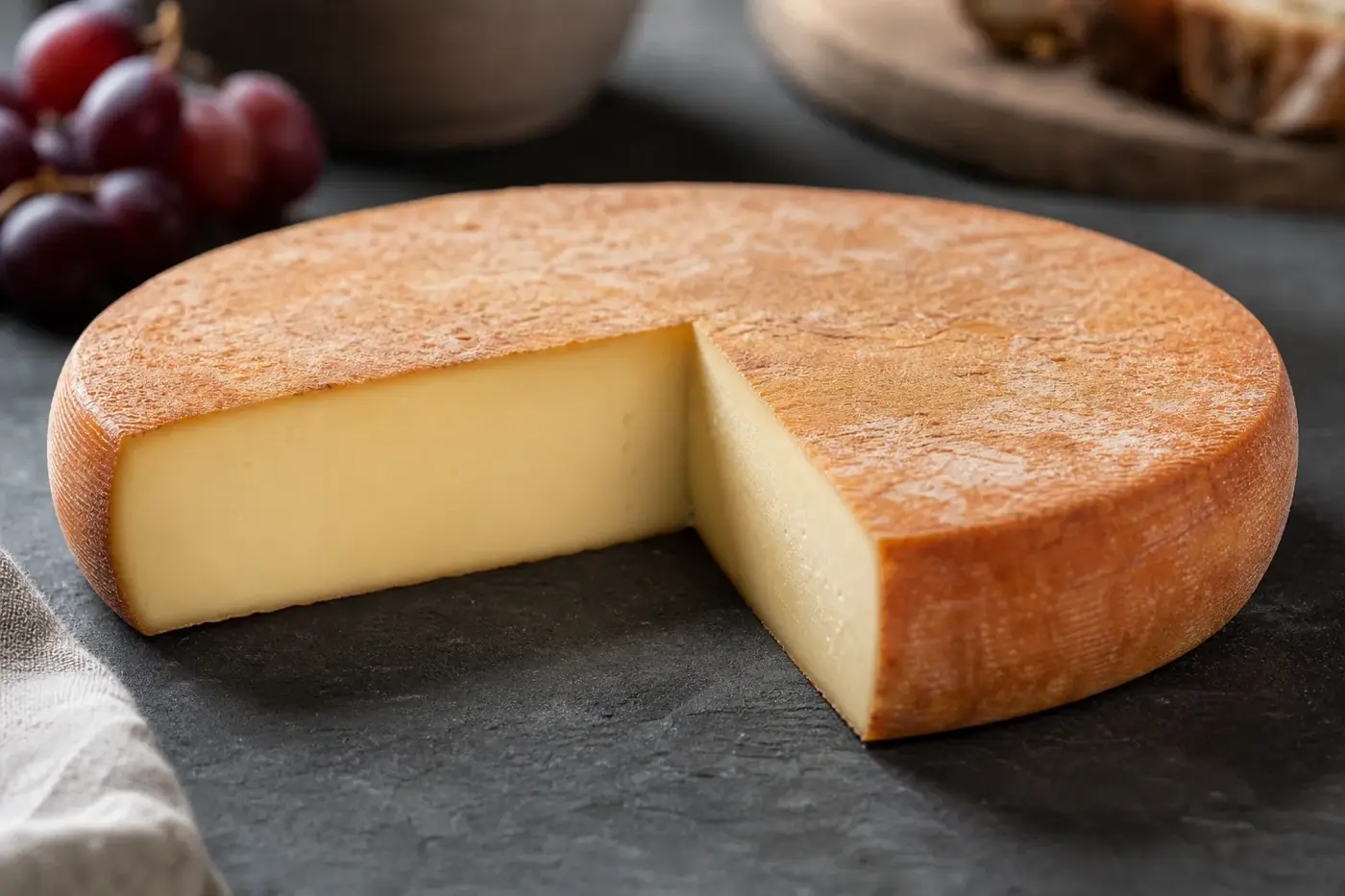
Dip into a pot of Fribourg’s moitié-moitié fondue and you meet a partnership worth lingering over.
Vacherin Mont-d'Or
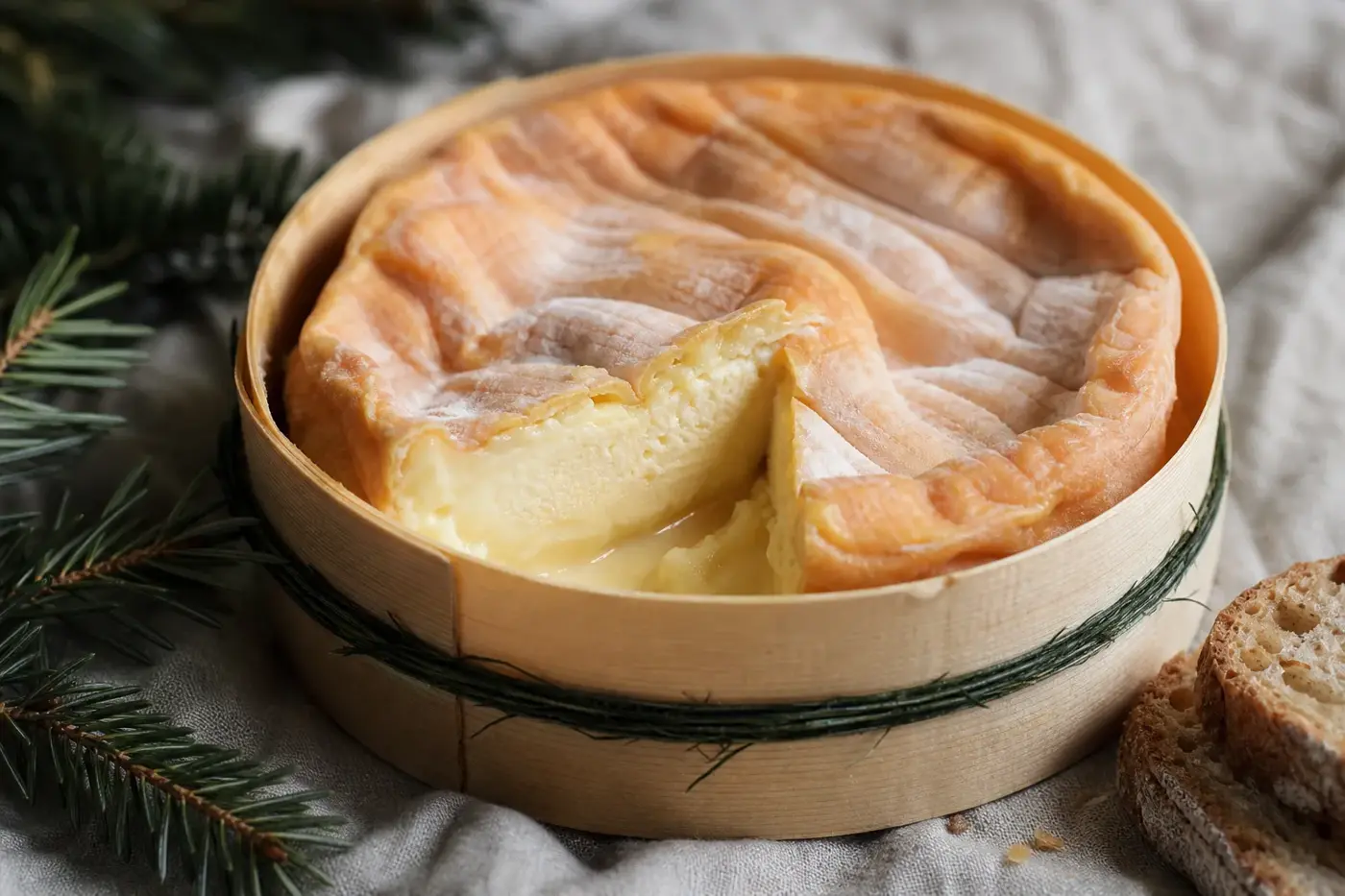
Your spoon slips through the pale centre of Vacherin Mont-d’Or, while a band of spruce keeps the soft cheese in place.
Tête de Moine
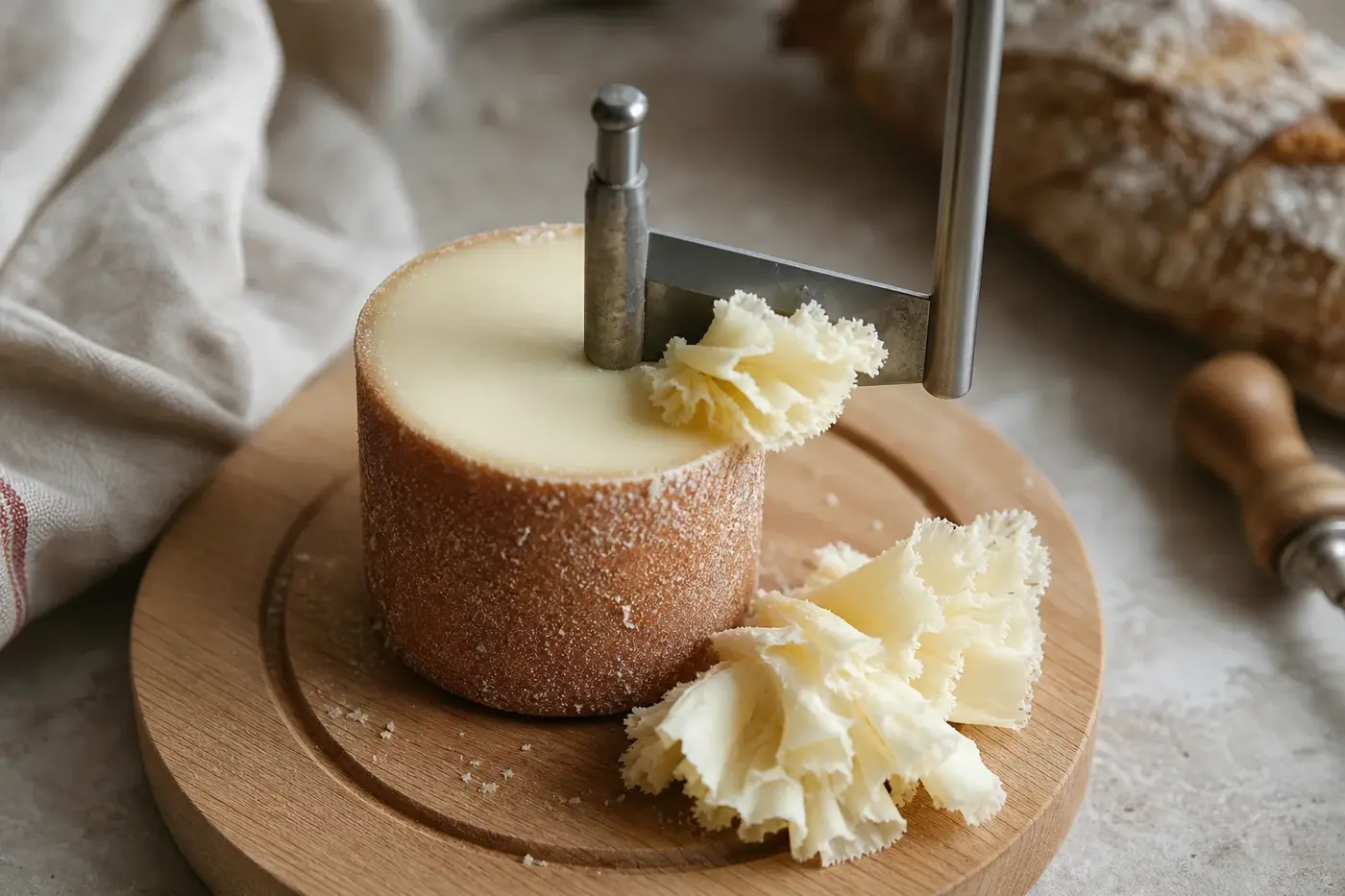
Turn the blade and a ribbon of cheese rises, almost translucent, before gathering into a ruffled rosette.
Everything in this section
- SbrinzIn a central Swiss cellar, great wheels of Sbrinz stand upright on silver fir boards, taking their time.
- Vorarlberger BergkäseSalt water meets a brush.
- L'EtivazA wood fire burns beneath a copper cauldron in a mountain chalet.
- Berner Alpkäse and HobelkäseA row of wheels stands on edge, their surface smear stripped away.
- Swiss TilsiterFirst, the thin, moist, reddish-brown rind.
- SchabzigerA little green Schabziger falls from your grater onto a plain potato.
- Tiroler GraukäseCut into Tiroler Graukäse and you might find two textures sharing the same piece: a pale, crumbly centre and supple, tra
- Tiroler BergkäseCut through the brownish yellow to brown rind and an ivory to pale yellow interior appears, dotted with sparse, pea-size
- Vorarlberger AlpkäsePicture cows grazing at 1,000 to 1,800 metres in western Austria.